Understanding plurals Worksheets for Ages 4-9
7 filtered results
-
From - To
Explore our engaging "Understanding Plurals Worksheets" designed for children ages 4-9! These interactive resources help young learners grasp the concept of plurals in a fun and enjoyable way. From recognizing and converting singular nouns to their plural forms, our worksheets provide a variety of activities, including coloring, matching, and fill-in-the-blanks. Tailored to suit different learning styles, these worksheets encourage children to practice their language skills while fostering their creativity. Perfect for teachers, parents, or homeschoolers, our plurals worksheets ensure that kids build a solid foundation in language arts as they develop confidence in their writing and speaking abilities. Start the journey today!
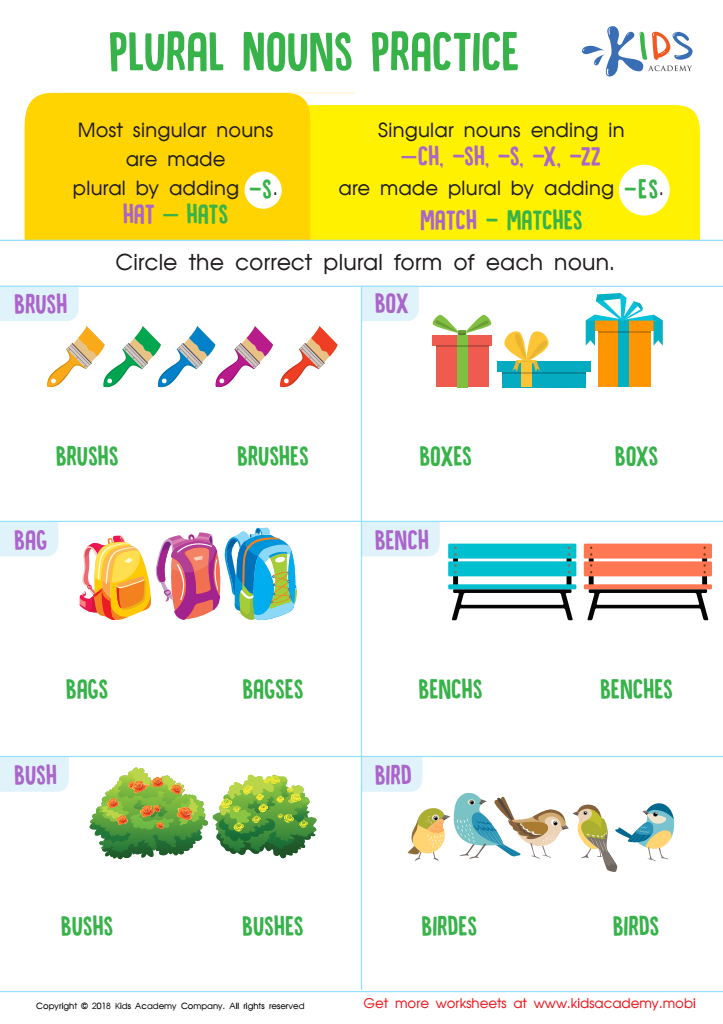
Plural Nouns Practice Worksheet
 Assign to My Students
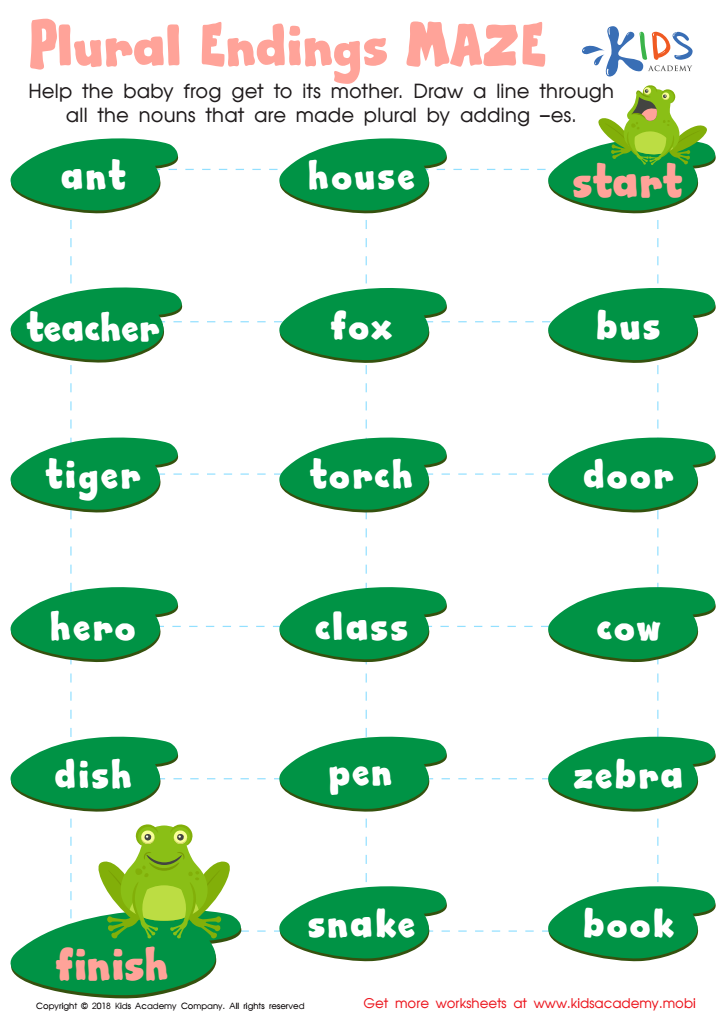
Plural Endings Maze Worksheet
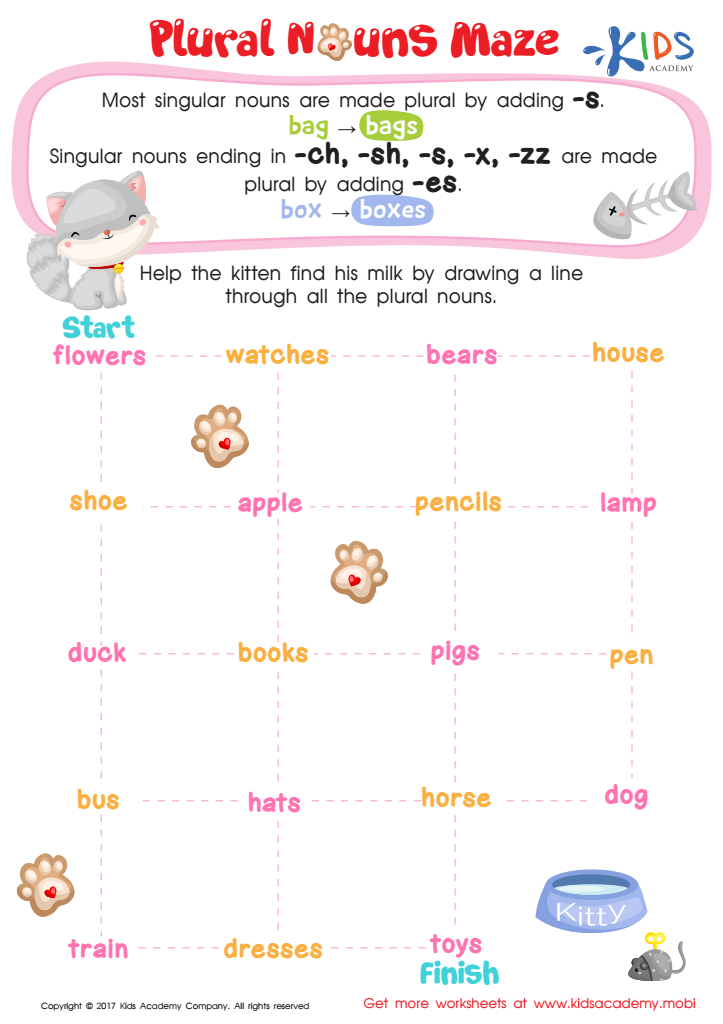
Plural Nouns Maze Worksheet
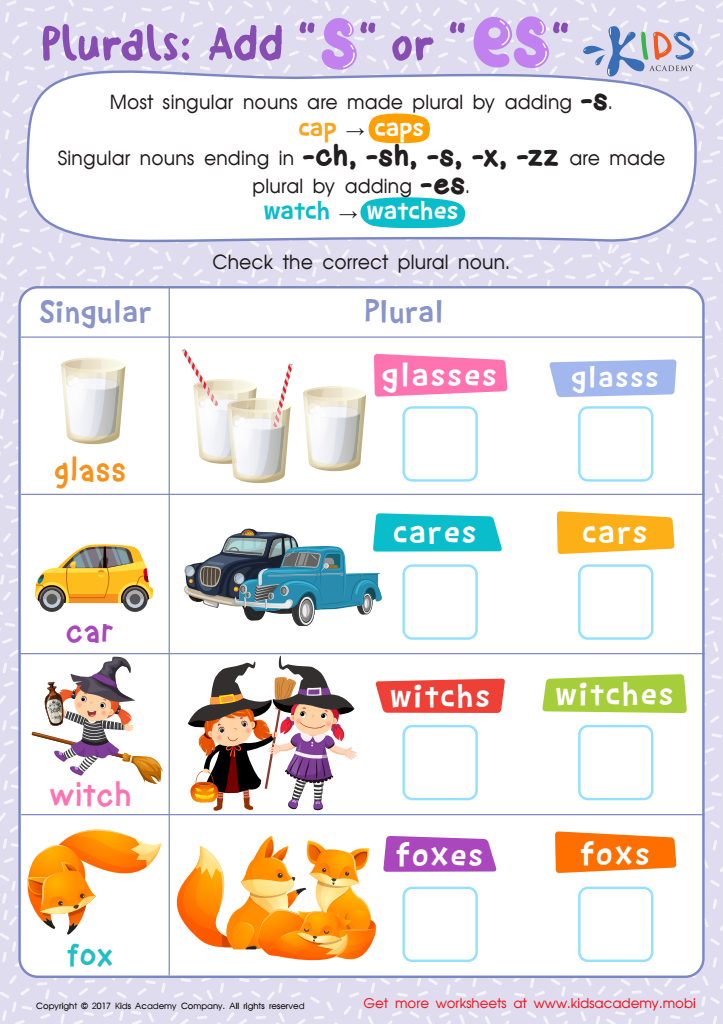
Plurals: "–es" or "–es"? Worksheet
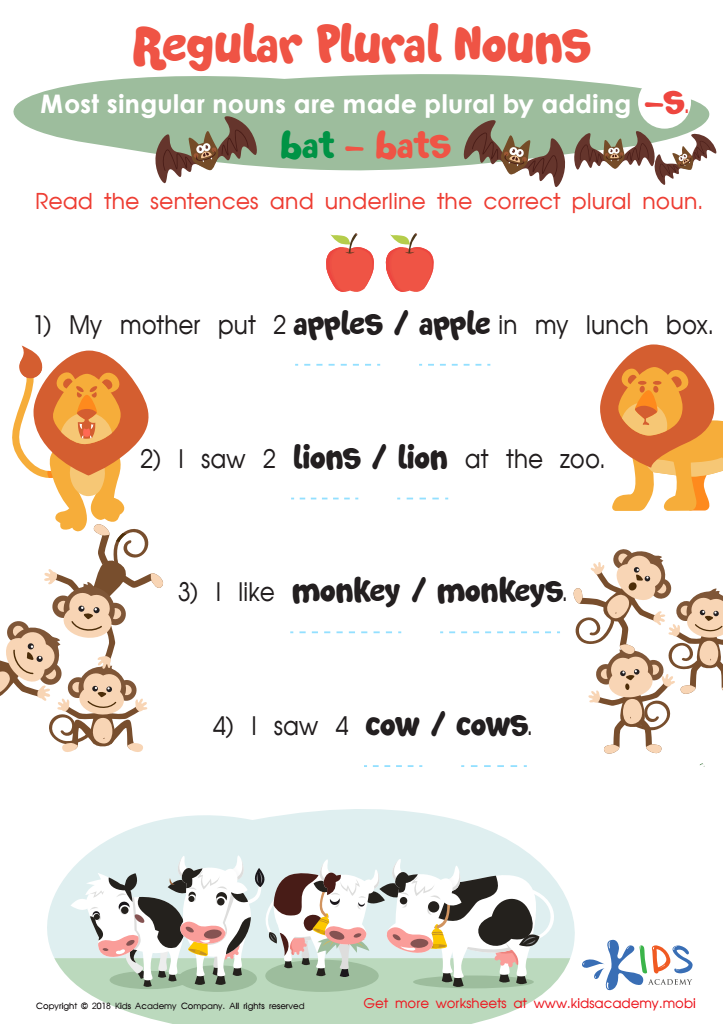
Regular Plural Nouns Worksheet
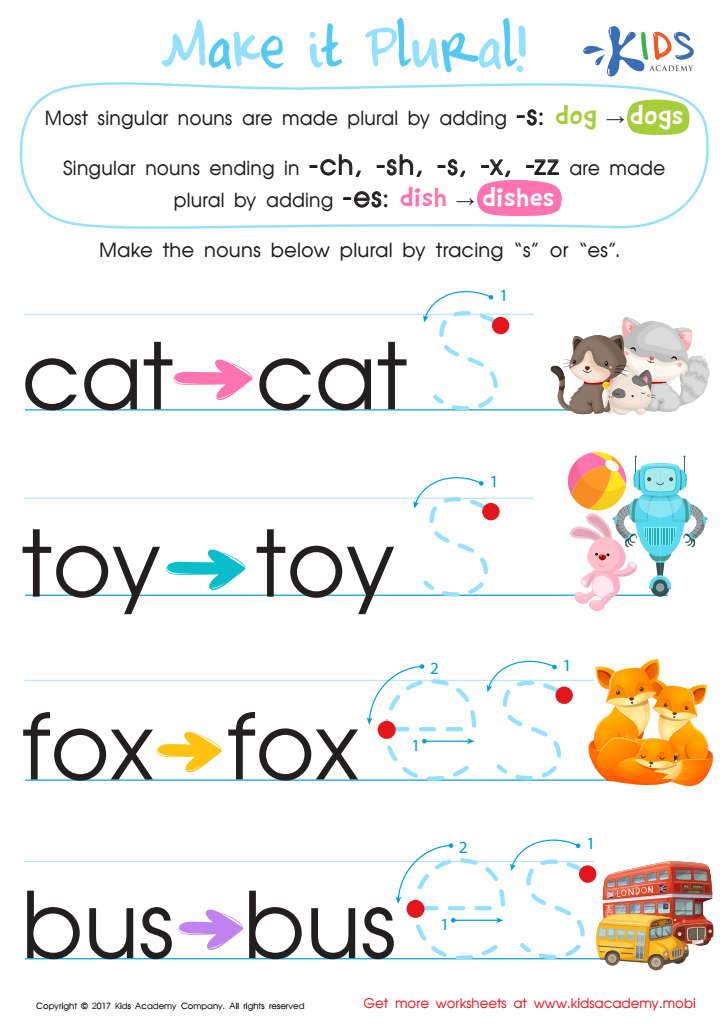
Make it Plural Worksheet


.jpg)




Understanding plurals is essential for children aged 4-9 as it lays the groundwork for their language and literacy development. This knowledge helps children expand their vocabulary, comprehend and form sentences accurately, and communicate effectively. At this age, children are rapidly learning to express themselves and connect with others, and grasping the concept of plurals enables them to differentiate quantities, an important cognitive skill. For example, recognizing that “cat” can become “cats” helps them understand not only how language works but also how to categorize and generalize information in the world around them.
Moreover, mastery of plurals enhances reading and writing proficiency. When children learn plural forms, they can better understand texts, recognizing patterns in word formation that make reading smoother and more enjoyable. Additionally, engaging with plural forms provides opportunities for interactive play and creativity, such as in storytelling or vocabulary games, making learning more enjoyable.
Teachers and parents can reinforce this learning in everyday situations, cultivating a positive attitude towards language acquisition. By nurturing an understanding of plurals, adults support children in developing essential communication skills that will benefit them socially and academically throughout their lives.








