Weather Vocabulary Worksheets for Ages 4-9
5 filtered results
-
From - To
Discover our engaging Weather Vocabulary Worksheets designed specifically for children ages 4-9! These interactive activities help young learners explore essential weather terms and concepts, enhancing their vocabulary and comprehension skills. From identifying different types of weather to understanding seasonal changes, our worksheets provide a fun and educational experience. Perfect for classroom use or at-home learning, these resources encourage curiosity about the natural world while promoting language development. Enhance your child’s learning journey with colorful illustrations, matching exercises, and fill-in-the-blank tasks that make mastering weather vocabulary enjoyable. Start building their understanding of weather today!
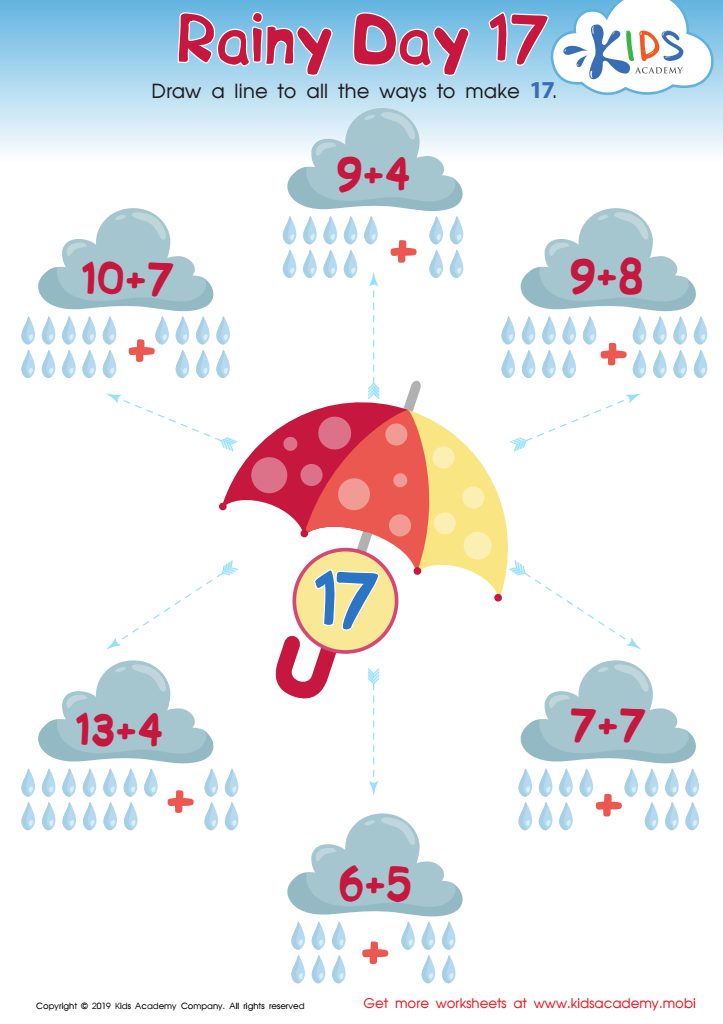
Rainy Day 17 Worksheet
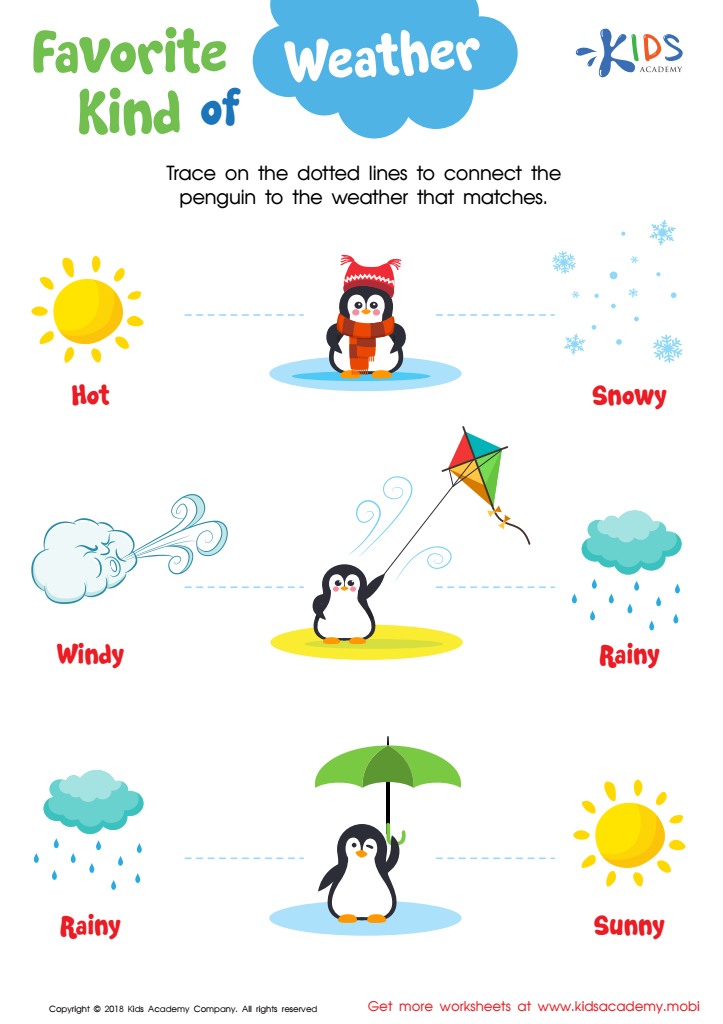
Favorite Kind of Weather Worksheet
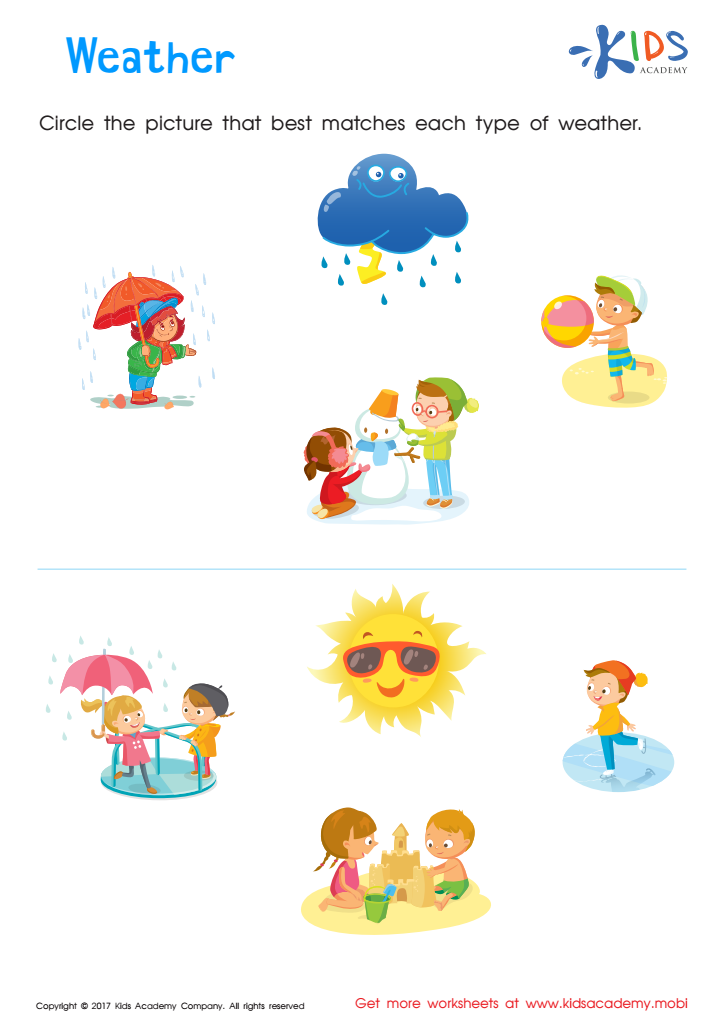
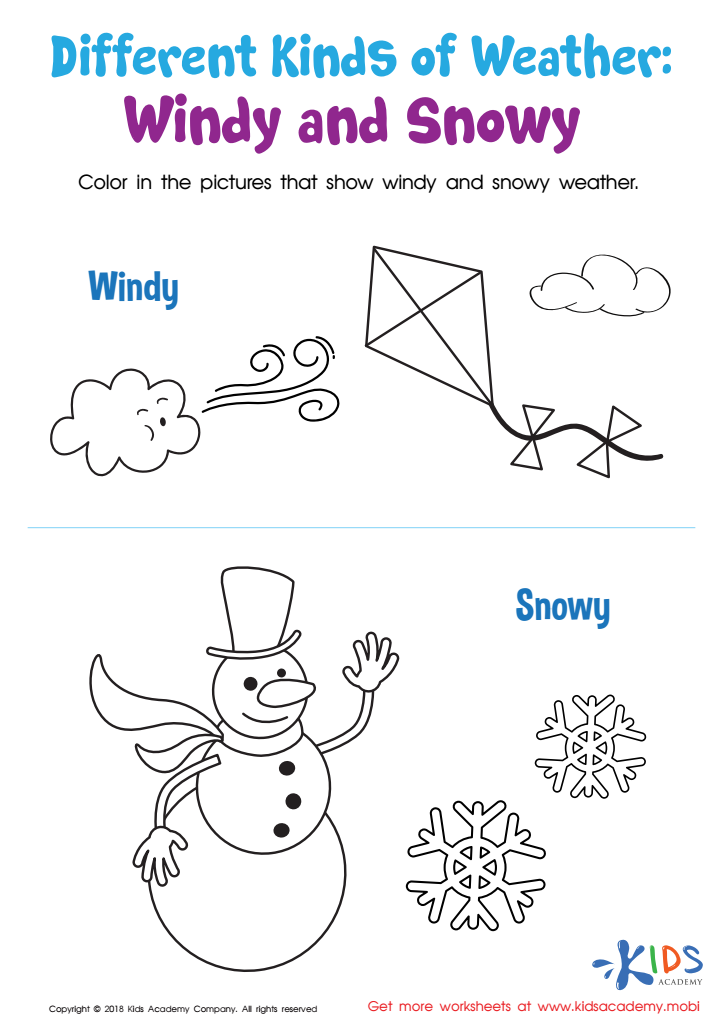
Different Kinds of Weather: Windy and Snowy Worksheet
 Assign to My Students
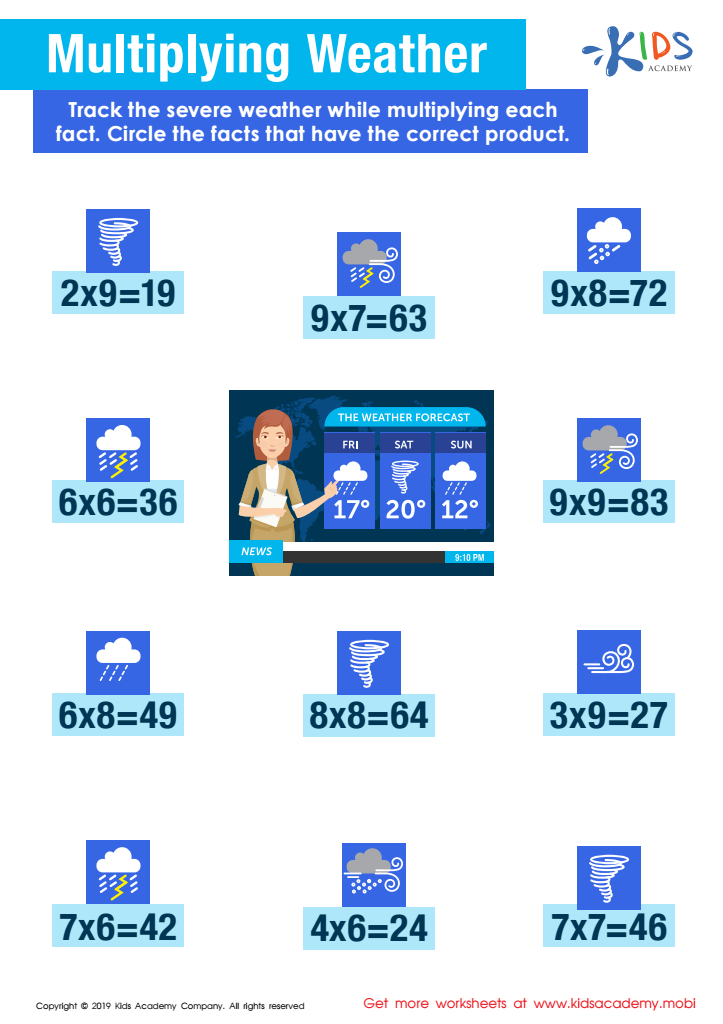
Multiplying Weather Worksheet





Understanding weather vocabulary is essential for children aged 4-9 as it lays the groundwork for their language development and scientific knowledge. Teaching weather terms like "rain," "sunny," "cloudy," and "storm" not only enriches a child's vocabulary but also enhances their ability to describe and articulate their observations of the world around them. This language foundation helps build critical thinking skills as children learn to make connections between weather phenomena and the environment.
Furthermore, a solid grasp of weather vocabulary can spark curiosity and encourage exploration. As children engage with concepts like temperature, seasons, and precipitation, they can understand how these factors affect daily life and activities. This awareness fosters an appreciation for nature and can motivate environmentally responsible behavior.
For parents and teachers, discussing weather vocabulary can promote collaboration during outdoor activities and storytelling while creating an interactive learning experience. Using weather vocabulary in daily discussions encourages conversations and enhances creativity through imaginative play and crafting. Ultimately, instilling a basic understanding of weather terms equips children with the tools they need to navigate their environments effectively, building a foundation for lifelong learning and curiosity about the world around them.








