
Wildlife knowledge Worksheets for Ages 4-9
3 filtered results
Difficulty Level
Grade
Age
-
From - To
Subject
Activity
Standards
Explore the wonders of wildlife with our engaging Wildlife Knowledge Worksheets, specially designed for children ages 4-9! These interactive resources spark curiosity and encourage a love for nature while developing essential skills. From identifying various animals and their habitats to understanding the importance of conservation, our worksheets provide fun and educational activities. Children will enjoy vibrant illustrations and hands-on tasks that promote critical thinking and creativity. Perfect for home or classroom use, these worksheets help young learners enhance their knowledge of wildlife while fostering a deep appreciation for the natural world. Dive into exciting wildlife adventures today!
Favorites
With answer key
Interactive
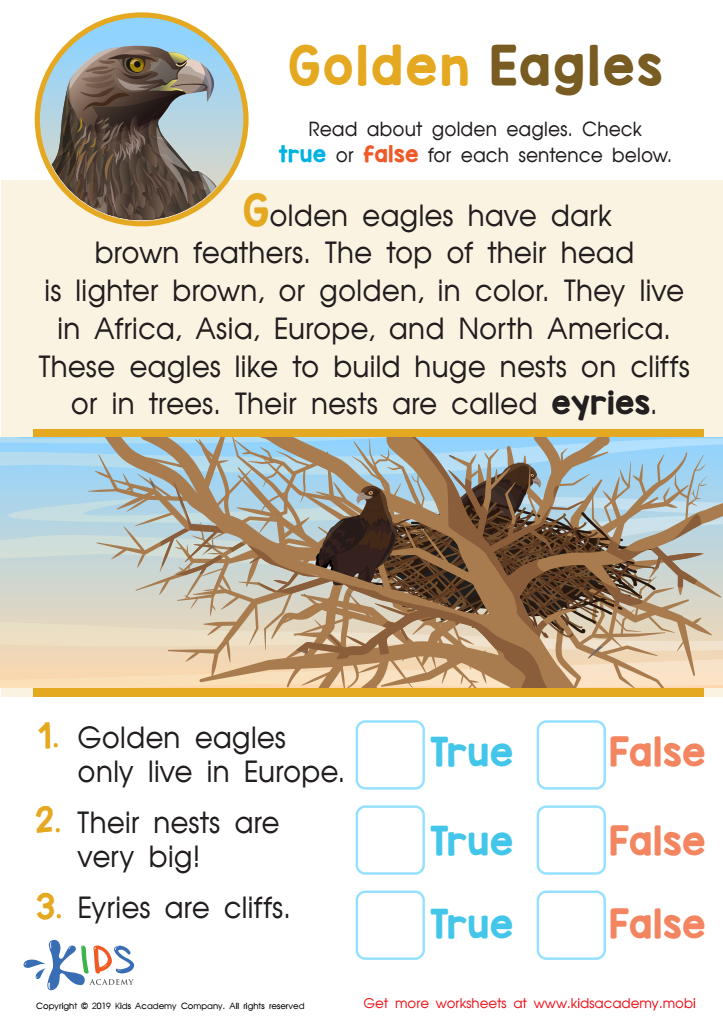
Golden Eagles Worksheet
Check your child's reading comprehension with this fascinating worksheet! Read the passage at the top of the page and discuss what was learned about golden eagles. Then, read the statements at the bottom and ask if they are true or false. Guide your child to circle the correct answer then read the text to back up the answer.
 Assign to My Students
Golden Eagles Worksheet
Worksheet
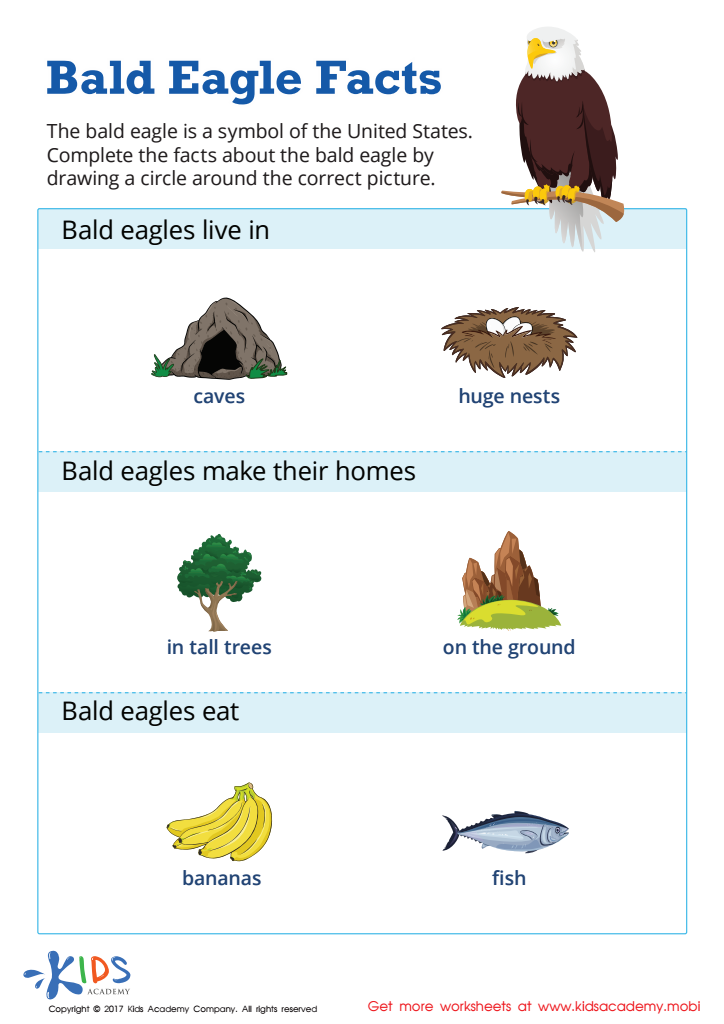
Bald Eagle Facts Worksheet
Teach your child to appreciate the beauty of bald eagles with this printable worksheet. It will help them to understand how they live and what they eat, as well as the importance of the bird as a national symbol. Take their learning to the next level by explaining the symbolism of the bird, and help them to develop a sense of respect.
Bald Eagle Facts Worksheet
Worksheet
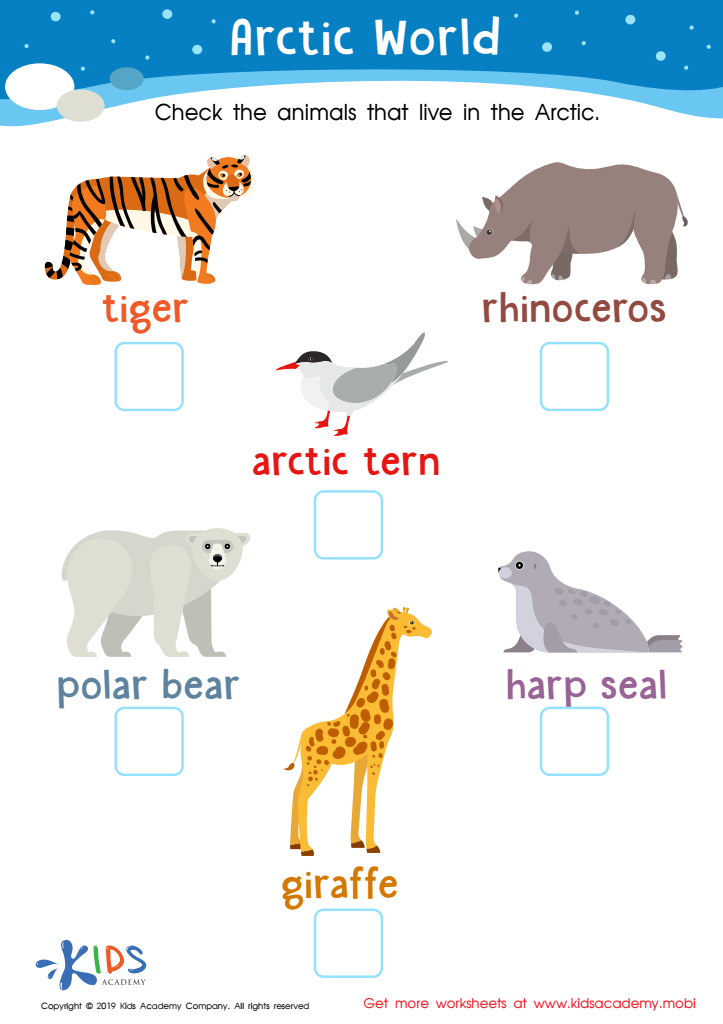
Arctic World Worksheet
Ask your students if they know where the Arctic is located and what lives there. If not, use a world atlas to show them. The Arctic is very cold and snow-covered; native animals have adapted to survive the harsh conditions. Look at the animals in the worksheet and help your students decide which ones live in the Arctic.
Arctic World Worksheet
Worksheet
Join Kids Academy for Free
Who is primarily going to use this learning content?







Wildlife knowledge is essential for children aged 4-9 as it fosters curiosity, empathy, and a sense of responsibility towards the environment. At this formative stage, children are naturally inquisitive about the world around them. Introducing them to wildlife not only satisfies their curiosity but also enhances their observational skills and critical thinking as they learn about various species, their habitats, and ecosystems.
Understanding wildlife encourages children to appreciate biodiversity and the interconnectedness of all living things. This awareness instills a sense of wonder and respect for nature, promoting positive attitudes towards conservation and environmental stewardship. Furthermore, wildlife knowledge can spark discussions about broader topics such as ecosystems, food chains, and the impact of human activities on animal habitats, all of which are vital for nurturing informed future citizens.
Engaging children with wildlife also provides numerous learning opportunities across subjects, from science to art. Outdoor explorations can be intertwined with literacy and math through nature-themed activities and storytelling. Ultimately, teaching wildlife knowledge equips young learners with awareness, compassion, and foundational skills that will empower them to become advocates for our planet as they grow. Therefore, both parents and teachers should prioritize this important aspect of education.








