Visual discrimination 2D Shapes Worksheets for Ages 4-9
5 filtered results
-
From - To
Enhance your child's visual discrimination skills with our 2D Shapes Worksheets designed for ages 4-9. These engaging, printable activities help young learners identify, match, and differentiate between various 2D shapes, boosting their cognitive development and spatial awareness. By working through these fun and educational exercises, children will improve their shape recognition, critical thinking, and fine motor skills. Perfect for use at home or in the classroom, our worksheets support a solid foundation in math while keeping kids entertained. Get started today and watch your child’s confidence in navigating the world of shapes soar!
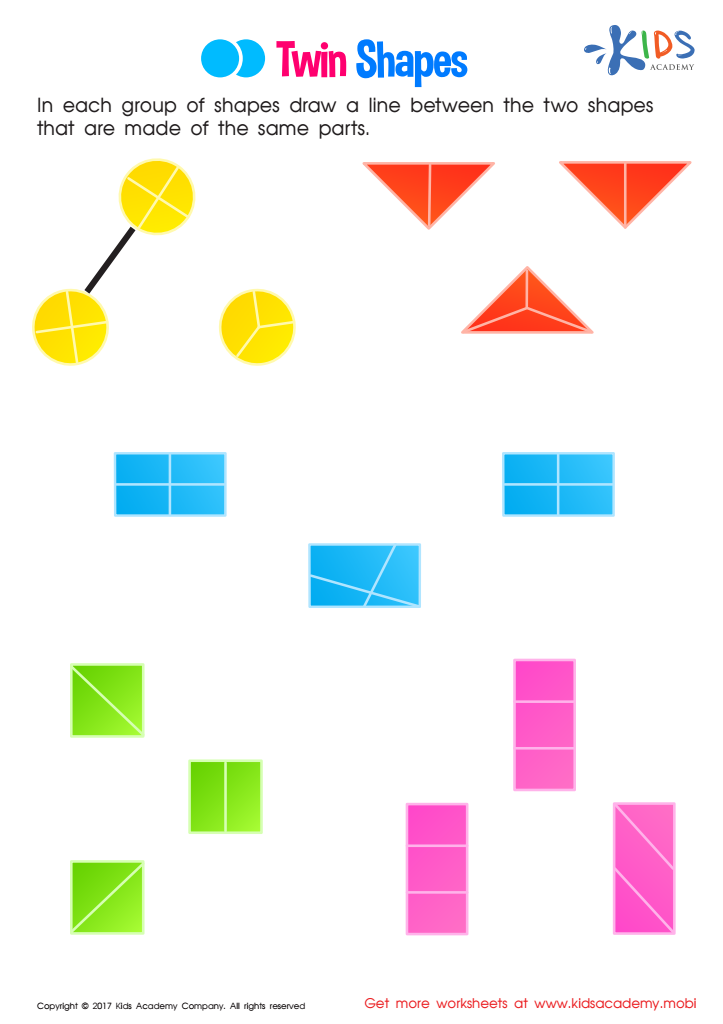
Twin Shapes Worksheet
 Assign to My Students





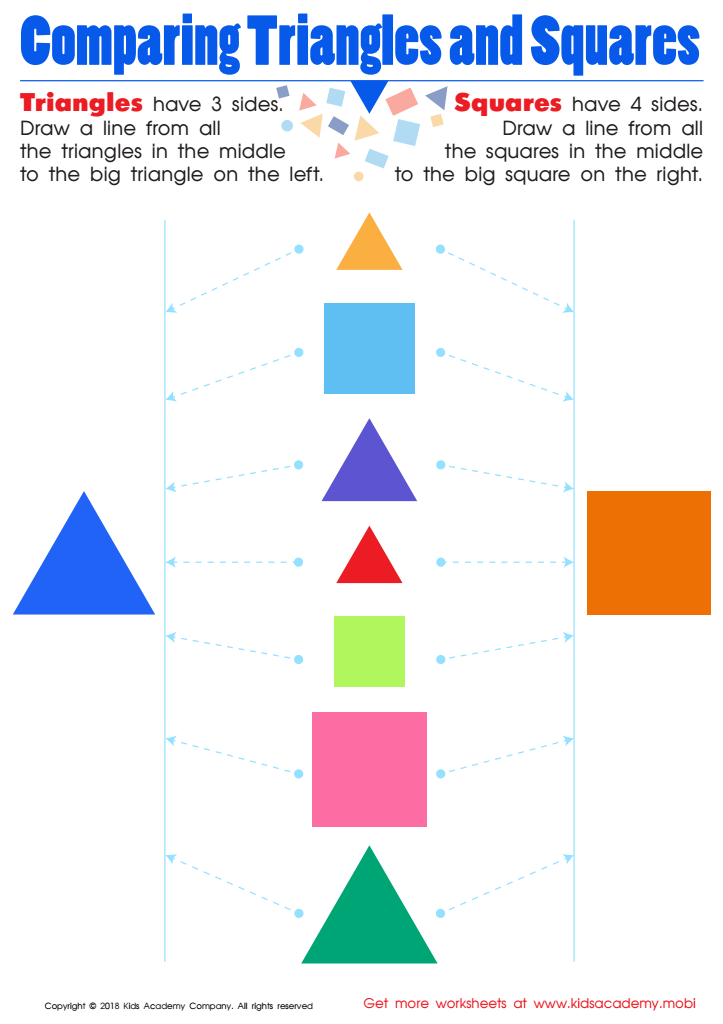
Comparing Triangles Squares Worksheet
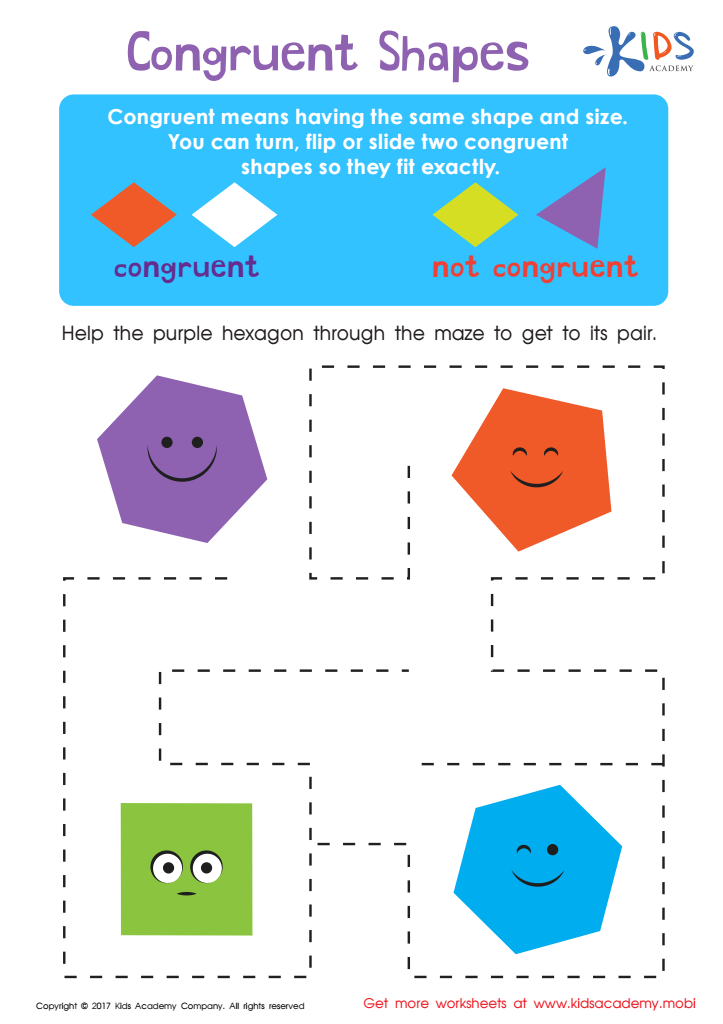
Congruent Shapes Worksheet
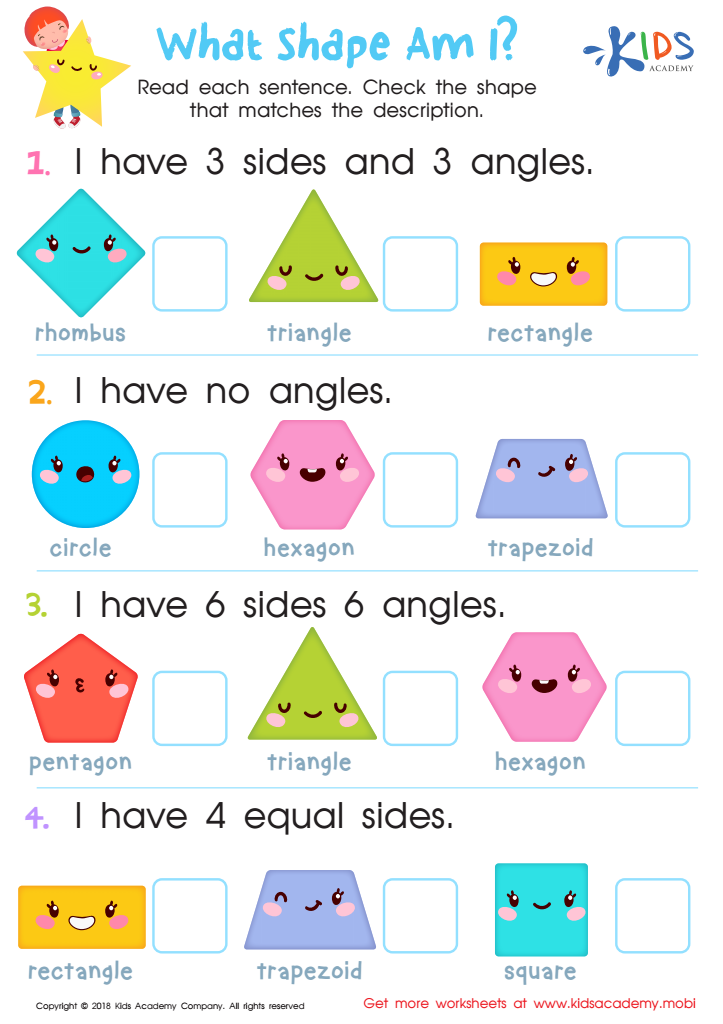
What Shape Am I? Worksheet
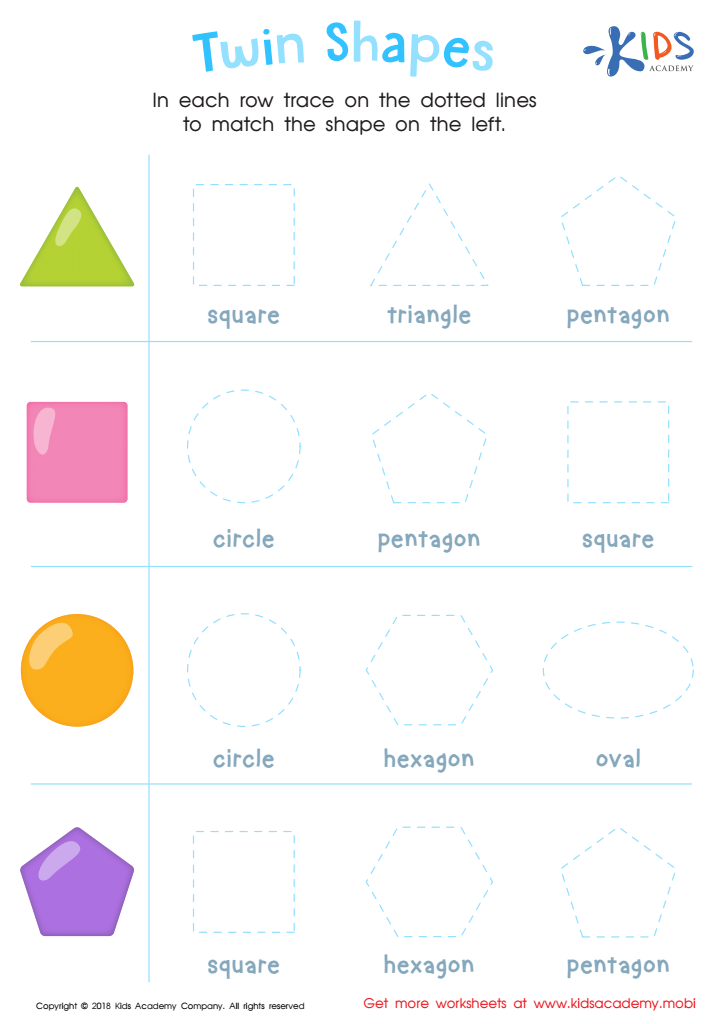
Twin Shapes Dot-to-Dot Worksheet








Parents and teachers should prioritize teaching visual discrimination of 2D shapes to children aged 4-9 because it directly supports critical developmental skills. During this early childhood phase, children are rapidly expanding their cognitive abilities. Recognizing and distinguishing between different shapes sharpens their observation skills and enhances cognitive development. This fundamental proficiency aids in fine motor skill development as kids learn to draw, sort, and categorize shapes by identifying specific characteristics like edges, angles, and similarities.
Visual discrimination of 2D shapes also lays a crucial foundation for later academic achievement, particularly in math and reading. For instance, recognizing shapes is a pre-math skill necessary for geometry, understanding patterns, and even developing spatial awareness, which is vital for solving complex math problems down the line. When children discern different shapes quickly and accurately, they get a head start on understanding the nuances of letters, numbers, and symbols, which can seemingly appear similar. This not only helps in reading but also in writing, enhancing overall literacy.
Moreover, enhancing visual discrimination through engaging activities makes learning more lively and fun, boosting a child’s confidence and eagerness to explore new concepts. Thus, fostering visual discrimination skills can positively affect a child's academic and personal growth, equipping them with essential tools for lifelong learning and success.