Filters

18 filtered results

Clear all filters
Favorites
With answer key
Interactive

18 filtered results

Difficulty Level

Grade


Enhance your child’s math skills with 'Visual Learning Adding in the Sea Worksheets' for ages 4-9. These engaging, ocean-themed activities make learning addition fun and interactive. Utilizing vibrant illustrations and creative problems, each worksheet is designed to help young learners visualize math concepts, improving their critical thinking abilities. Perfect for early childhood educators and parents, these printable materials bring math to life, fostering a love for learning in a visually stimulating way. Dive into a sea of knowledge and watch your child’s confidence in math grow with every colorful page they complete!
Check out this FREE Trial Lesson on Adding in the Sea for age 4-9!

Sorting Objects into 3 Categories

Favorites
With answer key
Interactive
  • 4-9
  • Visual Learning
  • Adding in the Sea
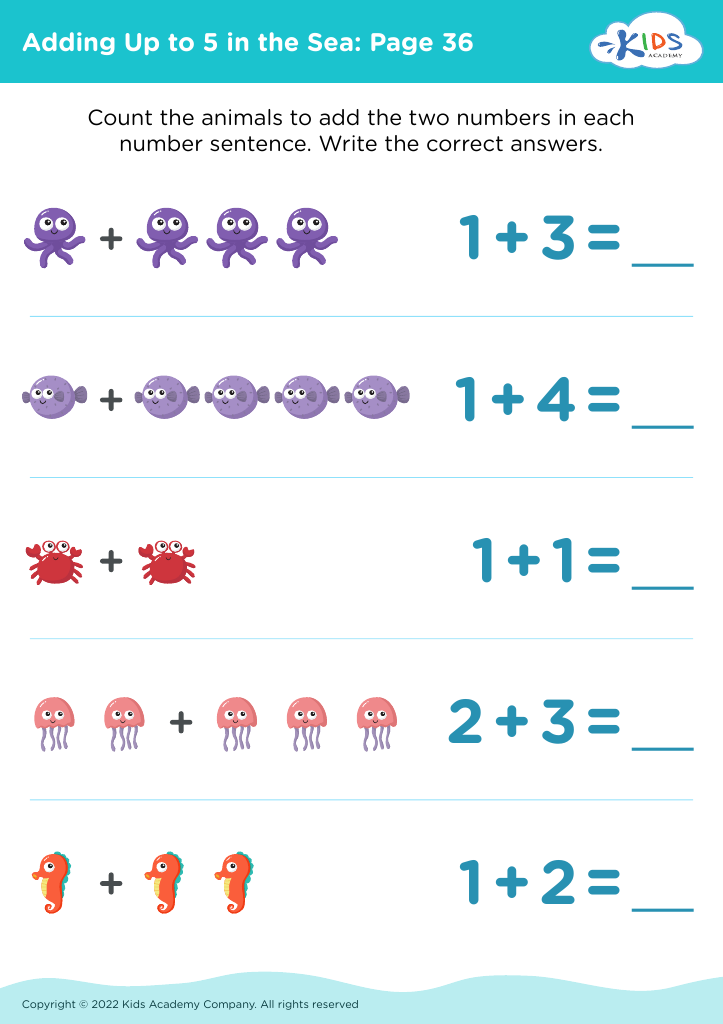
Adding Up to 5 in the Sea: Page 36
Worksheet
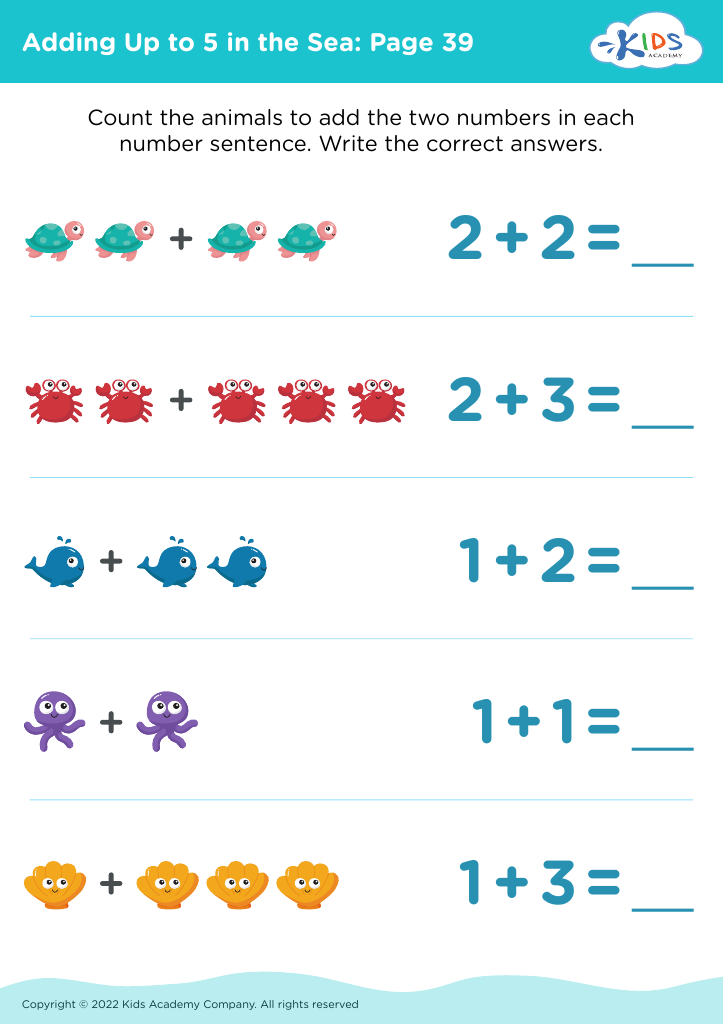
Adding Up to 5 in the Sea: Page 39
Worksheet
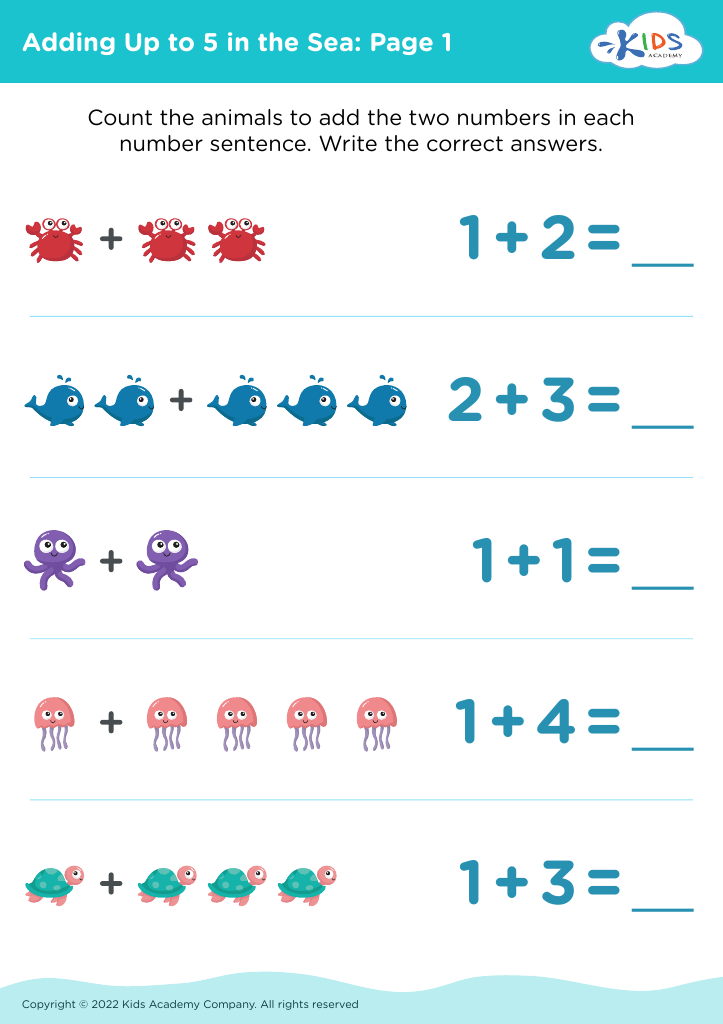
Adding Up to 5 in the Sea: Page 1

Adding Up to 5 in the Sea: Page 1

Adding Up to 5 in the Sea: Page 1
Worksheet
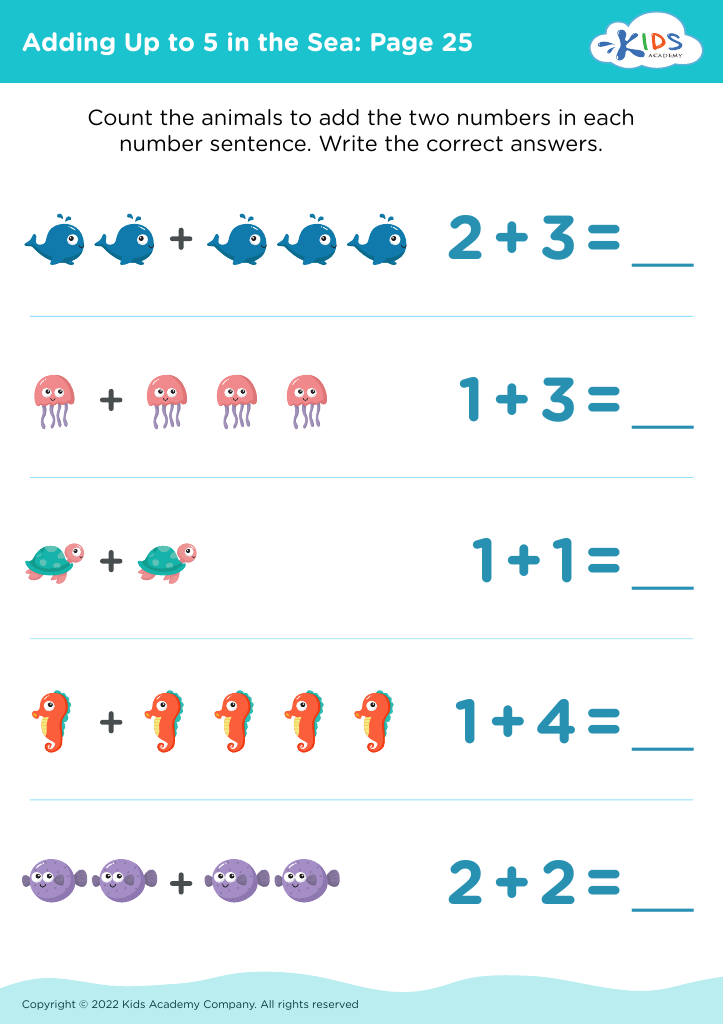
Adding Up to 5 in the Sea: Page 25
Worksheet
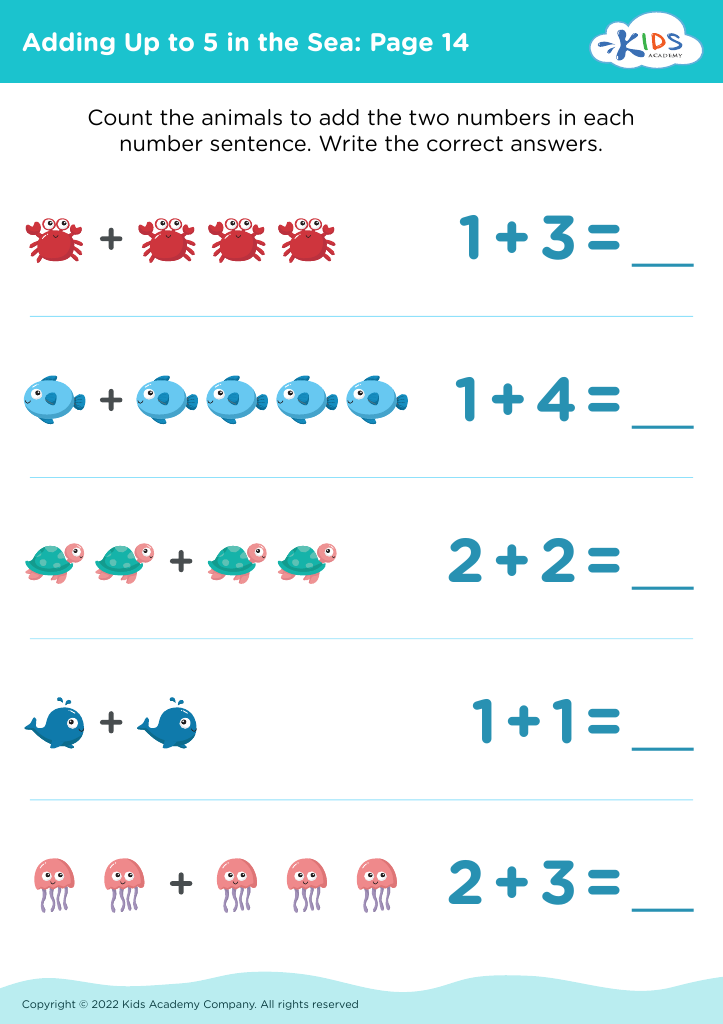
Adding Up to 5 in the Sea: Page 14
Worksheet
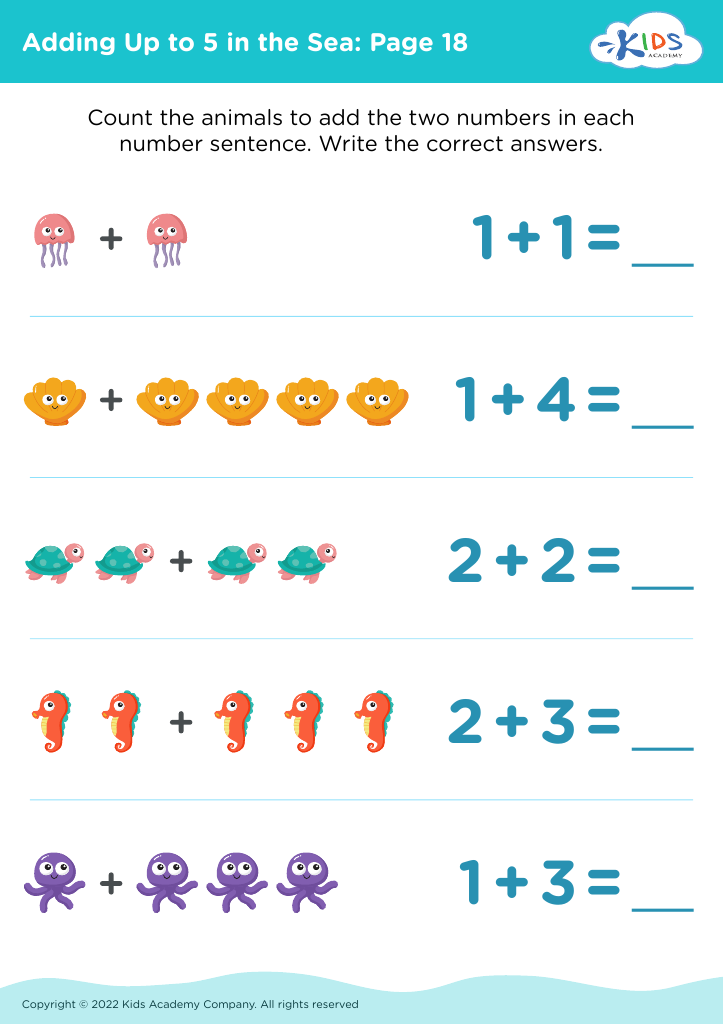
Adding Up to 5 in the Sea: Page 18
Worksheet
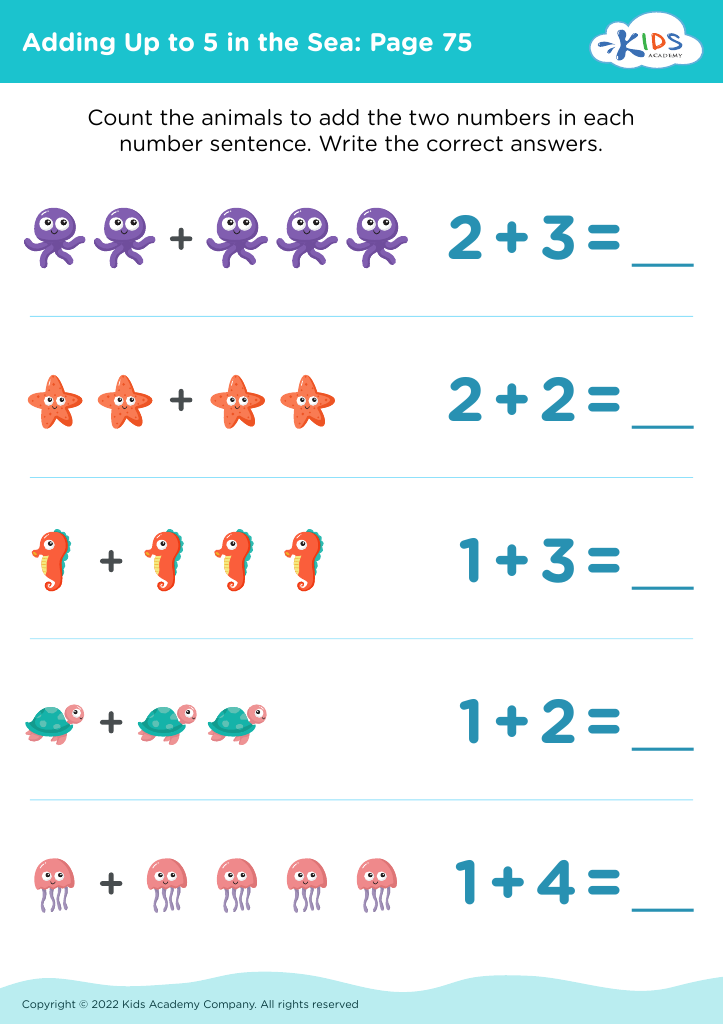
Adding Up to 5 in the Sea: Page 75
Worksheet
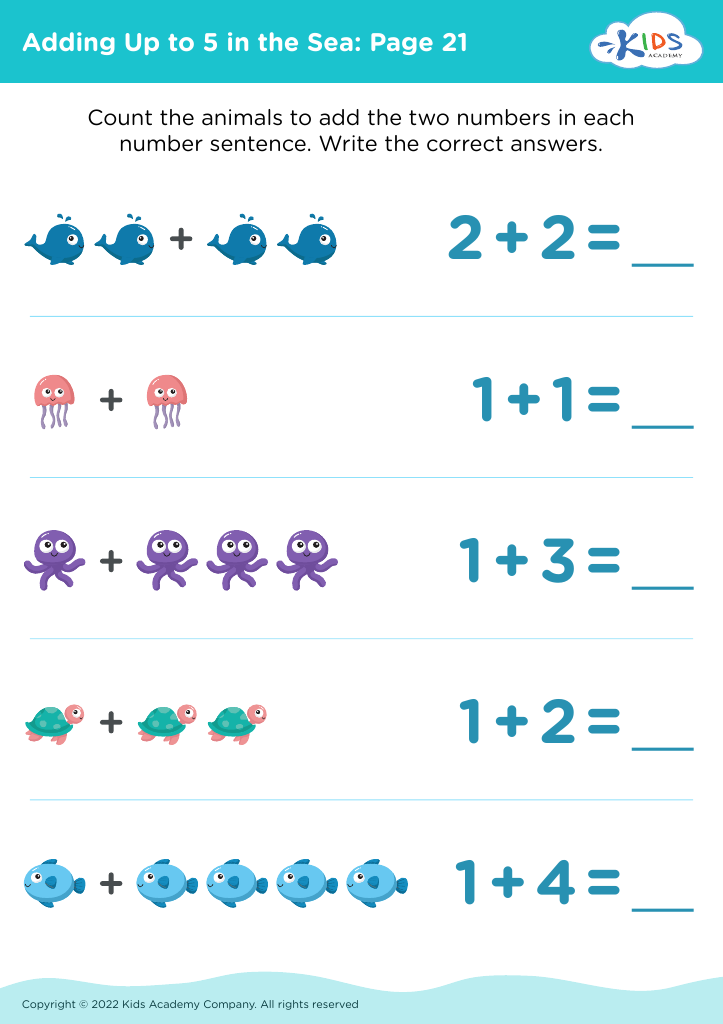
Adding Up to 5 in the Sea: Page 21
Worksheet
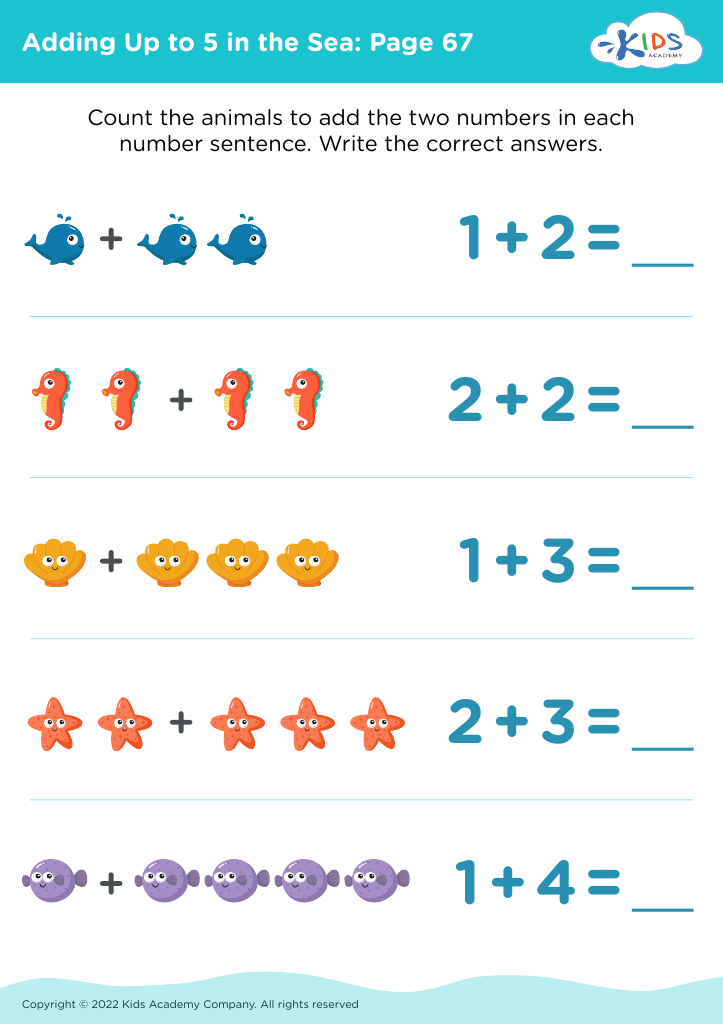
Adding Up to 5 in the Sea: Page 67
Worksheet
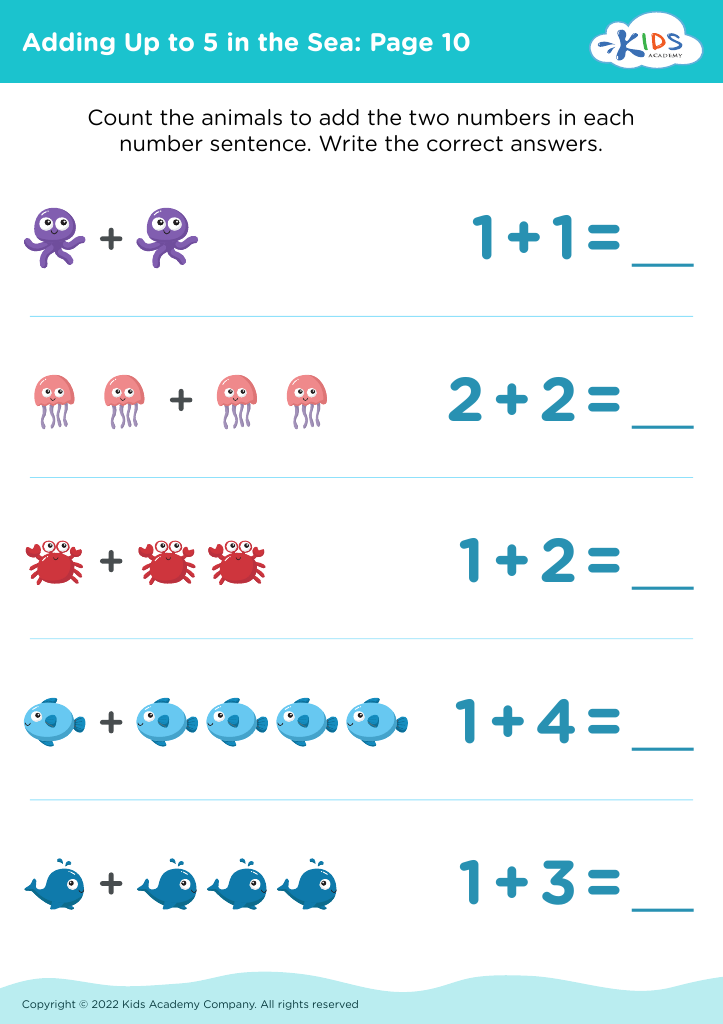
Adding Up to 5 in the Sea: Page 10
Worksheet
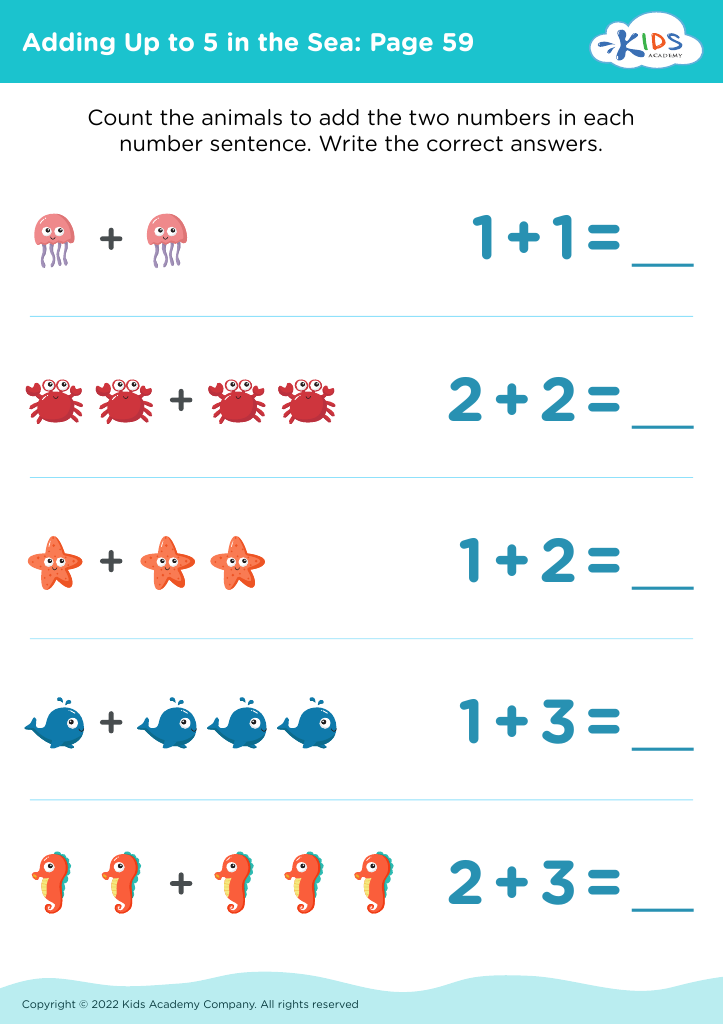
Adding Up to 5 in the Sea: Page 59
Worksheet
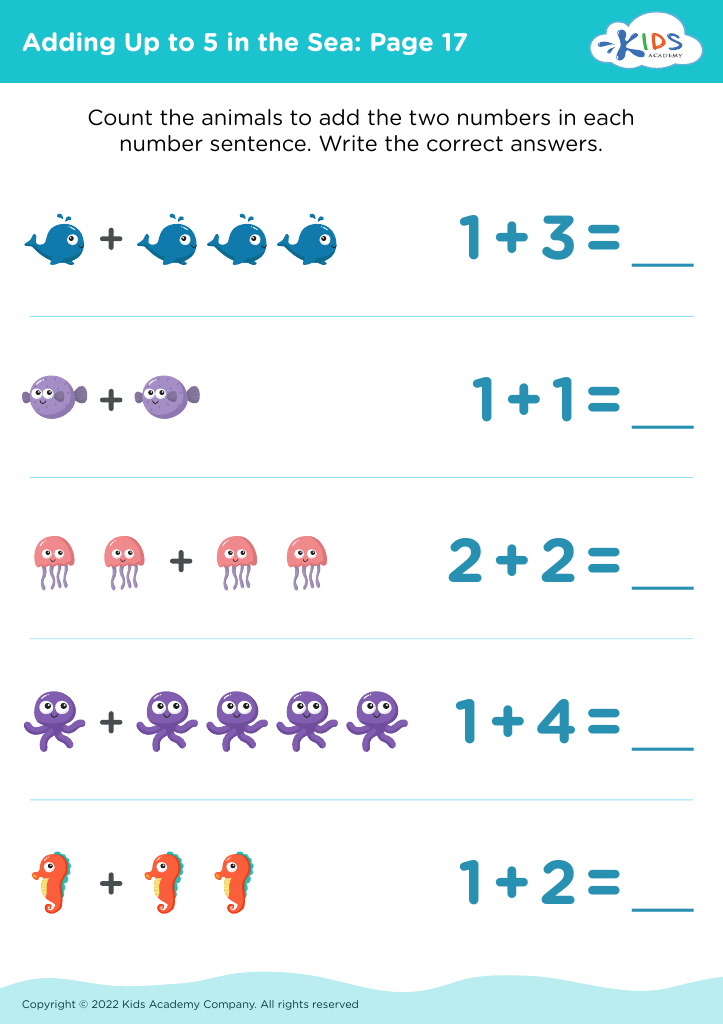
Adding Up to 5 in the Sea: Page 17
Worksheet
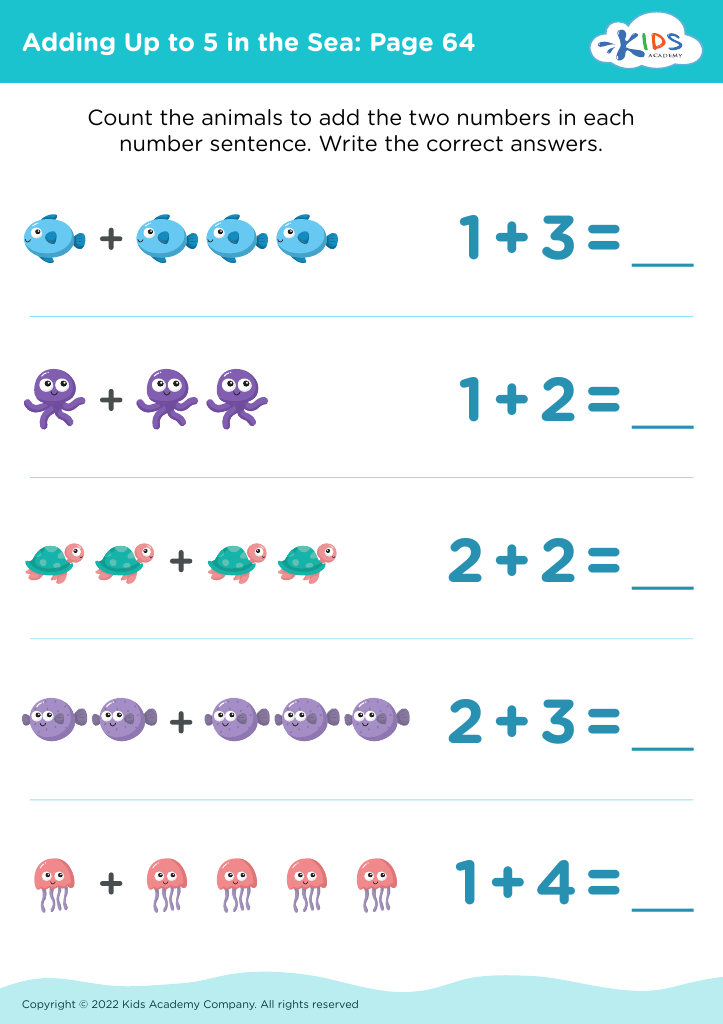
Adding Up to 5 in the Sea: Page 64
Worksheet
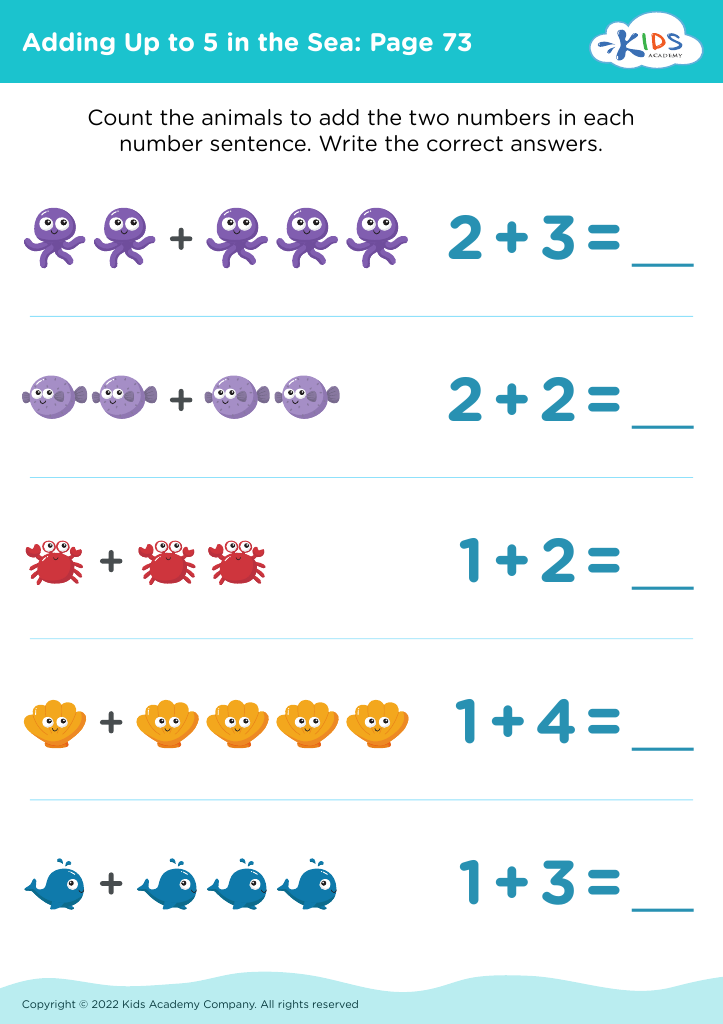
Adding Up to 5 in the Sea: Page 73
Worksheet
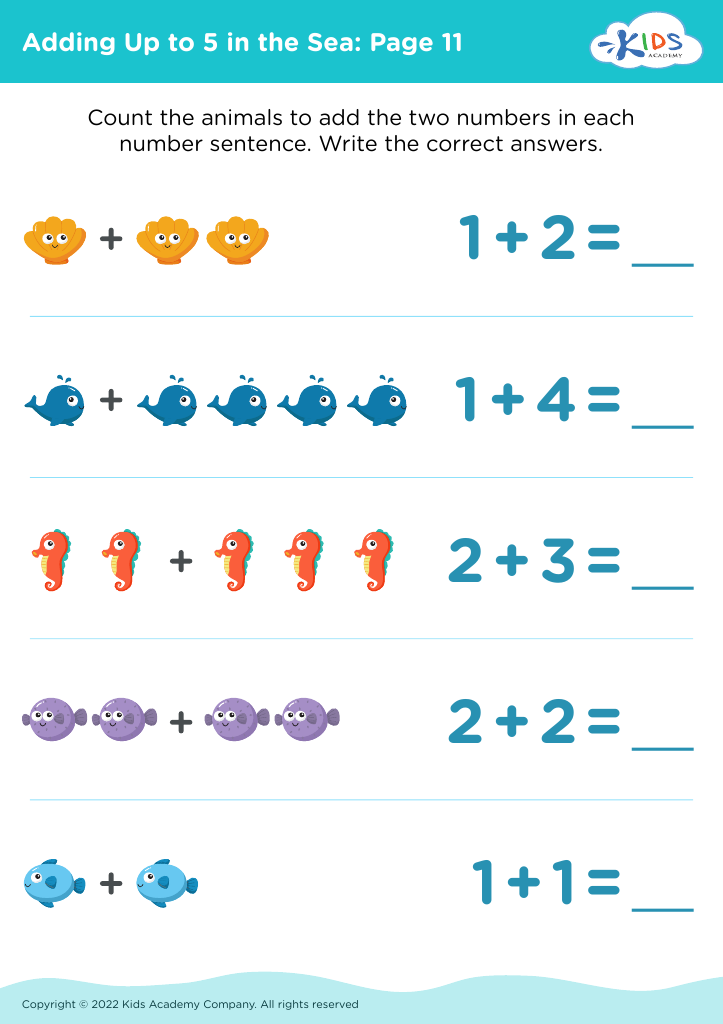
Adding Up to 5 in the Sea: Page 11
Worksheet
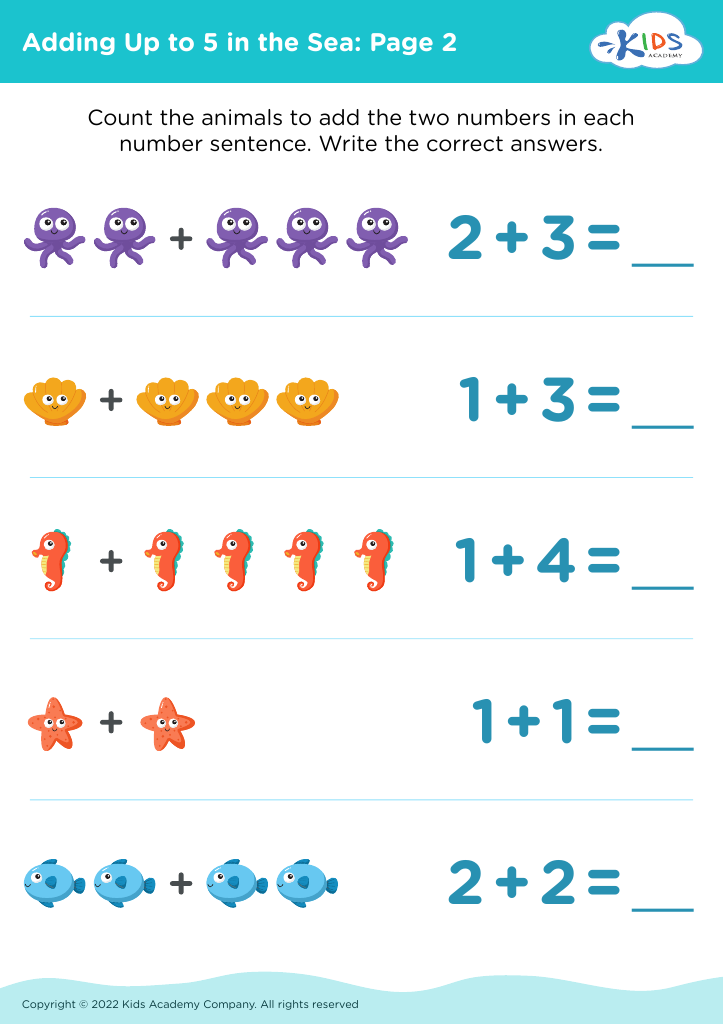
Adding Up to 5 in the Sea: Page 2

Adding Up to 5 in the Sea: Page 2

Adding Up to 5 in the Sea: Page 2
Worksheet
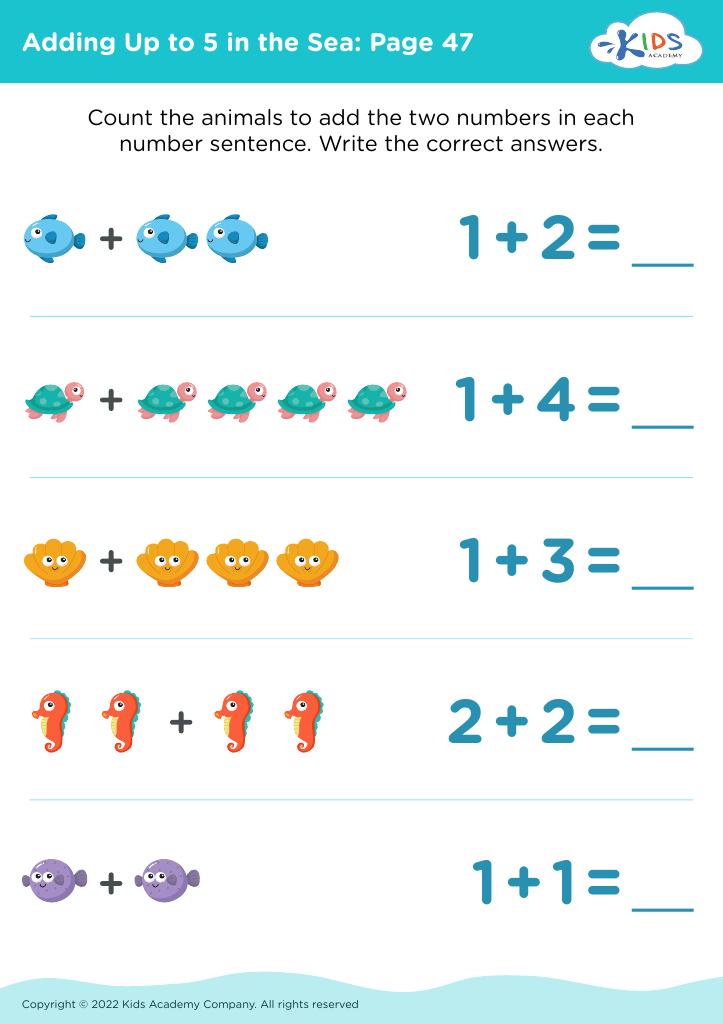
Adding Up to 5 in the Sea: Page 47
Worksheet
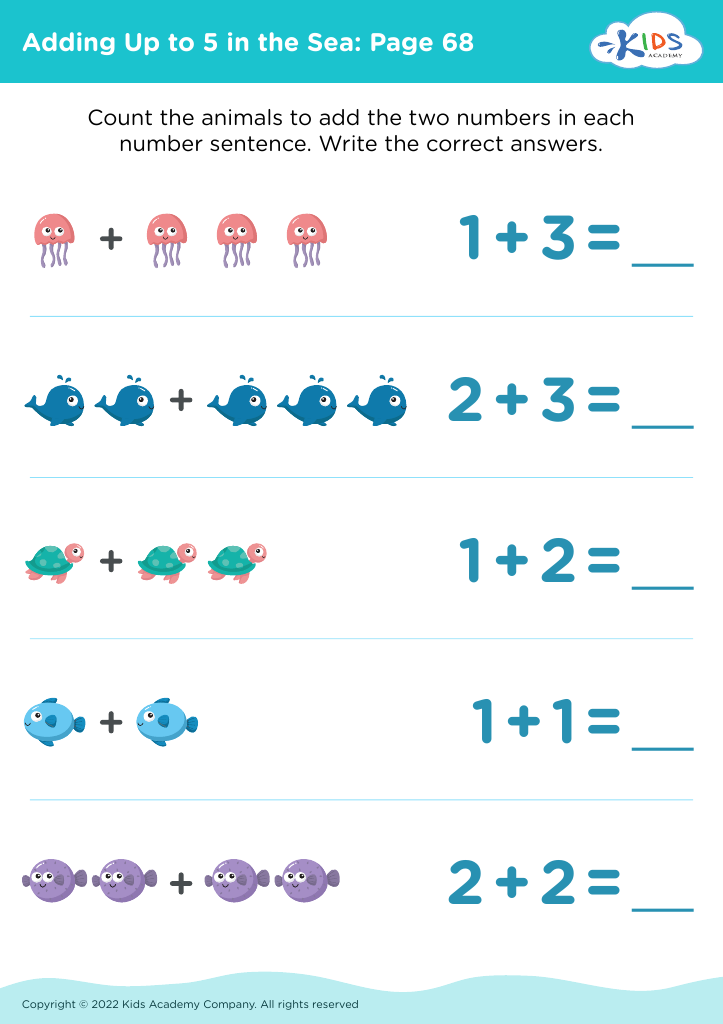
Adding Up to 5 in the Sea: Page 68
Worksheet


Visual learning in teaching mathematical concepts, such as addition, can be tremendously effective, especially for young children aged 4-9. Incorporating sea-themed visual aids can make learning engaging and memorable. At this age, children are developmentally geared towards concrete thinking, and visual elements help bridge the gap between abstract concepts and real-world understanding.

Using a sea-themed approach, such as counting fish, shells, or starfish to illustrate addition problems, aligns with children's natural curiosity and love for vibrant, animated scenes. This makes learning fun and captivates their attention, making the educational experience enjoyable. Moreover, these visual aids often come with simple-to-understand graphics that break down more complex tasks into manageable steps, allowing for easier comprehension and retention.

Engaging young learners visually also caters to diverse learning styles. Not all children learn best through auditory means or rote memorization; some thrive on seeing and manipulating tangible items. Visual learning strategies can also lay a foundational understanding of more complex mathematical principles by establishing strong, clear conceptual connections early on.

Lastly, such tools foster a love for learning and make children more receptive to engaging with educational content in other contexts. Thus, parents and teachers investing time in visual learning aids like "Adding in the Sea" can profoundly influence a child's educational journey positively by making early math concepts accessible, enjoyable, and impactful.