Filters

232 filtered results

Clear all filters
Favorites
With answer key
Interactive

232 filtered results

Difficulty Level

Grade


Check out this FREE Trial Lesson on Adding Up to 5 for age 4-9!

T

Favorites
With answer key
Interactive
  • 4-9
  • Counting practice
  • Adding Up to 5
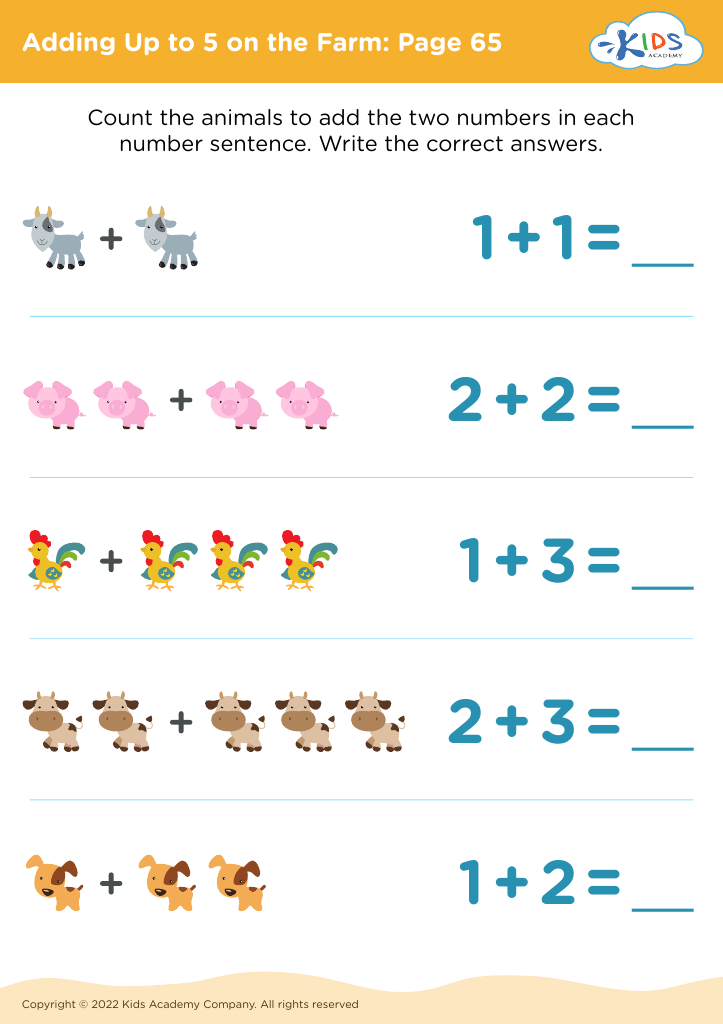
Adding Up to 5 on the Farm: Page 65
Worksheet
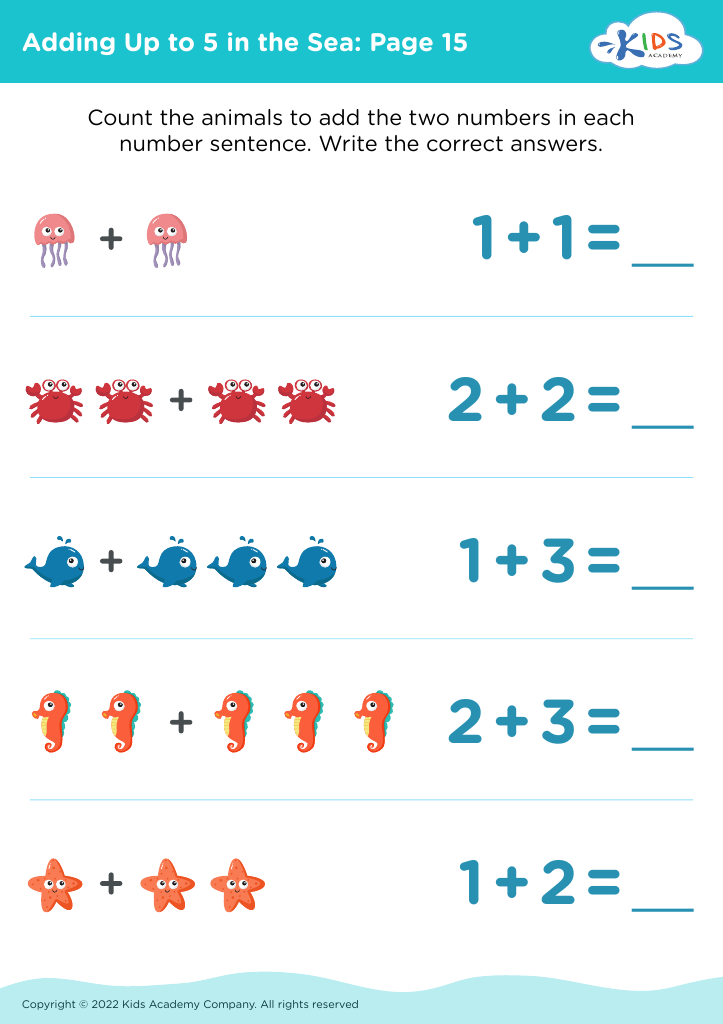
Adding Up to 5 in the Sea: Page 15
Worksheet
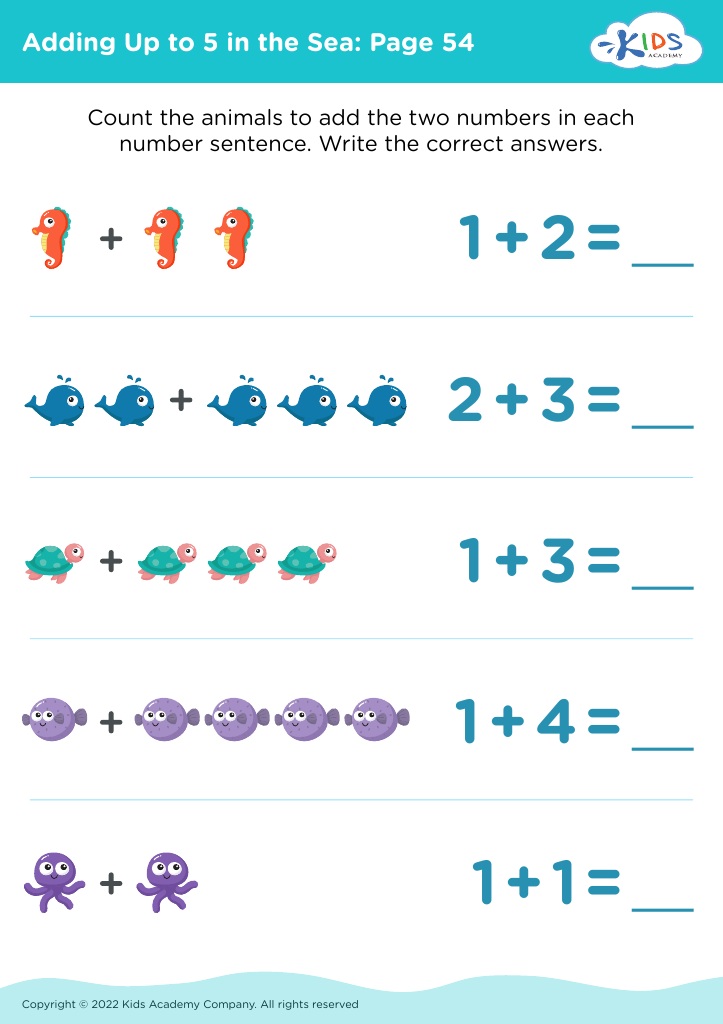
Adding Up to 5 in the Sea: Page 54
Worksheet
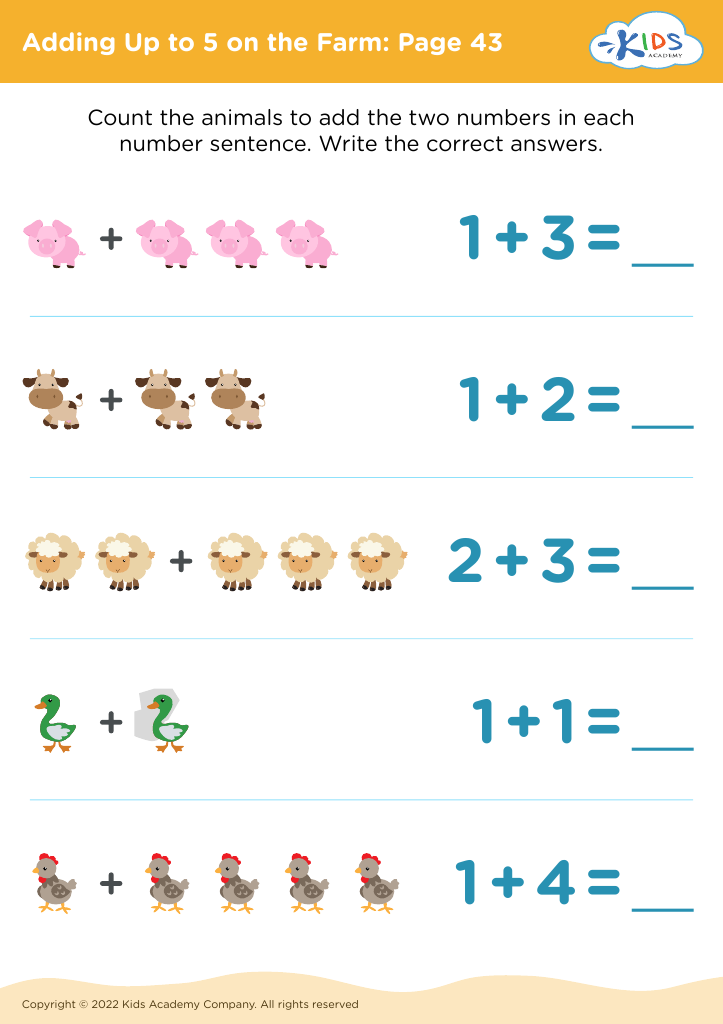
Adding Up to 5 on the Farm: Page 43
Worksheet
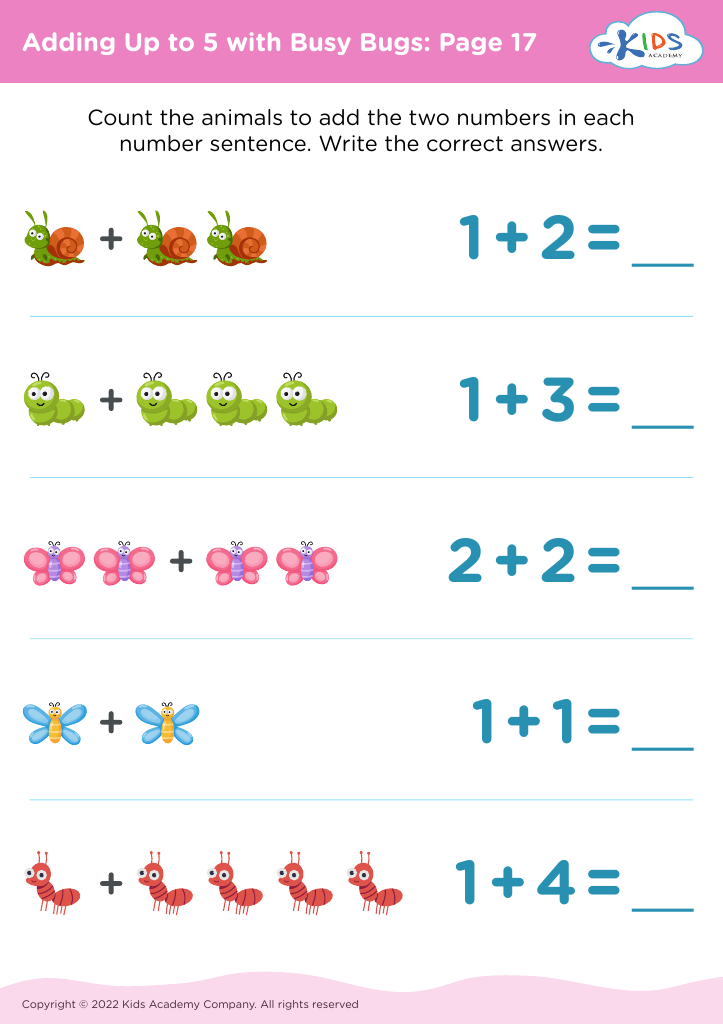
Adding Up to 5 with Busy Bugs: Page 17
Worksheet
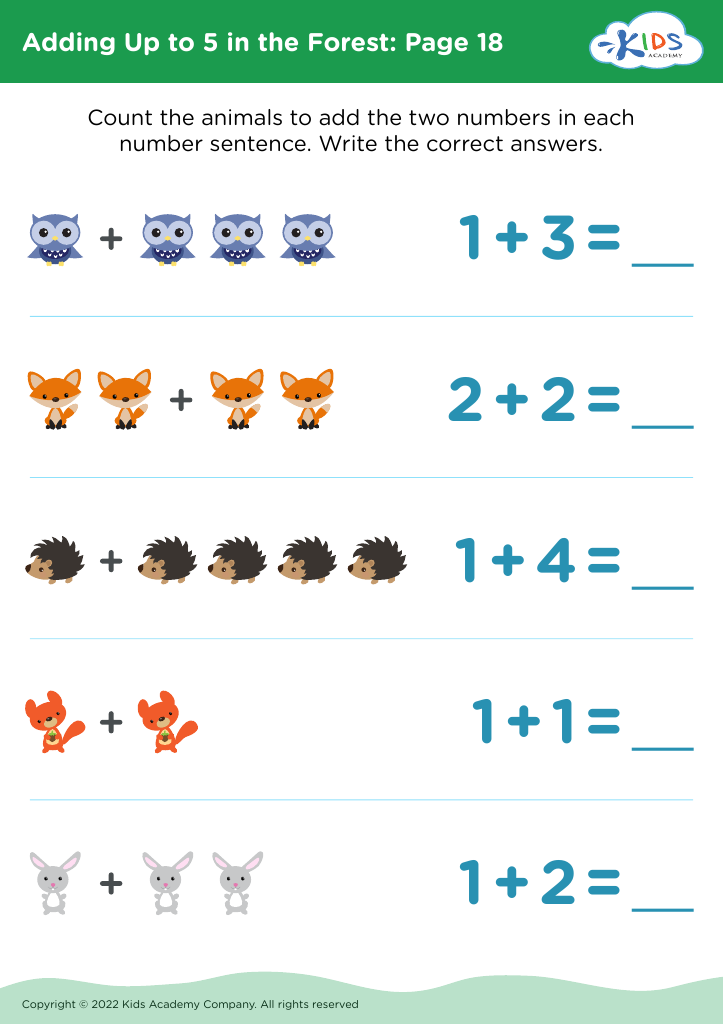
Adding Up to 5 in the Forest: Page 18
Worksheet
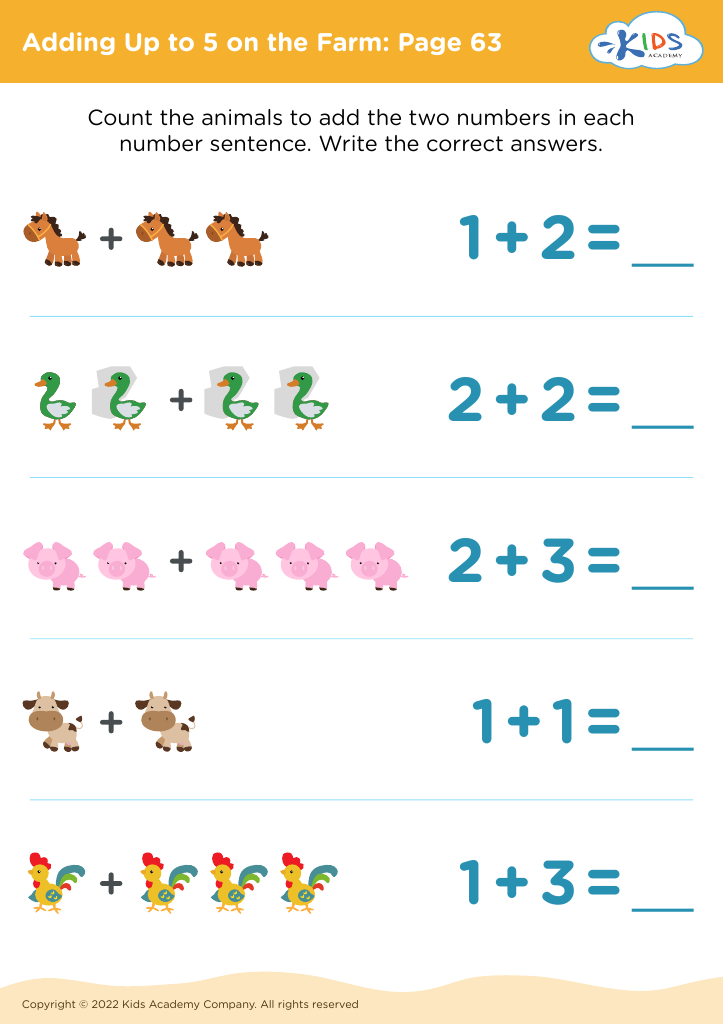
Adding Up to 5 on the Farm: Page 63
Worksheet
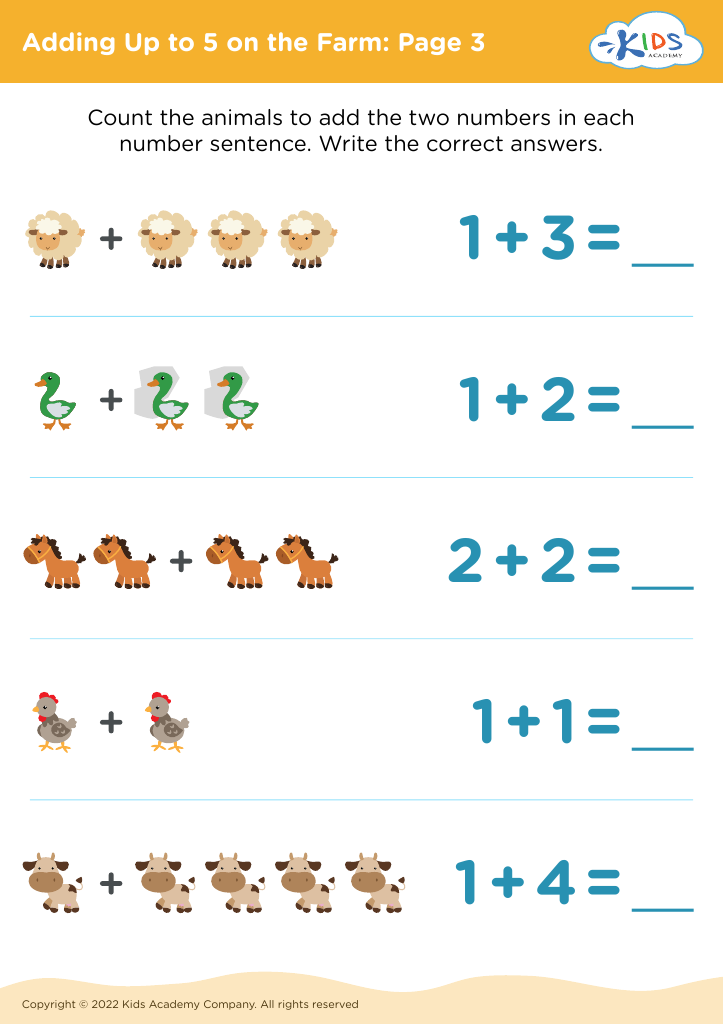
Adding Up to 5 on the Farm: Page 3
Worksheet
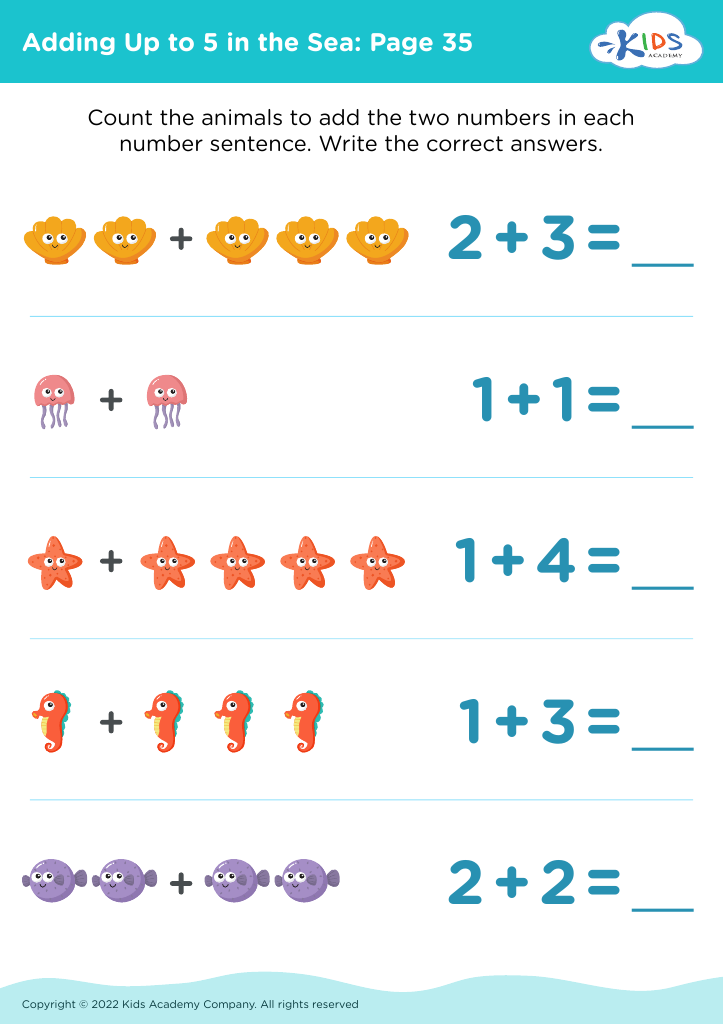
Adding Up to 5 in the Sea: Page 35
Worksheet
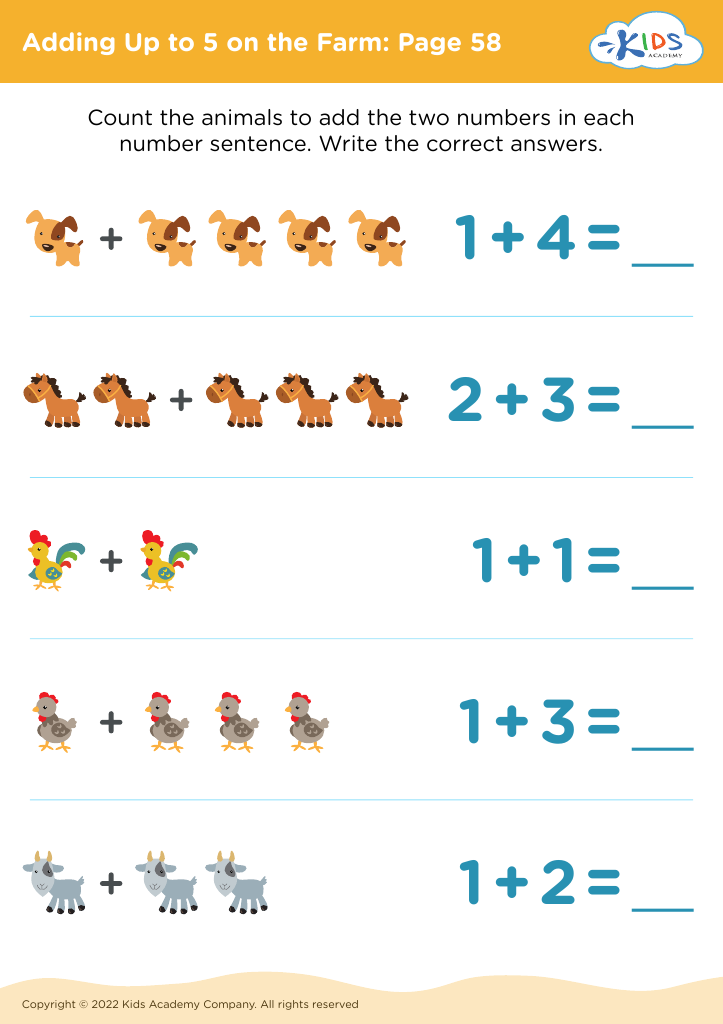
Adding Up to 5 on the Farm: Page 58
Worksheet
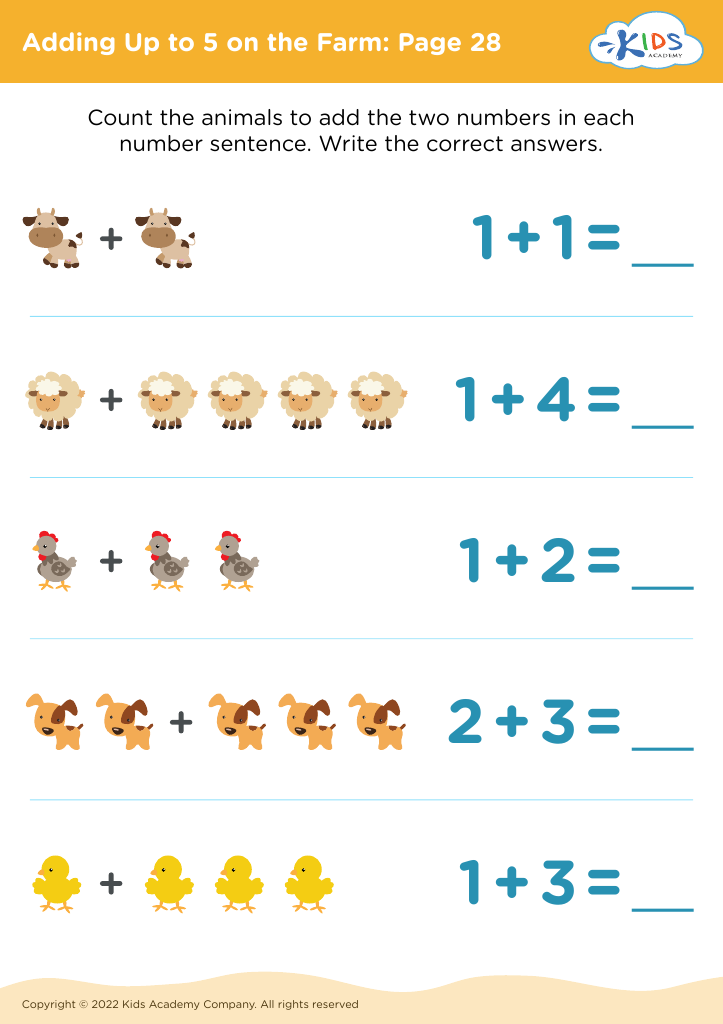
Adding Up to 5 on the Farm: Page 28
Worksheet
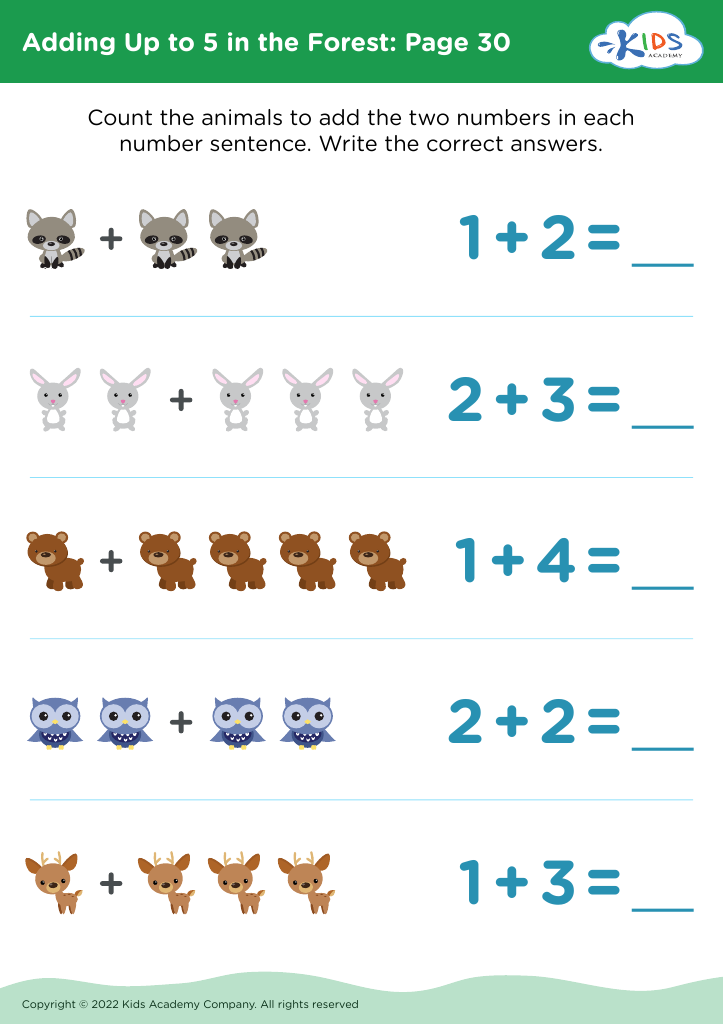
Adding Up to 5 in the Forest: Page 30
Worksheet
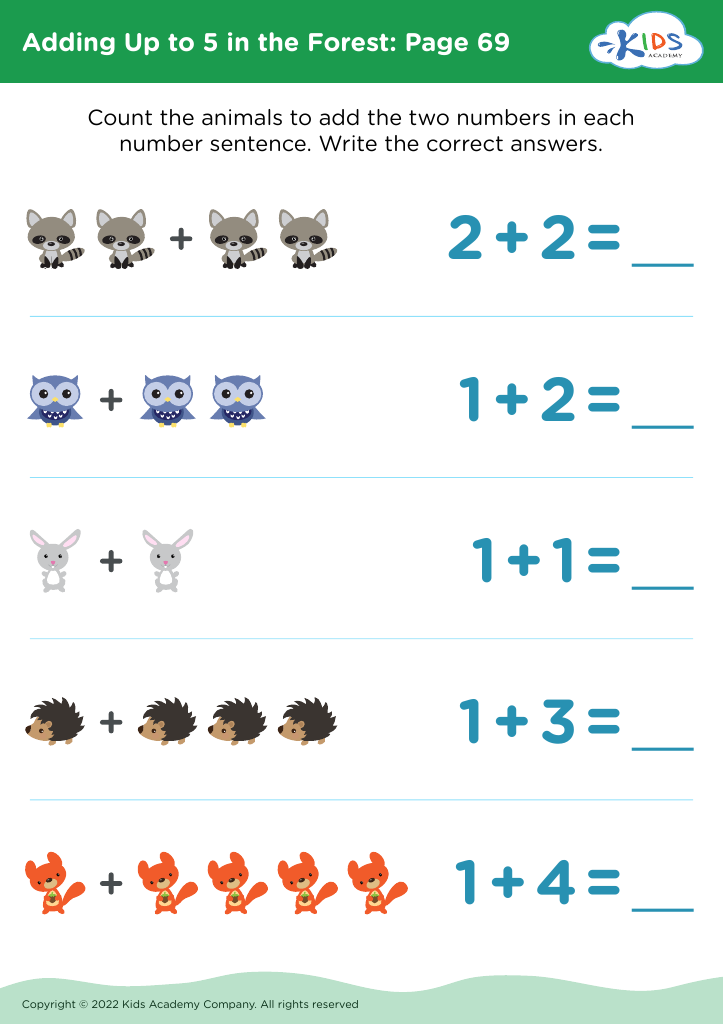
Adding Up to 5 in the Forest: Page 69
Worksheet
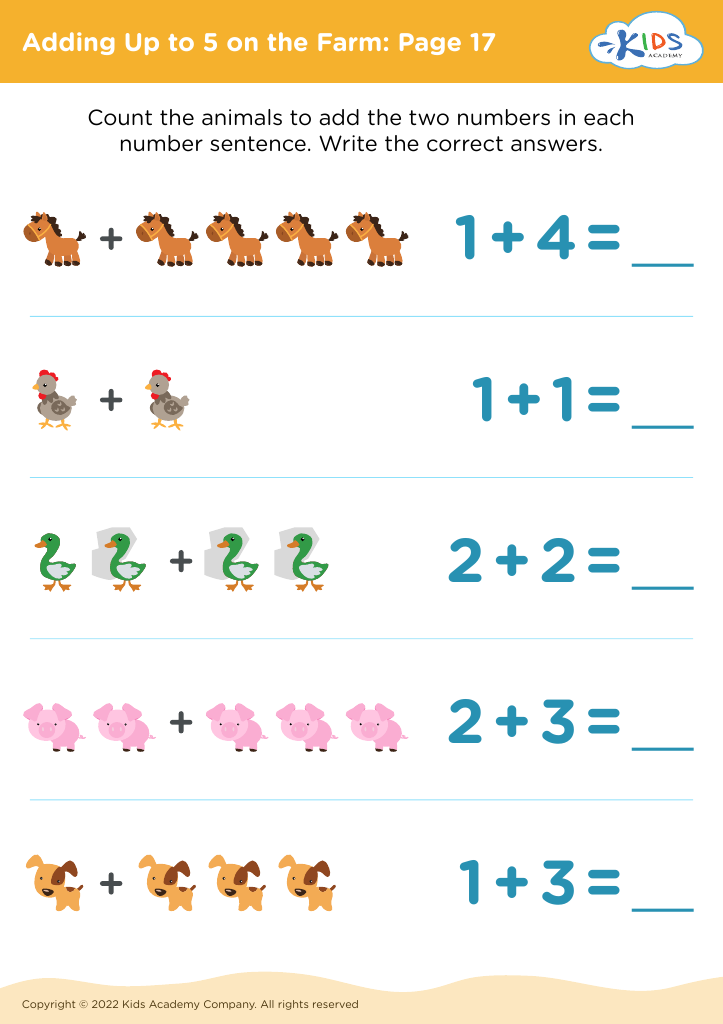
Adding Up to 5 on the Farm: Page 17
Worksheet
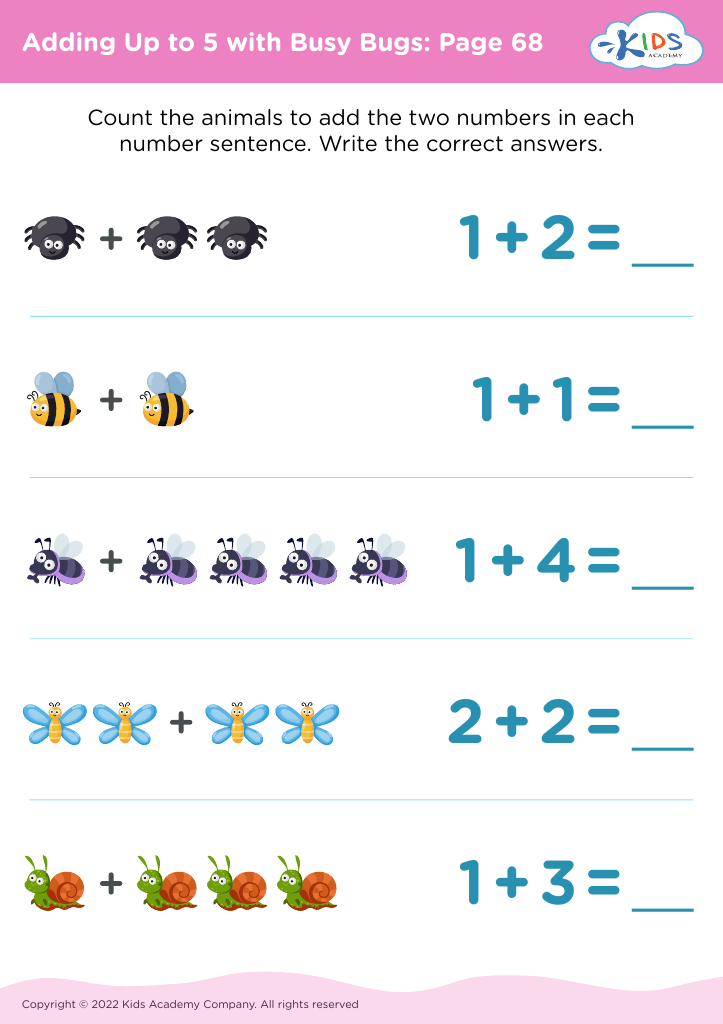
Adding Up to 5 with Busy Bugs: Page 68
Worksheet
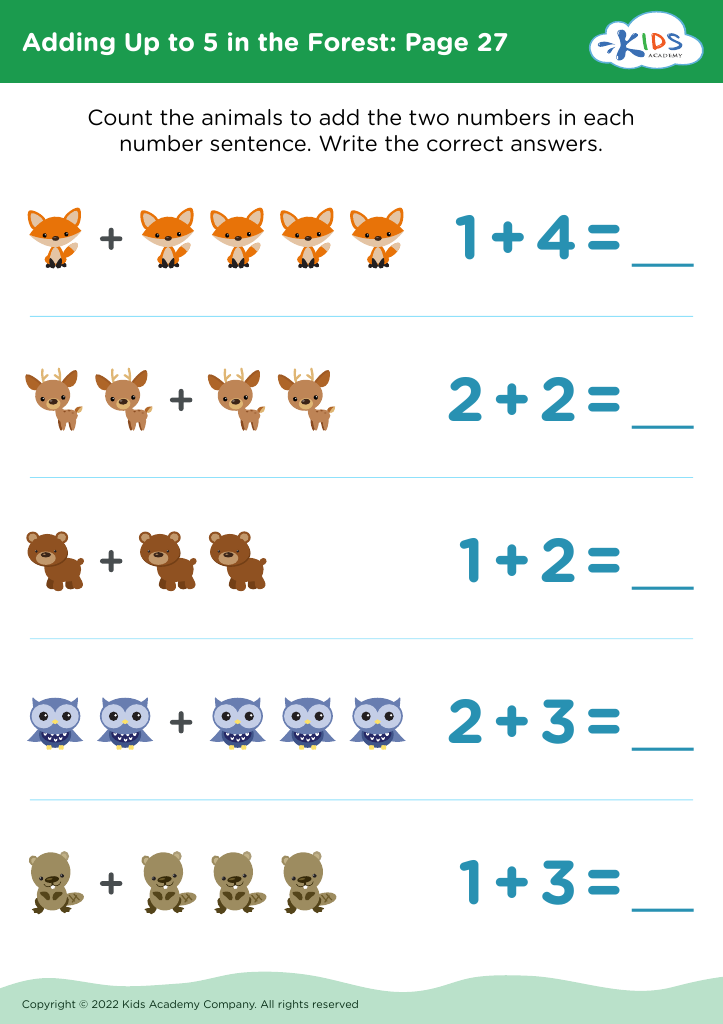
Adding Up to 5 in the Forest: Page 27
Worksheet
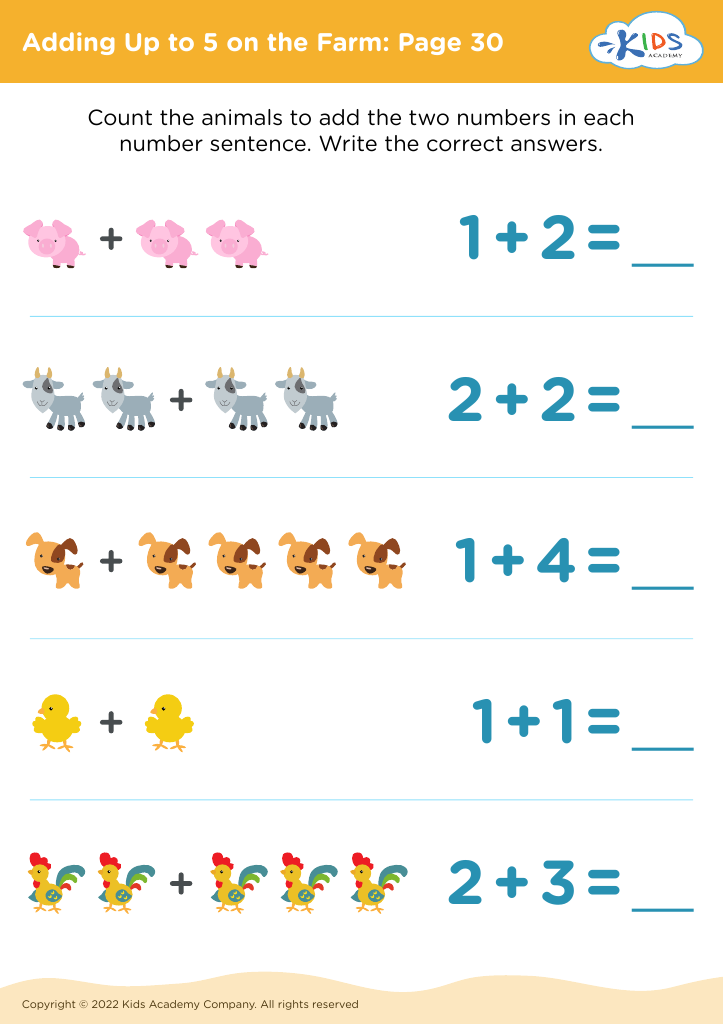
Adding Up to 5 on the Farm: Page 30
Worksheet
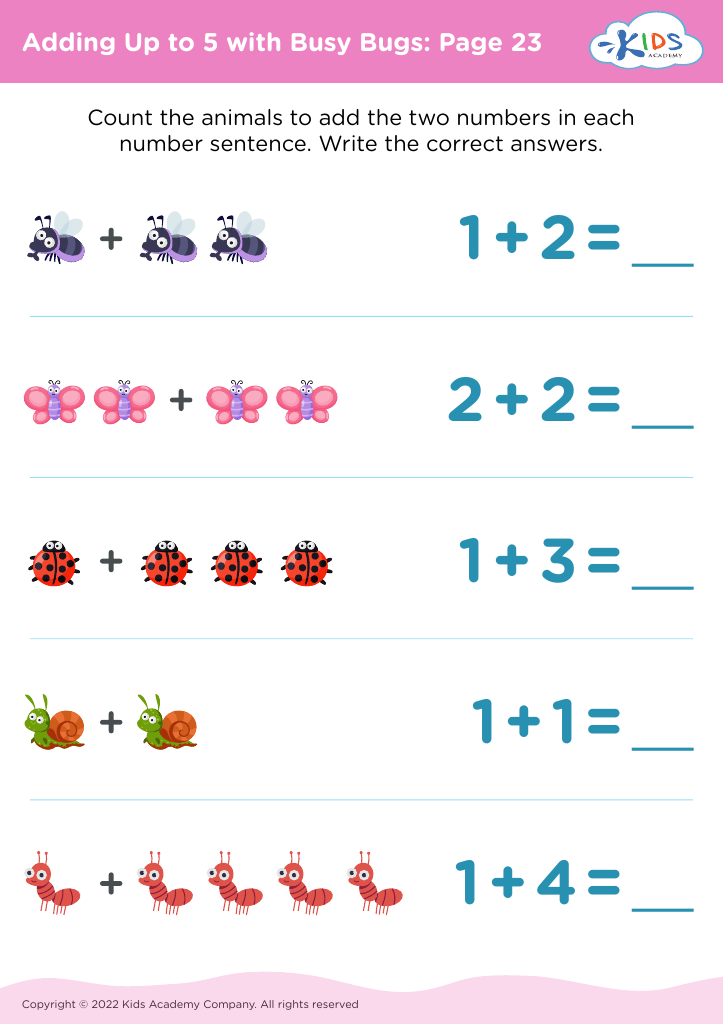
Adding Up to 5 with Busy Bugs: Page 23
Worksheet
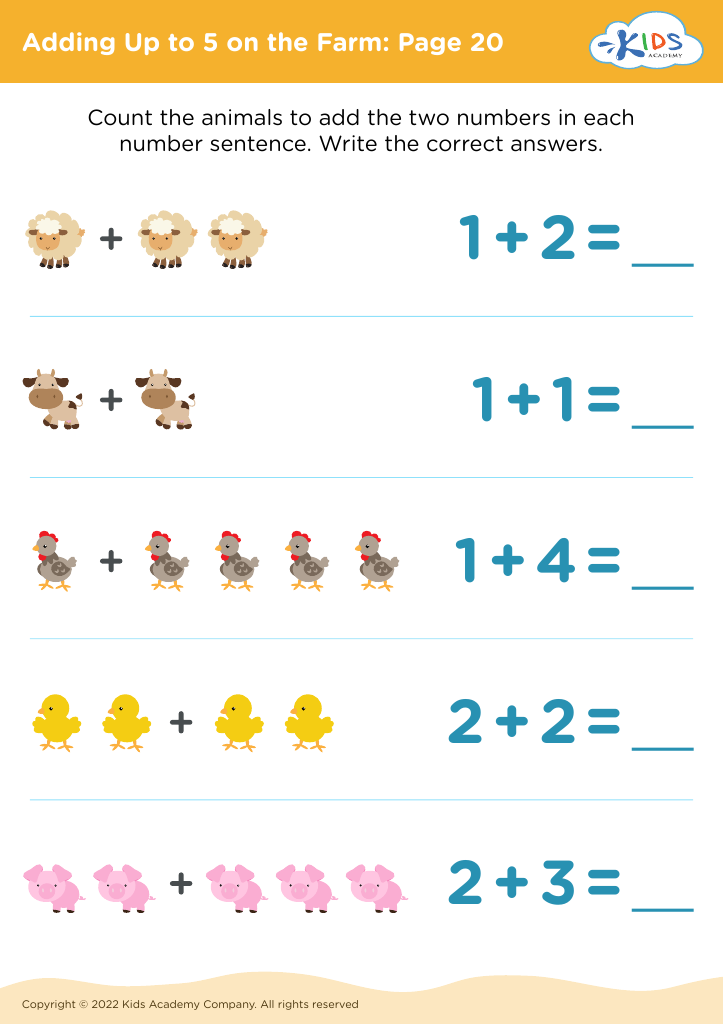
Adding Up to 5 on the Farm: Page 20
Worksheet
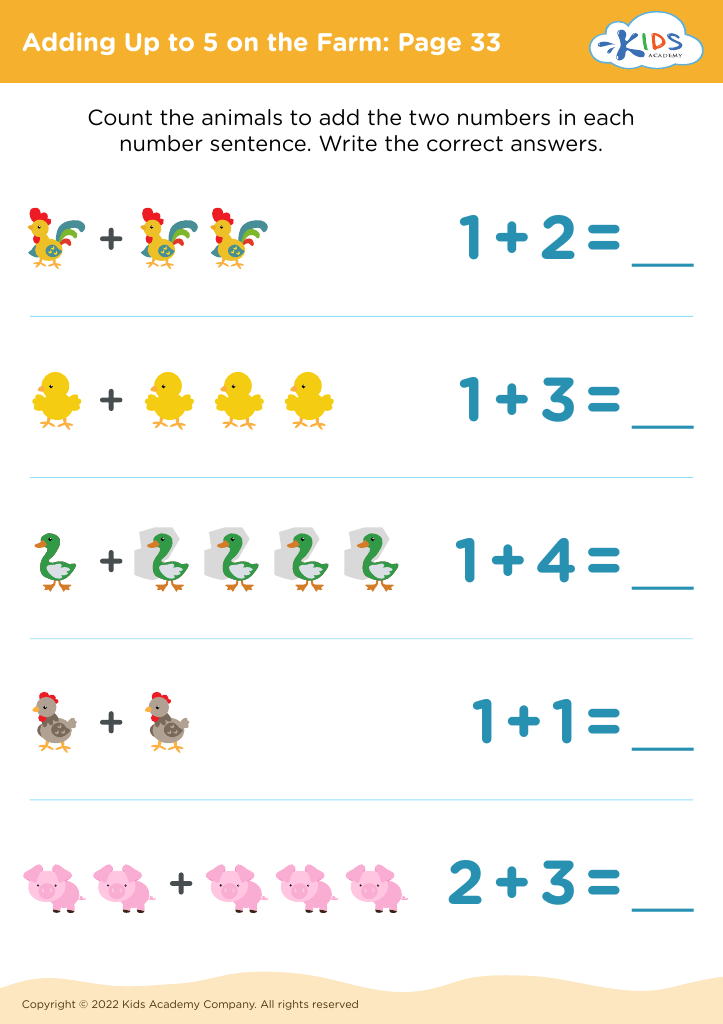
Adding Up to 5 on the Farm: Page 33
Worksheet
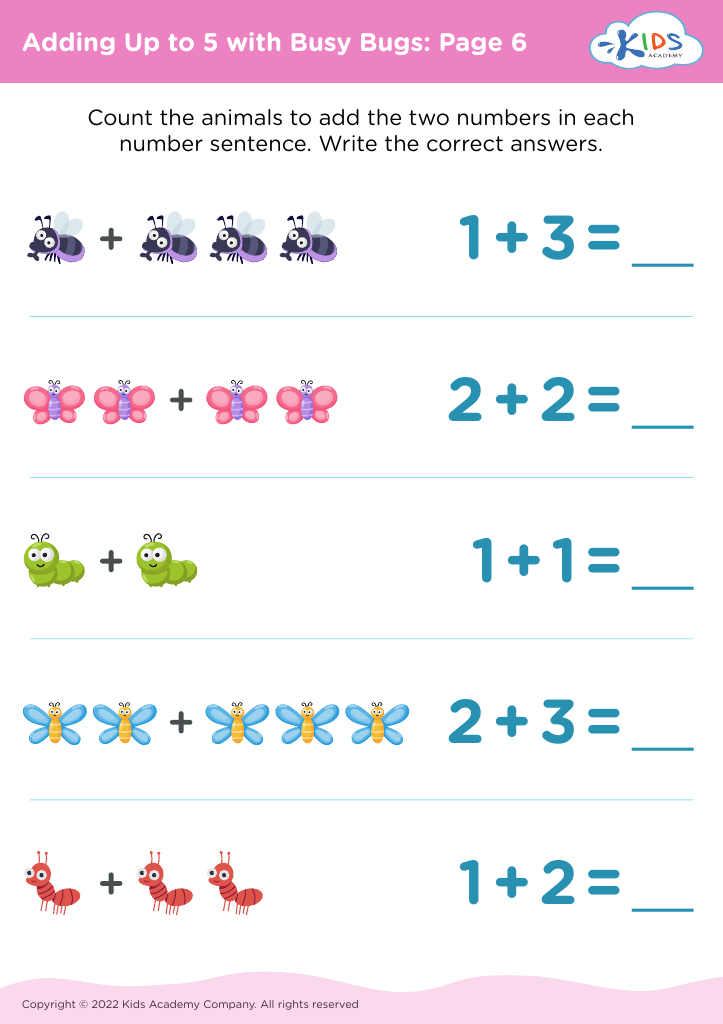
Adding Up to 5 with Busy Bugs: Page 6
Worksheet
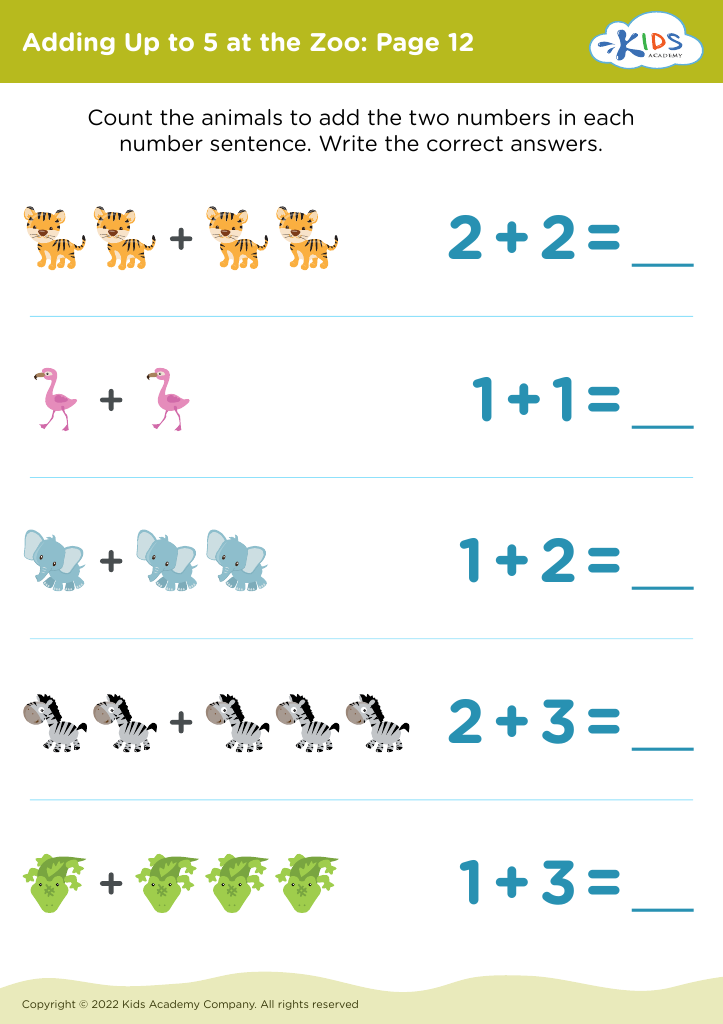
Adding Up to 5 at the Zoo: Page 12
Worksheet
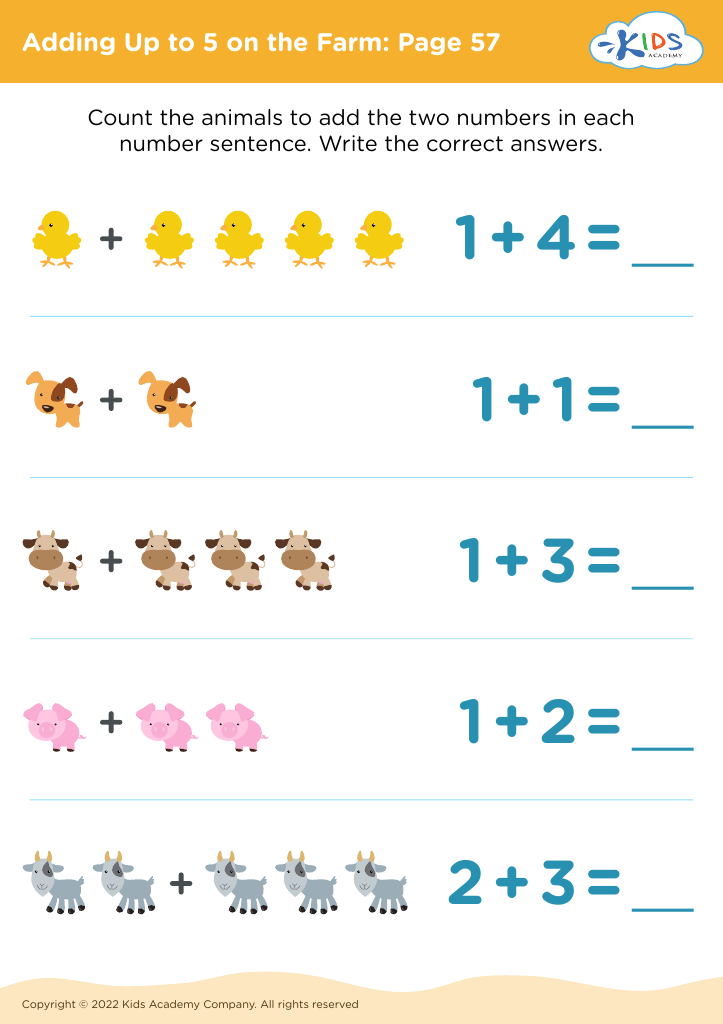
Adding Up to 5 on the Farm: Page 57
Worksheet
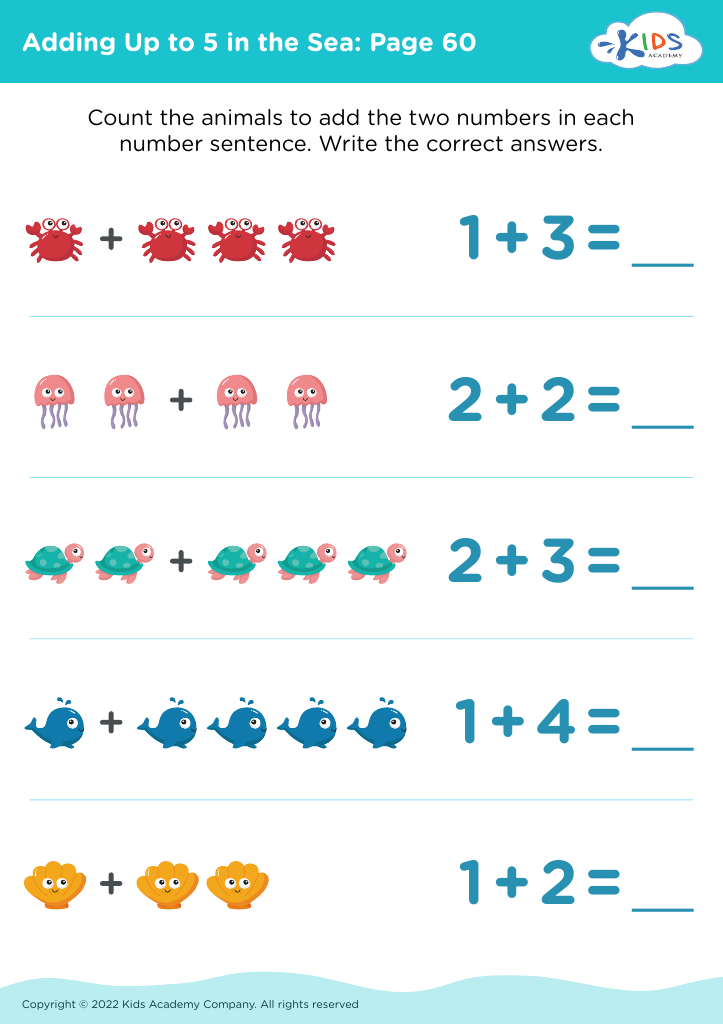
Adding Up to 5 in the Sea: Page 60
Worksheet


Counting practice and adding up to 5 for ages 4-9 is crucial because it forms the foundation for future mathematical learning. During these early developmental years, children are developing cognitive skills and the ability to understand mathematical concepts. Focusing on counting and basic addition solidifies their understanding of numbers, sequencing, and the relationship between quantities. This foundational skill set is essential for tackling more complex arithmetic and problem-solving tasks in later years, promoting a positive and confident attitude towards math.

Furthermore, success in early math skills is often linked to better performance in later academic subjects. A solid grasp on basic math concepts in preschool and early elementary school correlates with higher proficiency in other related areas, improving overall academic performance.

Engaging in counting and addition activities enhances children’s critical thinking, reasoning, and decision-making skills. It supports the natural development of logical thought processes and pattern recognition, pivotal for everyday problem-solving. Additionally, early math practice can foster perseverance and diligence as children learn to tackle and solve problems independently.

Counting and simple addition exercises involving engaging games, interactive activities, and hands-on learning also make learning fun. This fosters an enjoyable learning experience, encouraging a lifelong enthusiasm for math and learning in general. Therefore, parents and teachers should prioritize such foundational practices to support children's holistic development and future academic success.