Problem-Solving Skills Addition and Subtraction Word Problems Worksheets for Ages 4-9 - Page 2
33 filtered results
-
From - To
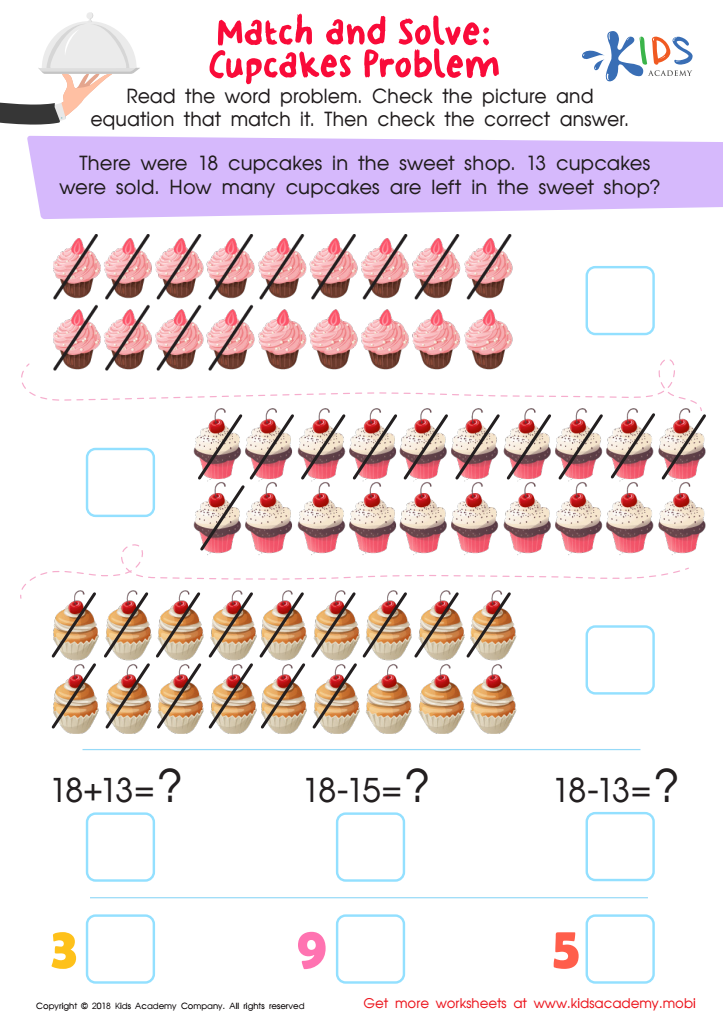
Match and Solve: Cupcakes Problem Worksheet
 Assign to My Students
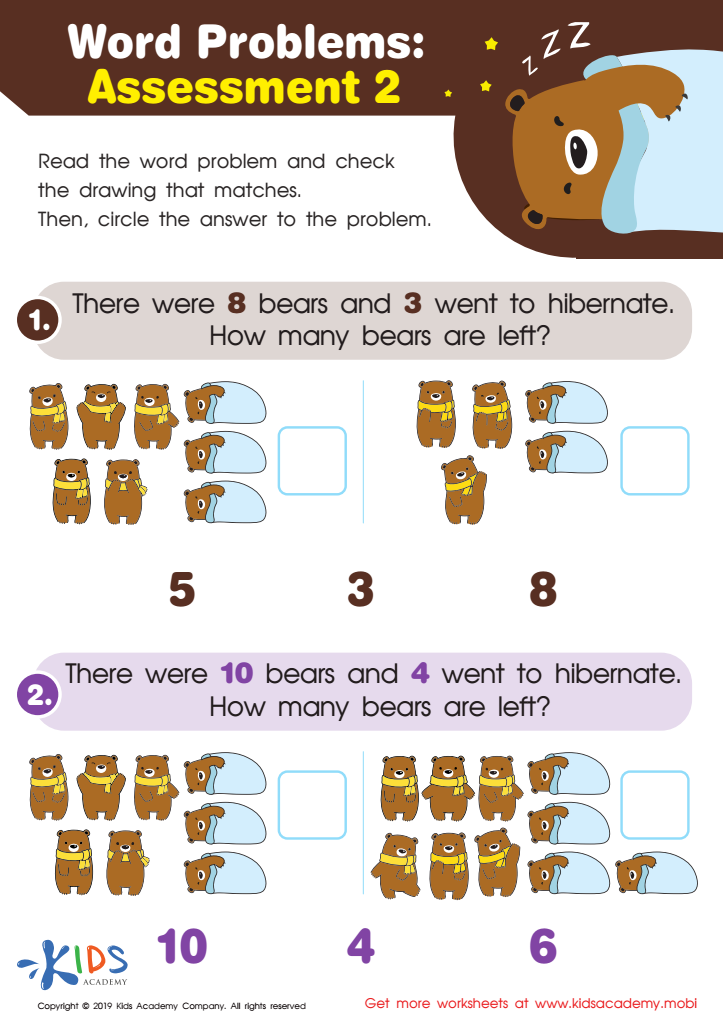
Word Problems: Assessment 2 Worksheet
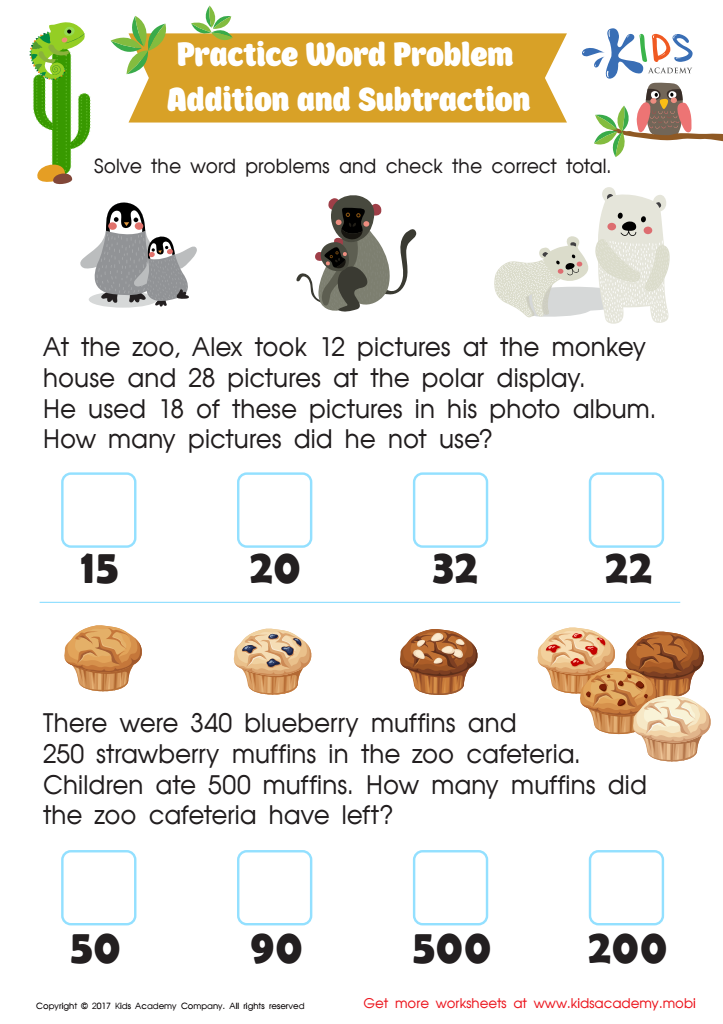
Addition and Subtraction: Word Problems Worksheet
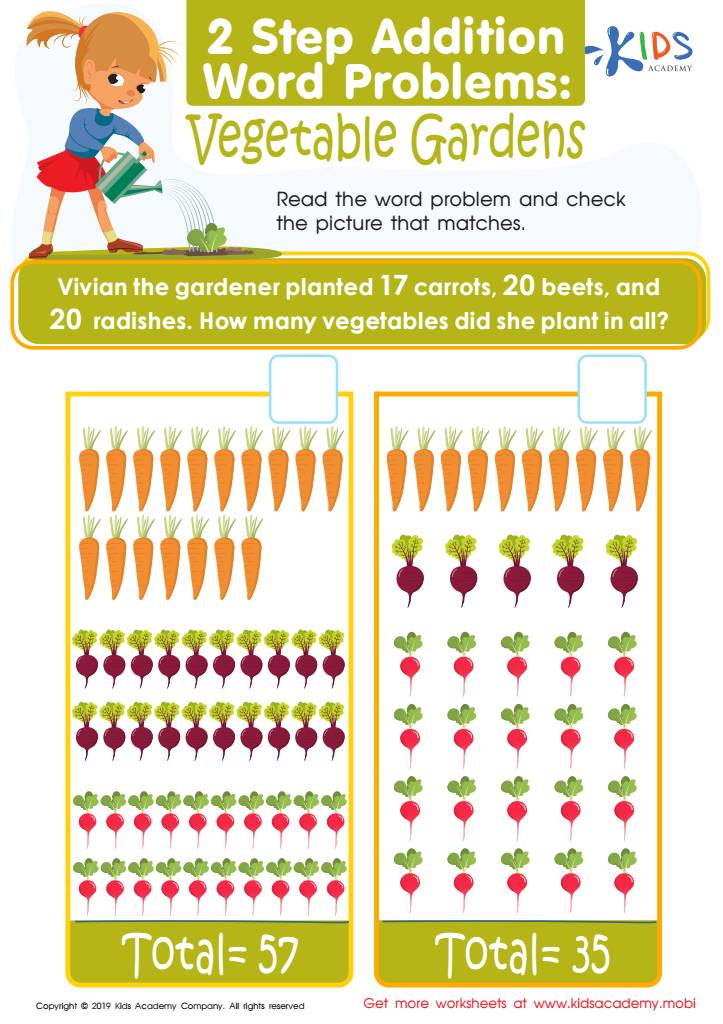
Vegetable Gardens Worksheet
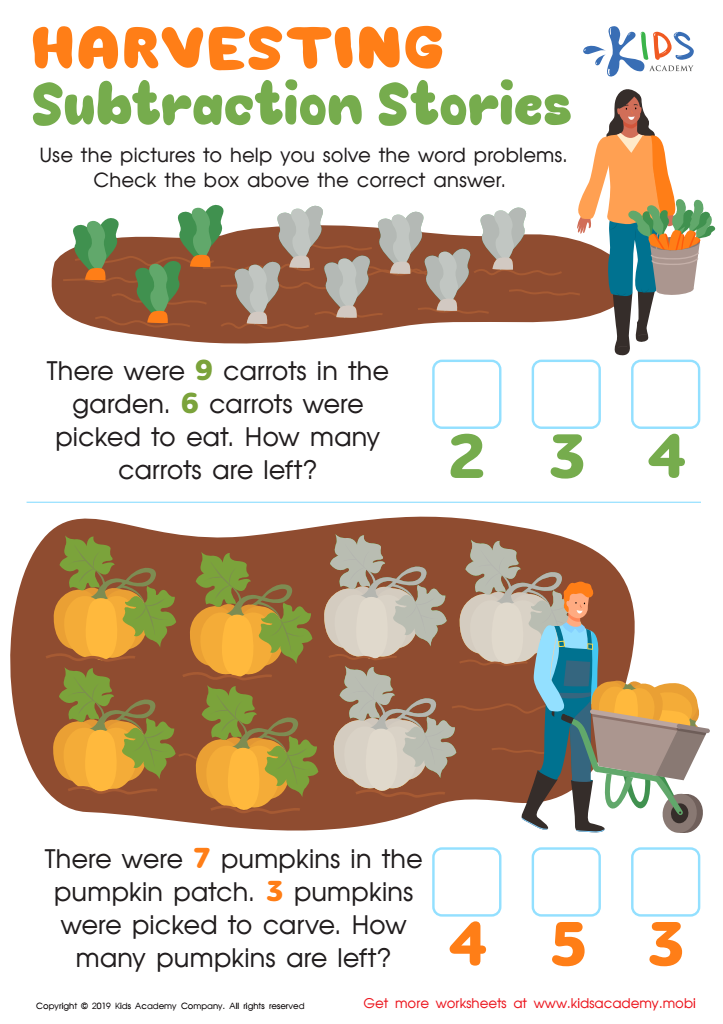
Harvesting Subtraction Stories Worksheet
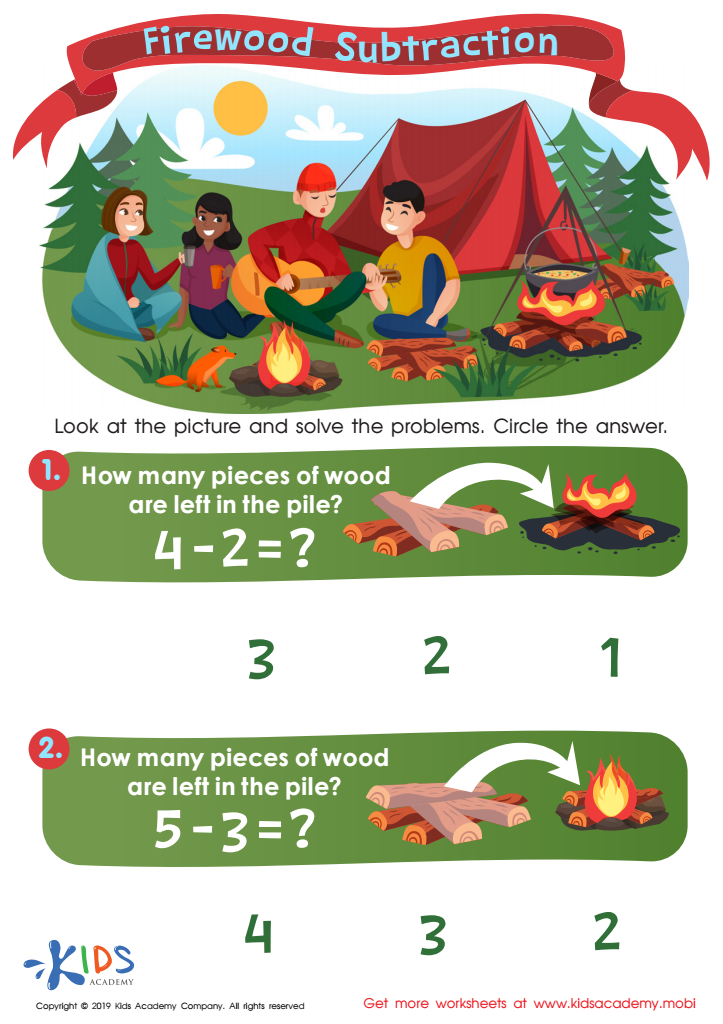
Firewood Subtraction Worksheet
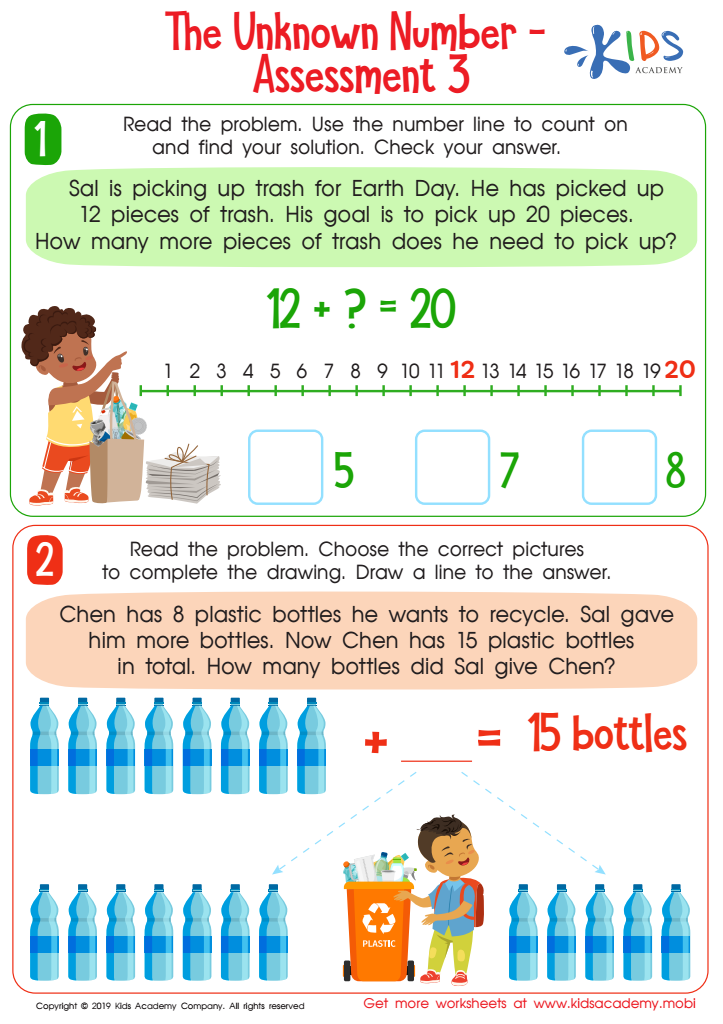
The Unknown Number - Assessment 3 Worksheet
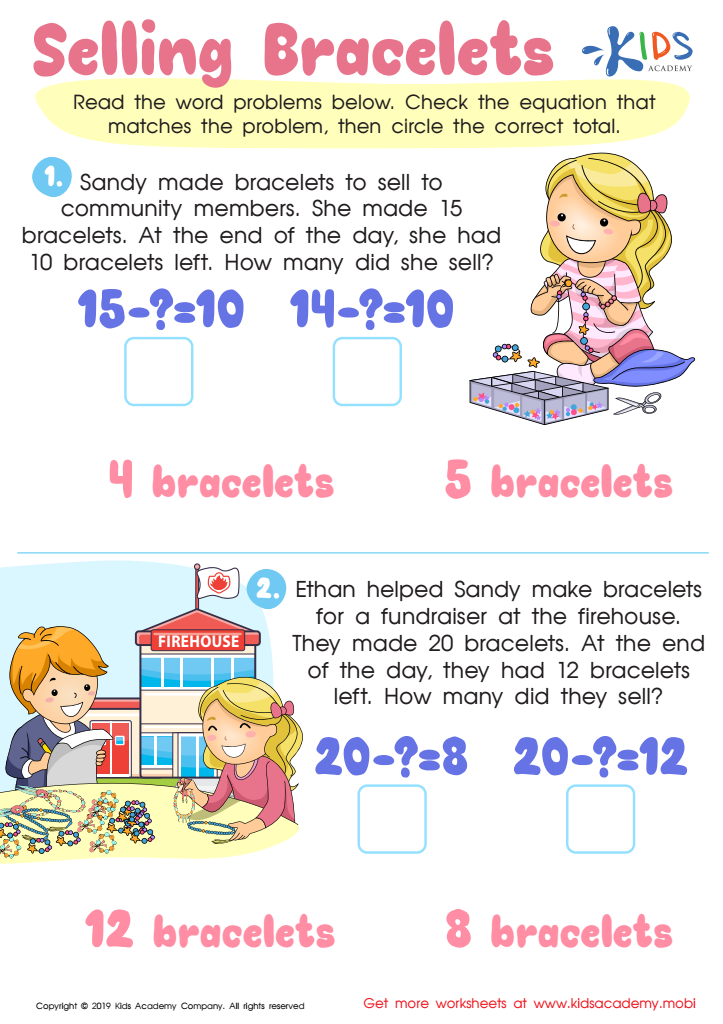
Selling the Bracelets Worksheet
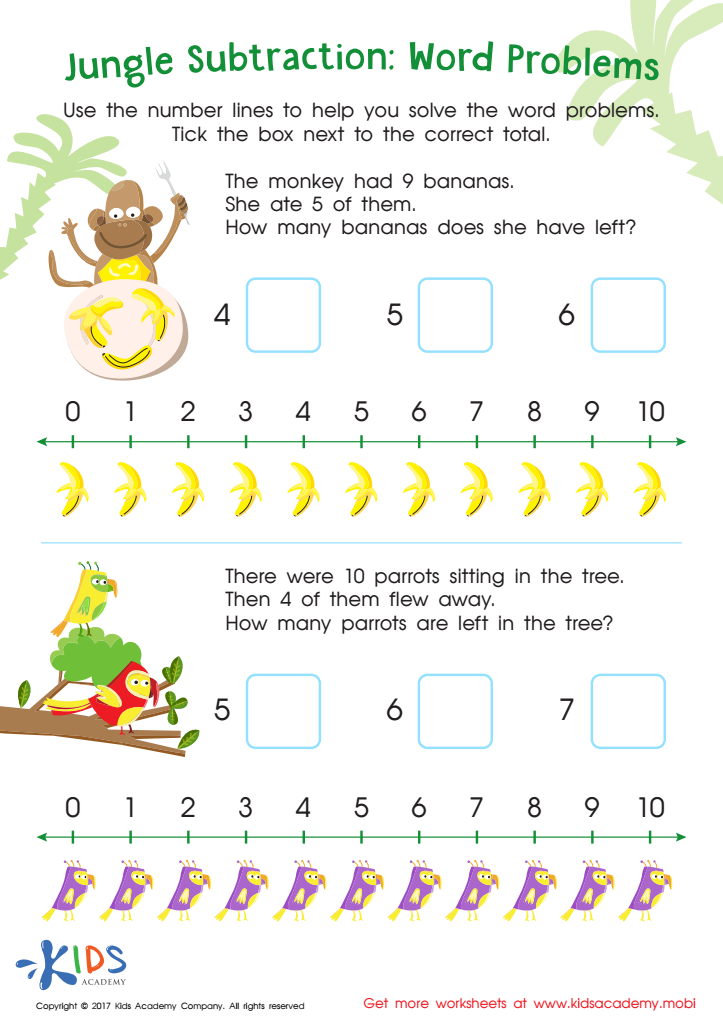
Jungle Subtraction Word Problems Substraction Worksheet








Parents and teachers should prioritize problem-solving skills in addition and subtraction word problems for children ages 4 to 9, as these foundational skills promote critical thinking and real-world application. This age group is developmentally poised to grasp basic arithmetic concepts, and engaging them in word problems allows them to see math in context. Learning to translate written scenarios into mathematical equations deepens comprehension and enhances cognitive abilities.
Moreover, solving word problems fosters perseverance and resilience in children. They learn to face challenges, navigate complexities, and approach problems methodically—a skill that extends beyond mathematics into other areas of life.
Developing problem-solving skills also aids in language development, as children must interpret and understand vocabulary used in the questions. This cross-disciplinary learning further enhances reading comprehension and verbal communication.
Furthermore, early proficiency in these skills builds confidence and a positive attitude toward mathematics, laying a strong foundation for future learning. As children become comfortable with solving word problems, they cultivate a growth mindset, viewing challenges as opportunities for growth rather than setbacks. By encouraging these skills, parents and teachers play a crucial role in preparing children for academic success and instilling a lifelong love of learning.