Visual Learning Addition and Subtraction Word Problems Worksheets for Ages 4-9
5 filtered results
-
From - To
Explore our engaging Visual Learning Addition and Subtraction Word Problems worksheets designed specifically for children aged 4-9! These interactive resources help young learners master essential math concepts by presenting word problems in a visually stimulating manner. By utilizing vivid illustrations and relatable scenarios, our worksheets make abstract math concepts easier to understand and apply. Perfect for reinforcing classroom learning or for at-home practice, these worksheets foster critical thinking and problem-solving skills. Whether teaching addition, subtraction, or both, these visual aids will captivate your child’s attention and enhance their mathematical comprehension. Start their journey to math mastery today!
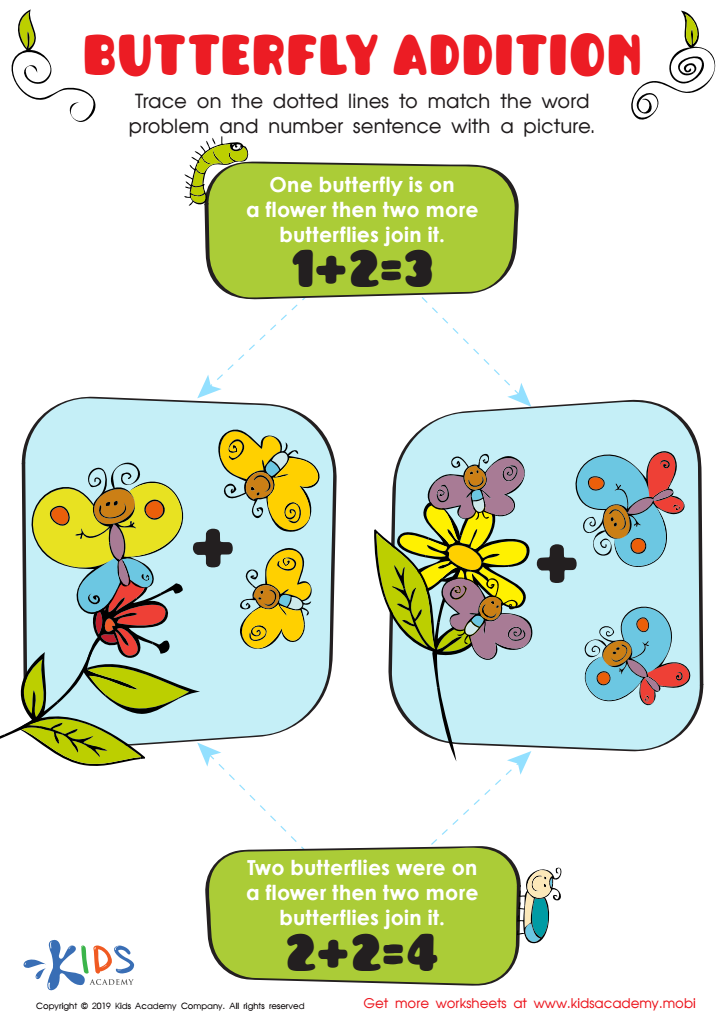
Butterfly Addition Worksheet
 Assign to My Students
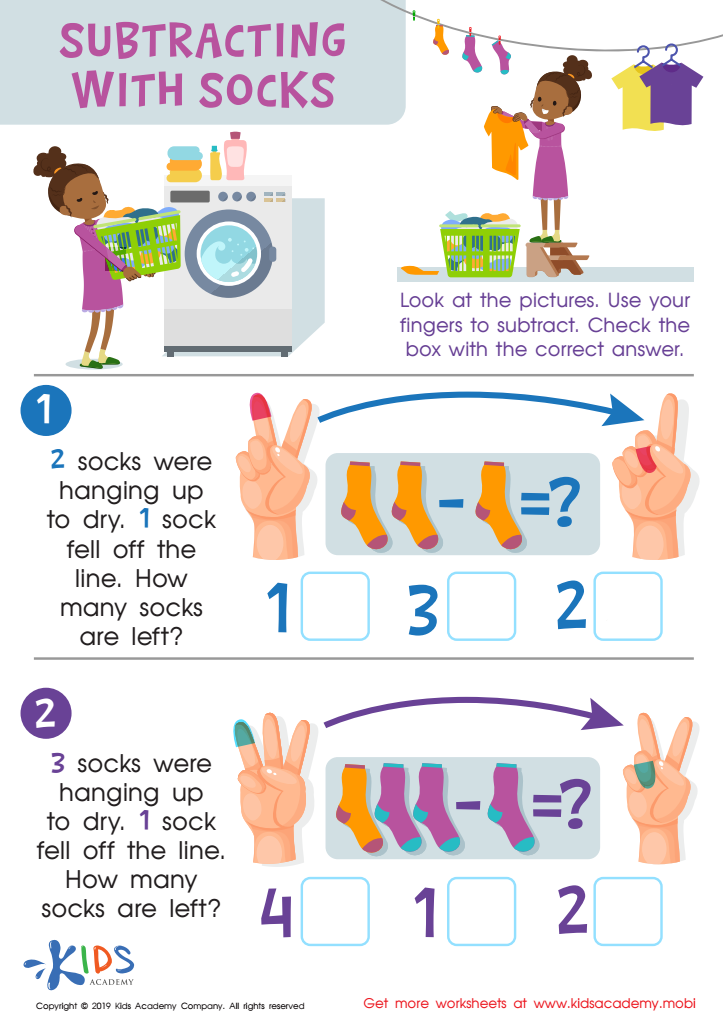
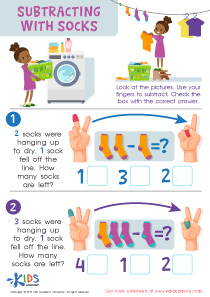
Subtracting Socks Worksheet
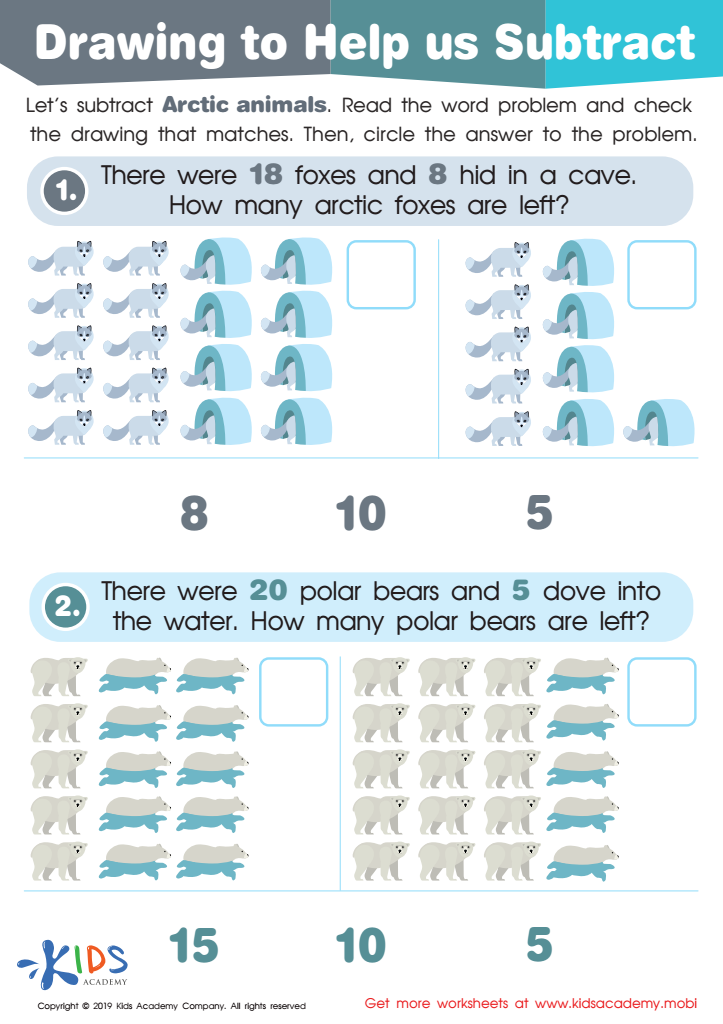
Drawing to Help Us Subtract Worksheet
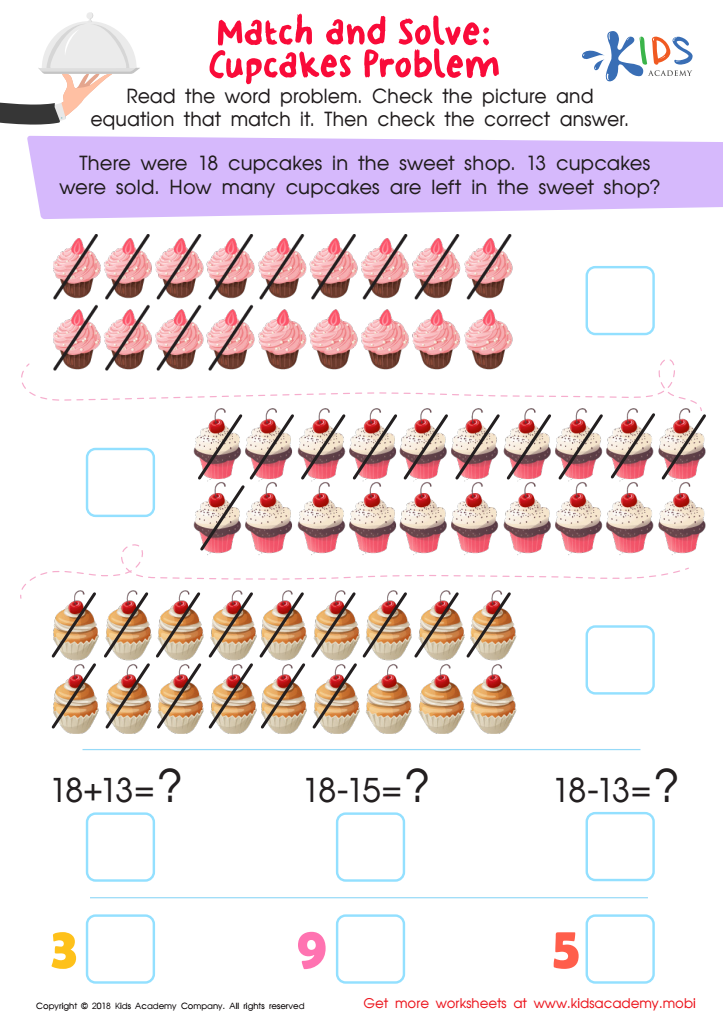
Match and Solve: Cupcakes Problem Worksheet
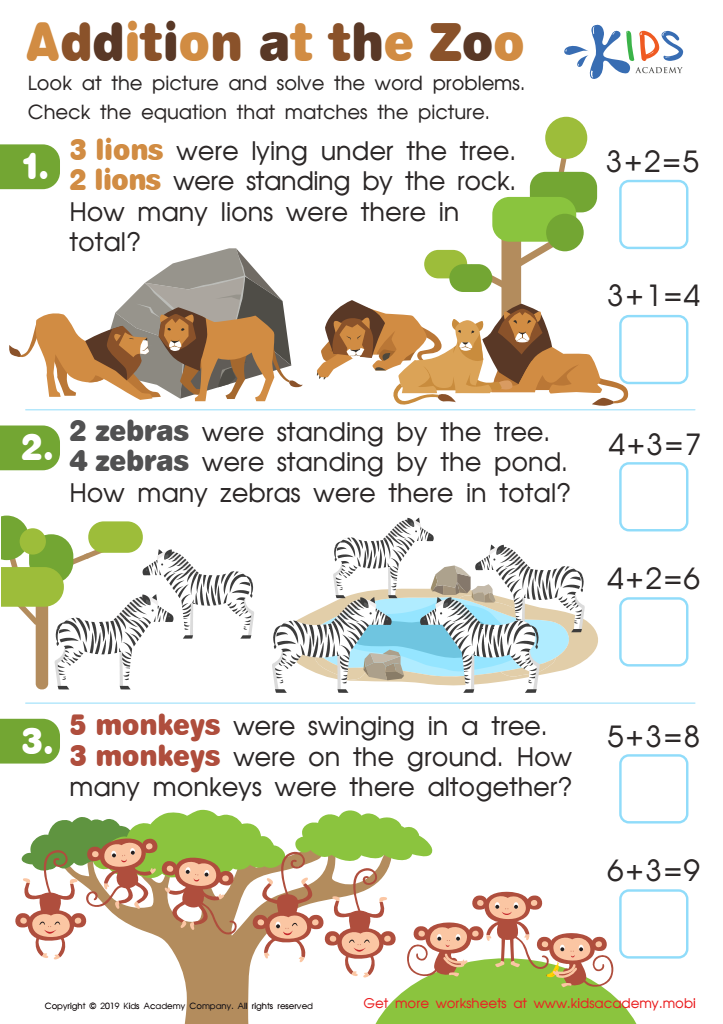
Addition at the Zoo Worksheet








Visual learning is critical in helping children ages 4-9 grasp foundational concepts in addition and subtraction, particularly through word problems. At this developmental stage, children's cognitive abilities flourish as they learn best through engaging, concrete representations of abstract concepts. Word problems presented visually—using pictures, symbols, or manipulatives—enable children to connect mathematical ideas to real-life situations, reinforcing their understanding and retention of basic arithmetic skills.
Furthermore, visual learning encourages critical thinking and problem-solving skills. As children parse word problems, they develop the ability to identify essential information and determine the best way to visualize and solve them. This process not only enhances their mathematical reasoning but also fosters a sense of achievement when they effectively find solutions.
Additionally, these skills promote a positive attitude towards math by making it less intimidating and more interactive, benefiting children's overall learning experience. For parents and teachers, prioritizing visual learning in addition and subtraction word problems supports holistic development, equipping children with essential abilities that transcend mathematics and foster lifelong learning habits. By nurturing these skills early, we empower children with a strong foundation for future academic success.