Fine motor skills (writing numbers) Addition & Subtraction Worksheets for Ages 4-9

Enhance your child's fine motor skills with our engaging addition and subtraction worksheets designed specifically for ages 4-9. Our versatile activities not only promote number writing practice, but also strengthen coordination and control essential for early learning. Each worksheet is crafted to make math fun and interactive, helping young learners grasp basic math concepts while improving their handwriting. Tailored for diverse educational needs, these resources support children in developing confidence in their abilities. Explore our collection to optimize your child's learning experience, fostering both their mathematical proficiency and fine motor skills—essential foundations for academic success!
Check out this FREE Trial Lesson on Addition & Subtraction for age 4-9!

H

Favorites
With answer key
Interactive
  • 4-9
  • Fine motor skills (writing numbers)
  • Addition & Subtraction
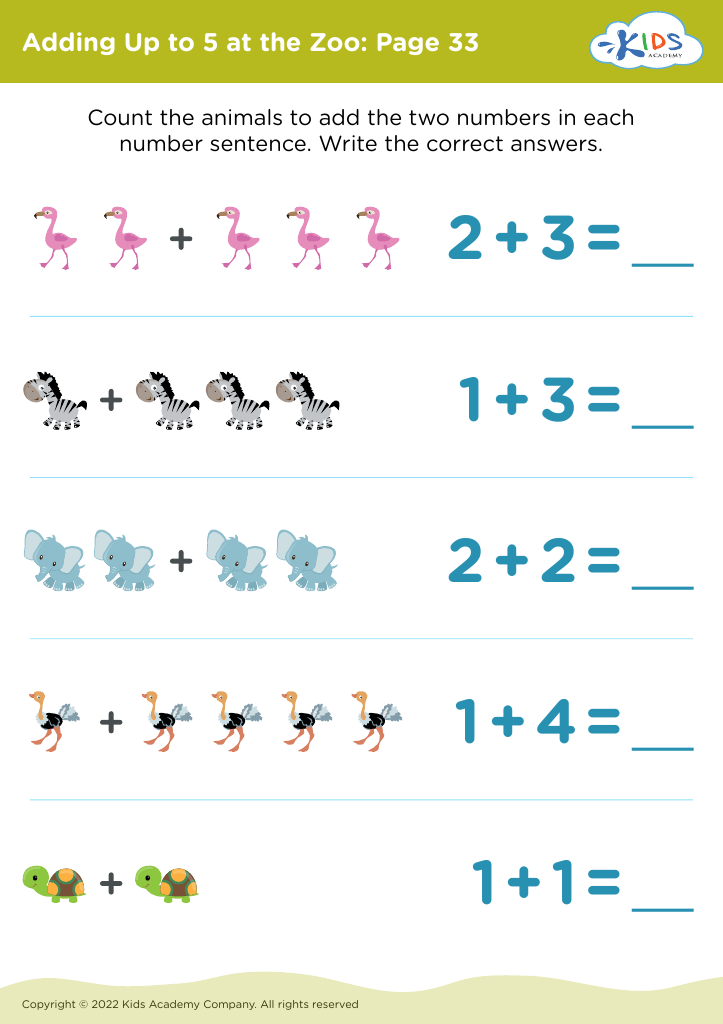
Adding Up to 5 at the Zoo: Page 33
Worksheet
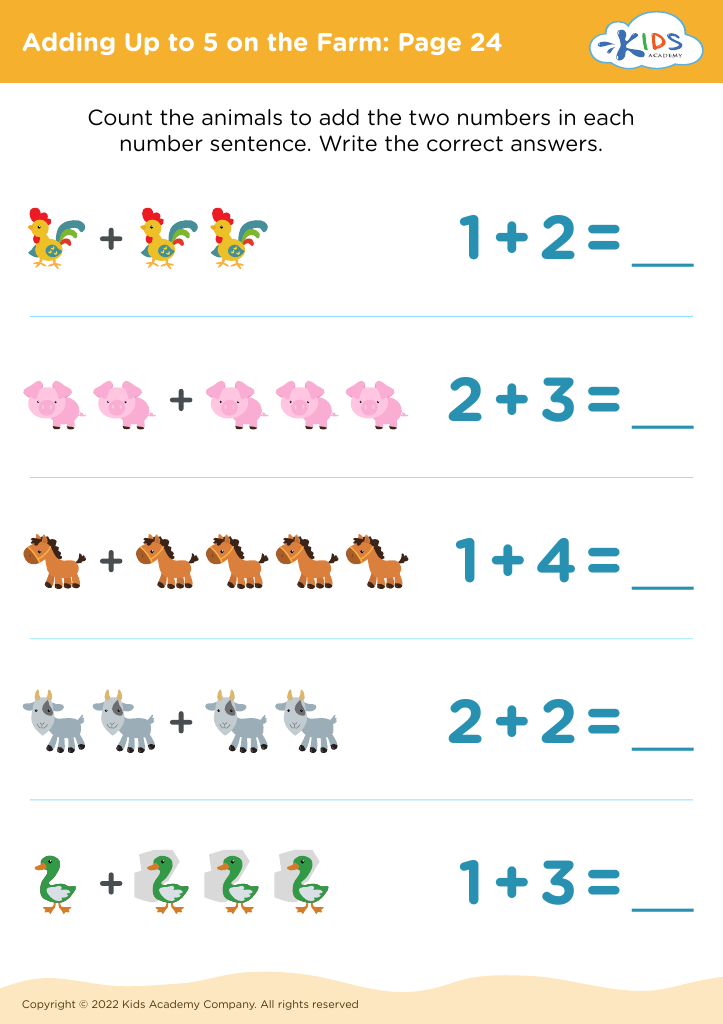
Adding Up to 5 on the Farm: Page 24
Worksheet
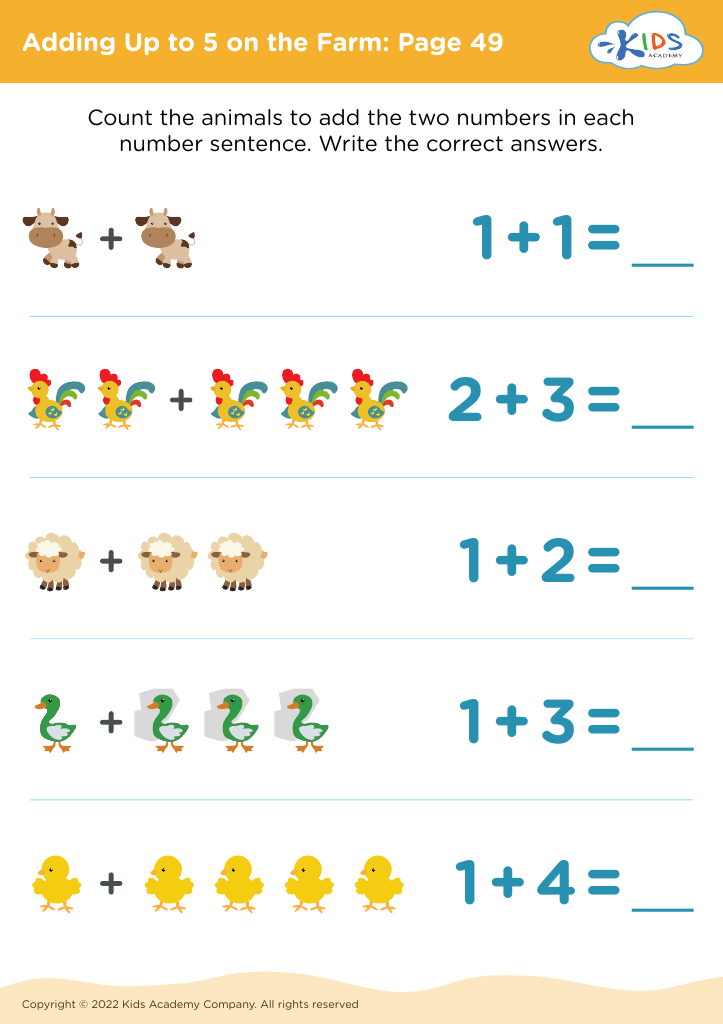
Adding Up to 5 on the Farm: Page 49
Worksheet
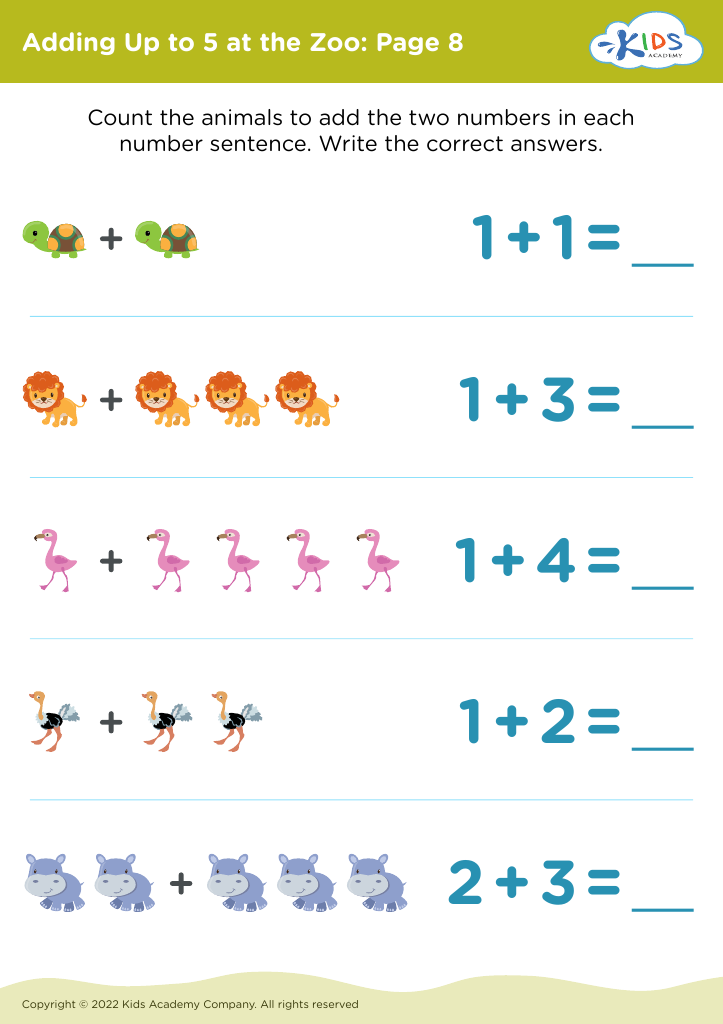
Adding Up to 5 at the Zoo: Page 8

Adding Up to 5 at the Zoo: Page 8

Adding Up to 5 at the Zoo: Page 8
Worksheet
Simple Addition PDF Worksheet

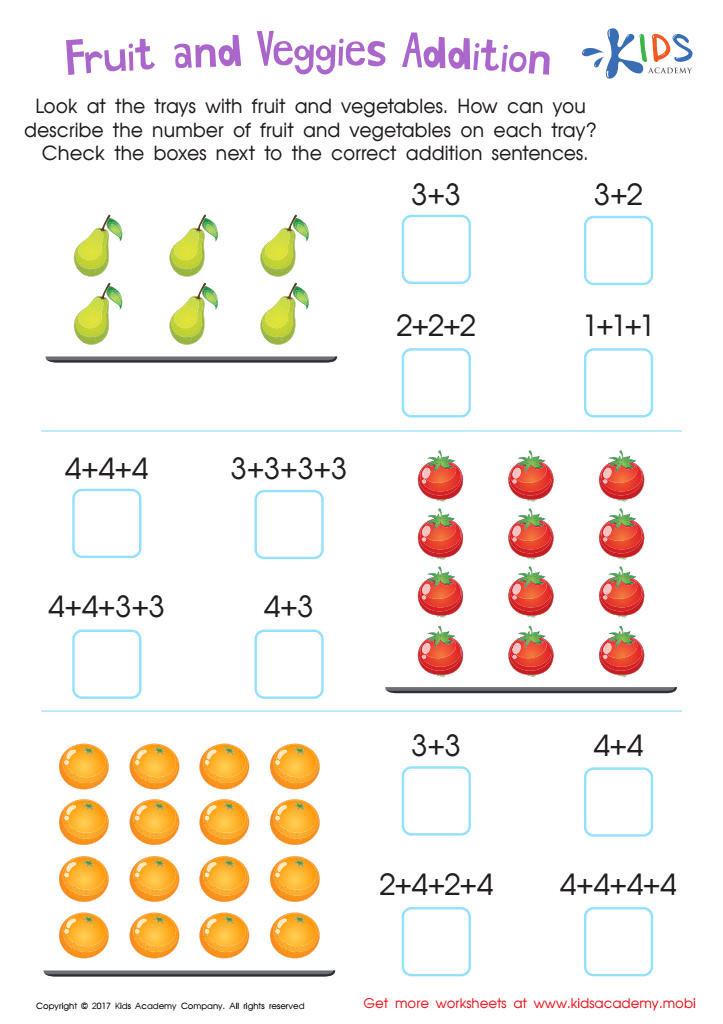
Fruit and Veggies Worksheet

It promotes problem-solving and analytical skills as kids match pictures to correct addition sentences. Help your child go beyond simple addition with this PDF worksheet!
Fruit and Veggies Worksheet
Worksheet
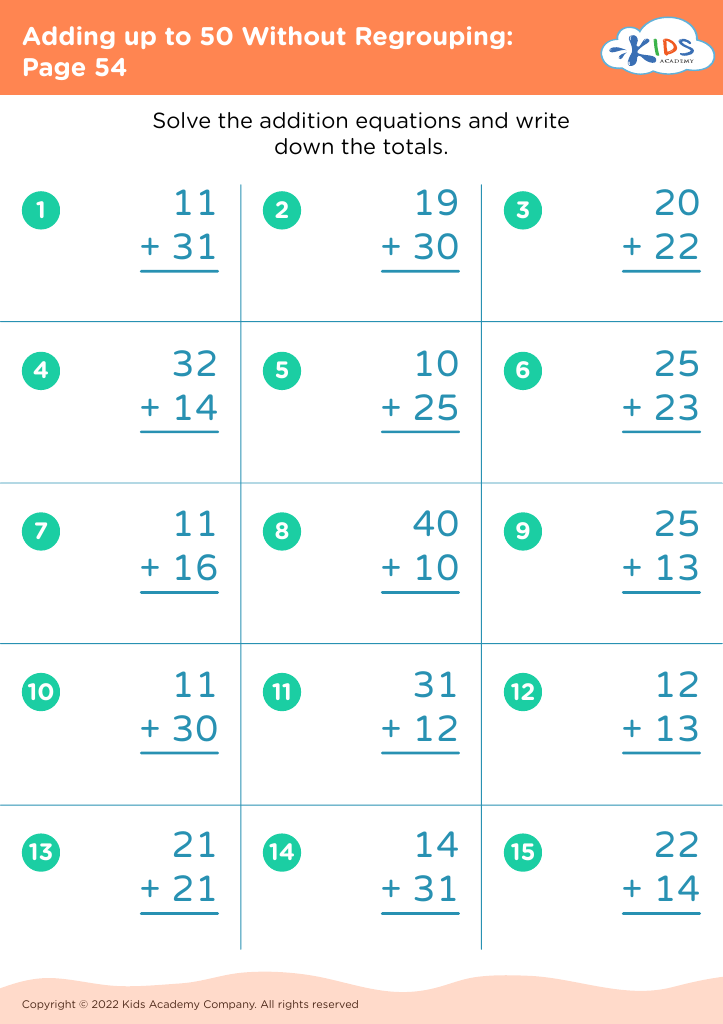
Adding up to 50 Without Regrouping: Page 54
Worksheet
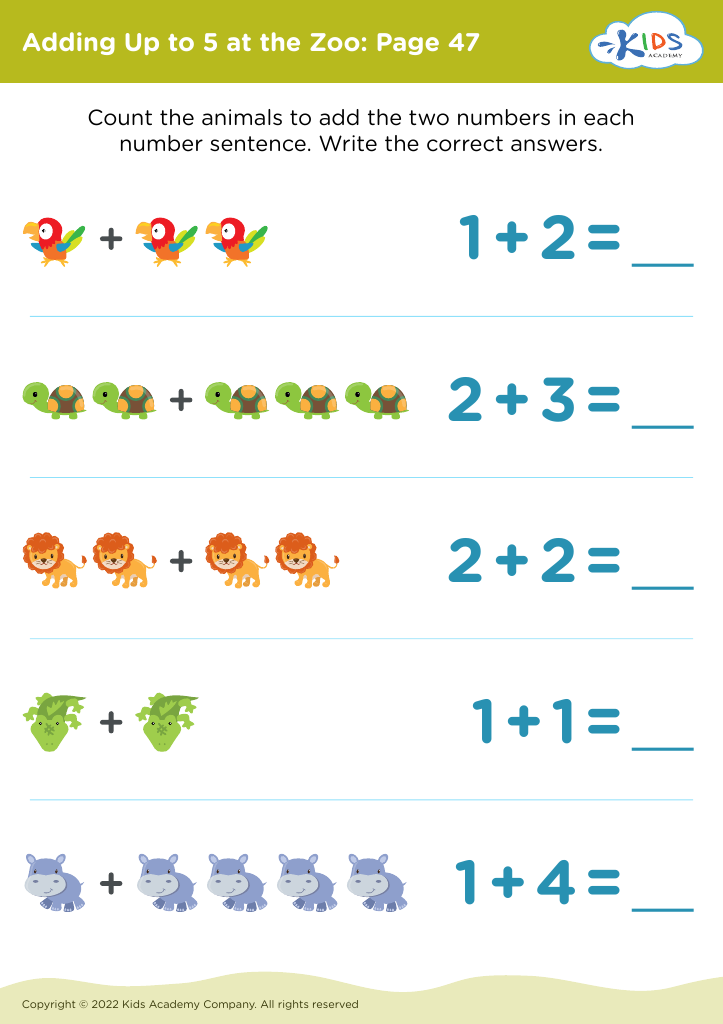
Adding Up to 5 at the Zoo: Page 47
Worksheet
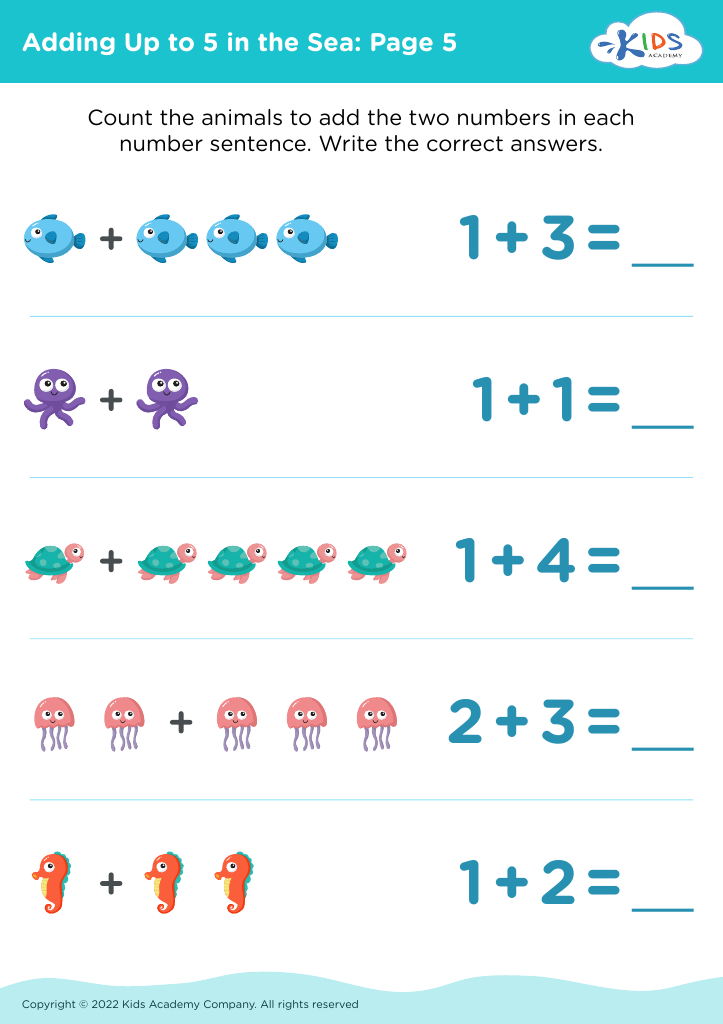
Adding Up to 5 in the Sea: Page 5

Adding Up to 5 in the Sea: Page 5

Adding Up to 5 in the Sea: Page 5
Worksheet
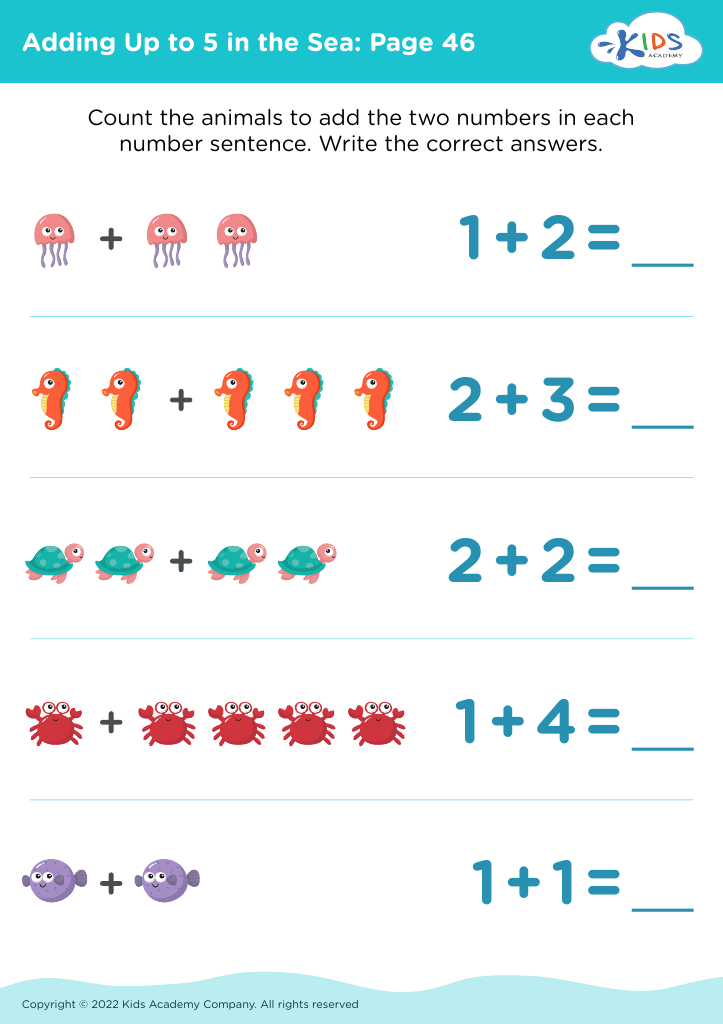
Adding Up to 5 in the Sea: Page 46
Worksheet
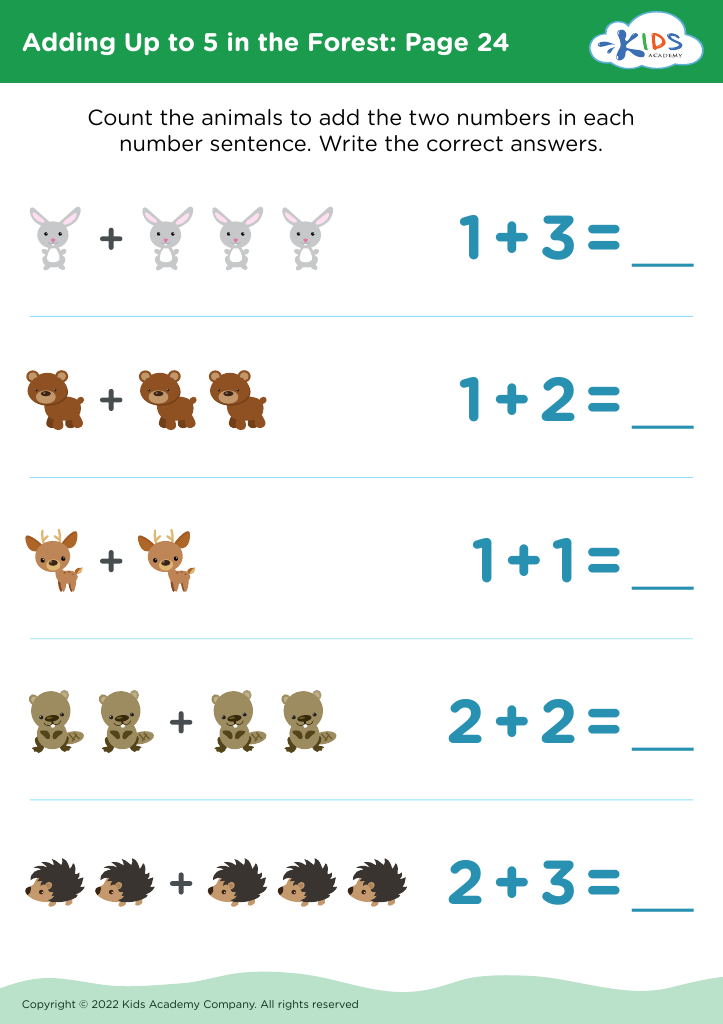
Adding Up to 5 in the Forest: Page 24
Worksheet
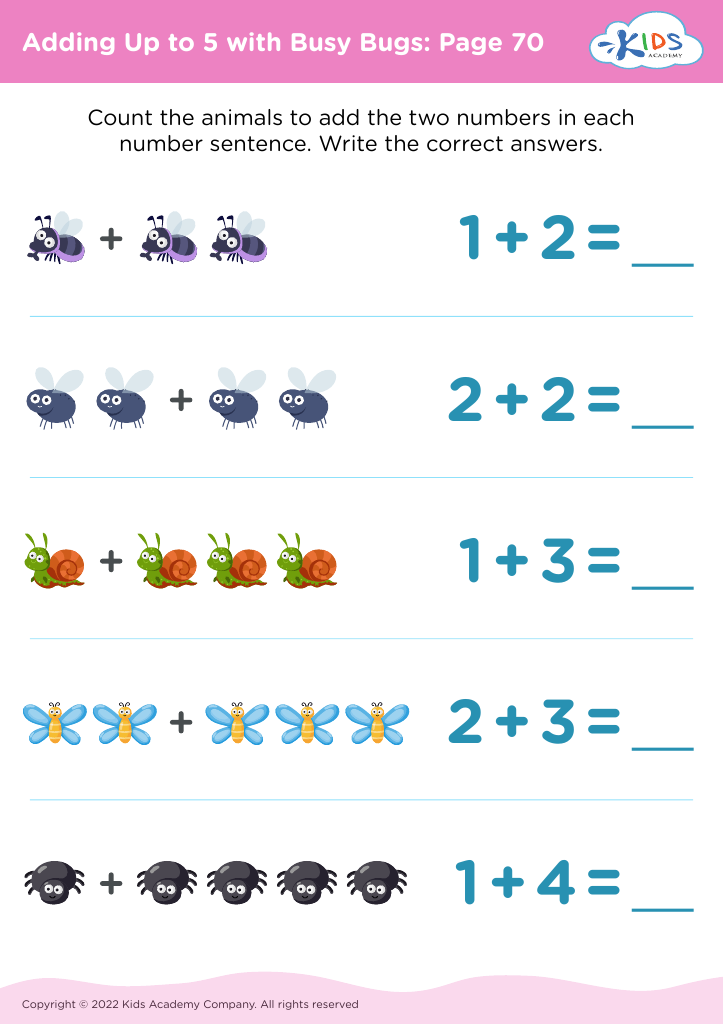
Adding Up to 5 with Busy Bugs: Page 70
Worksheet
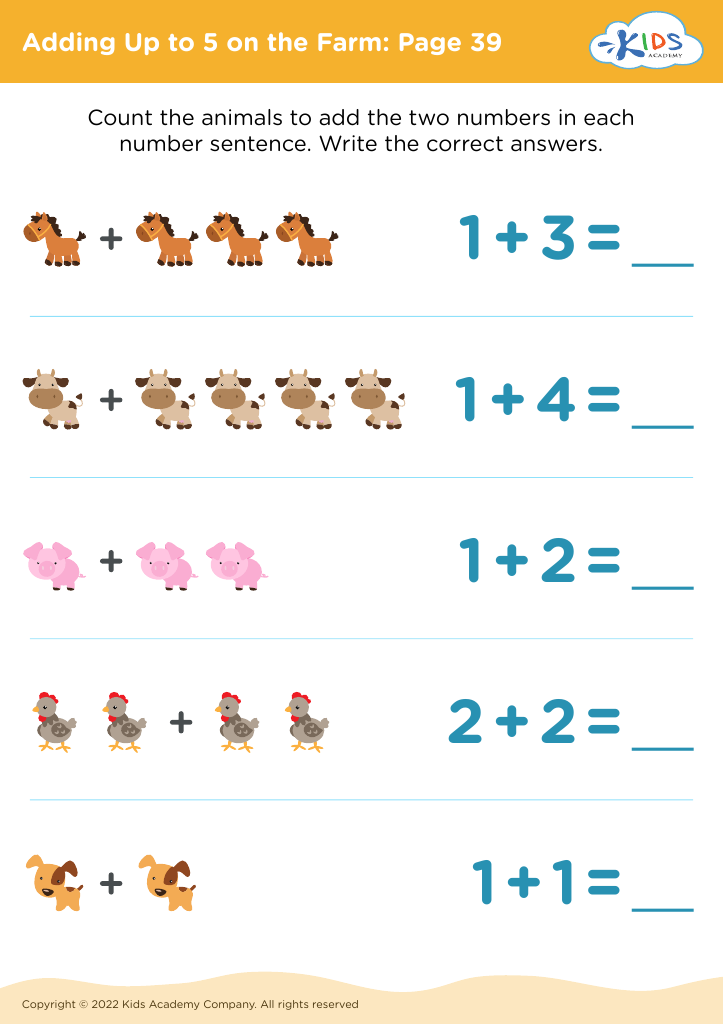
Adding Up to 5 on the Farm: Page 39
Worksheet
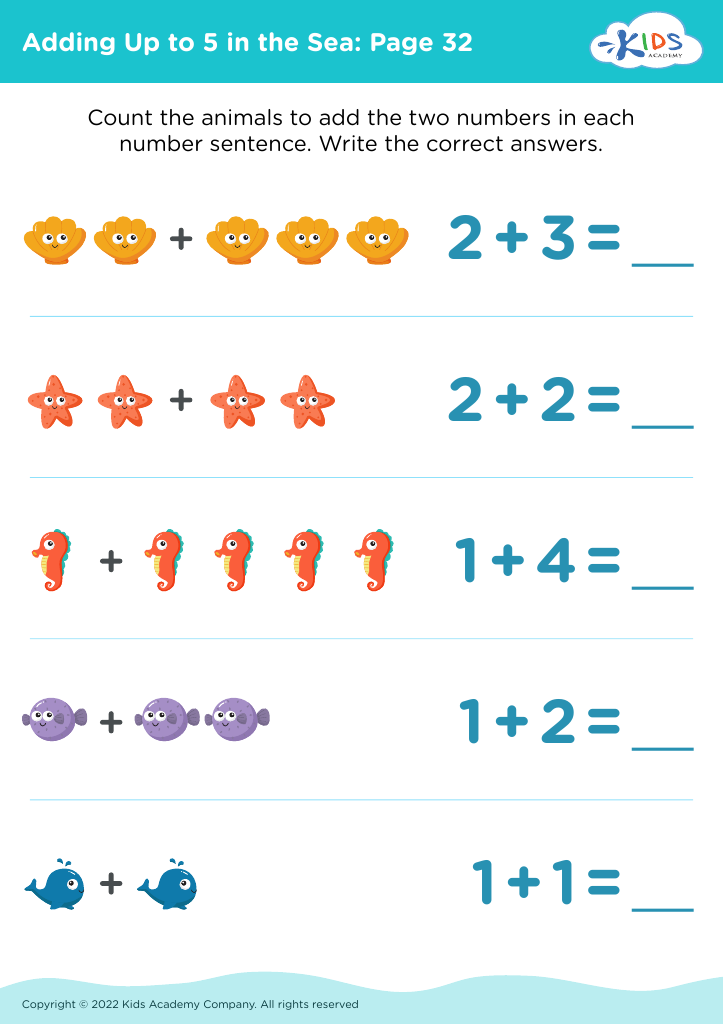
Adding Up to 5 in the Sea: Page 32
Worksheet
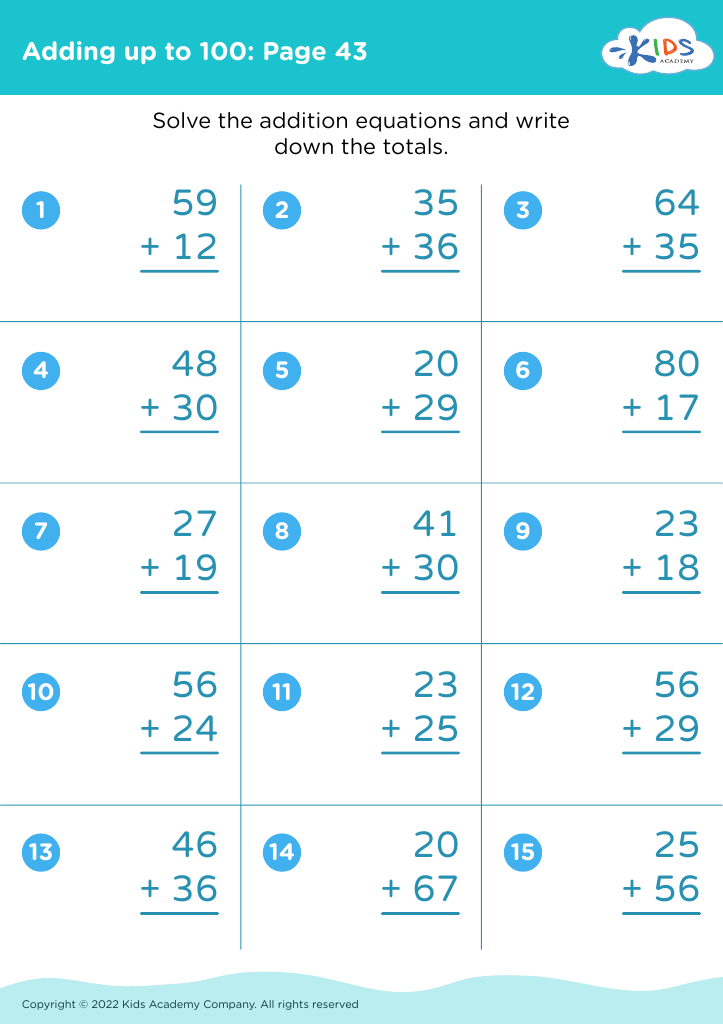
Adding up to 100: Page 43

Adding up to 100: Page 43

Adding up to 100: Page 43
Worksheet
Adding Instruments with Addison Worksheet
Adding Instruments with Addison Worksheet

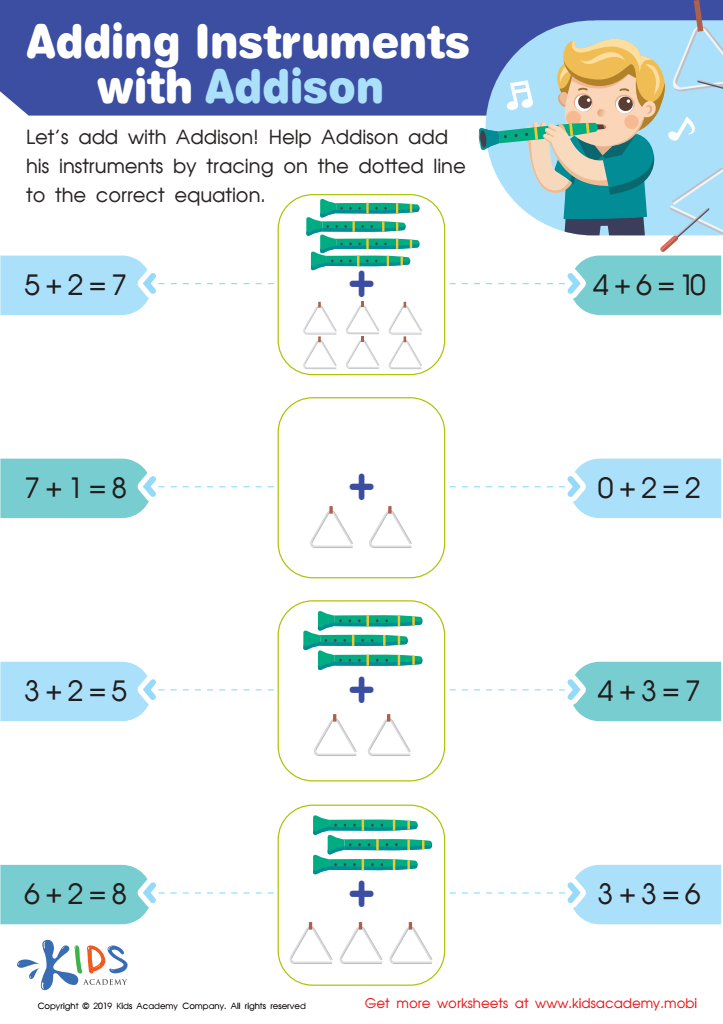
Your math stars will enjoy assisting Addison as he adds his instruments. This worksheet has 10 basic addition problems with pictures of instruments to aid children. They match the pics and sentences, then connect them to the correct problem using the lines. A fun way to learn and practice addition!
Adding Instruments with Addison Worksheet

Worksheet
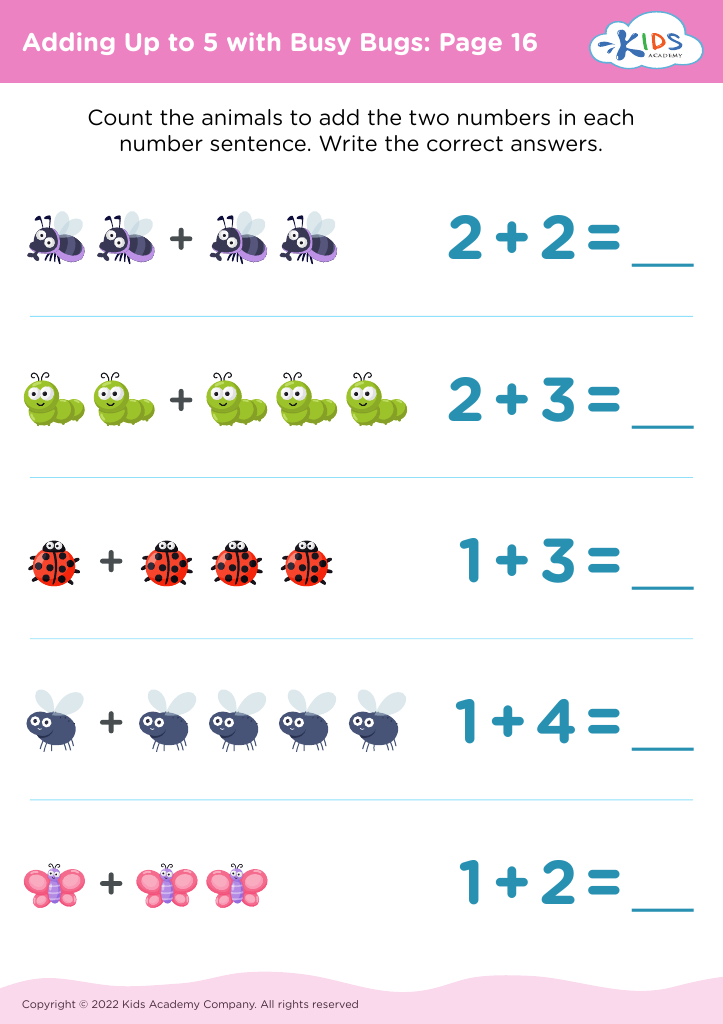
Adding Up to 5 with Busy Bugs: Page 16
Worksheet
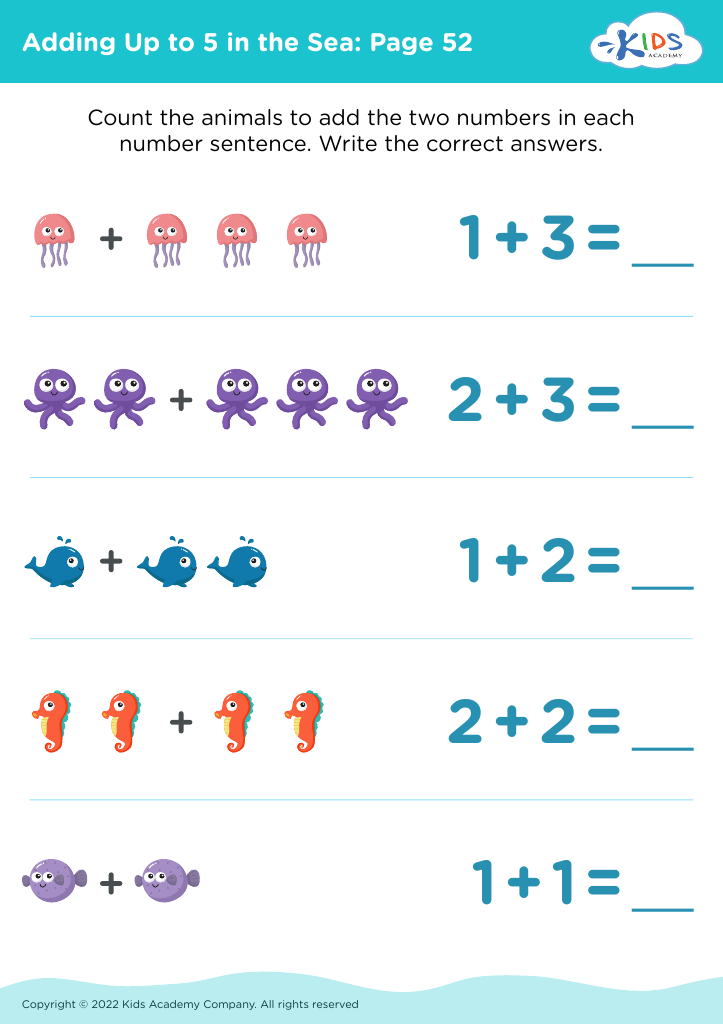
Adding Up to 5 in the Sea: Page 52
Worksheet


Fine motor skills are crucial for young children aged 4-9 as they lay the foundation for various tasks, including writing numbers and performing addition and subtraction. Mastering fine motor skills enhances a child's hand-eye coordination, dexterity, and control over small movements, all essential for effective writing and numeracy. When children write numbers neatly, they develop a visual understanding of number formation, which nurtures their mathematical abilities.

Moreover, strong fine motor skills enable more effective learning experiences. Children who struggle with these skills may find writing and math challenging, leading to frustration and diminished self-esteem. By fostering fine motor skills, parents and teachers can help children approach addition and subtraction with confidence, enhancing their overall engagement with math.

Additionally, practices that improve fine motor skills—such as drawing, cutting, and manipulating small objects—can also be integrated into fun activities that make learning enjoyable. Ultimately, nurturing these skills early on equips children with the tools they need for academic success and lays the groundwork for lifelong learning. By prioritizing fine motor development, adults are investing in a child's future competencies, promoting not only mathematical proficiency but also overall cognitive growth.