Money management skills Addition & Subtraction Worksheets for Ages 4-9
3 filtered results
-
From - To
Enhance your child's financial literacy with our engaging Money Management Skills Addition & Subtraction Worksheets, designed specifically for ages 4-9. These worksheets provide a fun and interactive way for young learners to master basic math concepts while exploring essential money management skills. Through colorful illustrations and relatable scenarios, children will practice addition and subtraction using coins and bills, laying the foundation for responsible financial habits. Perfect for home and classroom use, these resources promote essential problem-solving skills while keeping learning enjoyable. Equip your child with the tools they need for a bright financial future through captivating math practice today!
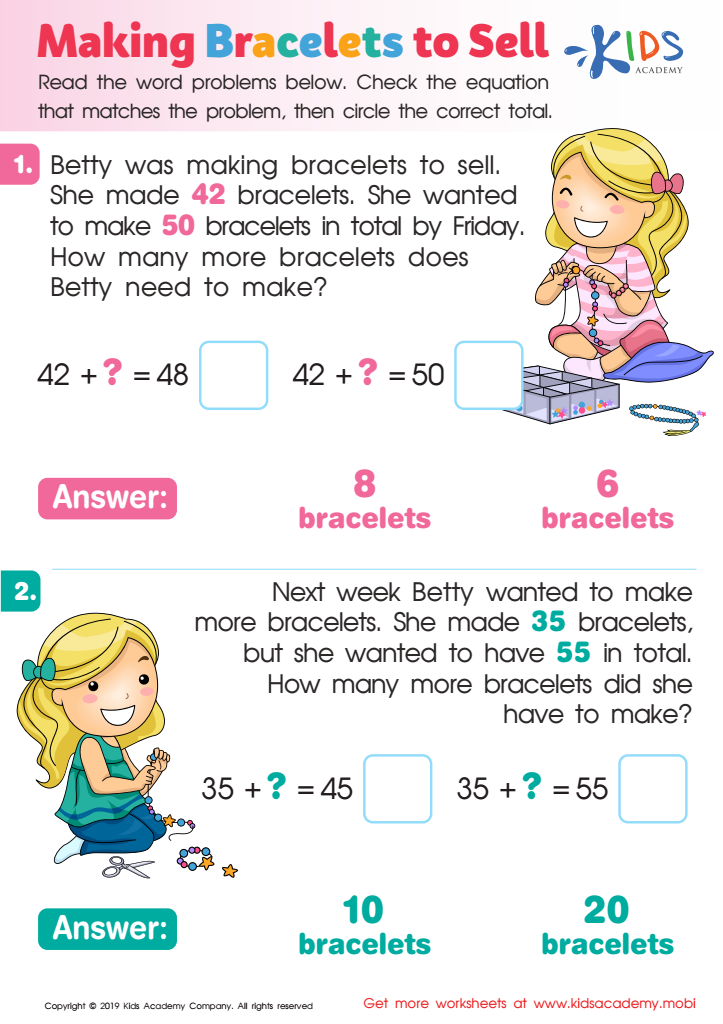
Making Bracelets to Sell Worksheet
 Assign to My Students
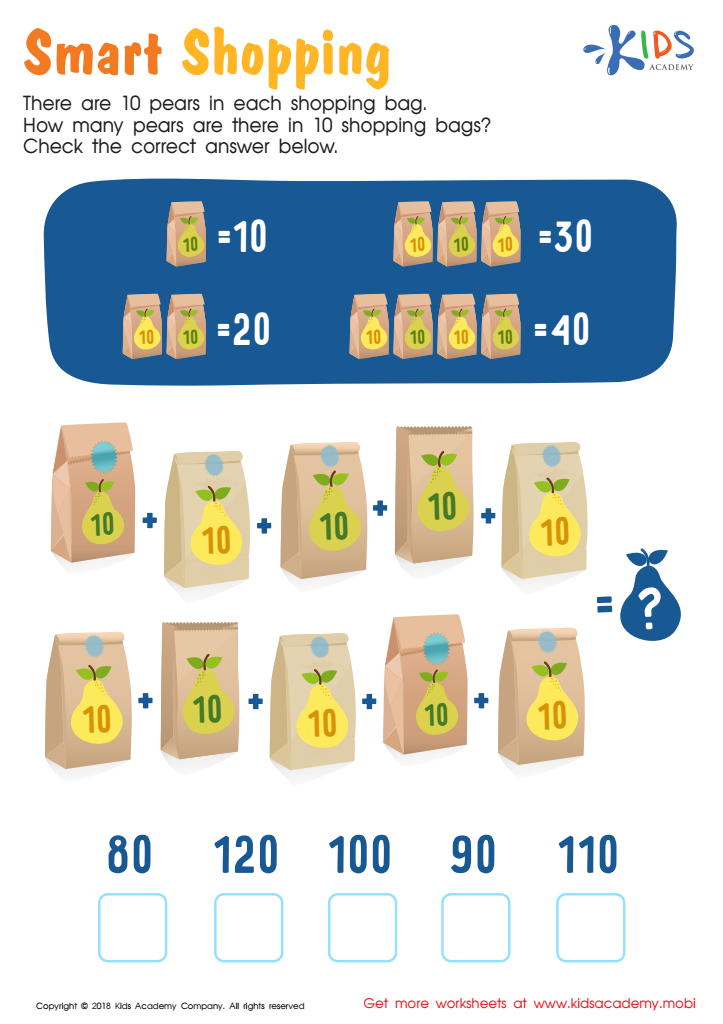
Smart Shopping: Trade Tens for a Hundred Worksheet
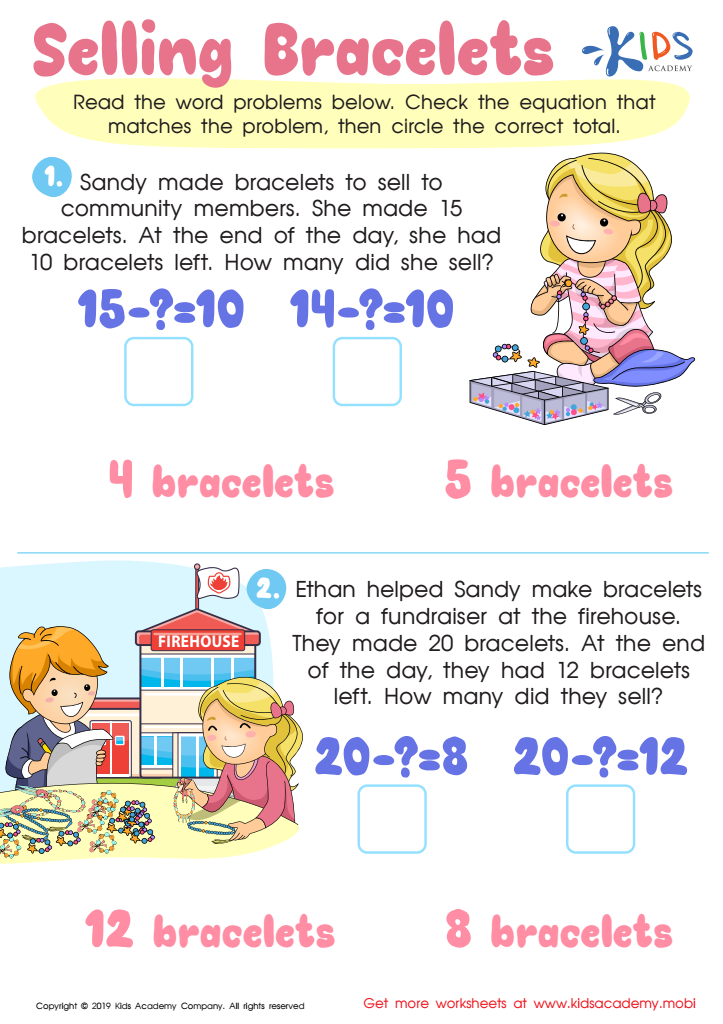
Selling the Bracelets Worksheet








Teaching money management skills, along with basic addition and subtraction, to children aged 4-9 is crucial for several reasons. First, these skills lay the foundation for financial literacy, which is essential in a consumer-driven society. By learning to recognize coins and bills, children can understand the value of money and develop the ability to make informed decisions.
Addition and subtraction are not just mathematical concepts; they also play a vital role in early money management. For instance, when children learn to add the cost of items while shopping or subtract their allowance, they practice essential math skills in a real-world context. This hands-on experience promotes cognitive development, enhances problem-solving abilities, and fosters critical thinking.
Moreover, these early lessons in money management instill a sense of responsibility and independence. Children who grasp the importance of budgeting, saving, and spending wisely will develop positive financial habits that can last a lifetime. By exposing young learners to these concepts, parents and teachers empower them to navigate their financial futures effectively, ultimately preparing them for adulthood and enabling them to make sound economic choices. In essence, fostering these skills now leads to financially responsible individuals in the future.








