
Counting proficiency Addition Worksheets for Ages 4-9
11 filtered results
Difficulty Level
Grade
Age
-
From - To
Subject
Activity
Standards
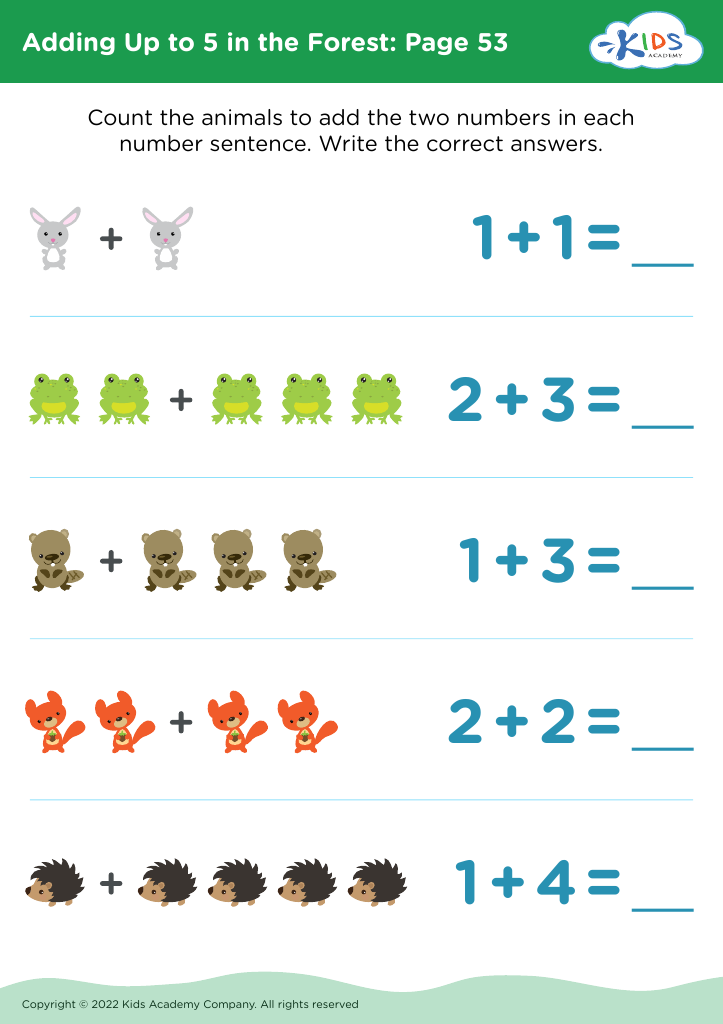
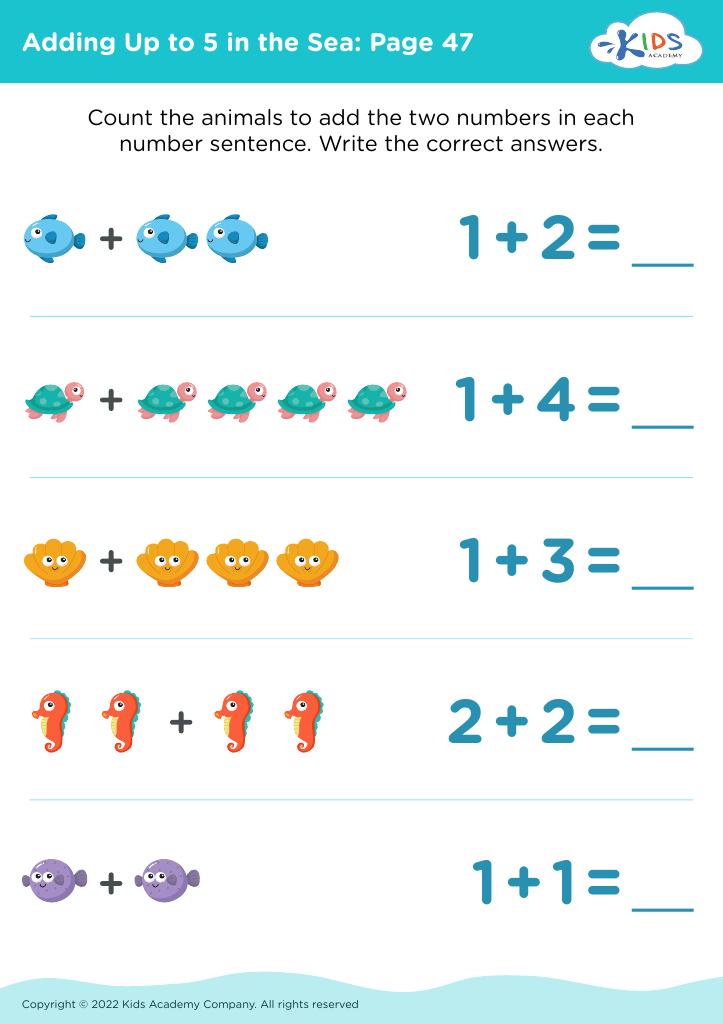
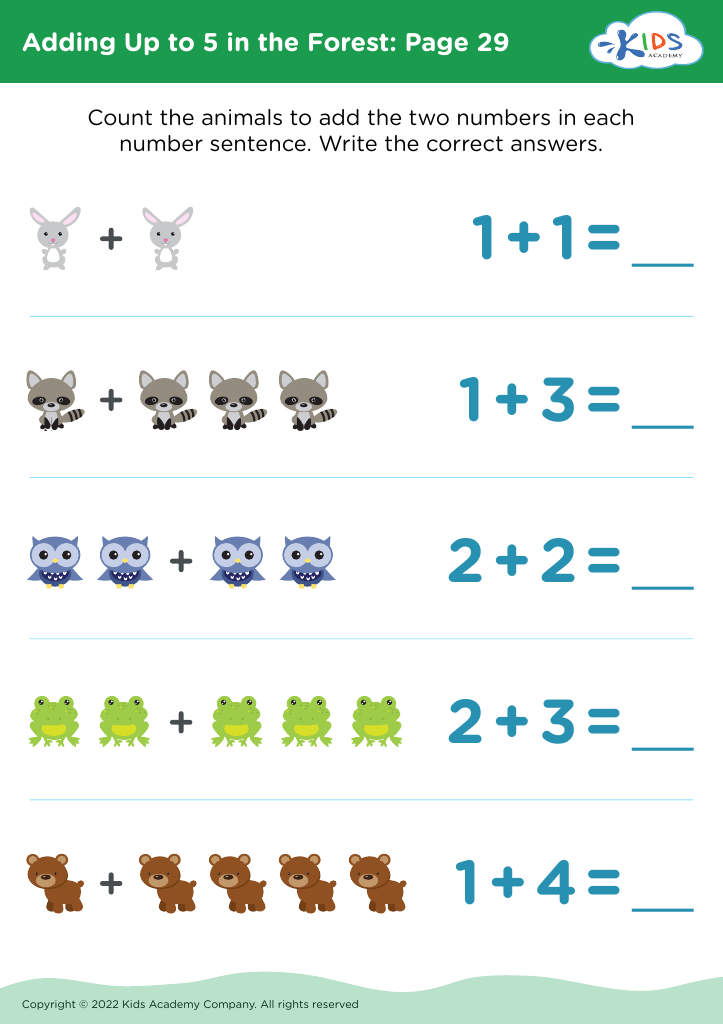
Boost your child's math skills with our "Counting Proficiency Addition Worksheets for Ages 4-9"! Ideal for early learners, these engaging worksheets help children grasp fundamental addition concepts while enhancing their counting proficiency. Designed to cater to various learning styles, these printables include colorful visuals and hands-on activities that make math fun. Perfect for home or classroom use, they offer a structured approach to developing a strong foundation in addition. Watch your child build confidence and improve their math skills with ease. Download today and start your little learner on the path to mathematical success!
Favorites
With answer key
Interactive
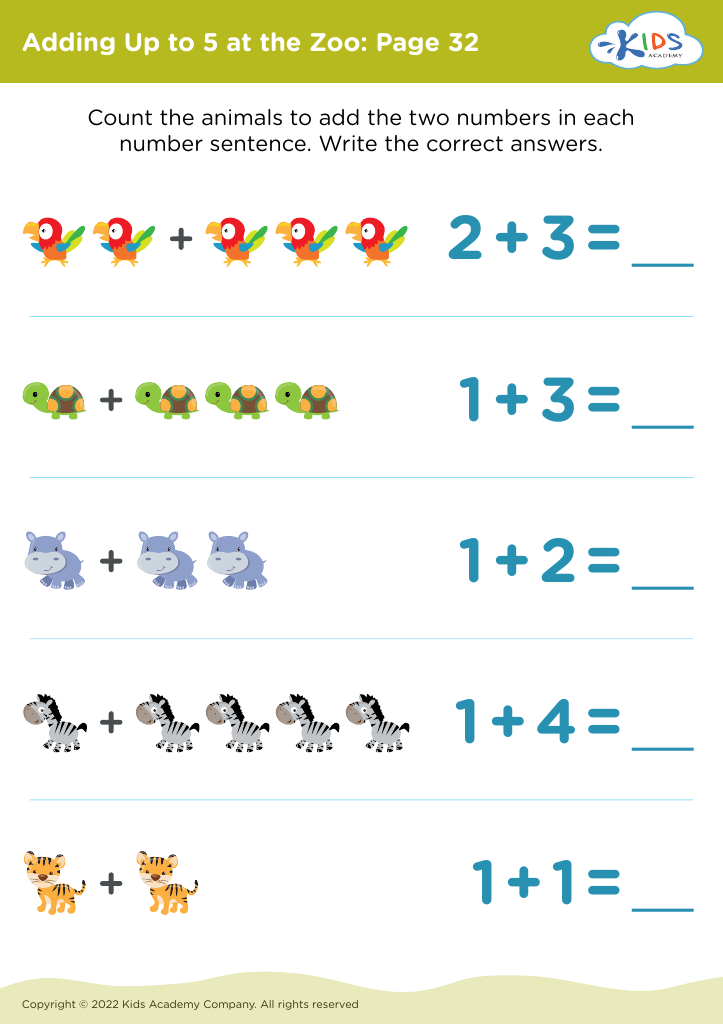
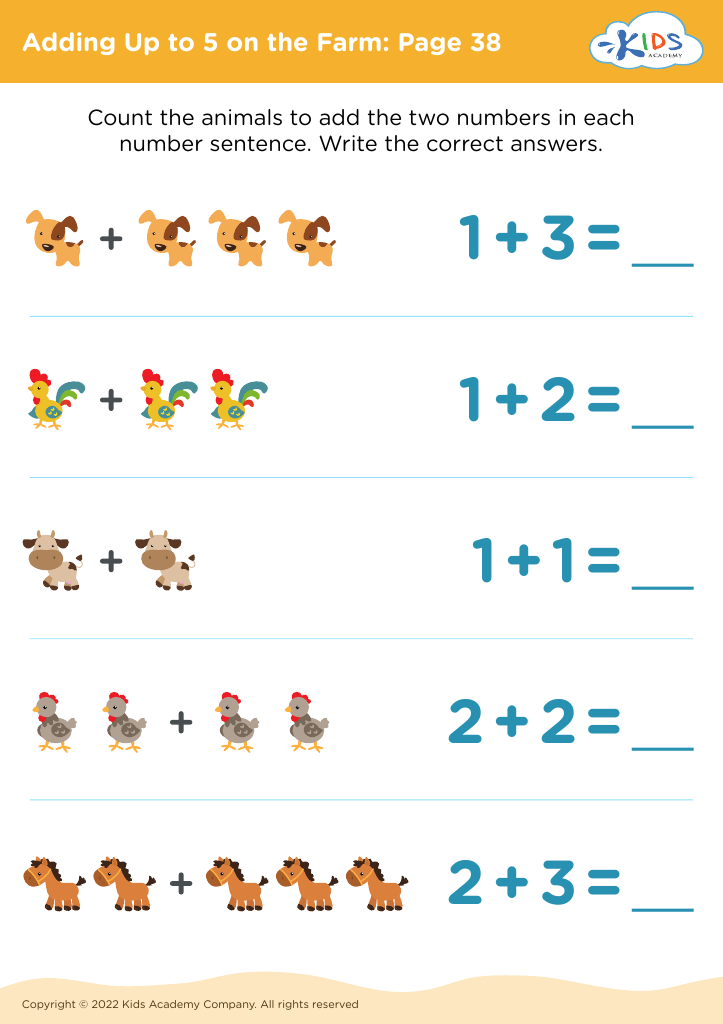
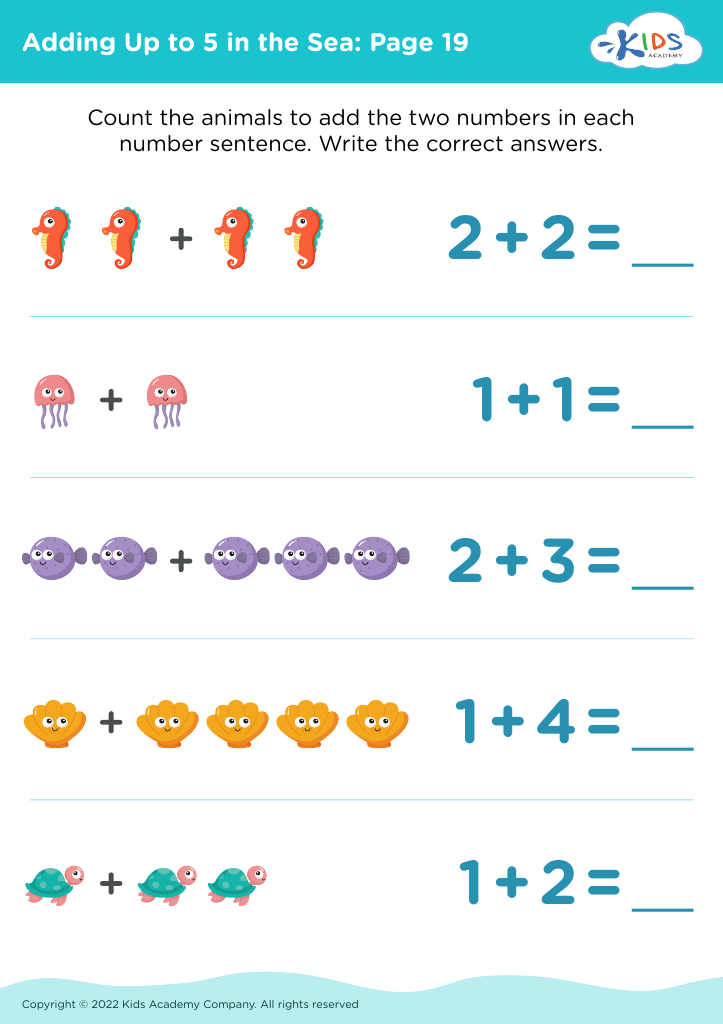
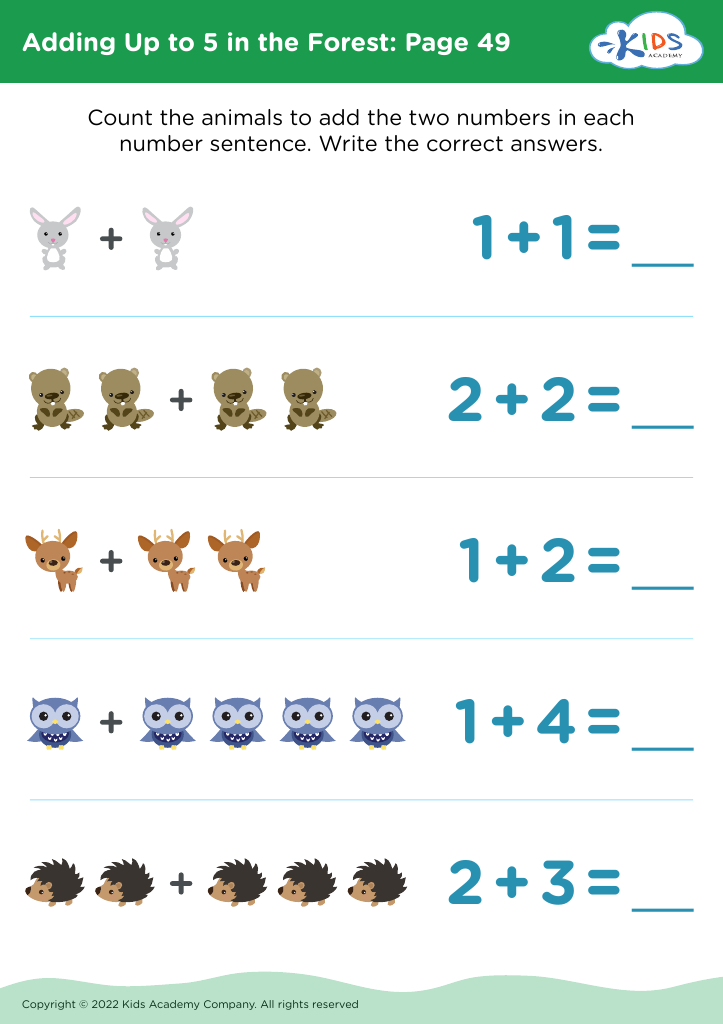
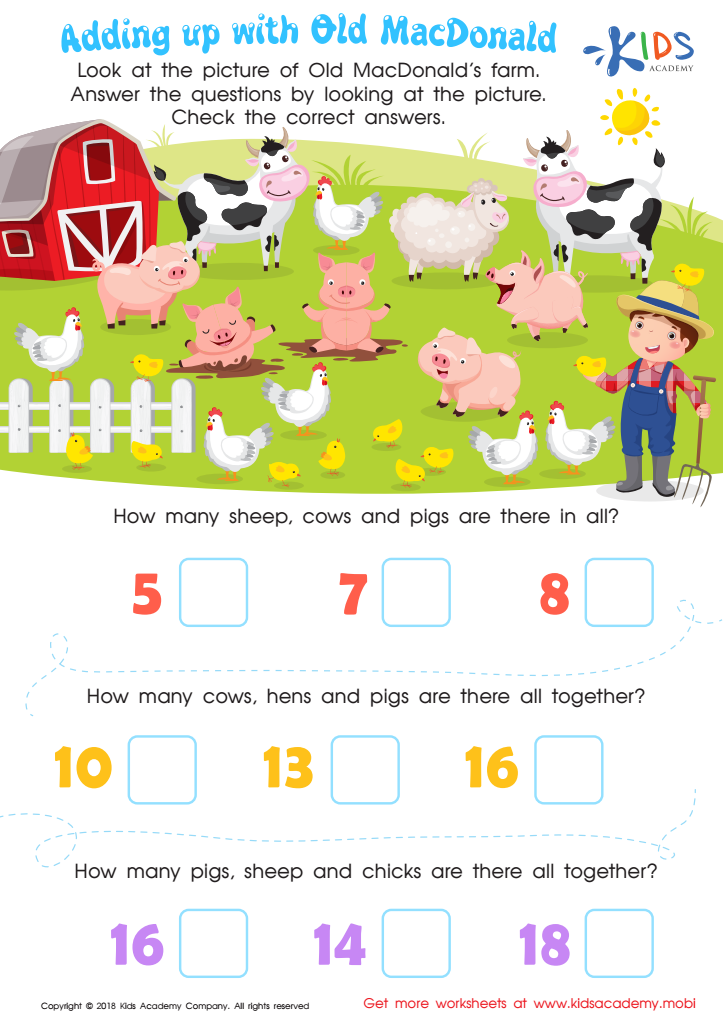
Adding Up with Old MacDonald Worksheet
Old MacDonald needs help counting his animals! Give your little math whiz a fun challenge with a free PDF worksheet. They'll love counting the animals and doing basic addition with two or three addends. Who knew math could be so much fun on the farm?
 Assign to My Students
Adding Up with Old MacDonald Worksheet
Worksheet
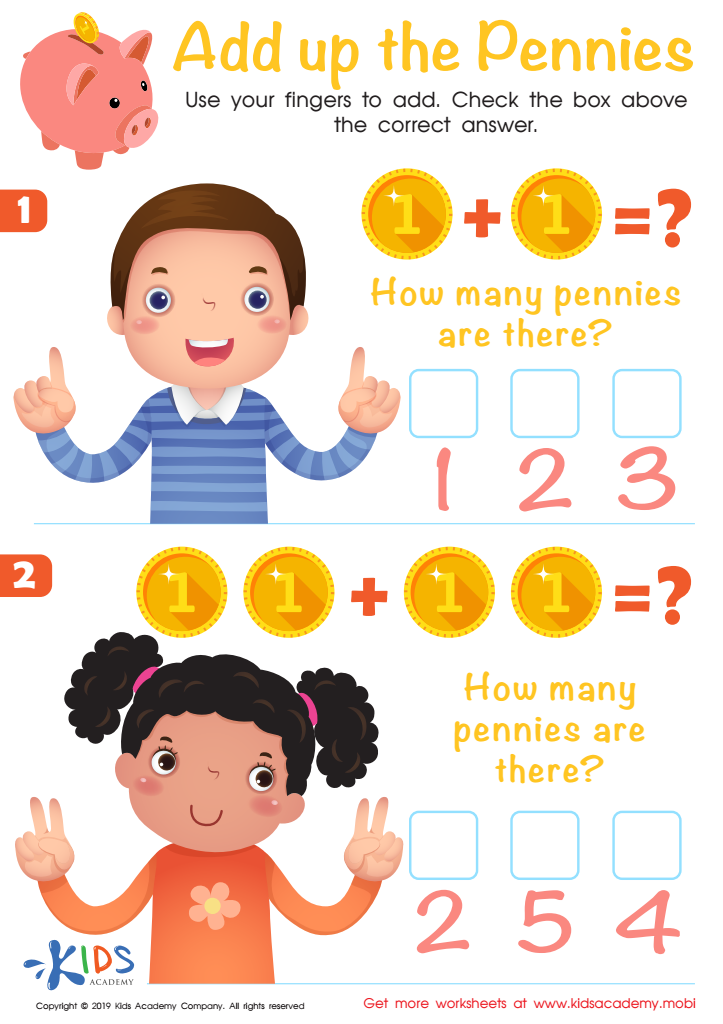
Add up the Pennies Worksheet
Help your kids ace their math skills with this simple worksheet! You can guide them to use their fingers to add numbers and then check the box above the correct answer. With practice and your support, they can become faster and better at adding numbers. No sweating required!
Add up the Pennies Worksheet
Worksheet
Join Kids Academy for Free
Who is primarily going to use this learning content?



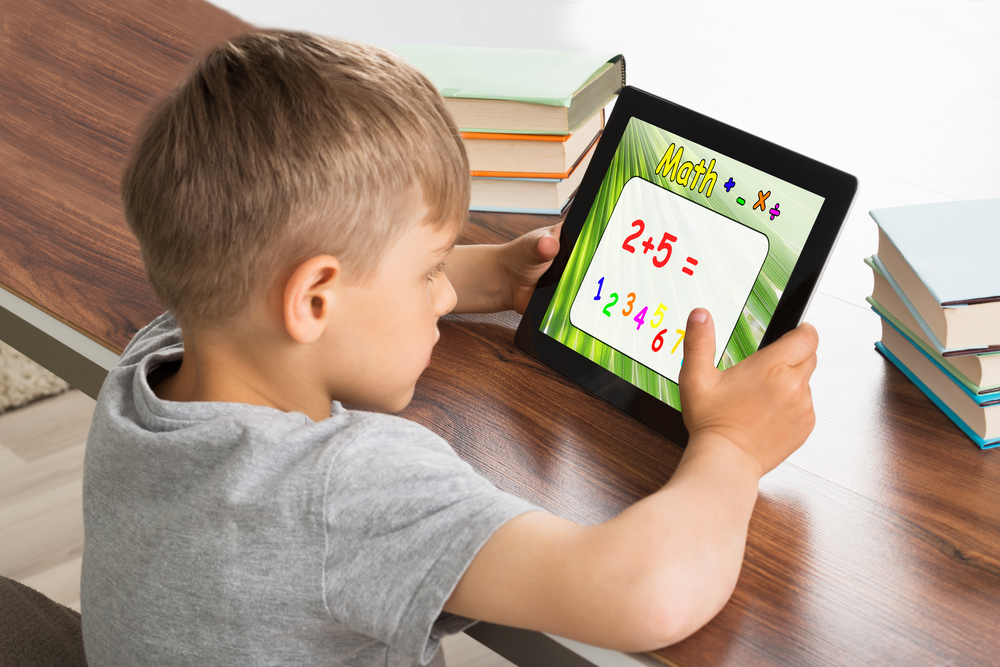




Counting proficiency and addition skills are fundamental building blocks for a child's mathematical development, making their importance undeniable for children aged 4-9. Counting helps children understand number concepts, the sequence of numbers, and the idea that each number represents a specific quantity. This groundwork is essential for grasping more complex math concepts later on.
Addition, on the other hand, is one of the four basic arithmetic operations foundational to all areas of mathematics. Developing proficiency in addition isn't just about being able to solve math problems; it lays the groundwork for logical thinking, problem-solving, and analytical skills that are applicable in everyday life.
For parents and teachers, fostering these skills early on is crucial. Early proficiency in counting and addition can lead to a more positive attitude towards math, boosting a child's confidence and academic performance. Moreover, early mastery of these basic skills ensures that children are not left behind when they progress to more advanced mathematical concepts in higher grades.
In a broader context, early math proficiency is linked to better outcomes in other academic areas as well, including reading and comprehension skills. By prioritizing counting and addition skills, parents and teachers set the stage for a child's lifelong learning and critical thinking abilities.








