Numeracy development Addition Worksheets for Ages 4-9
3 filtered results
-
From - To
Explore our engaging Numeracy Development Addition Worksheets designed for children aged 4-9. These resources are perfect for fostering a strong foundation in mathematics through fun and interactive activities. Our worksheets cover essential addition concepts, helping young learners develop vital skills like number recognition, counting, and problem-solving. With easy-to-follow instructions and colorful visuals, these materials make learning enjoyable and effective. Ideal for classroom use or at-home practice, our addition worksheets cater to various learning styles and abilities. Support your child's mathematical journey and build their confidence in numbers with our thoughtfully crafted resources! Start your numeracy adventure today!
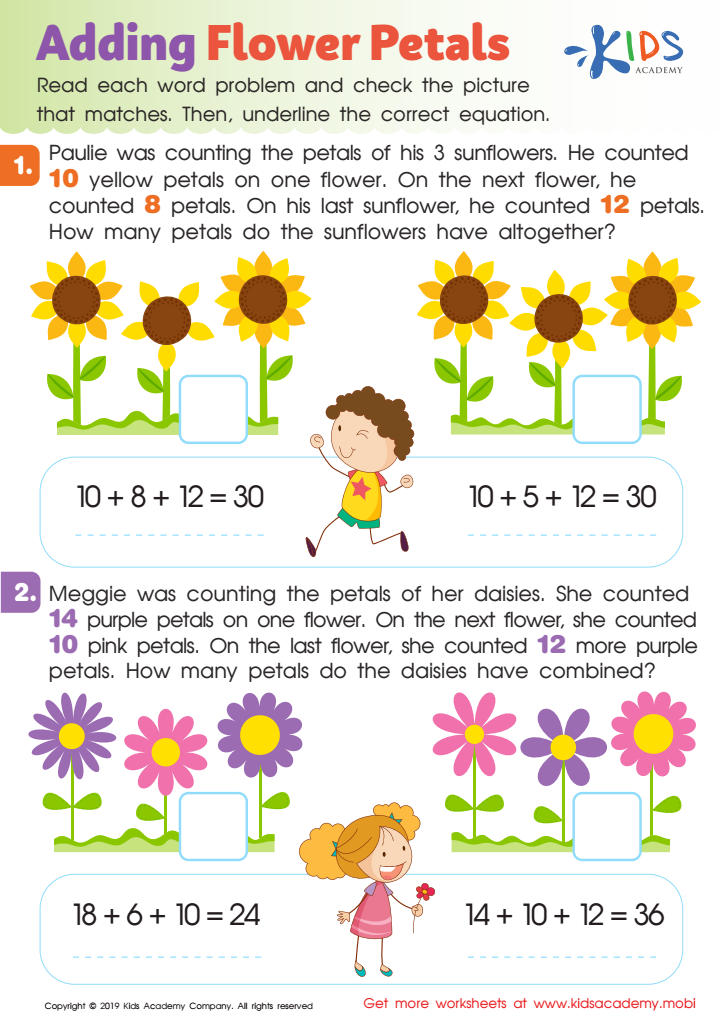
Adding Flower Petals Worksheet
 Assign to My Students
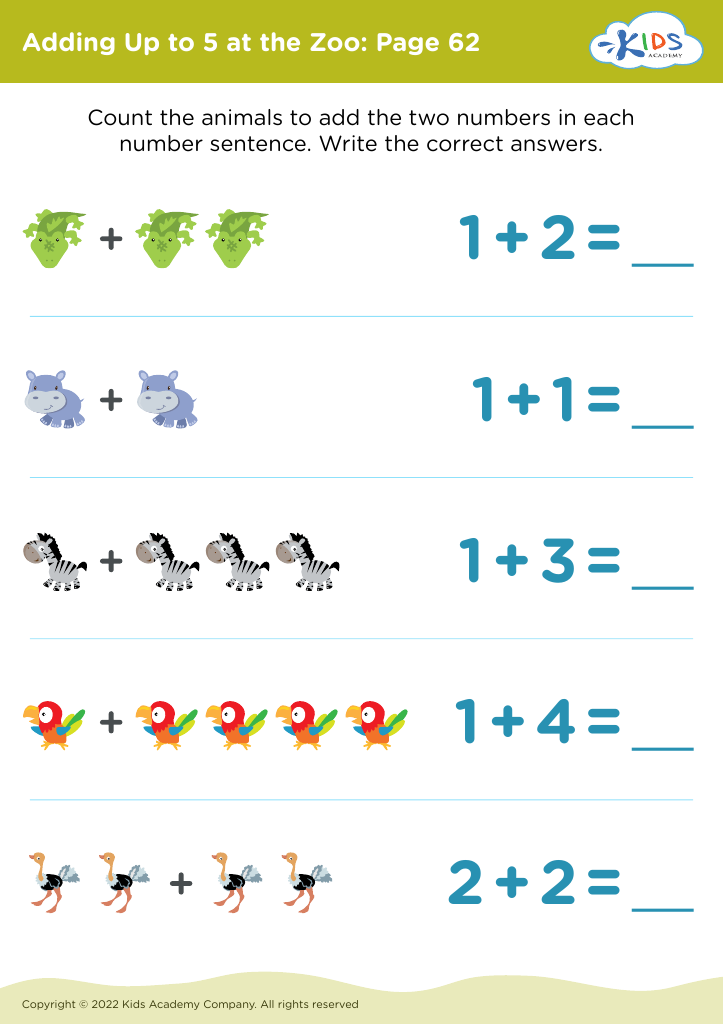
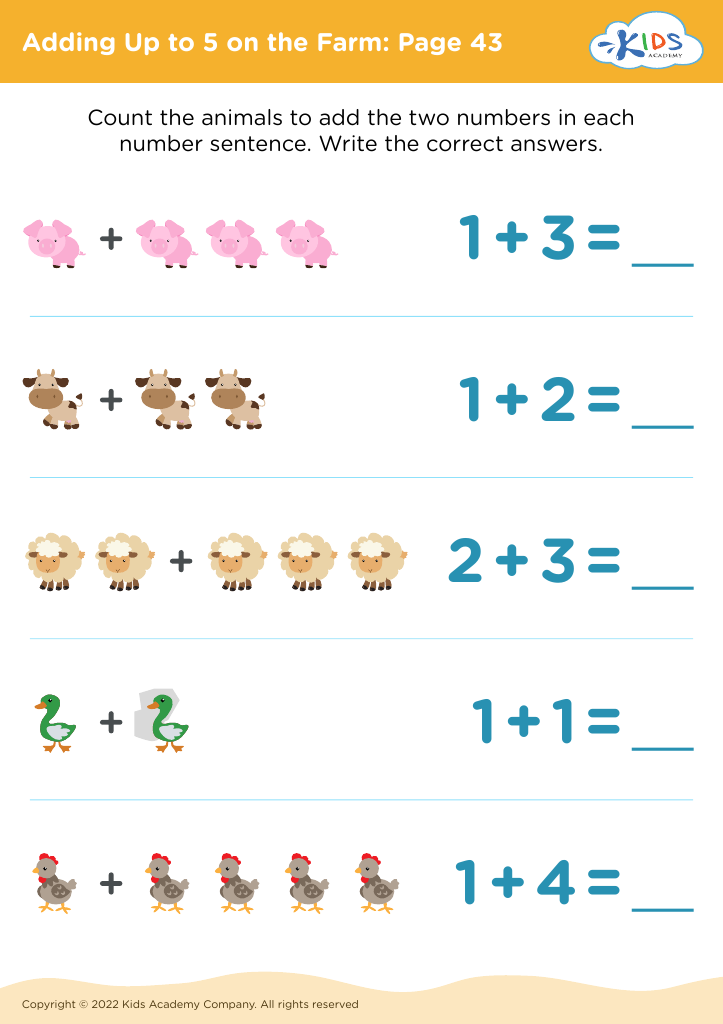








Numeracy development, particularly in addition, is a fundamental skill for children aged 4-9. During these formative years, children build the foundation for mathematical understanding, which is essential not only for academic success but also for everyday problem-solving. Parents and teachers should care about fostering addition skills in young learners for several reasons.
Firstly, mastering addition enhances critical thinking and cognitive abilities. As children learn to manipulate numbers and solve problems, they develop logical reasoning skills that extend beyond mathematics. This foundational learning supports their approach to more complex mathematical concepts in the future.
Secondly, a strong grasp of addition boosts confidence. When children can confidently add numbers, they are more likely to engage in and enjoy mathematical activities, leading to a positive attitude towards learning in general. This self-confidence reduces math anxiety, which can be prevalent among children.
Moreover, addition is often the gateway to understanding more advanced mathematical concepts, such as subtraction, multiplication, and division. Early numeracy skills are closely linked to long-term academic outcomes and eventually influence critical life skills, such as budgeting and problem-solving in daily situations.
In summary, nurturing addition skills in early childhood not only builds a pivotal academic foundation but also fosters essential cognitive and social skills for lifelong learning.








