Filters

158 filtered results

Clear all filters
Favorites
With answer key
Interactive

158 filtered results

Difficulty Level

Grade


Check out this FREE Trial Lesson on Addition for age 4-9!

T

Favorites
With answer key
Interactive
  • 4-9
  • Understanding fractions
  • Addition
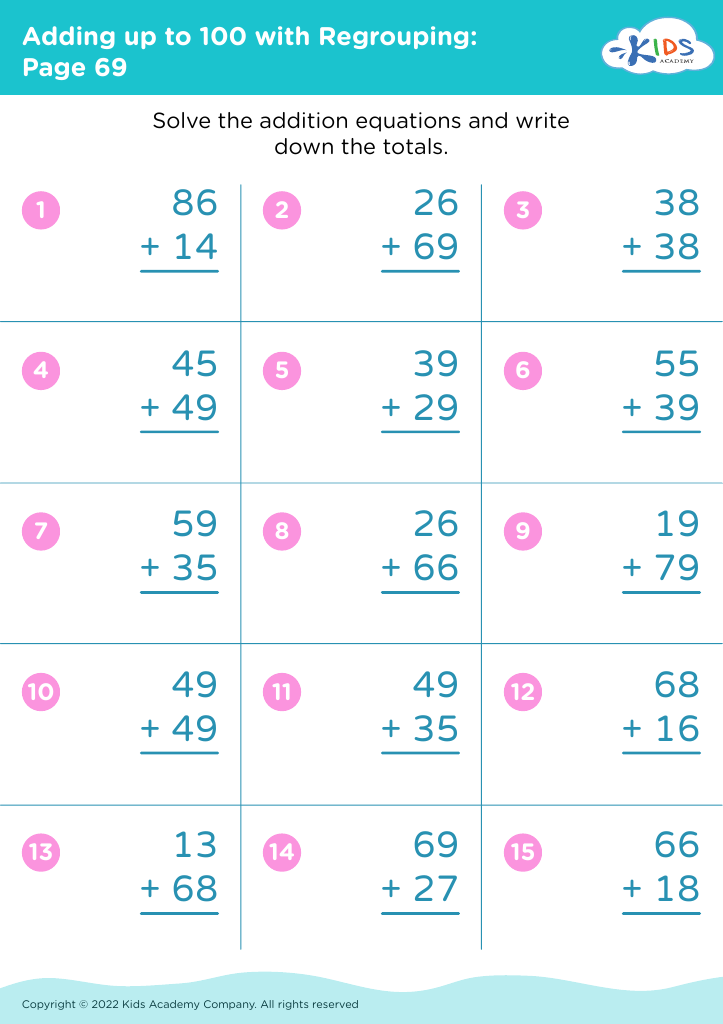
Adding up to 100 with Regrouping: Page 69
Worksheet
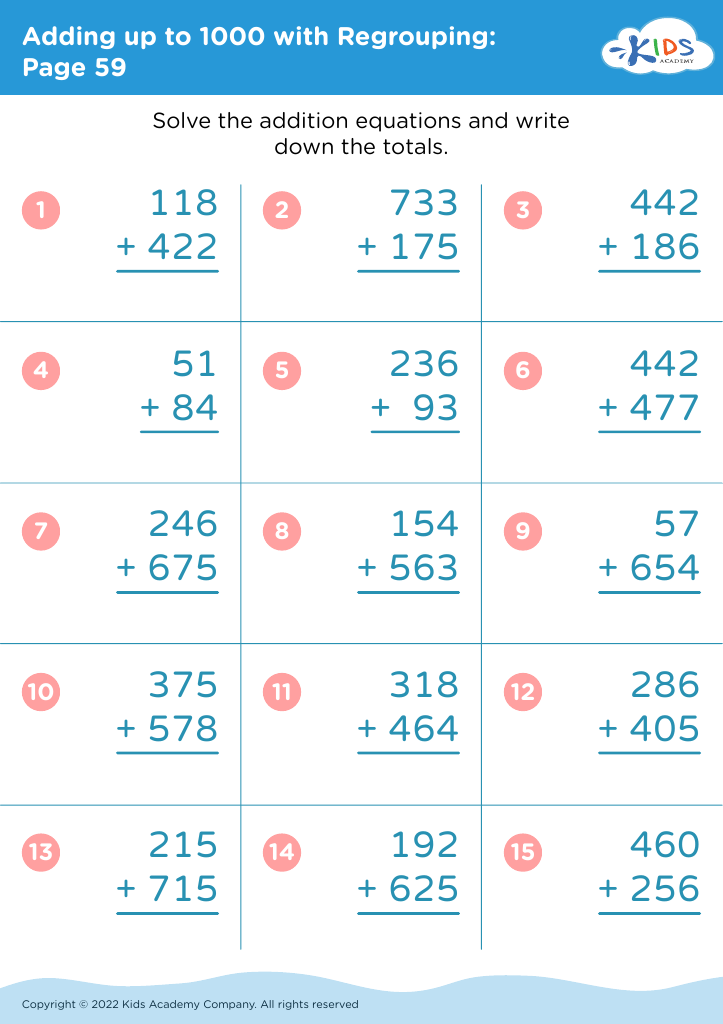
Adding up to 1000 with Regrouping: Page 59
Worksheet
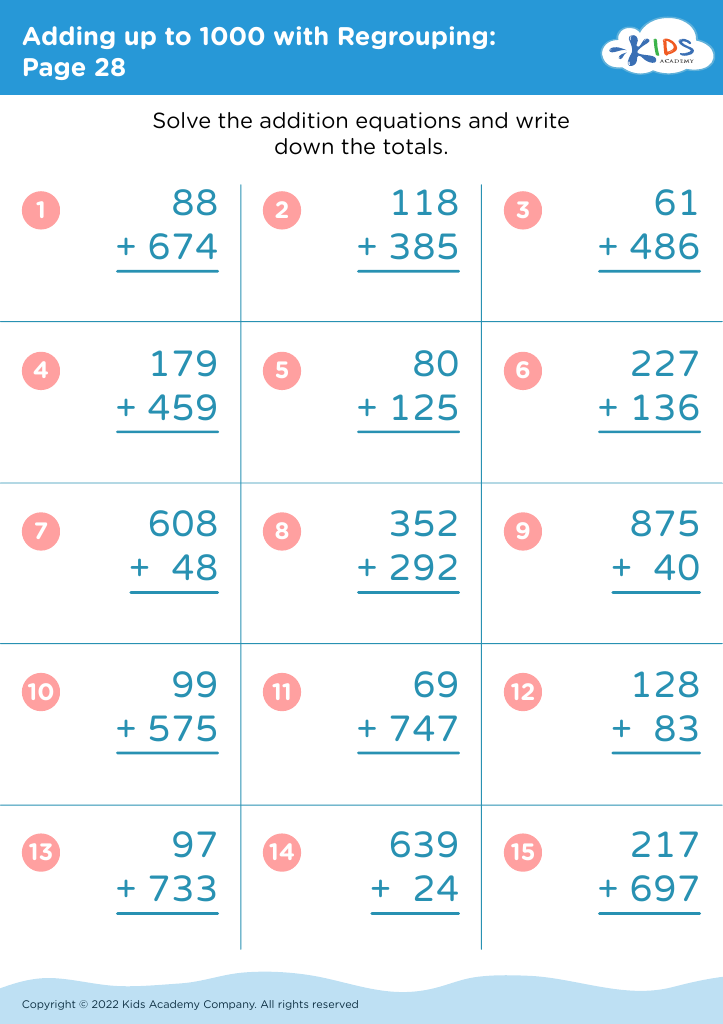
Adding up to 1000 with Regrouping: Page 28
Worksheet
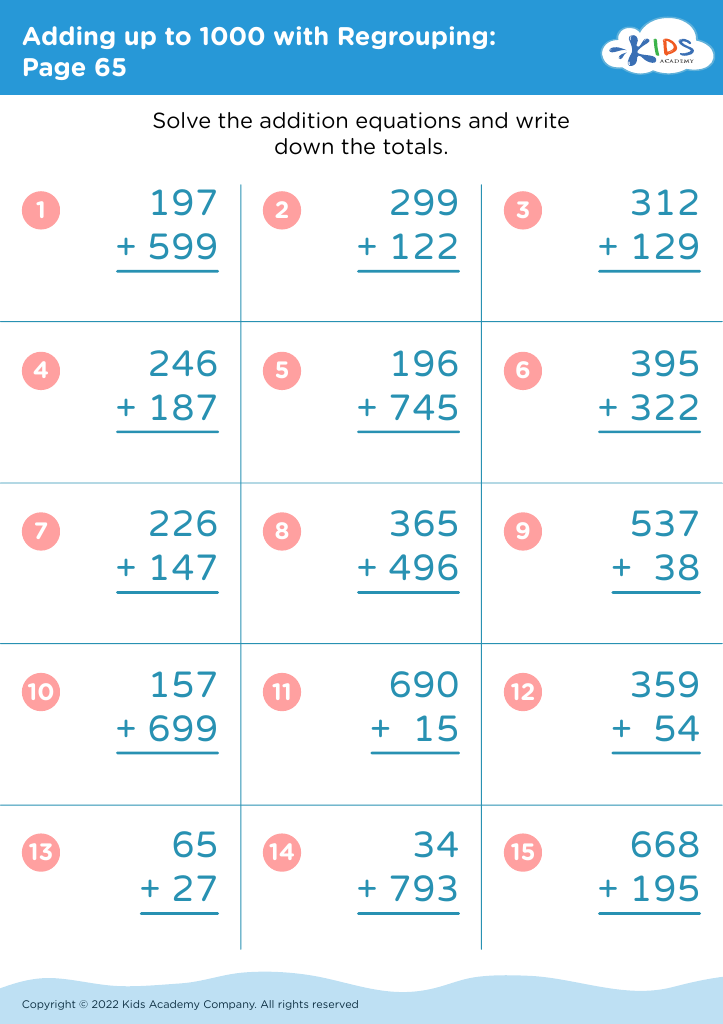
Adding up to 1000 with Regrouping: Page 65
Worksheet
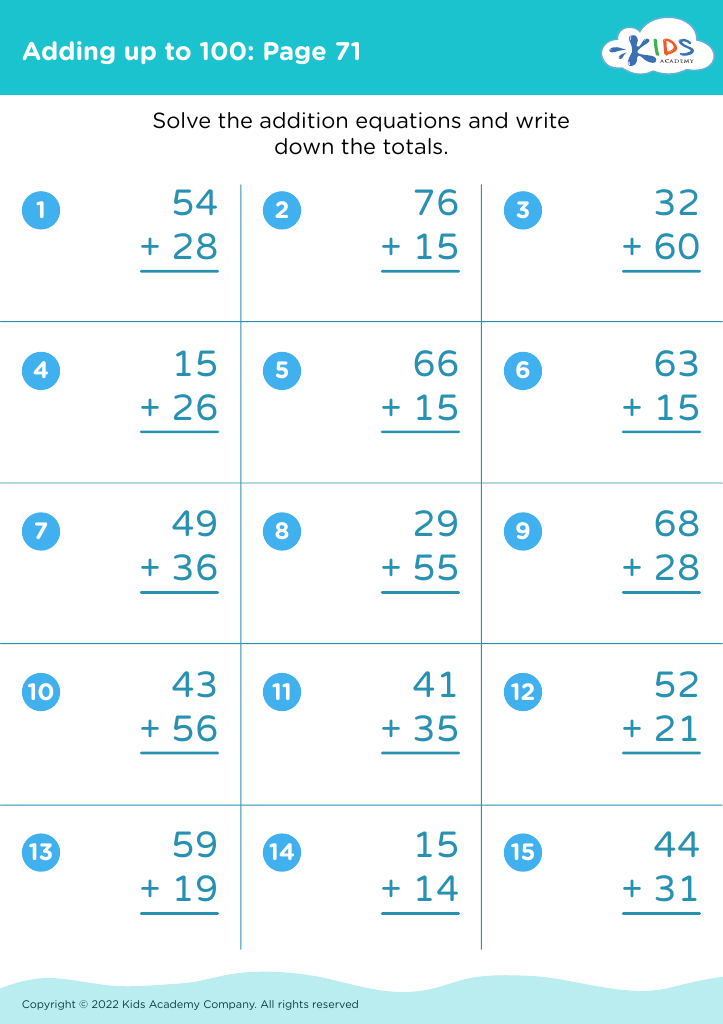
Adding up to 100: Page 71

Adding up to 100: Page 71

Adding up to 100: Page 71
Worksheet
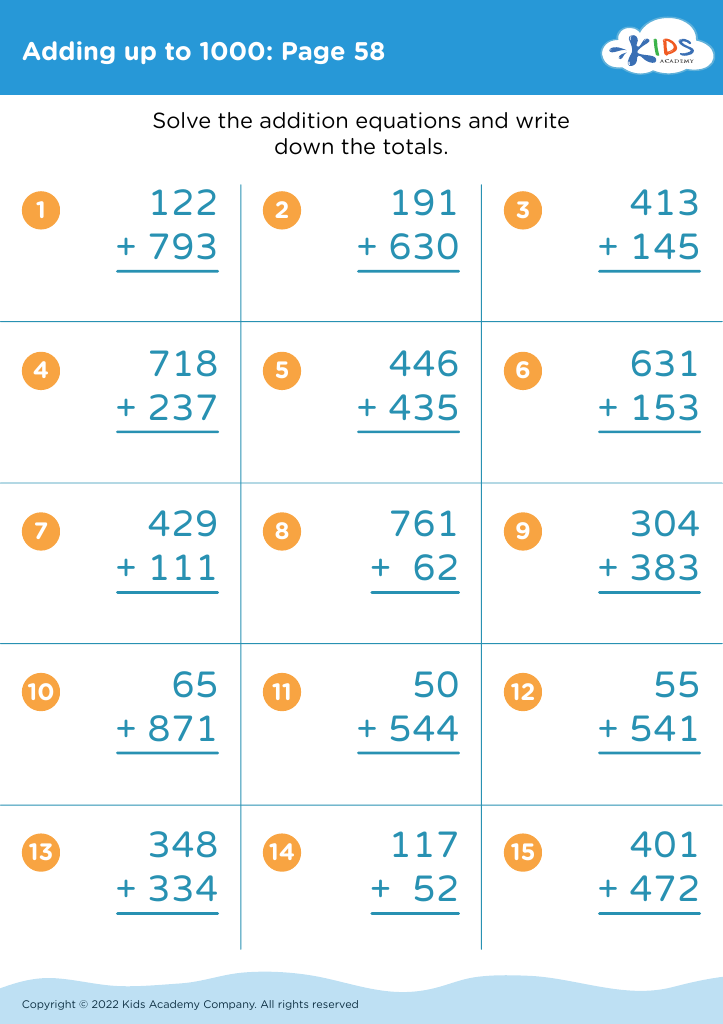
Adding up to 1000: Page 58

Adding up to 1000: Page 58

Adding up to 1000: Page 58
Worksheet
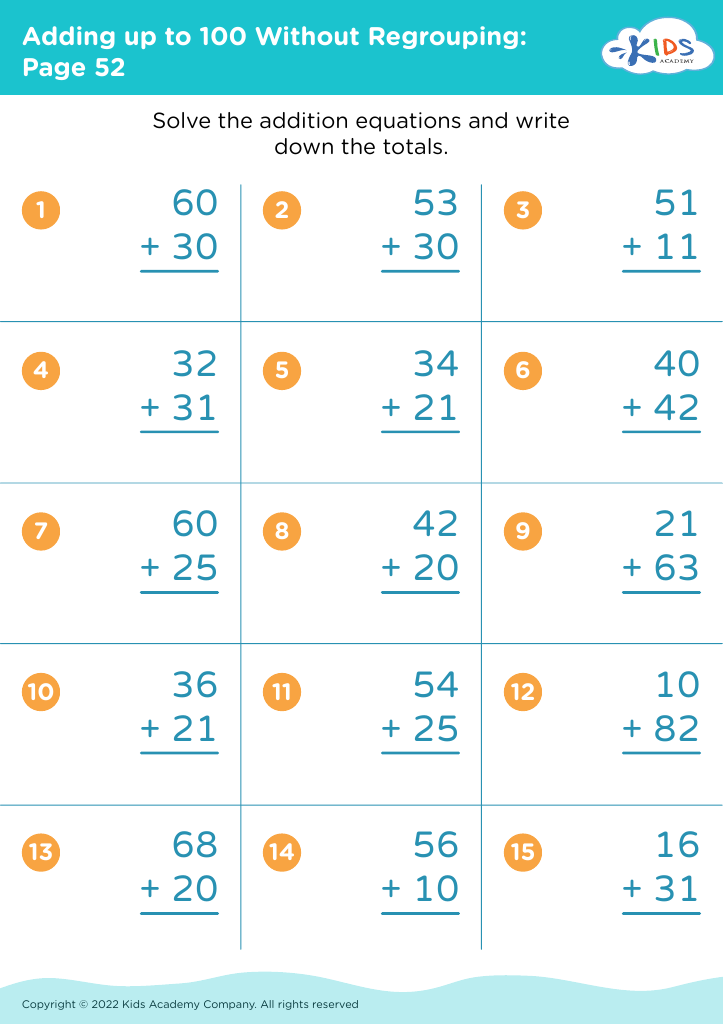
Adding up to 100 Without Regrouping: Page 52
Worksheet
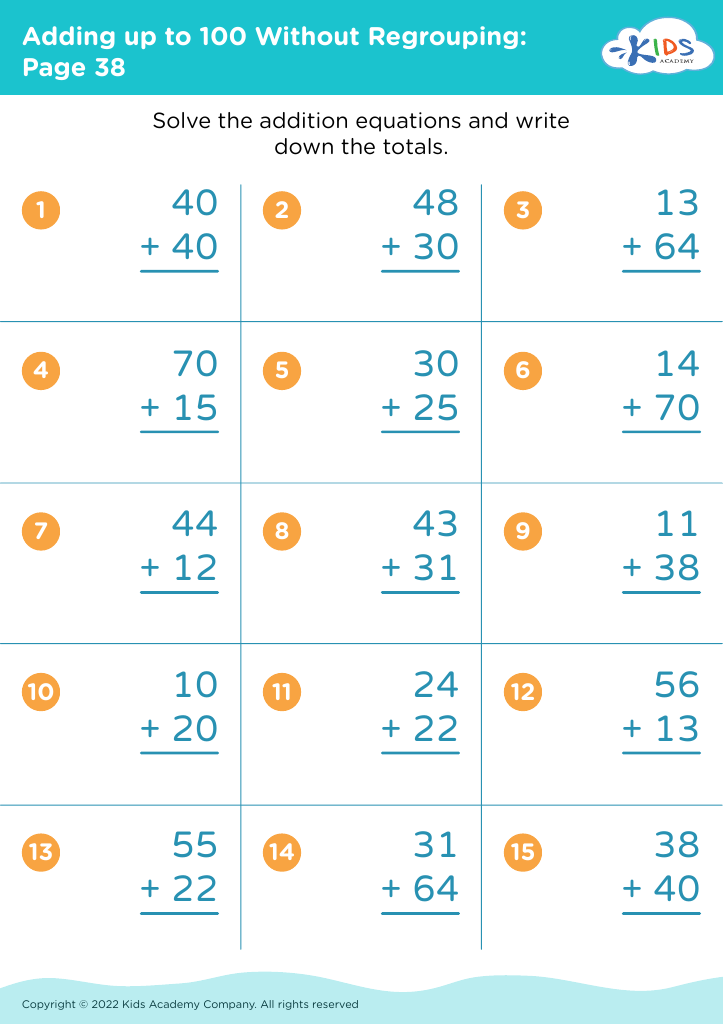
Adding up to 100 Without Regrouping: Page 38
Worksheet
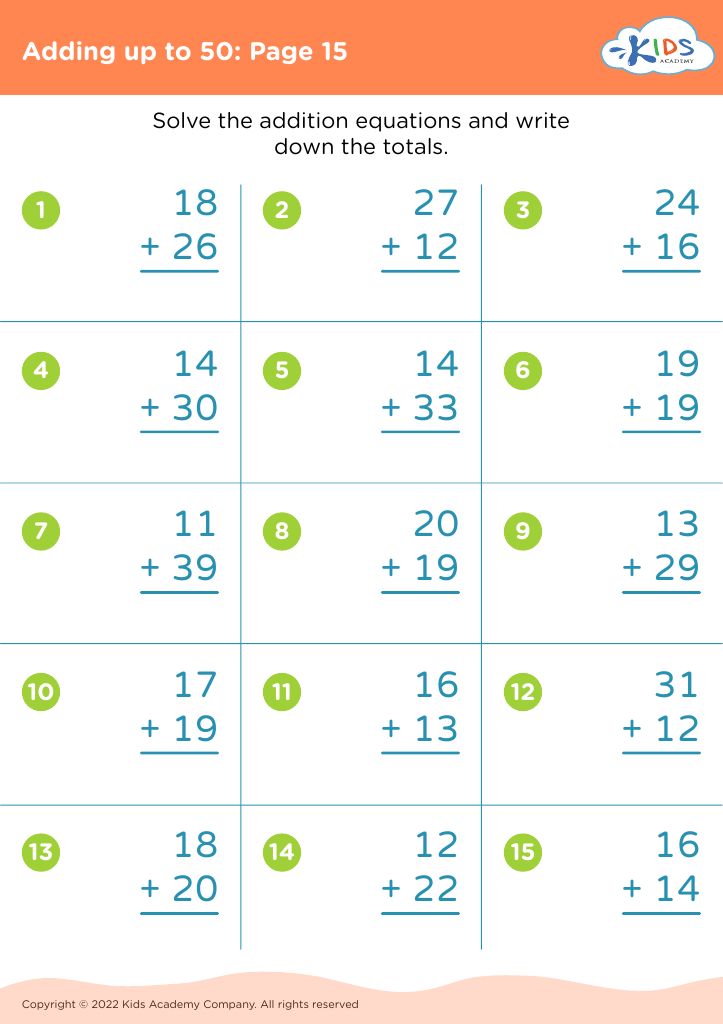
Adding up to 50: Page 15

Adding up to 50: Page 15

Adding up to 50: Page 15
Worksheet
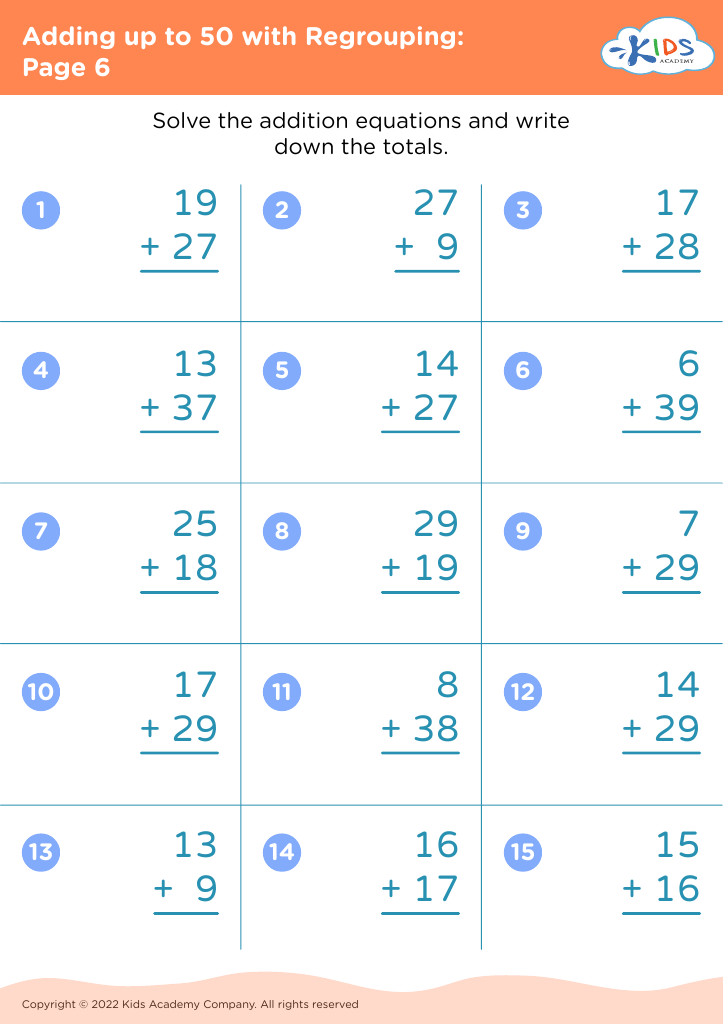
Adding up to 50 with Regrouping: Page 6
Worksheet
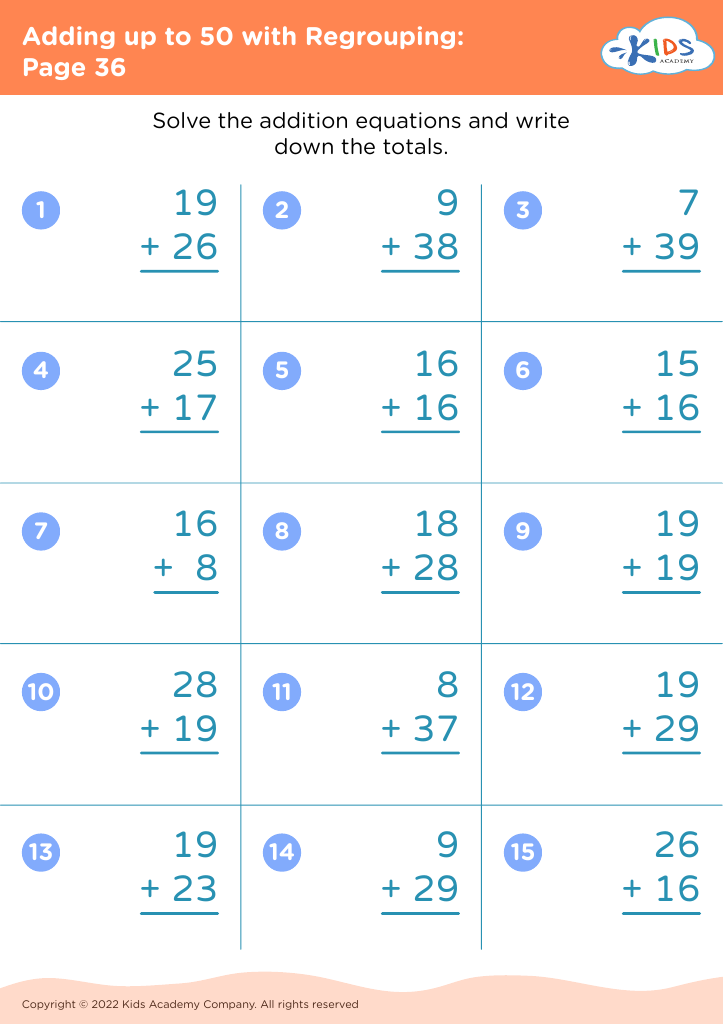
Adding up to 50 with Regrouping: Page 36
Worksheet
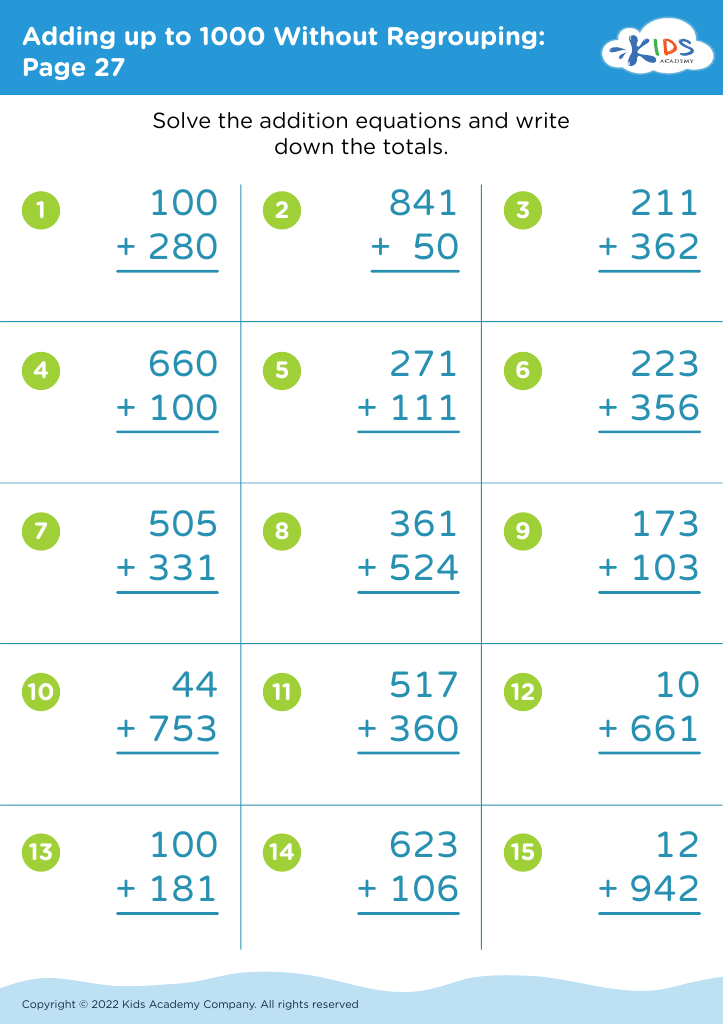
Adding up to 1000 Without Regrouping: Page 27
Worksheet
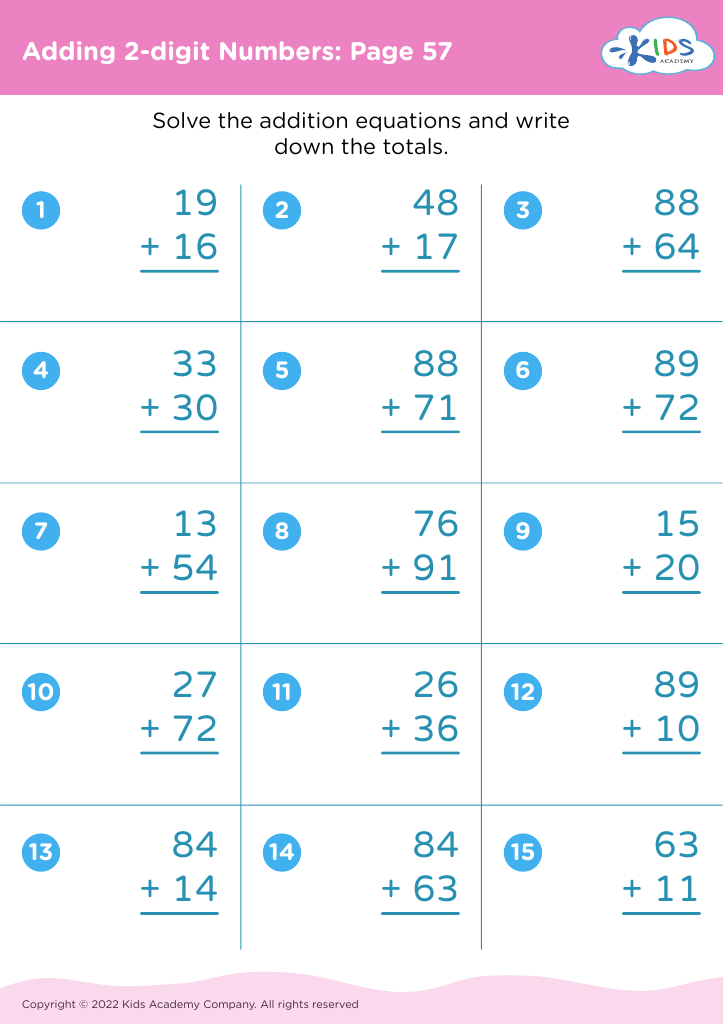
Adding 2-digit Numbers: Page 57

Adding 2-digit Numbers: Page 57

Adding 2-digit Numbers: Page 57
Worksheet
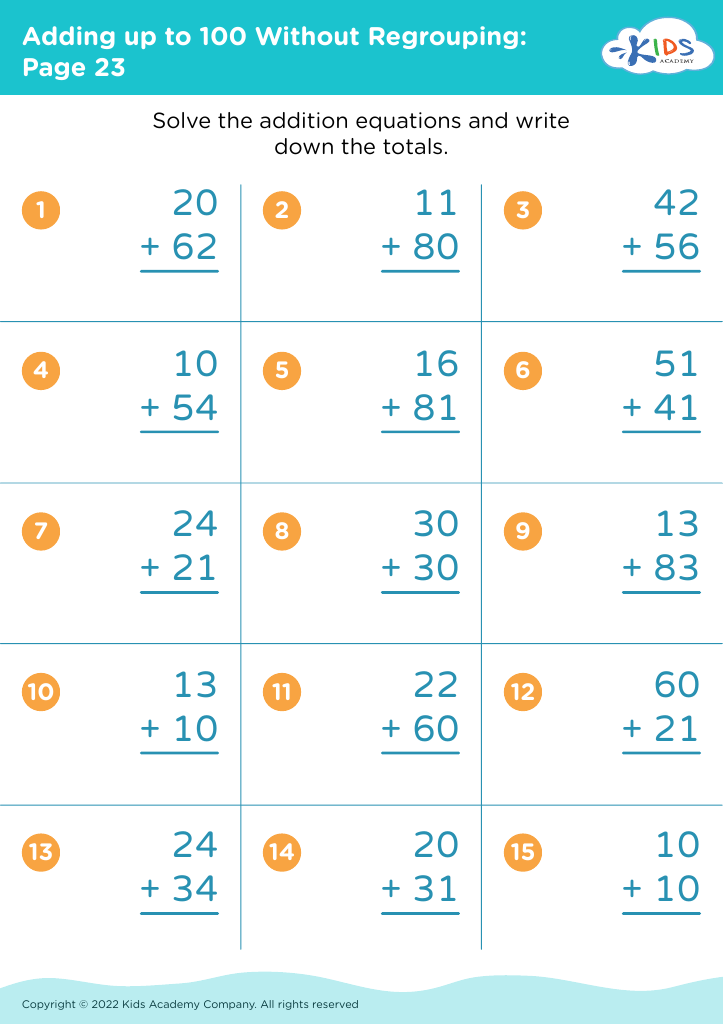
Adding up to 100 Without Regrouping: Page 23
Worksheet
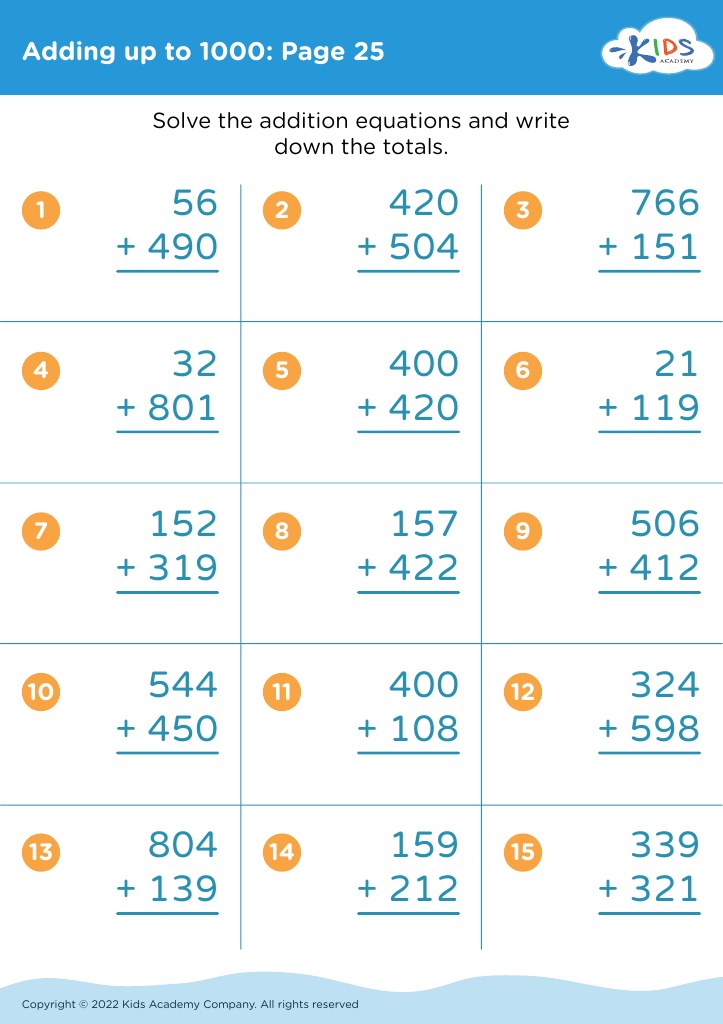
Adding up to 1000: Page 25

Adding up to 1000: Page 25

Adding up to 1000: Page 25
Worksheet
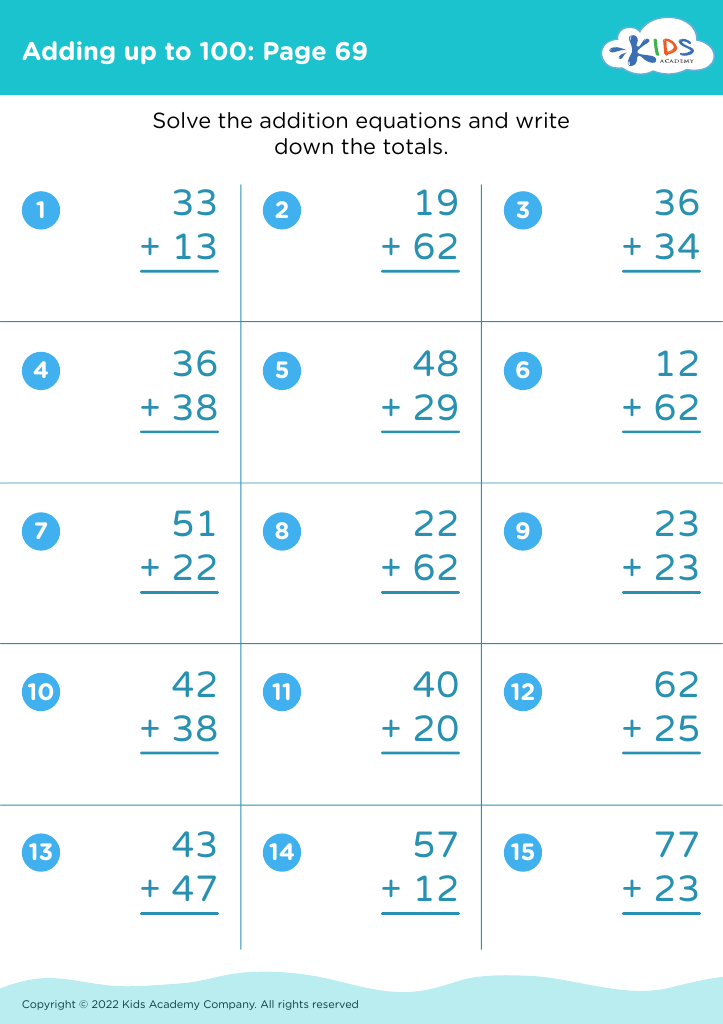
Adding up to 100: Page 69

Adding up to 100: Page 69

Adding up to 100: Page 69
Worksheet
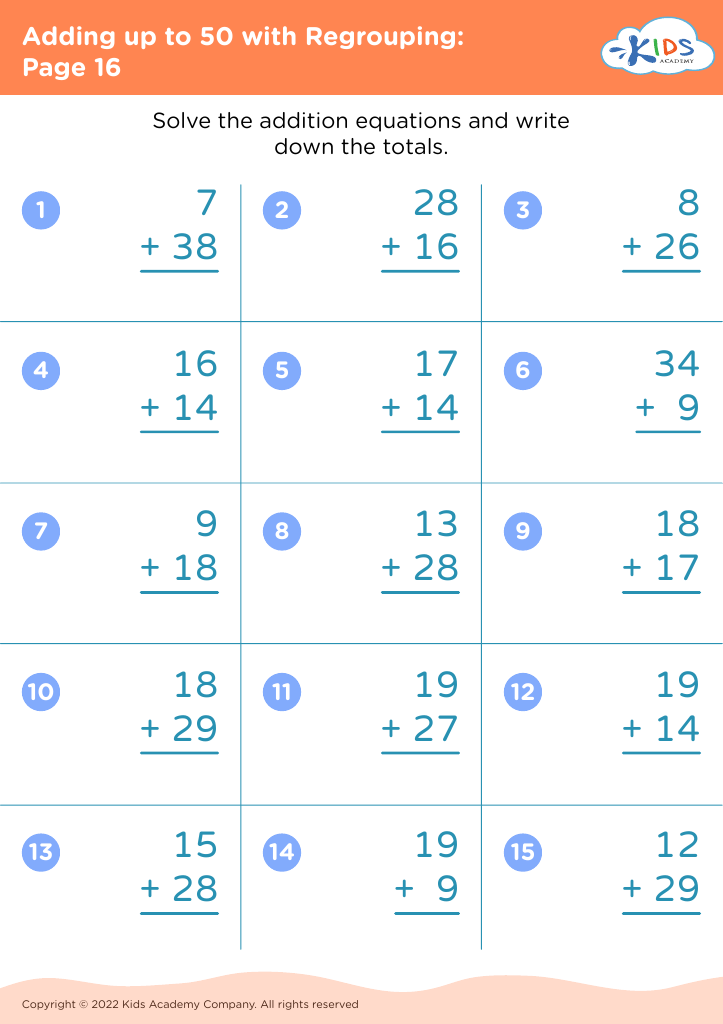
Adding up to 50 with Regrouping: Page 16
Worksheet
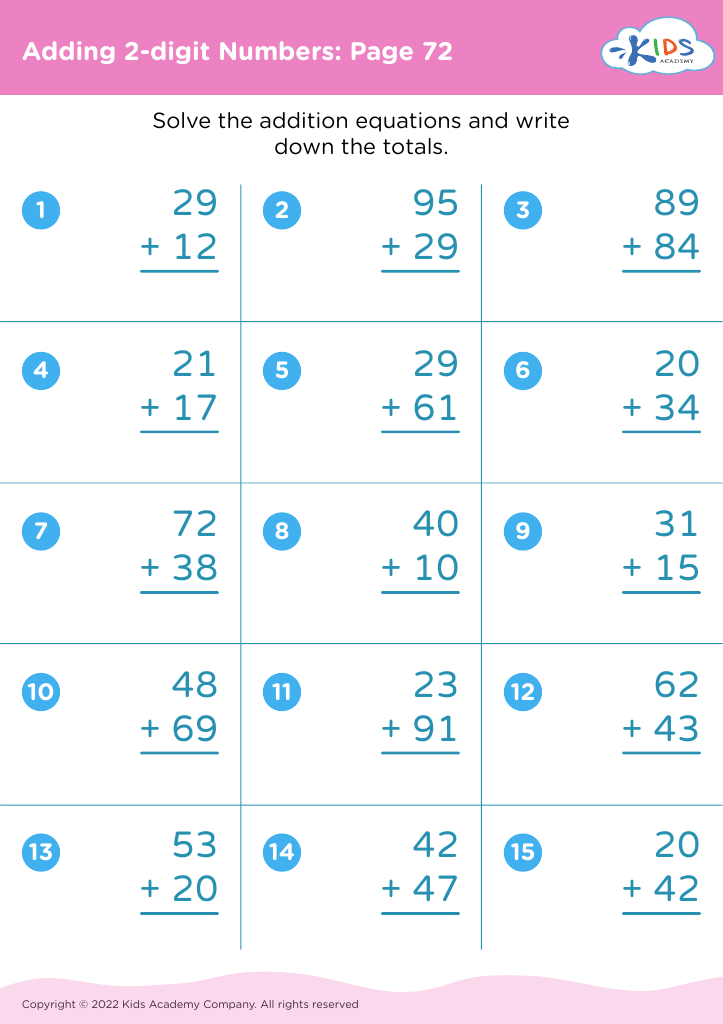
Adding 2-digit Numbers: Page 72

Adding 2-digit Numbers: Page 72

Adding 2-digit Numbers: Page 72
Worksheet
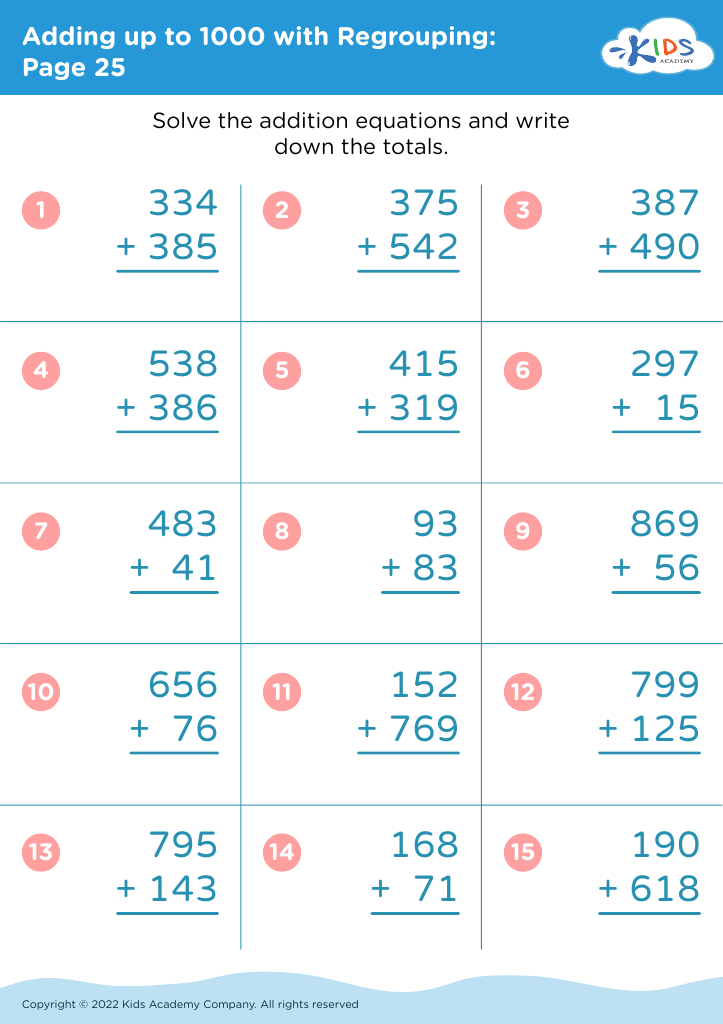
Adding up to 1000 with Regrouping: Page 25
Worksheet
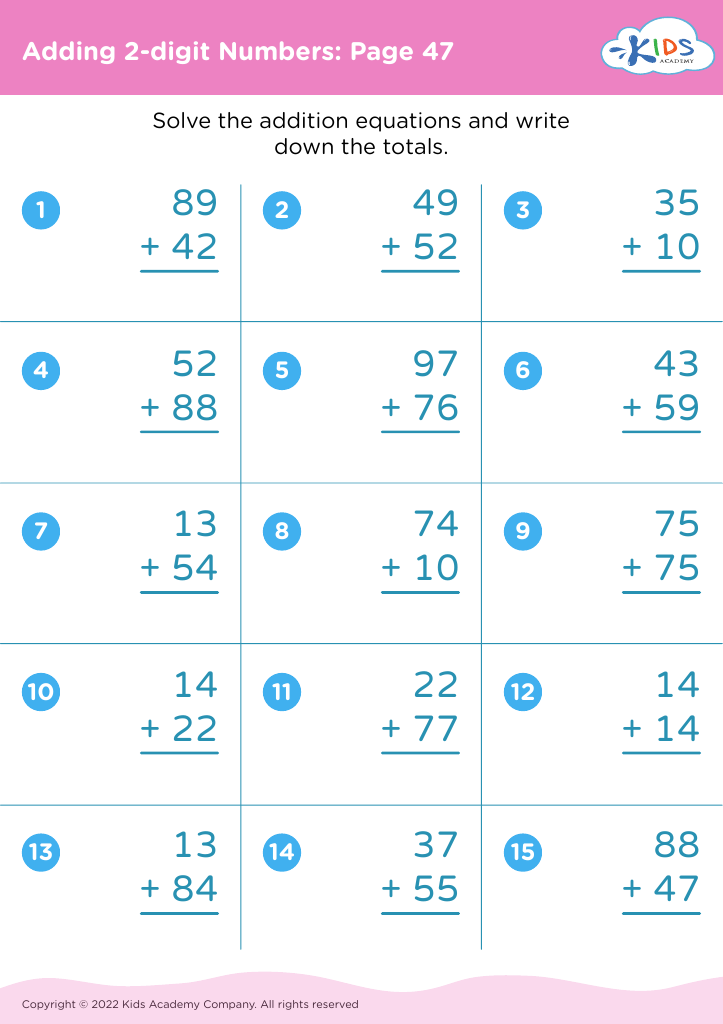
Adding 2-digit Numbers: Page 47

Adding 2-digit Numbers: Page 47

Adding 2-digit Numbers: Page 47
Worksheet
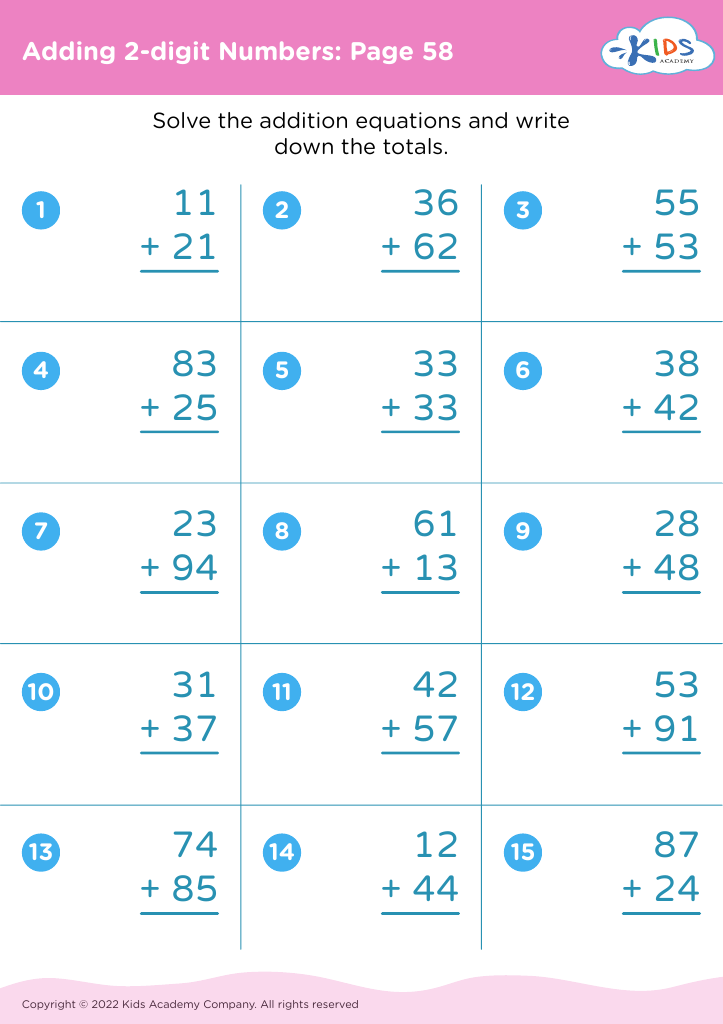
Adding 2-digit Numbers: Page 58

Adding 2-digit Numbers: Page 58

Adding 2-digit Numbers: Page 58
Worksheet
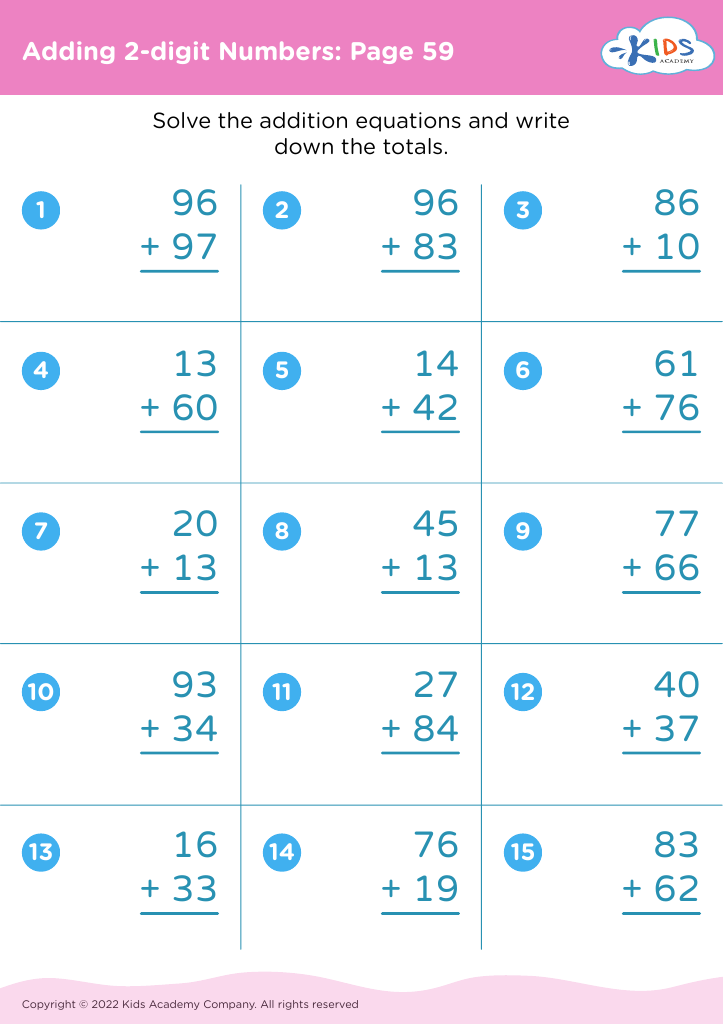
Adding 2-digit Numbers: Page 59

Adding 2-digit Numbers: Page 59

Adding 2-digit Numbers: Page 59
Worksheet
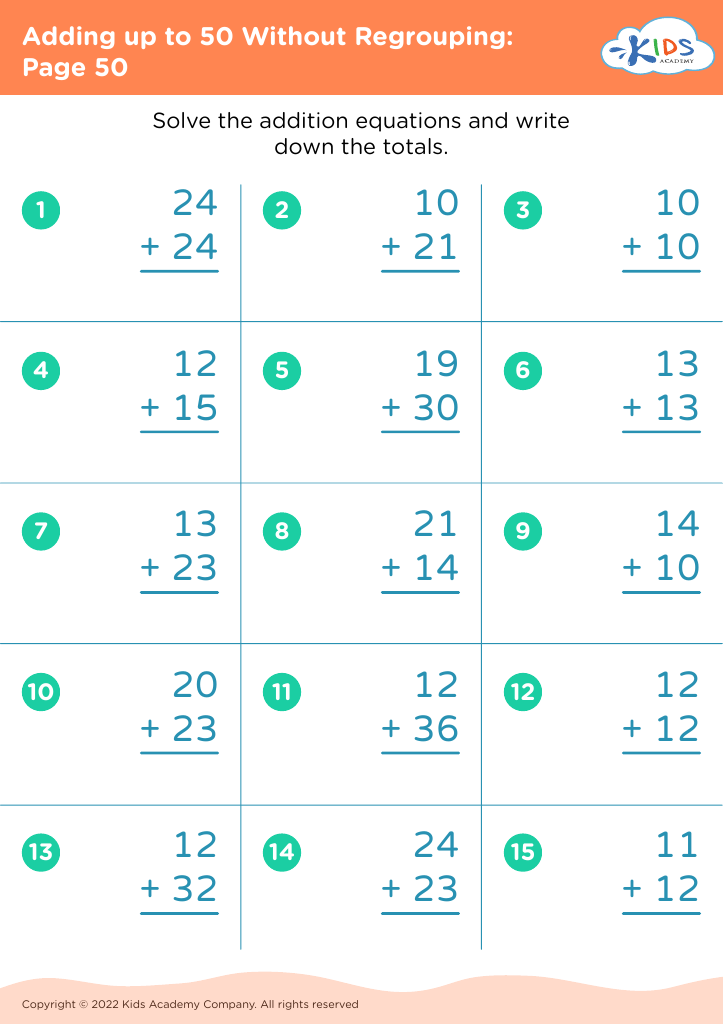
Adding up to 50 Without Regrouping: Page 50
Worksheet
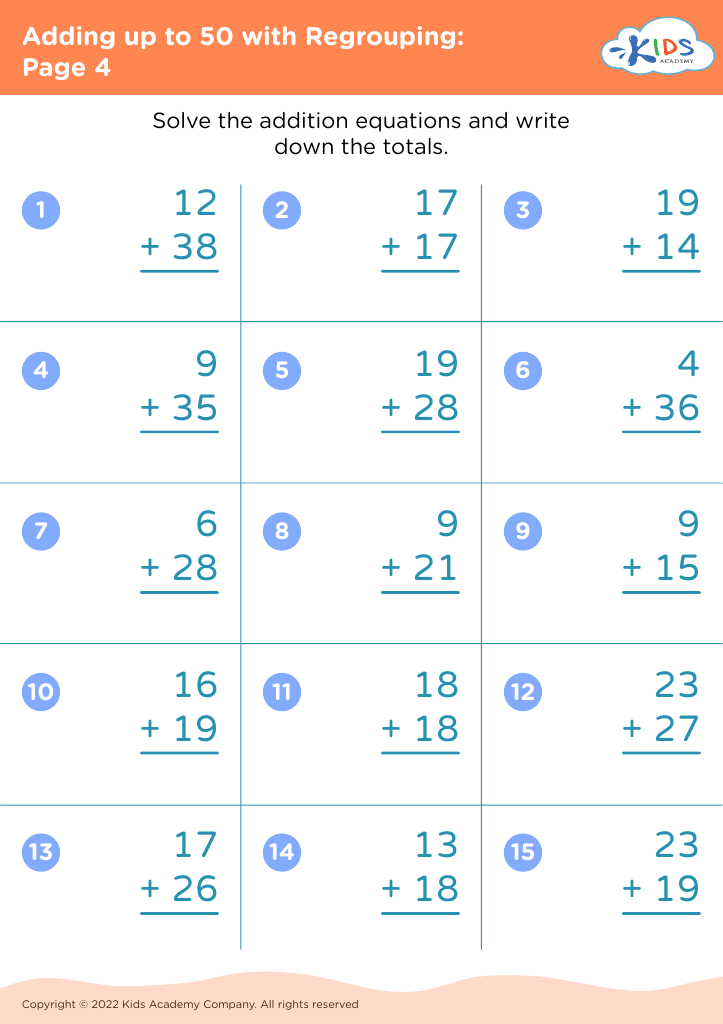
Adding up to 50 with Regrouping: Page 4
Worksheet


Understanding fractions and how to add them is crucial for children aged 4-9 because it lays the foundation for future math skills and critical thinking. Early exposure to fractions helps children recognize parts of a whole, enhancing their ability to grasp concepts like division and ratios as they progress in their education.

Fractions are not just numerical; they reflect real-world situations, such as sharing, cooking, or measuring, making them relatable and tangible for young learners. When parents and teachers focus on understanding fraction addition, they promote analytical thinking and problem-solving abilities. This motivates children to engage with math, fostering a positive attitude toward the subject.

Additionally, mastering fractions early encourages collaboration and communication skills during group activities, as students share their methods and ideas. This teamwork aspect is essential for social development in that age group. Overall, prioritizing fraction addition in early education accelerates academic confidence, improves performance in subsequent mathematical concepts, and cultivates a lifelong appreciation for learning. By investing in these foundational skills, parents and teachers equip children with the necessary tools to succeed in school and beyond.