Vocabulary Building Addition Worksheets for Ages 4-9
5 filtered results
-
From - To
Discover our engaging Vocabulary Building Addition Worksheets designed specifically for children aged 4-9. These dynamic worksheets seamlessly integrate vocabulary development with essential addition skills, making learning both fun and educational. Each activity helps young learners expand their word bank while reinforcing their math abilities, promoting a strong foundation for future academic success. With vibrant illustrations and interactive exercises, these worksheets encourage creative thinking and problem-solving. Whether in the classroom or at home, our vocabulary building resources nurture a love for learning and boost confidence in math and language skills. Explore our collection today and watch your child's growth soar!
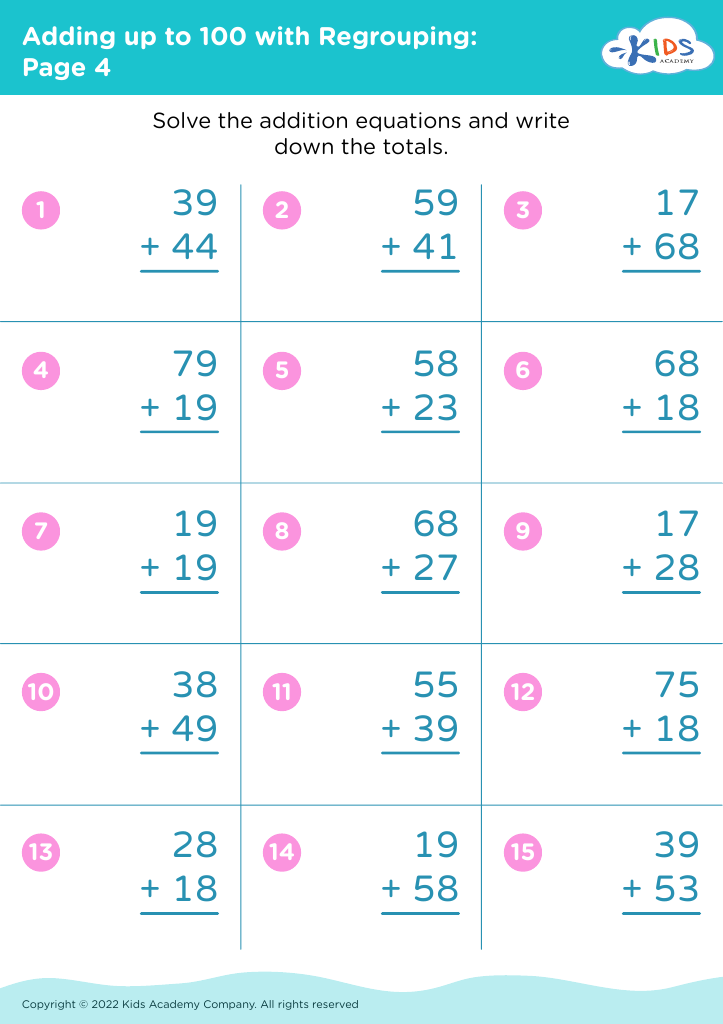
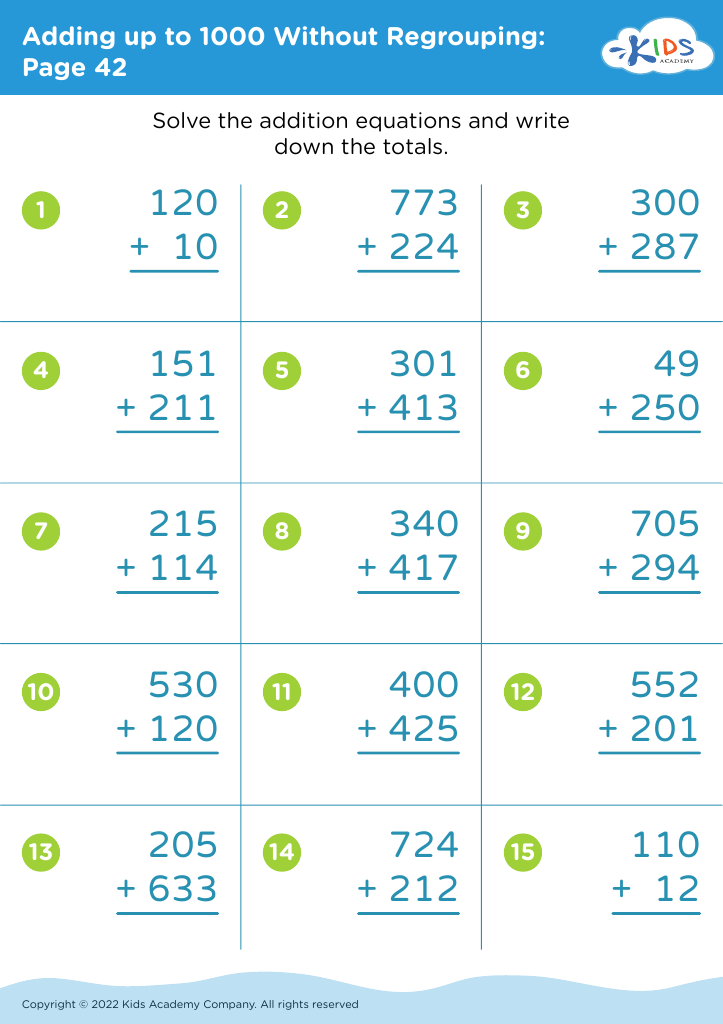
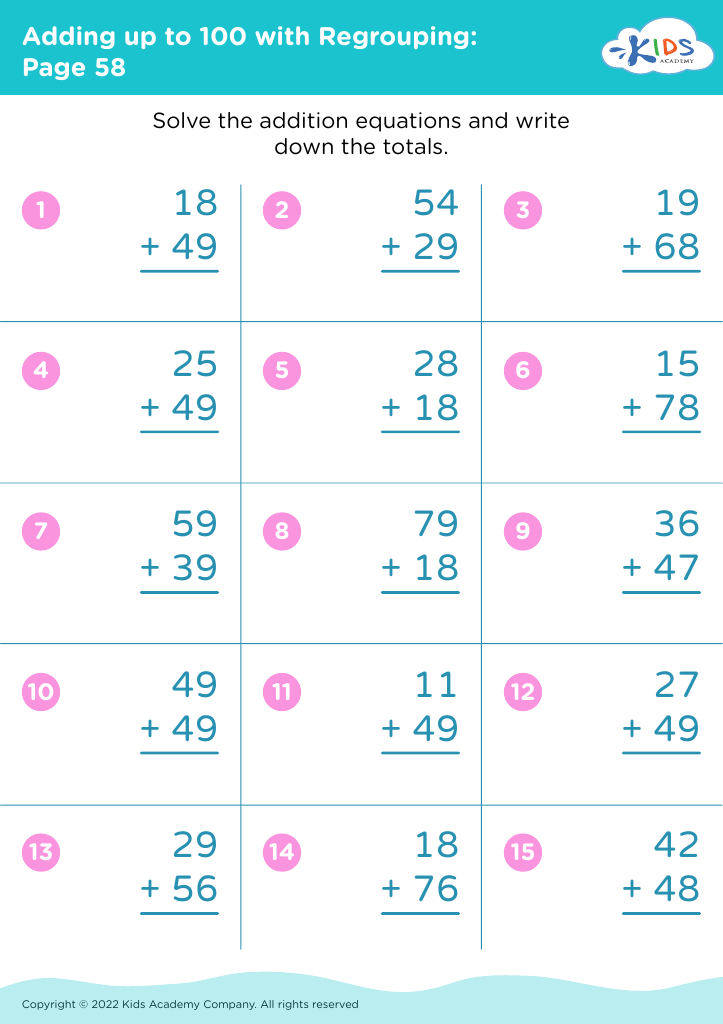
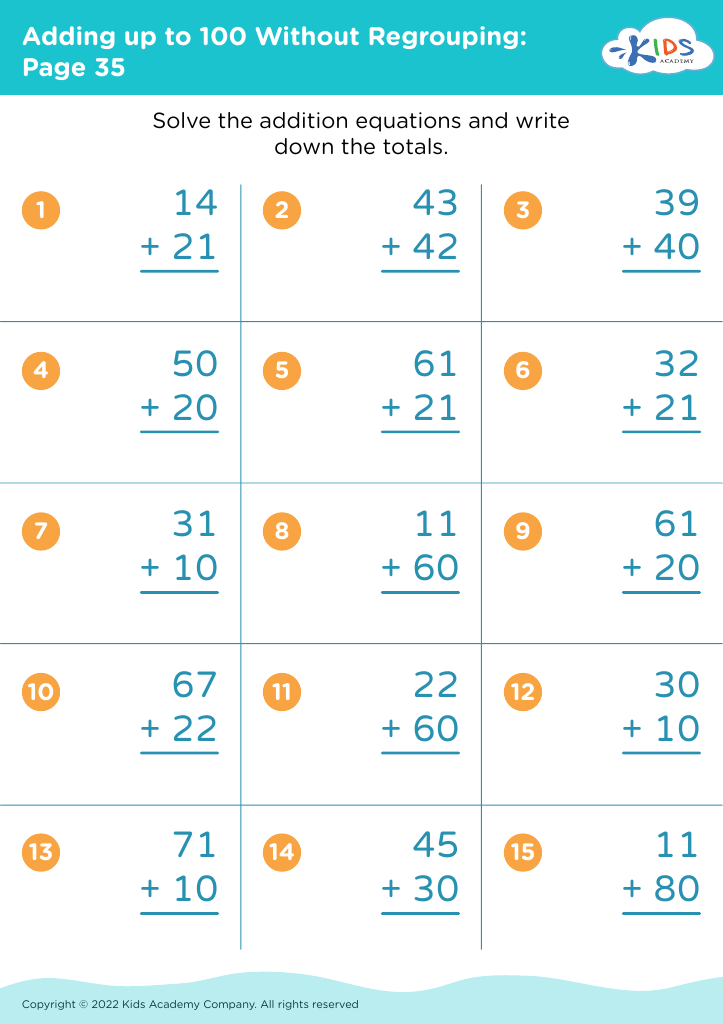



.jpg)




Vocabulary building is crucial for children aged 4 to 9, as it lays the foundation for their reading, writing, and communication skills. At this stage of development, young learners are like sponges, eager to absorb language through interactions, stories, and play. A robust vocabulary boosts their confidence and enhances their ability to express thoughts and feelings accurately.
Parents and teachers should prioritize vocabulary building as it can influence academic success. Children with a rich vocabulary are better equipped to understand complex texts and engage in thoughtful discussions. This early proficiency is linked to higher reading comprehension and improved performance across all subjects. Besides academic benefits, a strong vocabulary fosters critical thinking and creativity, as children learn to articulate their ideas and explore concepts more deeply.
Engagement in vocabulary-rich activities—like reading aloud, storytelling, and word games—makes learning enjoyable and memorable. In this age of digital communication, where language skills are essential, parents and teachers play a pivotal role in creating a nurturing environment that promotes vocabulary expansion. By actively participating in vocabulary development, adults empower children with the tools necessary for lifelong learning and effective communication. Ultimately, investing in vocabulary building ensures children are well-prepared for future challenges and opportunities.








