Filters

7 filtered results

Clear all filters
Favorites
With answer key
Interactive

7 filtered results

Difficulty Level

Grade


Subject

    Enhance your child's fine motor skills while making learning fun with our engaging Counting Worksheets designed for ages 4-9. These printables combine essential counting exercises with activities that promote dexterity and control, including tracing, cutting, and pasting. By using our worksheets, children will not only develop vital numeracy skills but also strengthen their hand-eye coordination and finger strength, laying the foundation for future learning. Ideal for classroom settings or home practice, these counting activities foster both cognitive and physical development. Explore our variety of colorful worksheets today to support your child’s educational journey with creativity and excitement!

    Check out this FREE Trial Lesson on Counting for age 4-9!

    Breaking Down 7

    Favorites
    With answer key
    Interactive
    • 4-9
    • Fine Motor Skills
    • Counting
    8 Petals Worksheet
    8 Petals Worksheet

    8 Petals Worksheet

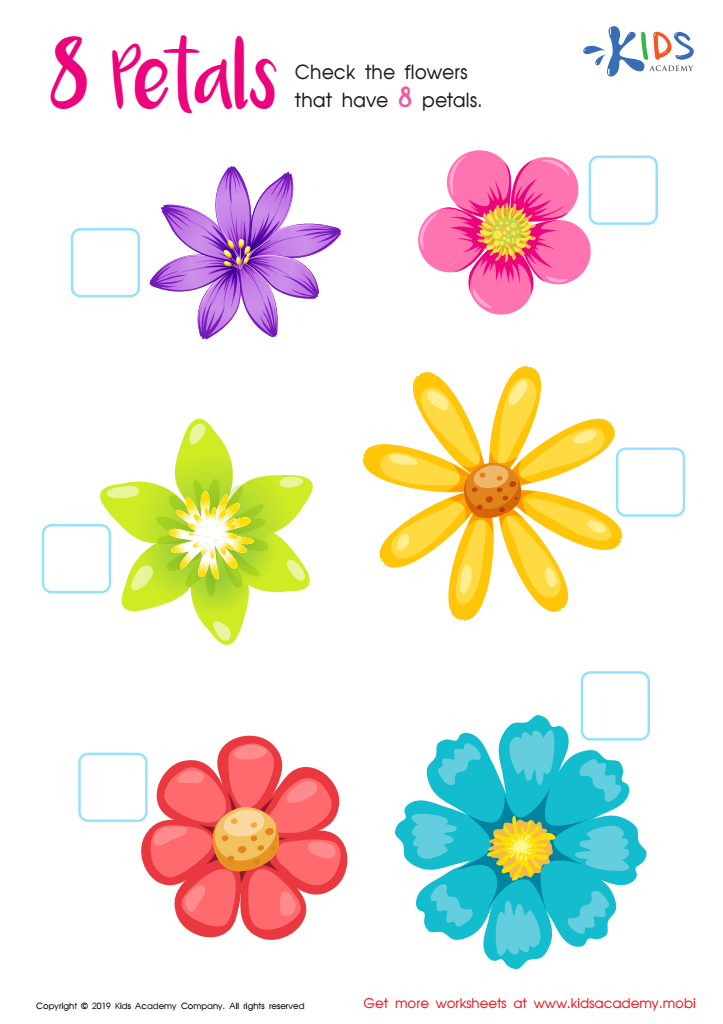
    Help your children master counting with this fun worksheet. It's filled with colorful flowers and they must count the petals and check the flowers with 8 petals. It's a great way to practice their counting skills and have some fun too!
    8 Petals Worksheet
    Worksheet
    Find 7 Worksheet
    Find 7 Worksheet

    Find 7 Worksheet

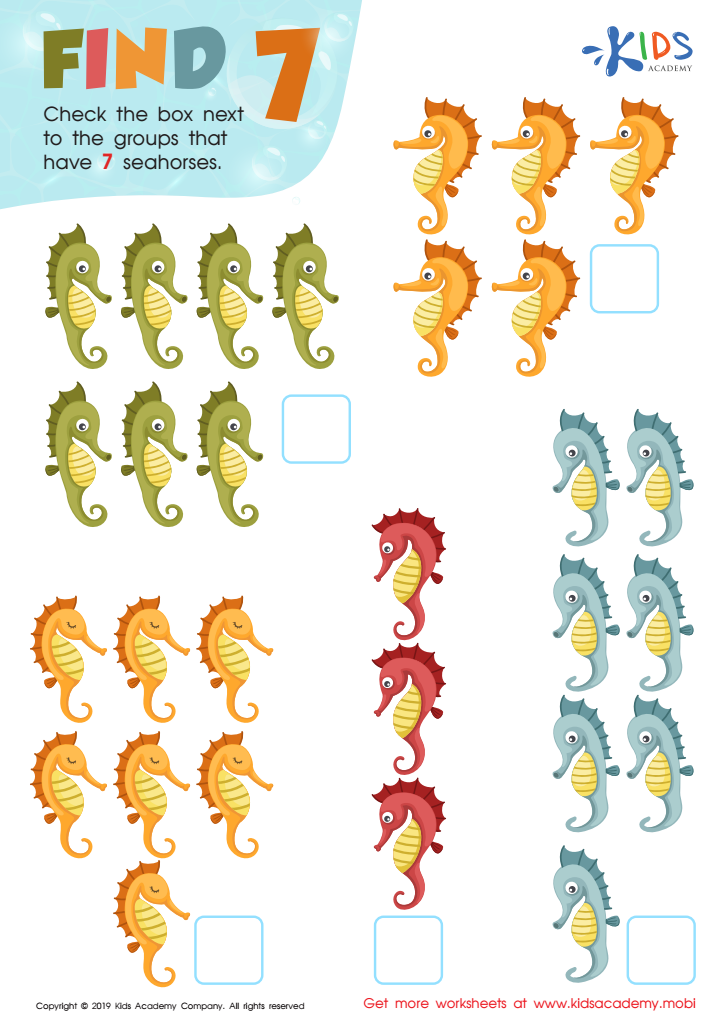
    Counting seahorses in groups of 7 is fun and educational with this free worksheet. Kids practice counting, one-to-one number representation, and check off the correct answers, all while admiring the brightly colored seahorses. A great way to make learning enjoyable!
    Find 7 Worksheet
    Worksheet
    Ten Spots Worksheet
    Ten Spots Worksheet

    Ten Spots Worksheet

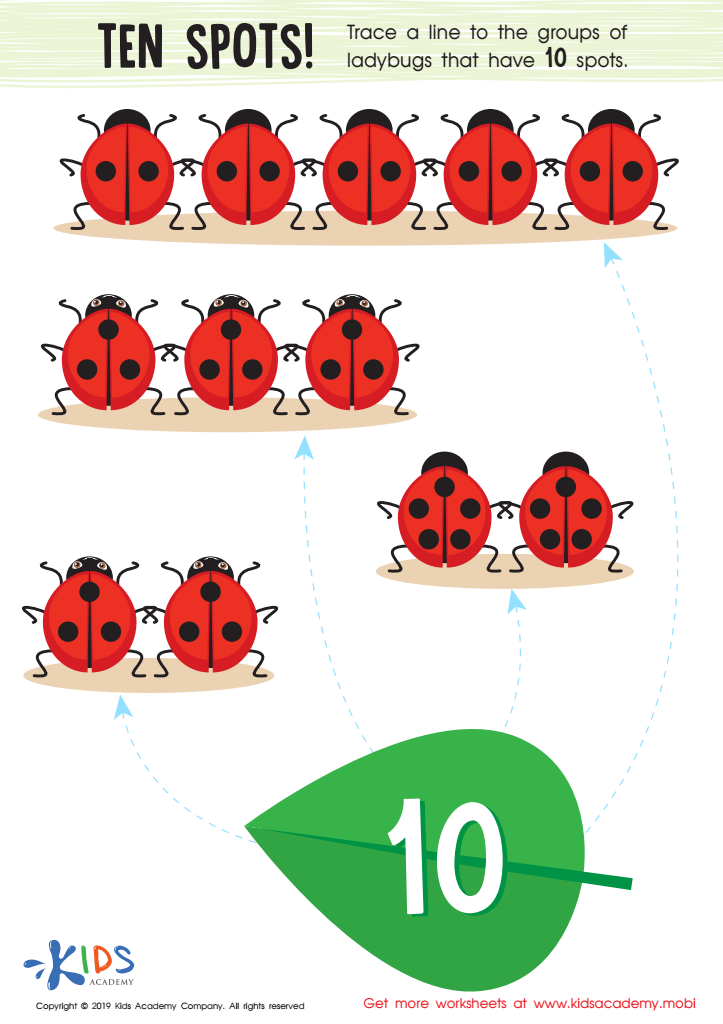
    Kids love ladybugs! Ask them to tell you what stands out most--the spots. Show them a picture and help them count the spots. Trace a line to the group with 10 spots for a fun counting lesson.
    Ten Spots Worksheet
    Worksheet
    9 or 10 Bugs Worksheet
    9 or 10 Bugs Worksheet

    9 or 10 Bugs Worksheet

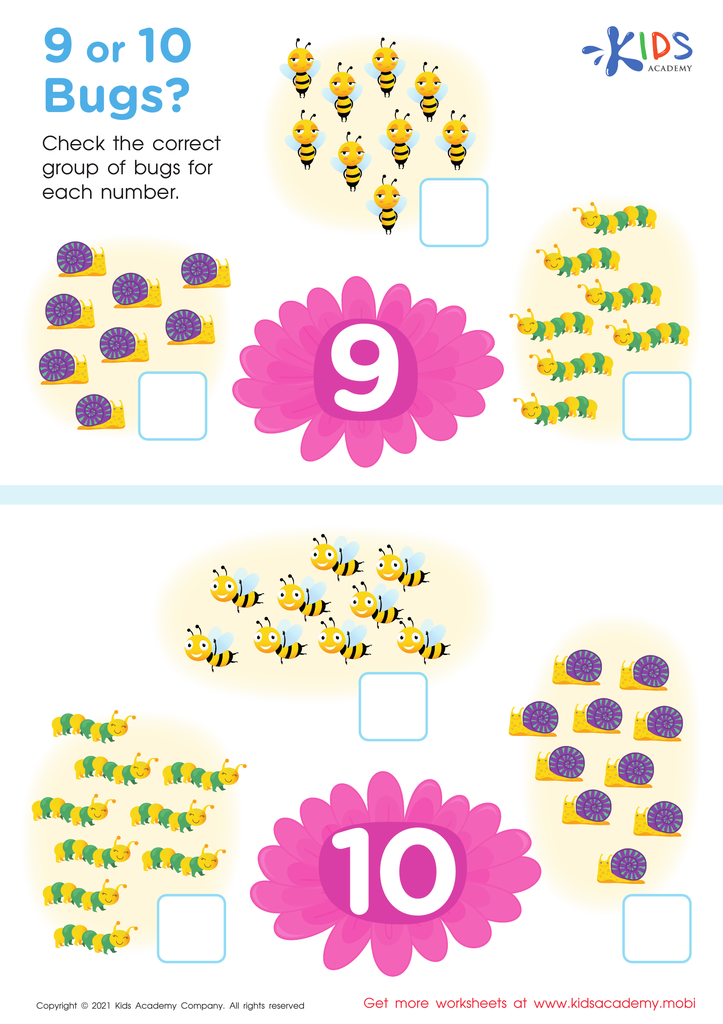
    Help your kids count faster and better by turning everyday tasks into counting lessons. With this worksheet, they'll count and match the group of bugs to the given number. Kids who love insects will have a blast completing the tasks and practicing their counting skills.
    9 or 10 Bugs Worksheet
    Worksheet
    Frog Countdown Worksheet
    Frog Countdown Worksheet

    Frog Countdown Worksheet

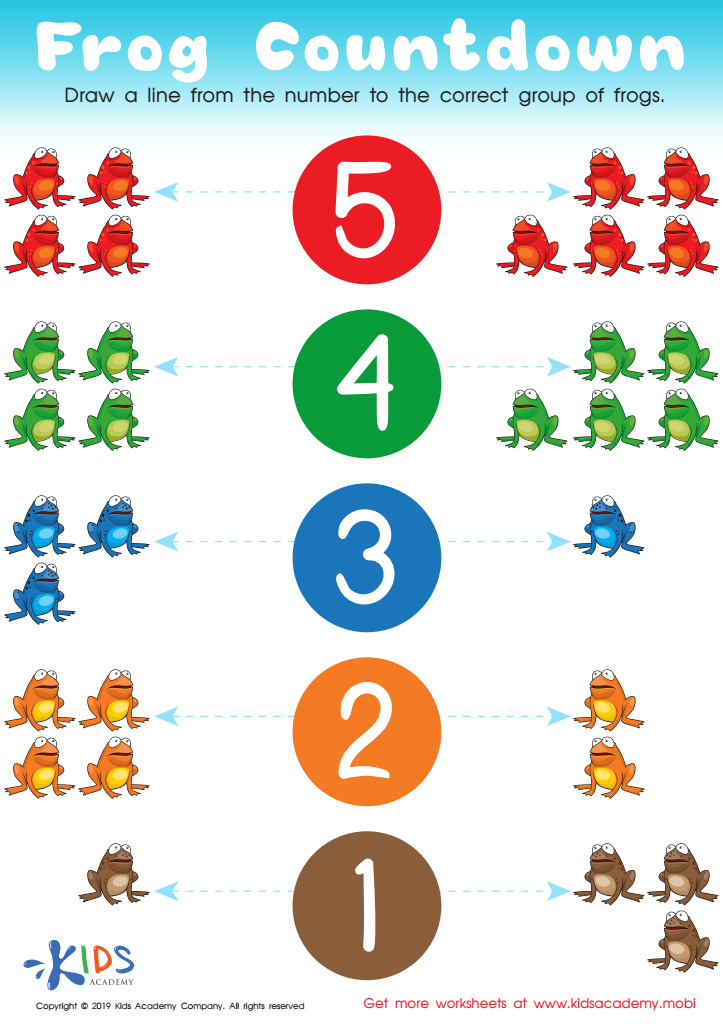
    Make learning fun for kids with traceable printouts! This exercise has kids counting frogs and drawing a line to match the number. Expand their knowledge with activities like this, beyond the basics they learn in school. Help them explore new ways of learning and make it enjoyable.
    Frog Countdown Worksheet
    Worksheet
    Count and Match: Feed the Animals Worksheet
    Count and Match: Feed the Animals Worksheet

    Count and Match: Feed the Animals Worksheet

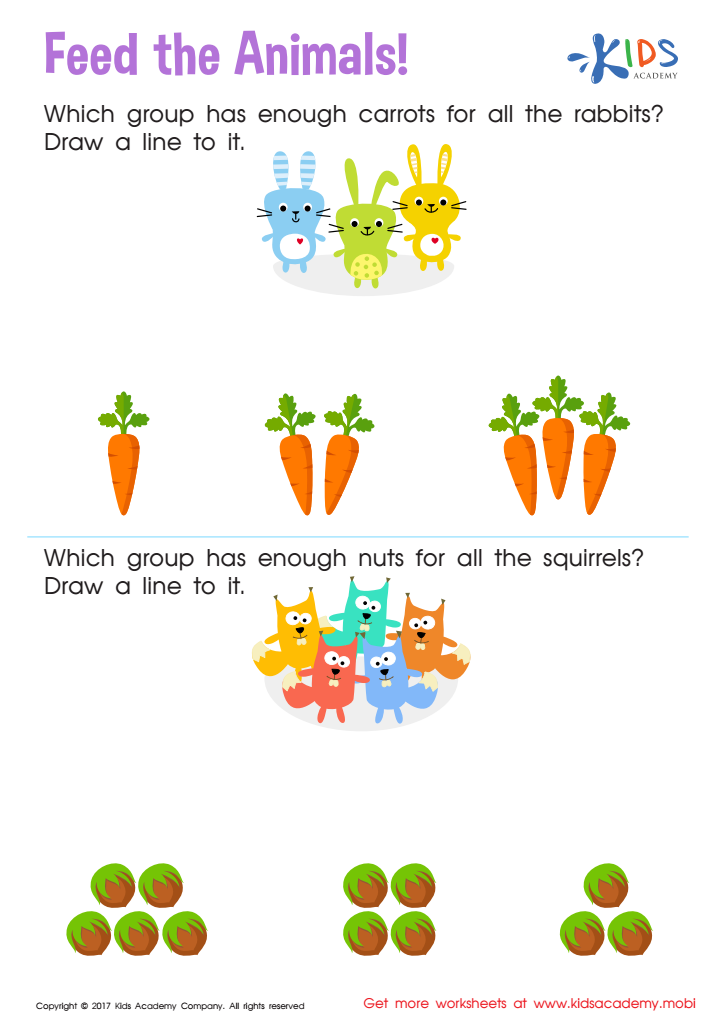
    Learning and growing involves more than just numbers, phonics and comparison. This Feed the Animals worksheet helps kids to exercise their reasoning skills. They must work out how many rabbits and carrots there are, and then repeat the process for the squirrels. This encourages problem solving and counting skills.
    Count and Match: Feed the Animals Worksheet
    Worksheet
    Triceratops Counting to 9 Worksheet

    Triceratops Counting to 9 Worksheet

    Triceratops Counting to 9 Worksheet

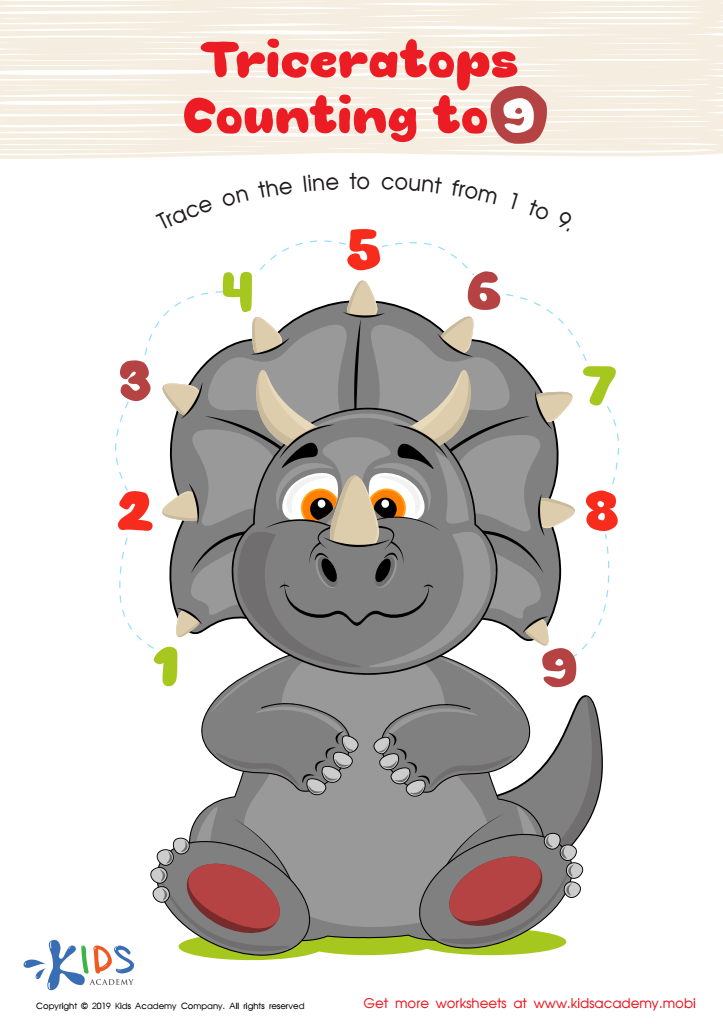
    This little triceratops is here to help kids learn to count! Dinosaurs lived long before us and we've never seen one alive, but through research, we know a lot about them. Let the dinosaur help trace on the line from 1 to 9 for a fun counting practice.
    Triceratops Counting to 9 Worksheet

    Worksheet


    Fine motor skills and counting are crucial developmental milestones for children aged 4 to 9. Fine motor skills involve the coordination of small muscles in the hands and fingers, essential for tasks like writing, drawing, and manipulating small objects. When children engage in activities that enhance these skills, they build a foundation for future learning, particularly in literacy and mathematics.

    Counting is a fundamental mathematical concept that children need to grasp during early education. It not only aids in understanding numbers and quantities but also helps with problem-solving and logical thinking. Tying fine motor skill development to counting activities—for instance, using beads for counting exercises or engaging in crafts that involve cutting and gluing—supports simultaneous learning in both domains.

    Teachers and parents should prioritize this connection because it fosters greater engagement and success in academic settings. Children who can manipulate objects easily are more likely to experiment and participate in counting tasks, leading to deeper cognitive understanding. Enhanced fine motor skills also boost confidence, allowing children to approach learning challenges with a positive mindset. By nurturing these skills early on, adults set the stage for a well-rounded educational experience that prepares children for future academic and everyday tasks.