Color differentiation Geometry Worksheets for Ages 4-9
3 filtered results
-
From - To
Enhance your child's learning with our engaging Color Differentiation Geometry Worksheets designed for ages 4 to 9! These worksheets provide a fun and interactive way to help young learners explore basic geometric shapes while developing color recognition skills. Each activity encourages them to identify, sort, and differentiate shapes by their colors, promoting both cognitive and motor skills. Perfect for use in classrooms or at home, these worksheets cater to various learning styles and keep children excited about geometry. Foster your child's creativity and critical thinking as they embark on this colorful learning adventure today! Suitable for at-home practice or classroom use.
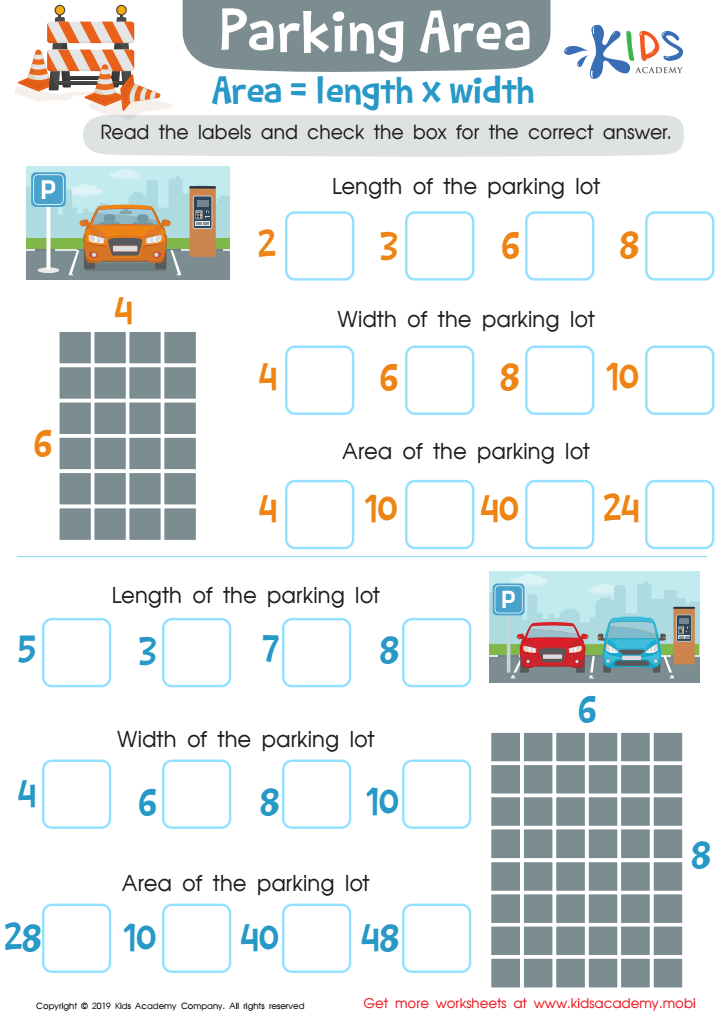
Parking Area Worksheet
 Assign to My Students











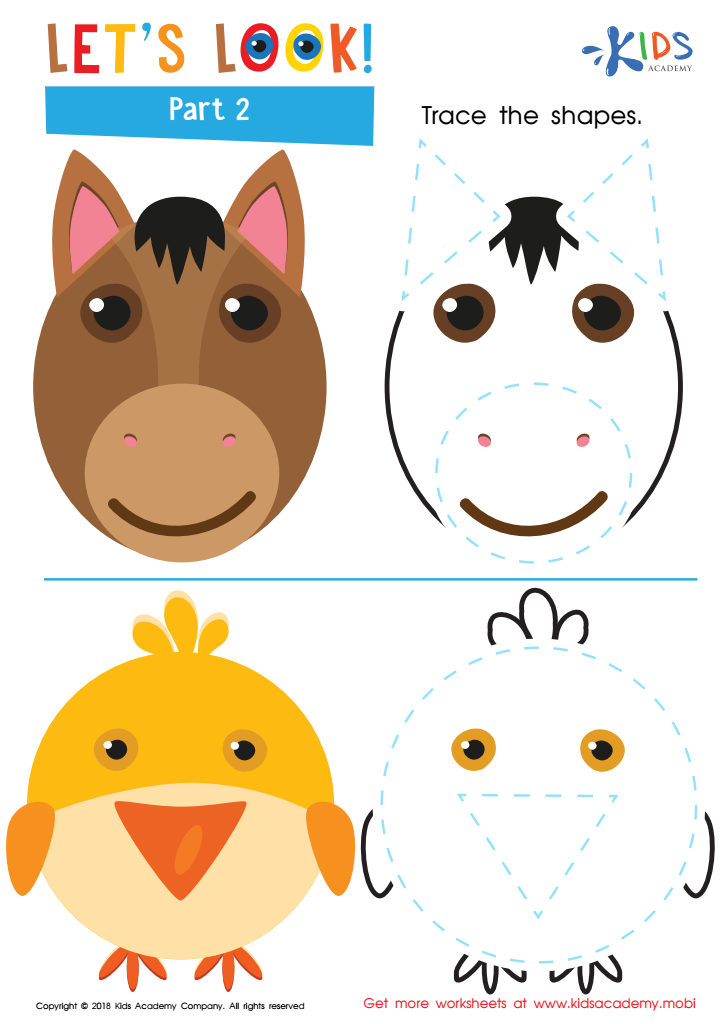
Let's Look! Part 2 Worksheet
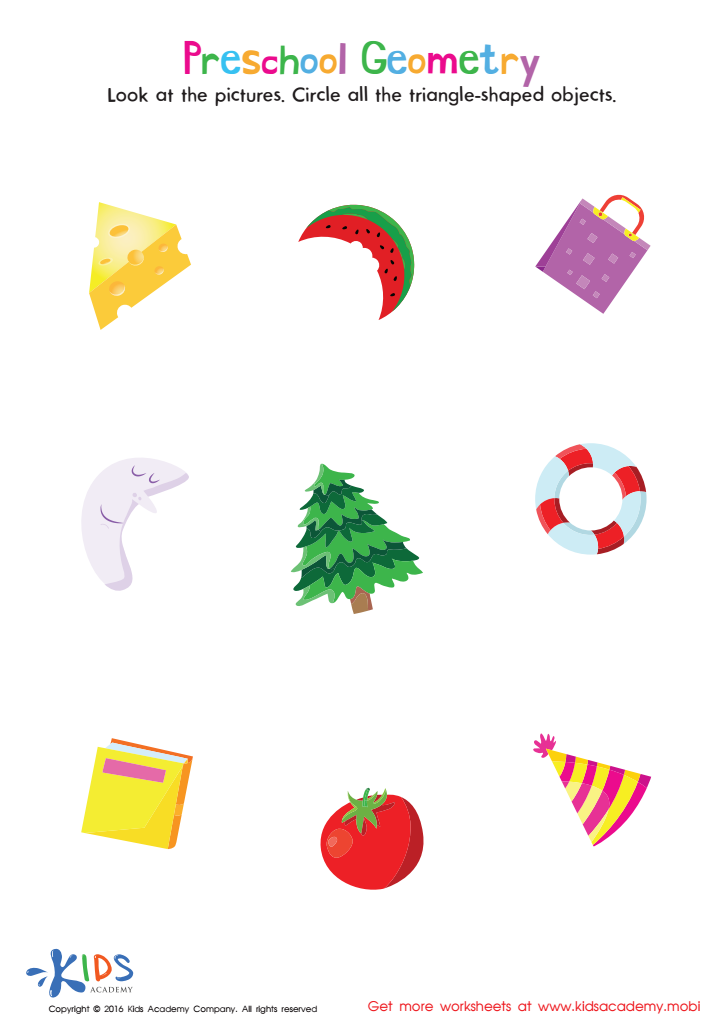








Color differentiation in geometry is crucial for children aged 4-9 as it enhances their cognitive development, creativity, and understanding of spatial relationships. At this age, children are naturally curious and eager to explore their environment. Introducing geometry through colors allows them to associate different shapes and forms with visual stimuli, making learning more engaging and enjoyable.
By using colors to differentiate geometric shapes, teachers and parents can help children strengthen their observational skills and gain a better grasp of concepts like symmetry, patterns, and categorization. The use of color fosters a deeper understanding of geometric properties and can aid memory retention, making it easier for children to recognize and distinguish between various shapes in their world.
Additionally, color differentiation encourages critical thinking and problem-solving skills. As children learn to categorize and organize shapes based on color, they begin to develop logical reasoning abilities, which are foundational for later mathematical learning.
Moreover, incorporating color into geometric activities provides opportunities for collaborative play and social interaction, pivotal during early childhood. In summary, parents and teachers should prioritize color differentiation in geometry as it not only enriches STEM education but also nurtures key skills necessary for overall growth and development.








