Comparing shapes Geometry Worksheets for Ages 4-9
4 filtered results
-
From - To
Explore our "Comparing Shapes Geometry Worksheets" designed for children aged 4-9! These engaging worksheets help young learners identify, compare, and differentiate various shapes in an interactive way. Each printable resource is tailored to enhance spatial awareness and critical thinking skills, making geometry fun and approachable. Children can practice recognizing shapes like circles, squares, and triangles, while learning to compare sizes and attributes. Our activities encourage hands-on learning through colorful visuals and fun exercises that stimulate creativity and mastery in geometry concepts. Perfect for home or classroom use, these worksheets are an excellent tool to foster early math skills in a dynamic educational environment.
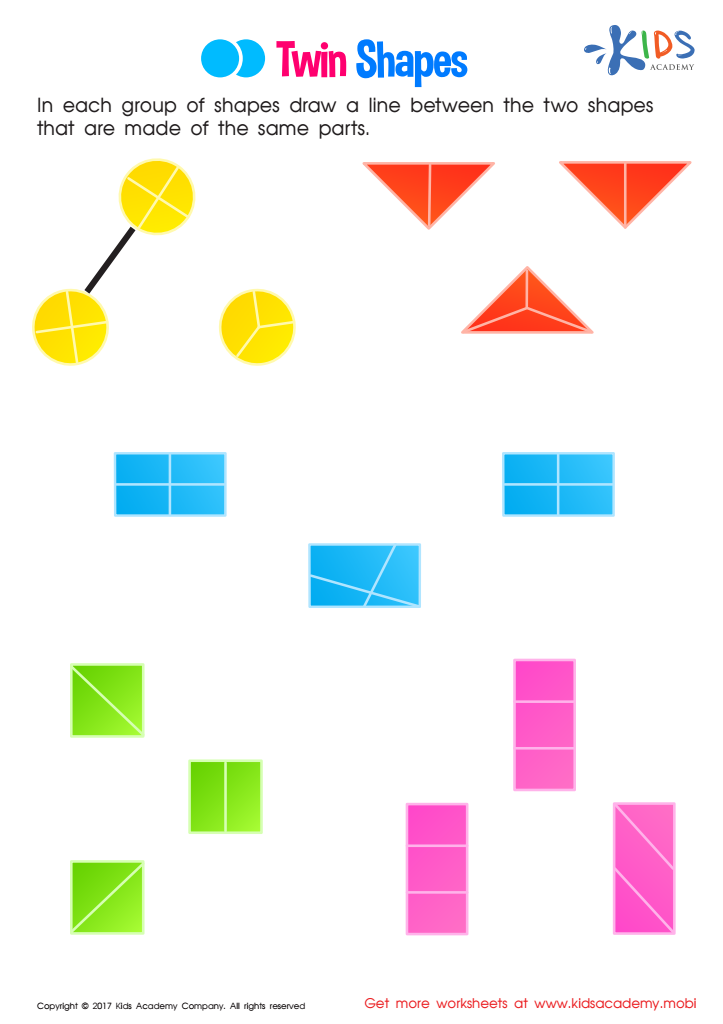
Twin Shapes Worksheet
 Assign to My Students











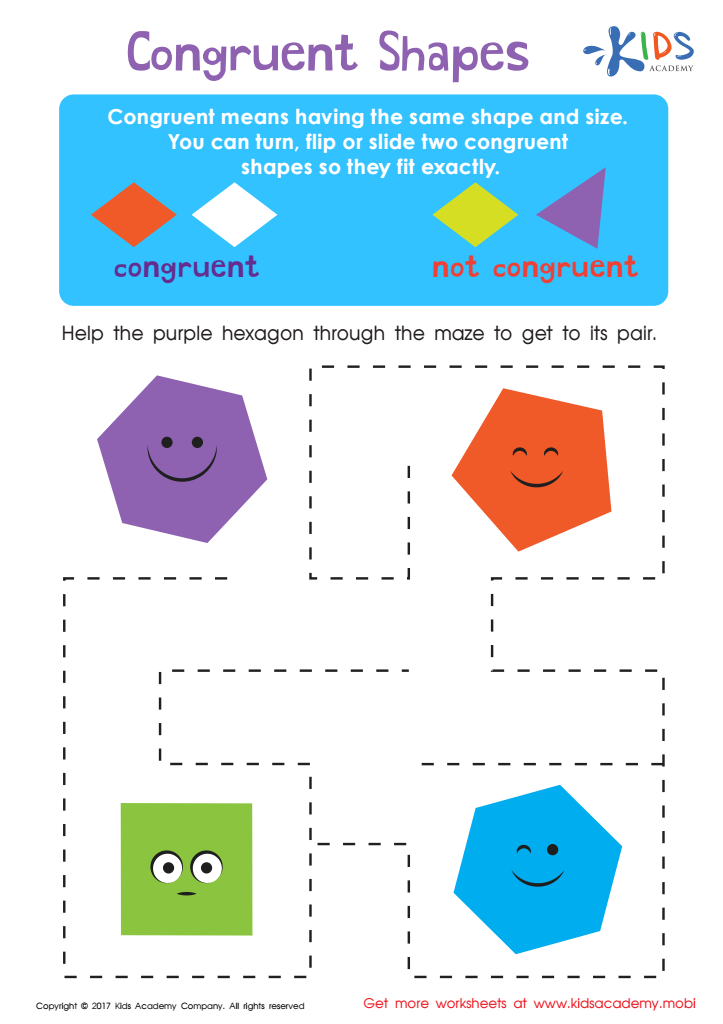
Congruent Shapes Worksheet
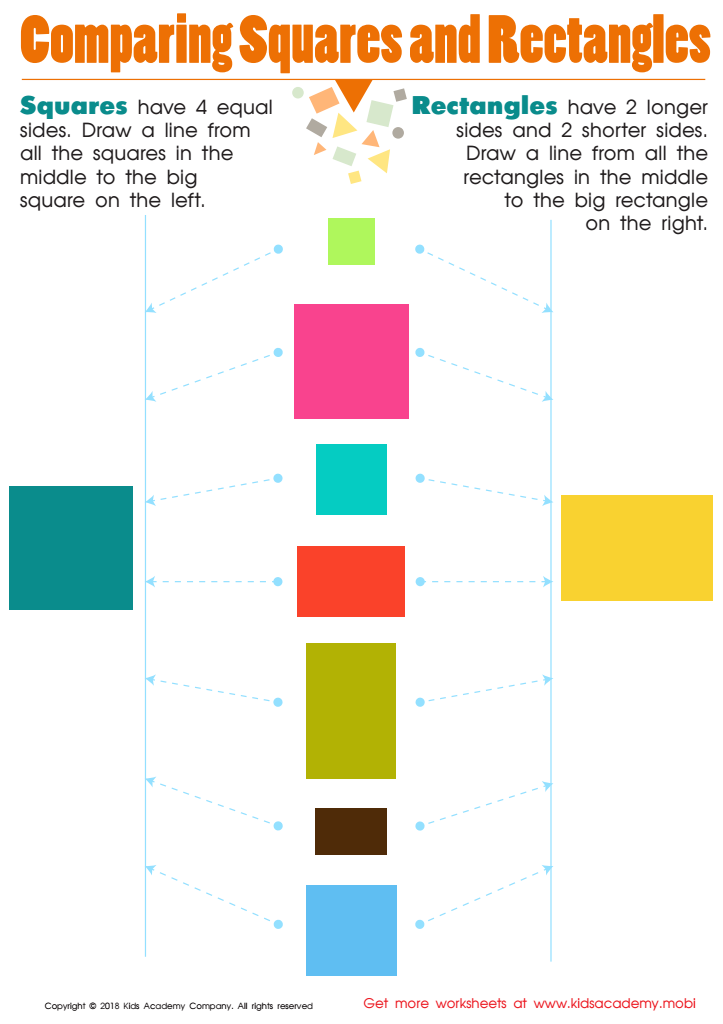
Comparing Squares Rectangles Worksheet
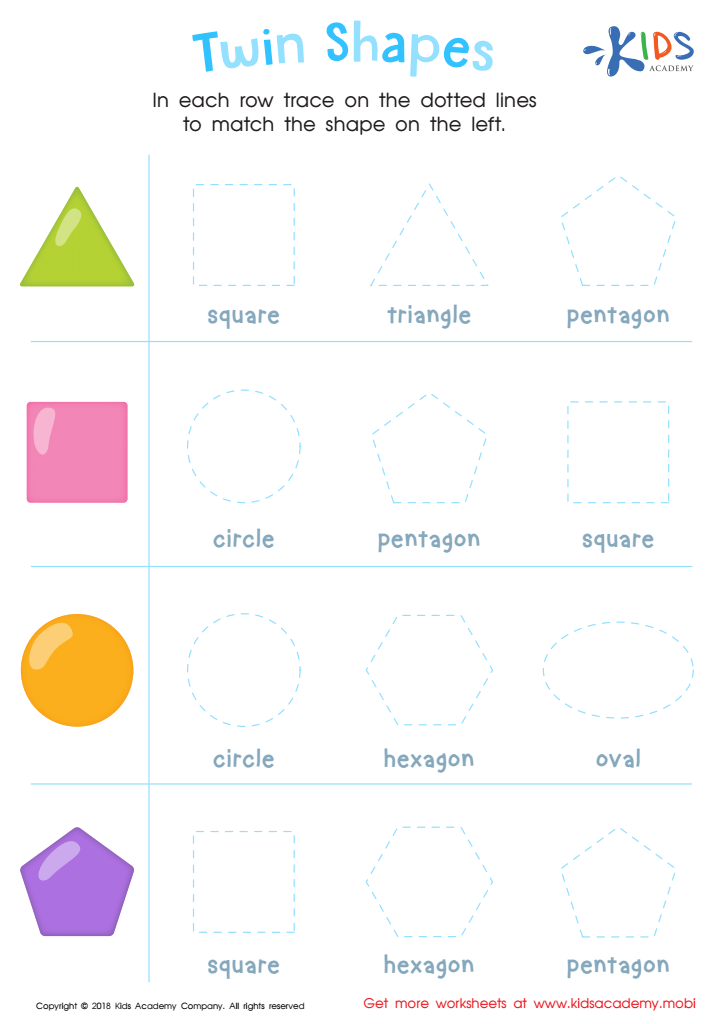
Twin Shapes Dot-to-Dot Worksheet








Parents and teachers should prioritize teaching children about comparing shapes in geometry for several key reasons. Firstly, engaging young learners with shape comparison enhances their cognitive development, crucial for building critical thinking skills. Understanding geometric relationships fosters spatial awareness, which is essential for later mathematical concepts, such as measurement, geometry, and even problem-solving.
Moreover, comparing shapes helps children make connections between the physical world and mathematical reasoning. It encourages them to observe their surroundings, enhancing their observational skills. For instance, identifying and describing similarities and differences among shapes leads to better analytical skills and fosters a foundational understanding of classification—a critical math skill.
Additionally, shape comparison promotes language development. Asking children to describe shapes not only enhances their vocabulary but also encourages them to articulate their thoughts clearly. This kind of discussion can develop their communication skills significantly.
Ultimately, cultivating an early interest and proficiency in geometry through activities centered around comparing shapes lays the foundation for future academic success. By giving children tools to understand and interact with the world around them, parents and teachers empower them to think critically and creatively, preparing them for more complex studies ahead.








