Fraction visualization Geometry Worksheets for Ages 4-9
6 filtered results
-
From - To
Explore our engaging Fraction Visualization Geometry Worksheets designed for children ages 4-9. These interactive resources help young learners develop a solid understanding of fractions through colorful visuals and hands-on activities. Our worksheets incorporate shapes, dividing segments, and relatable real-world examples, making math both fun and accessible. Ideal for home or classroom use, they promote critical thinking and visual reasoning. With a variety of problems that progress in complexity, children will gain confidence in their fractional knowledge while enjoying the learning process. Let your child discover the beauty and practicality of fractions in geometry today!
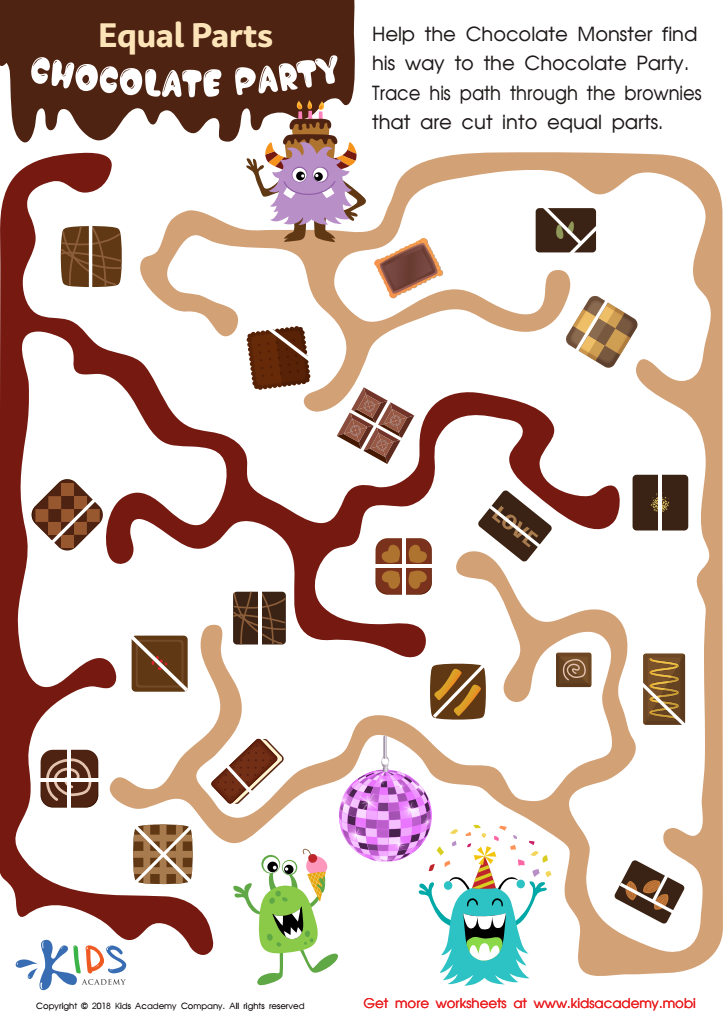
Equal Parts: Chocolate Party Worksheet
 Assign to My Students











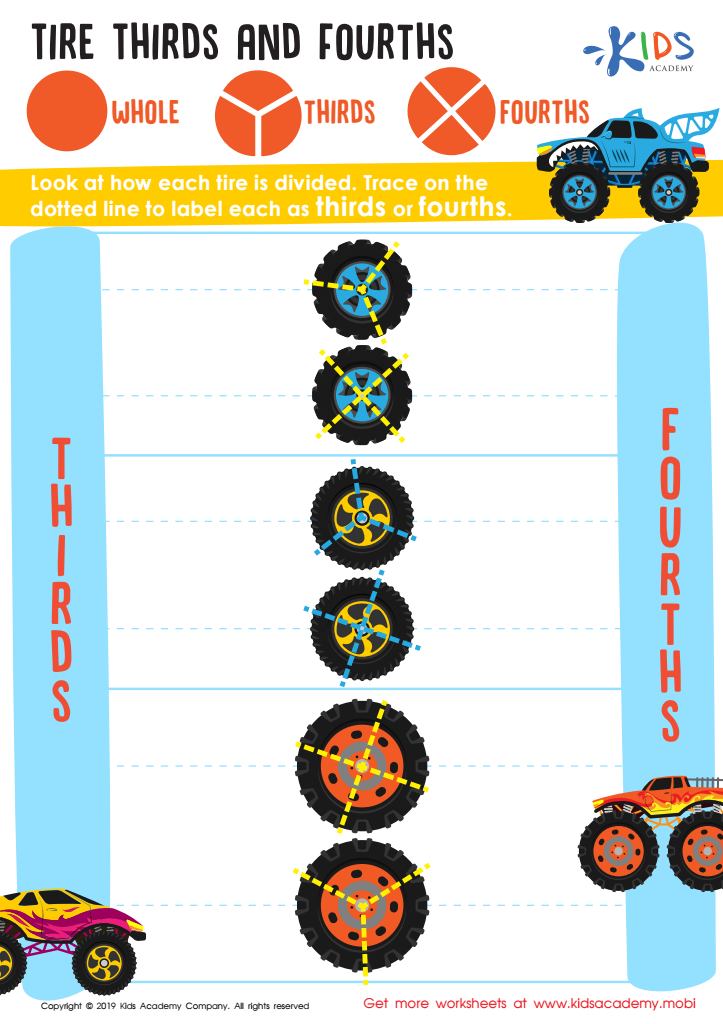
Tire Thirds and Fourths Worksheet
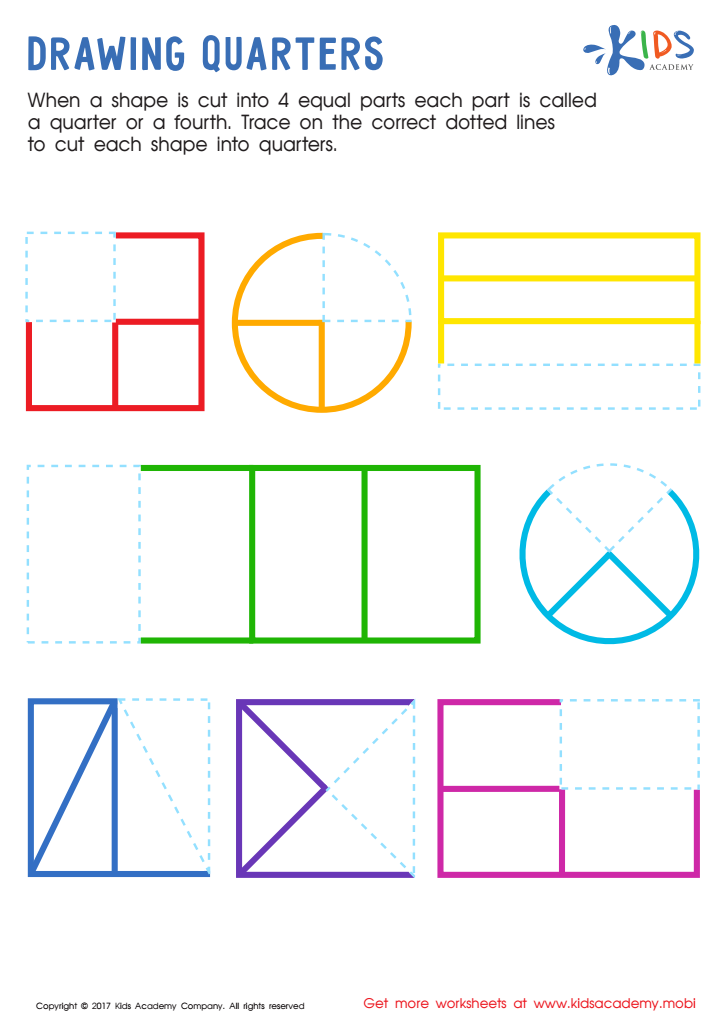
Drawing Quarters Worksheet
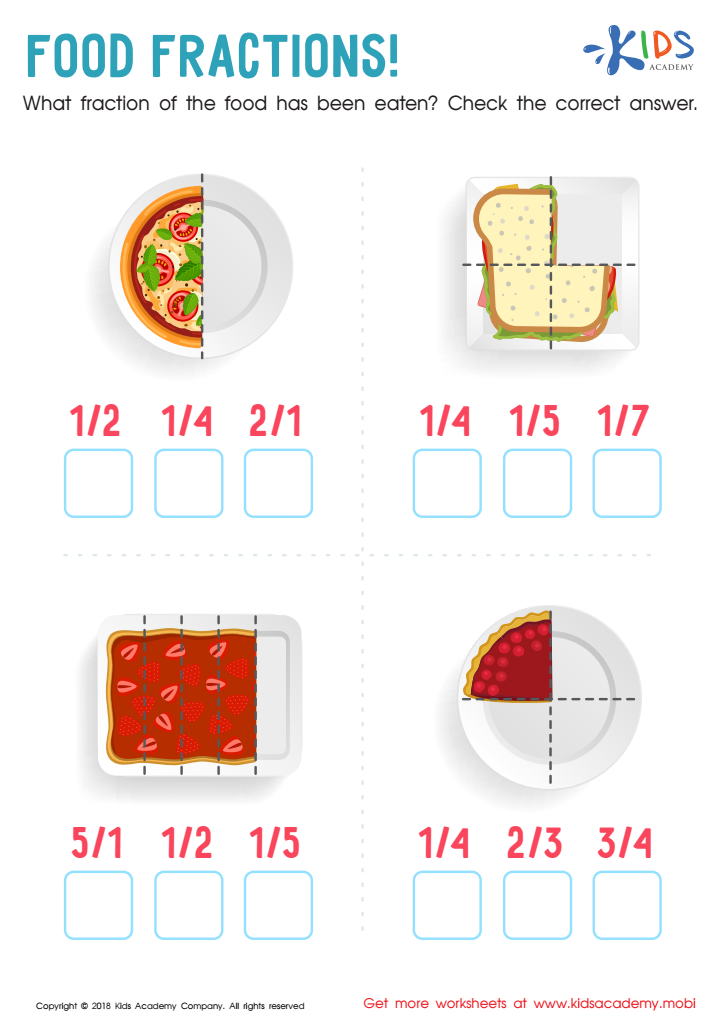
Food Fractions Worksheet
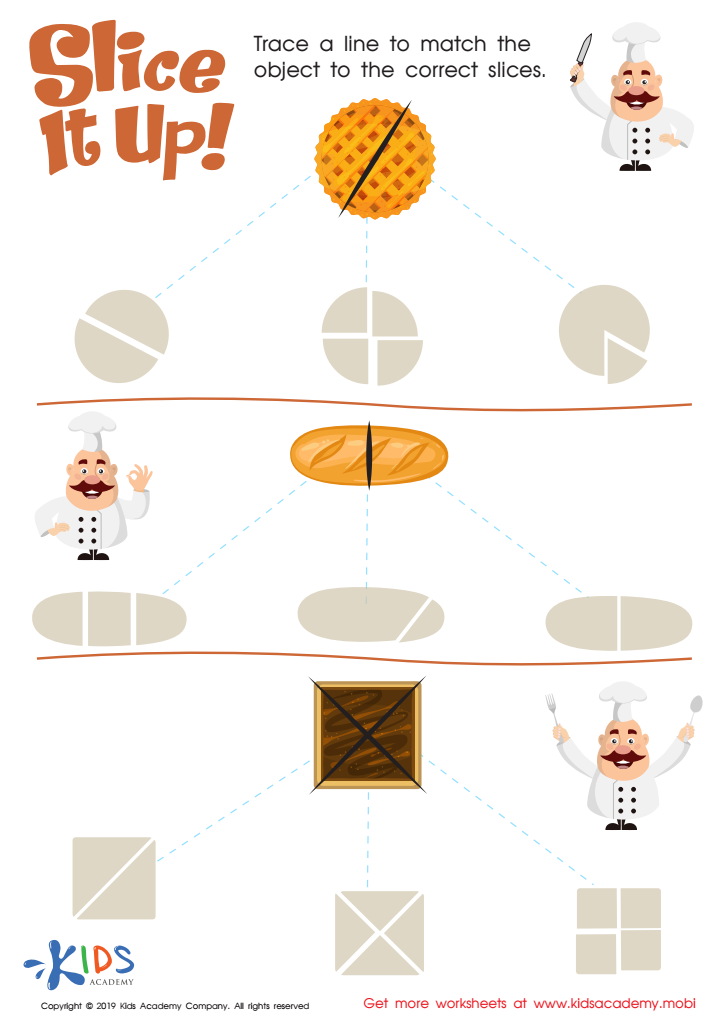
Slice It Up Worksheet
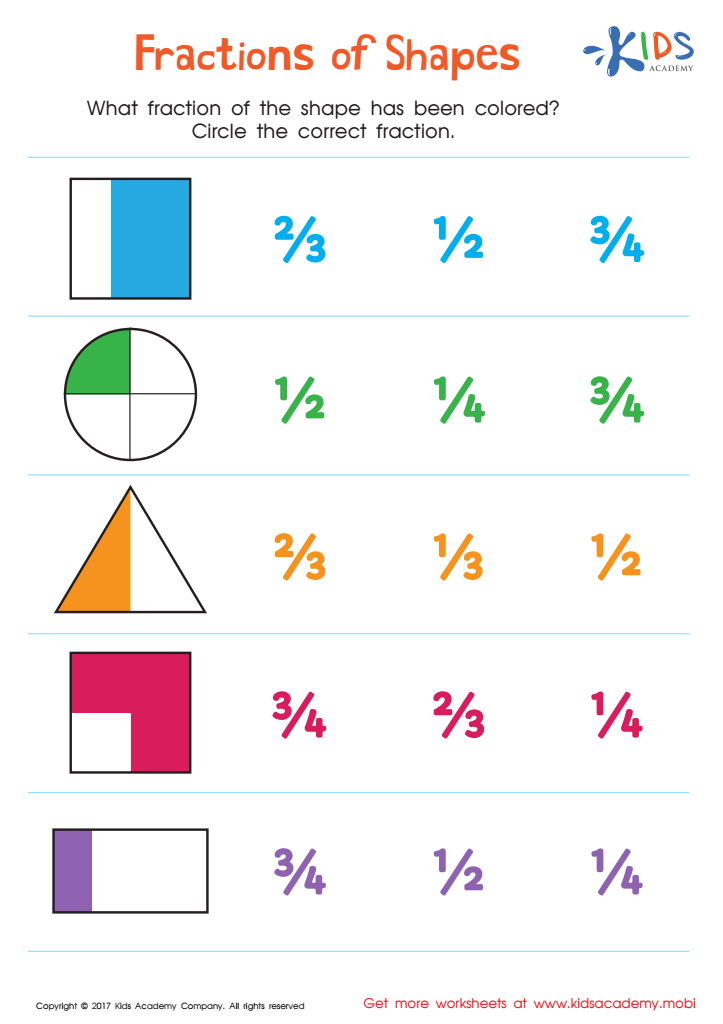
Fractions of Shapes: Math Concept Worksheet








Fraction visualization in geometry is a crucial concept for children aged 4-9, as it forms the foundation for higher-level mathematical understanding. At this stage, children are developing their spatial reasoning and problem-solving skills, which are essential for their future academic success. Introducing fractions through visual representations, such as shapes divided into equal parts, helps young learners grasp the concept of part-whole relationships. This cognitive approach makes abstract ideas more concrete and relatable.
Moreover, engaging with fraction visualization fosters critical thinking. When students work with shapes, they not only recognize fractions but also begin to see patterns and relationships between numbers. This method enhances their ability to understand and compare fractions, building a strong basis for future math concepts such as equivalent fractions, addition, and subtraction of fractions, and more advanced geometry shapes.
Additionally, teaching fraction visualization can promote collaboration and communication among peers, as children often work together to explore and discuss their findings. Parents and teachers who prioritize this early exposure ensure that students develop a positive attitude towards math, reduce anxiety, and build self-confidence in their abilities, ultimately preparing them for more complex mathematical challenges ahead. Investing in these vital skills early creates well-rounded, capable learners.








