Identifying shapes Geometry Worksheets for Ages 4-9
3 filtered results
-
From - To
Help young learners develop essential geometry skills with our "Identifying Shapes Geometry Worksheets for Ages 4-9." Engaging, colorful, and thoughtfully designed, these worksheets will captivate children as they explore a variety of shapes. Perfect for reinforcing classroom lessons or supplementing learning at home, each worksheet focuses on recognizing, naming, and differentiating shapes through fun activities and exercises. Promote early math proficiency and boost your child's confidence with practice that adapts to different learning paces. Ideal for toddlers, preschoolers, and elementary students alike, these resources lay a solid foundation for future geometry success. Start shaping young minds today!
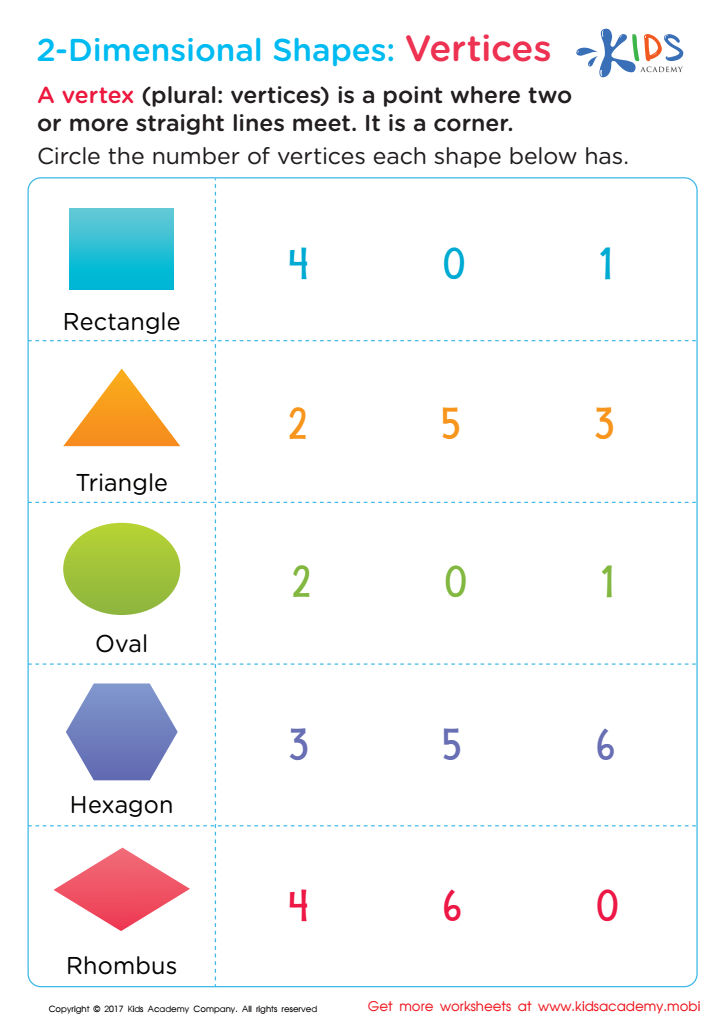
Two–Dimensional Shapes: Vertices Printable











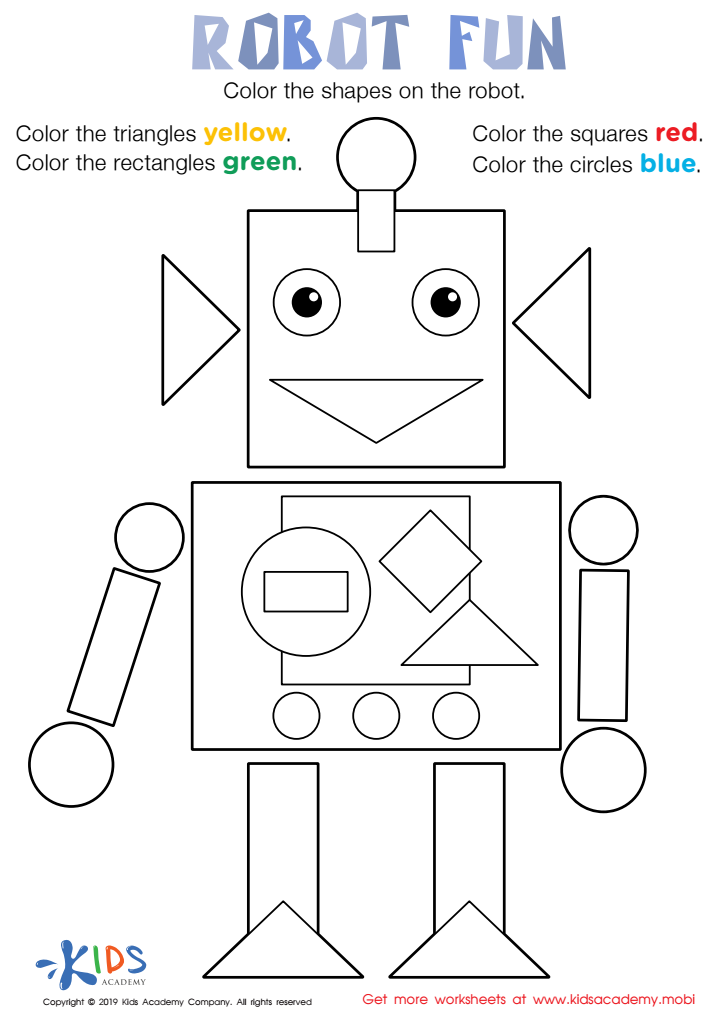
Robot Fun Worksheet
 Assign to My Students
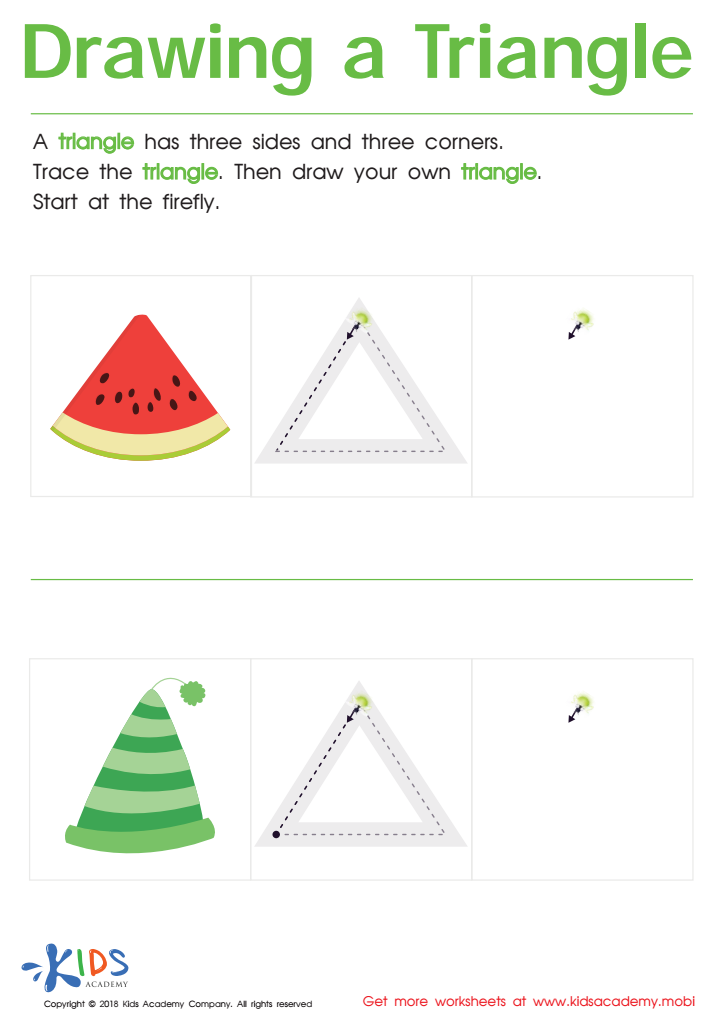
Drawing a Triangle Worksheet








Identifying shapes in geometry is crucial for children aged 4-9, as it lays the foundation for essential cognitive and academic skills. From a mathematical perspective, early exposure to shapes helps children develop spatial awareness, which is fundamental for understanding more complex geometry concepts later on. This early skill acquisition also supports problem-solving abilities as kids learn to recognize and categorize different forms.
Beyond math, shape recognition enhances fine motor skills and hand-eye coordination, essential for writing and art. It links closely to language development, too, as children learn the names and properties of shapes, expanding their vocabulary and forming connections between visual and verbal knowledge.
Socially and emotionally, familiarity with shapes boosts confidence. Children gain a sense of achievement when they correctly identify and articulate the shapes around them. This confidence spills over into other learning areas, fostering a positive attitude towards education.
For parents and teachers, prioritizing shape identification supports holistic development. Simple activities, like puzzles or drawing, can make learning about shapes engaging. Recognizing the importance of geometry in early education sets a solid foundation on which other academic skills are built, encouraging a lifelong love of learning.








