Logical Reasoning Geometry Worksheets for Ages 4-9
7 filtered results
-
From - To
Enhance your child's critical thinking skills with our interactive Logical Reasoning Geometry Worksheets, designed specifically for ages 4-9. These engaging resources combine geometric concepts with fun exercises, helping young learners to identify shapes, patterns, and spatial relationships while improving their reasoning abilities. Each worksheet features colorful illustrations and age-appropriate challenges that capture children's attention and encourage active learning. Parents and educators can use these worksheets to reinforce STEM skills in a playful manner, perfect for home or classroom settings. Inspire your child's mathematical journey and watch them develop confidence in their logical reasoning as they explore the fascinating world of geometry!
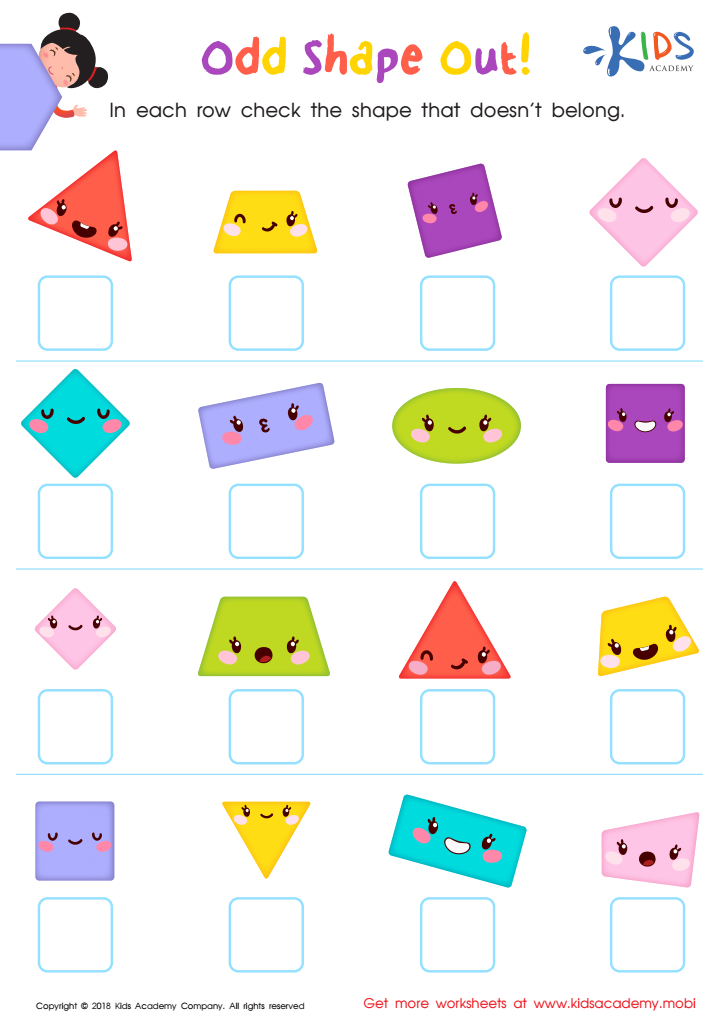
Odd Shape Out Worksheet for Grade 3
 Assign to My Students











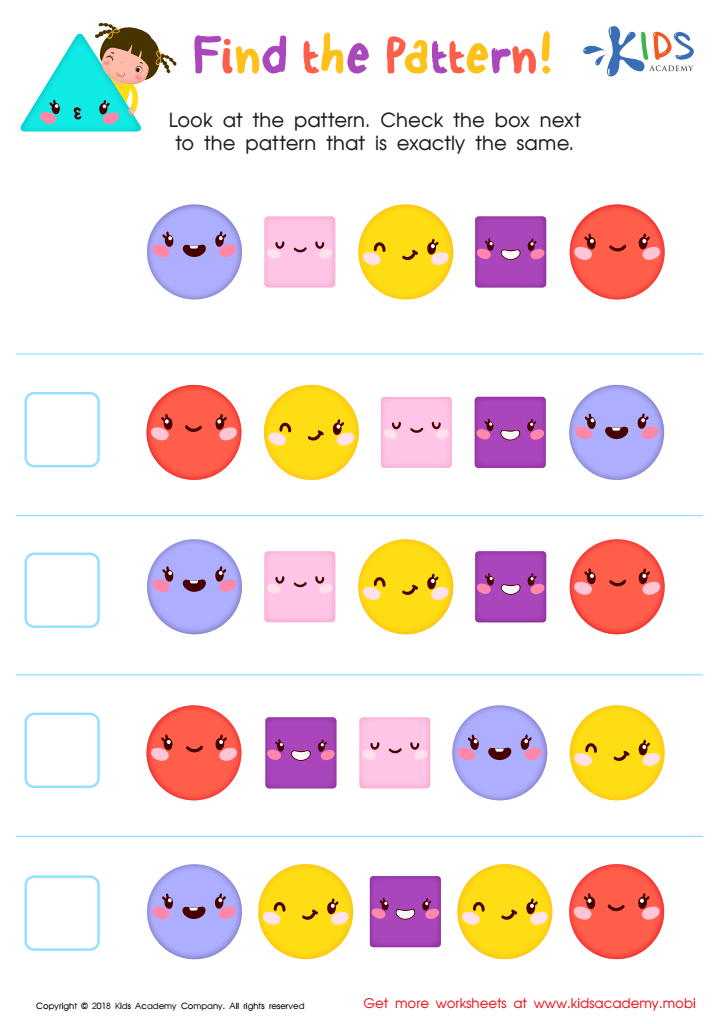
Find the Pattern Worksheet
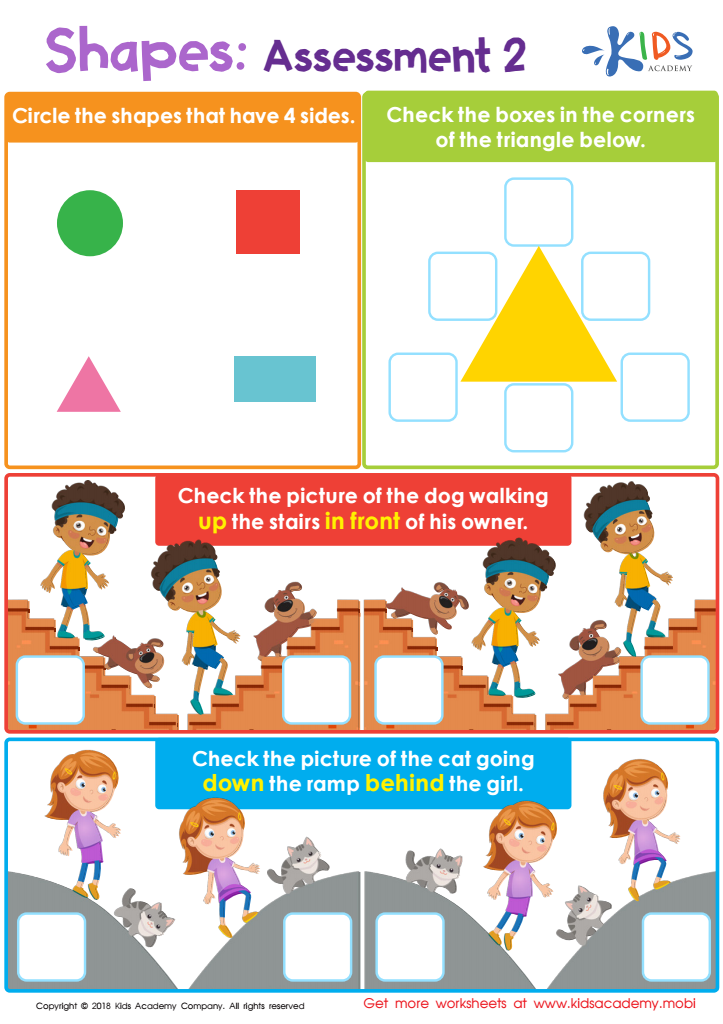
Shapes: Assessment 2 Worksheet
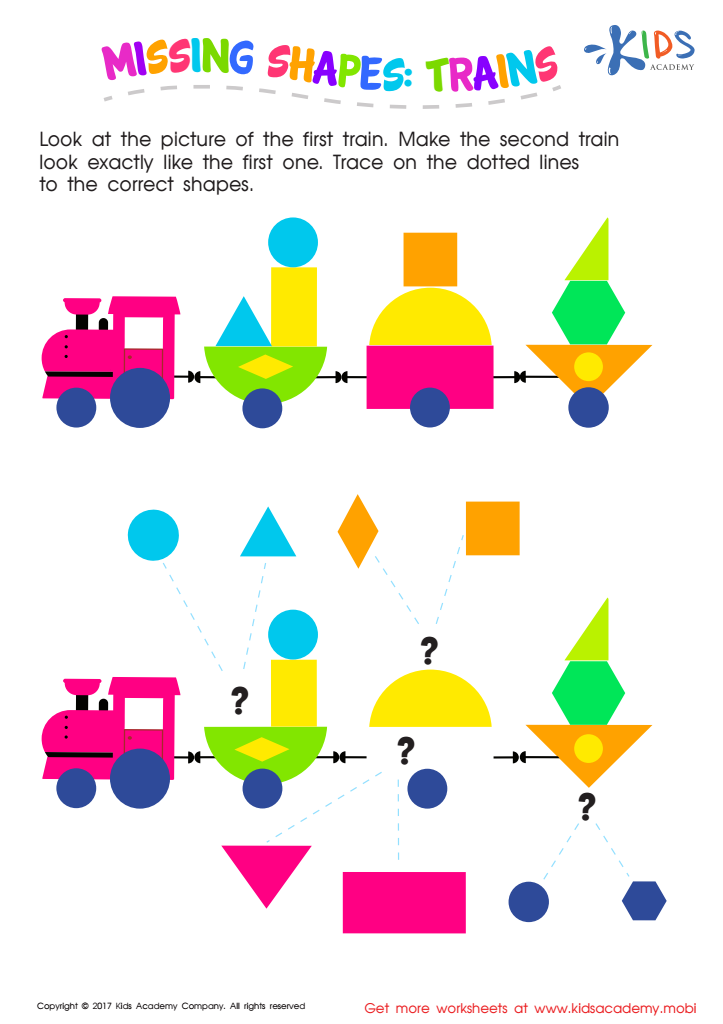
Missing Shapes: Trains Worksheet
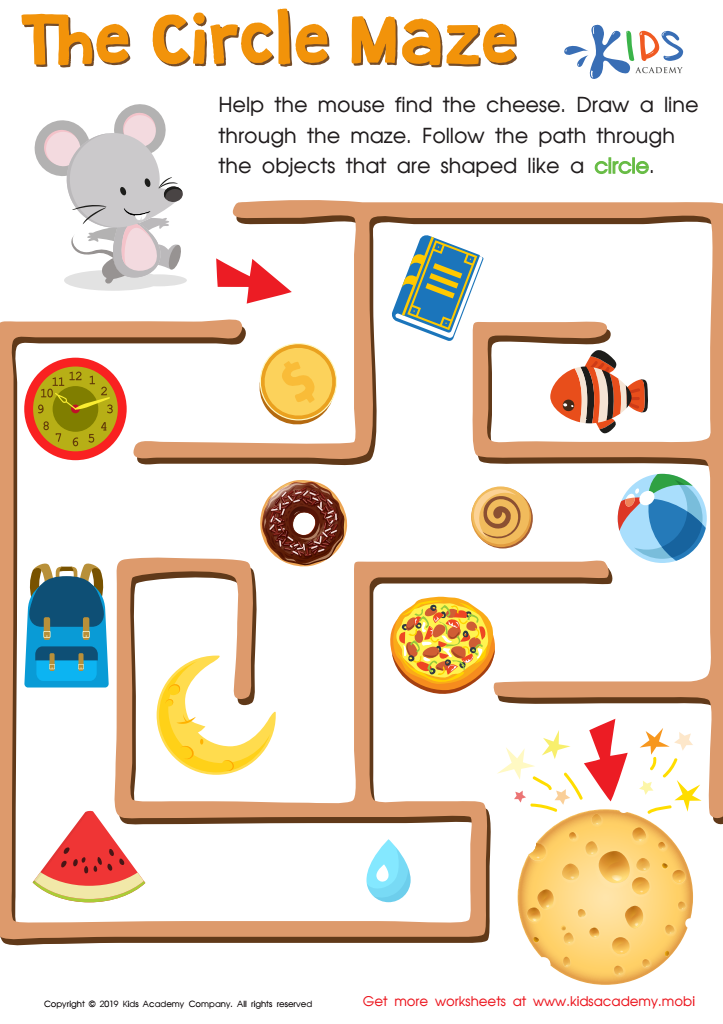
The Circle Maze Worksheet
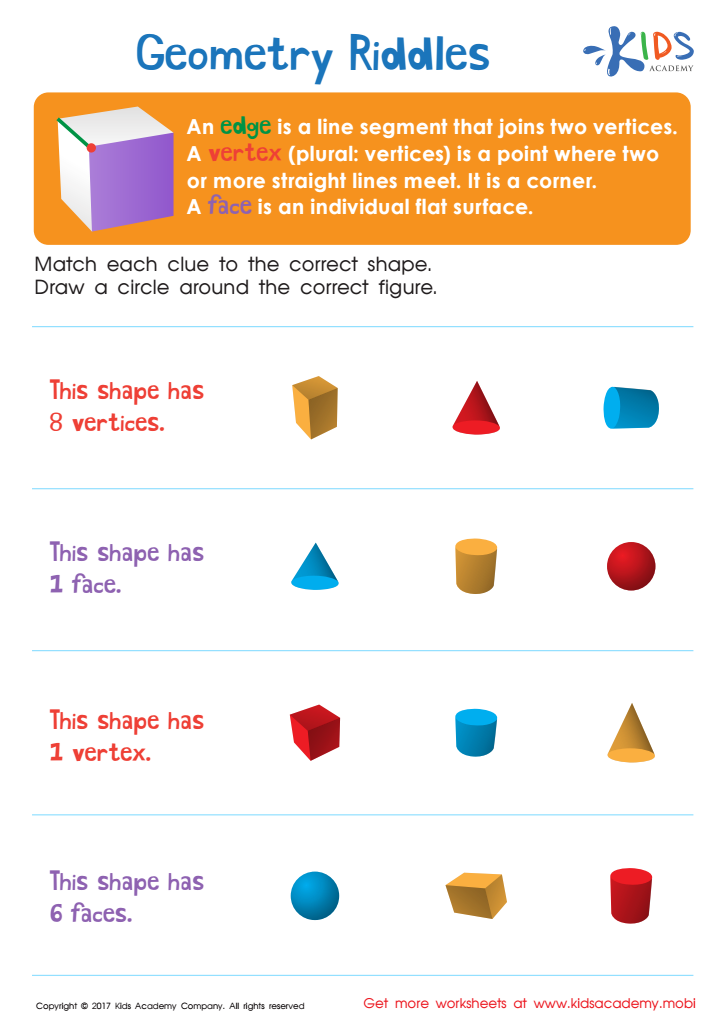
Geometry Riddles Printable








Logical reasoning and geometry are fundamental skills that play a crucial role in a child's cognitive development, especially for children aged 4 to 9. At this age, children are naturally curious and eager to understand the world around them. Introducing concepts of logical reasoning helps them develop critical thinking skills, enabling them to analyze situations, solve problems, and make decisions. When they engage in activities that involve pattern recognition or spatial understanding, they enhance their ability to think systematically and creatively.
Geometry, on the other hand, fosters visual-spatial reasoning, which is essential for everyday tasks and future academic pursuits, including mathematics, science, and art. Understanding shapes, sizes, and spatial relationships helps children to navigate their environment more effectively, thereby building their confidence and independence.
By focusing on logical reasoning and geometry during these formative years, parents and teachers support children in cultivating skills that lead to improved academic performance and enhanced problem-solving abilities. Furthermore, these activities promote social skills through group problem-solving tasks and collaborative play, helping to strengthen communication and teamwork skills. Ultimately, investing in logical reasoning and geometry nurtures a child's overall cognitive development and lays the groundwork for lifelong learning.








