Pattern recognition Geometry Worksheets for Ages 4-9
3 filtered results
-
From - To
Explore our engaging Pattern Recognition Geometry Worksheets designed specifically for children ages 4 to 9. These interactive resources help young learners develop essential math skills through fun activities that enhance their understanding of shapes, sizes, and patterns. Our worksheets feature colorful visuals and age-appropriate challenges that encourage critical thinking and problem-solving abilities. Ideal for classroom use or at-home learning, these worksheets foster creativity and support early geometric concepts. Enhance your child's confidence in math with our comprehensive collection that makes learning enjoyable and effective. Start your journey towards mastering geometry and pattern recognition today!
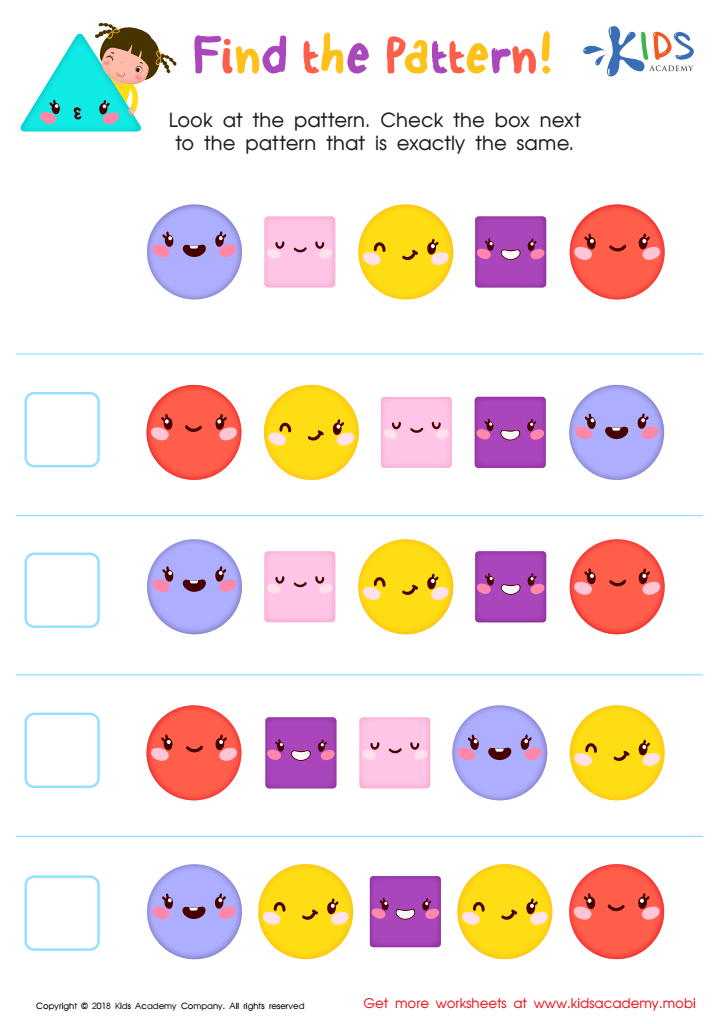
Find the Pattern Worksheet
 Assign to My Students











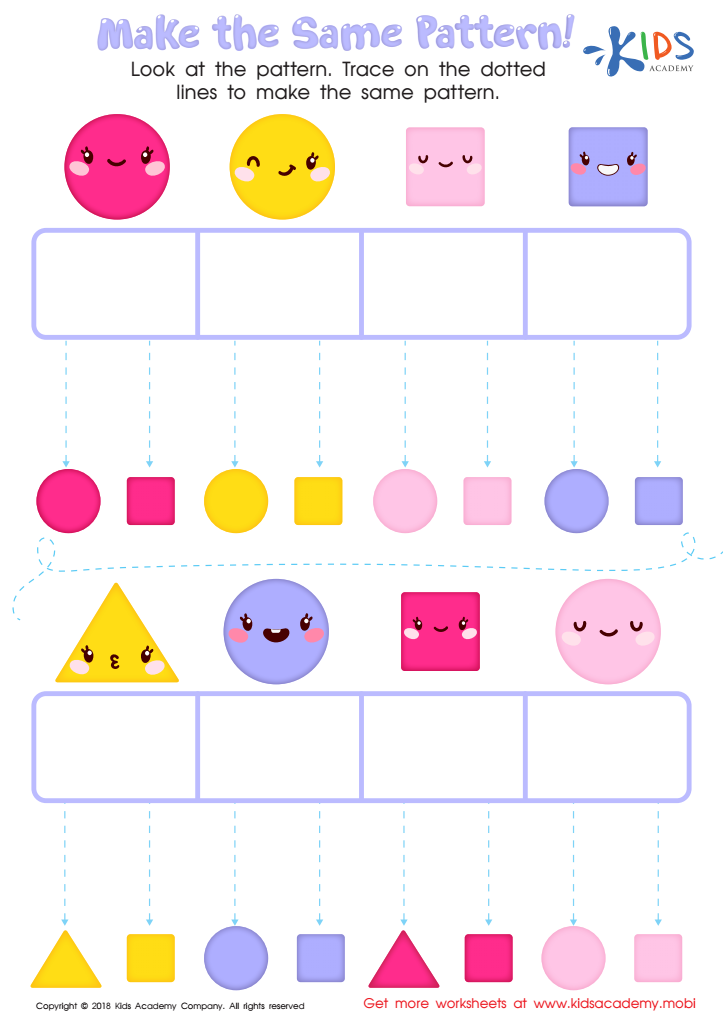
Make the Same Pattern Worksheet
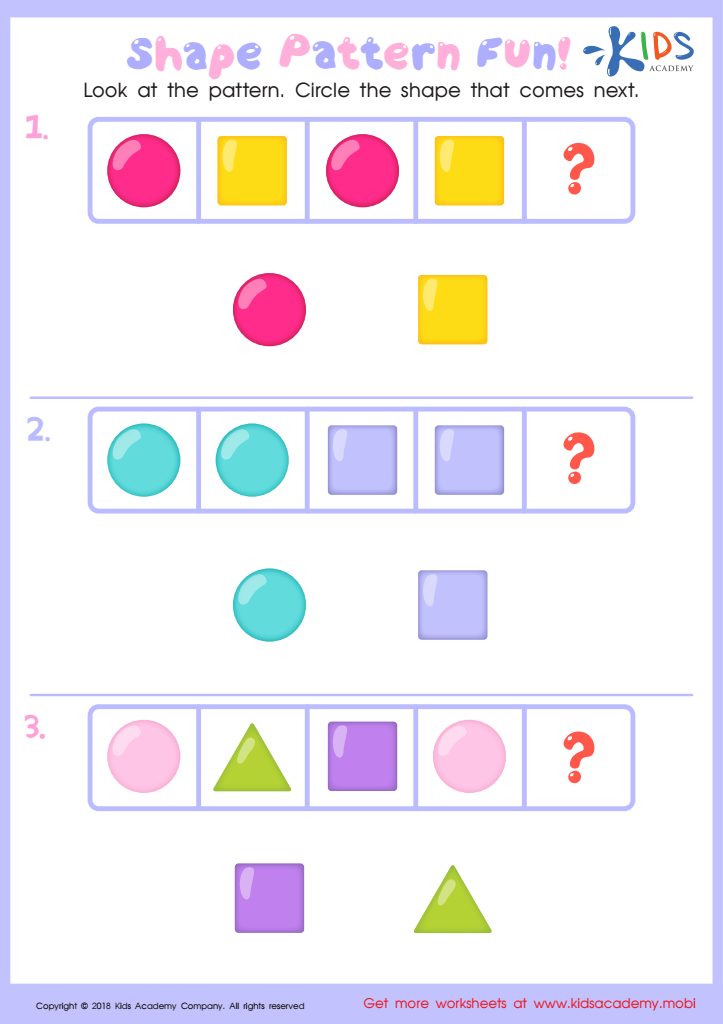
Shape Pattern Fun Worksheet








Pattern recognition in geometry is a crucial cognitive skill that can significantly benefit children aged 4-9. At this developmental stage, children's brains are highly receptive to recognizing patterns, which lays the foundation for more complex mathematical thinking later on. Understanding shapes, sizes, and their relationships nurtures critical thinking skills and enhances problem-solving abilities.
By engaging with geometric patterns, children develop spatial awareness, which plays a crucial role in everyday tasks and lays the groundwork for subjects like science, technology, engineering, and mathematics (STEM). Recognizing patterns and constructing them supports creativity and encourages imaginative play, allowing for cognitive growth and promoting a love for learning.
For parents and teachers, emphasizing pattern recognition makes math and geometry more accessible and enjoyable, fostering a positive environment that mitigates math anxiety. These early experiences empower children to approach mathematical concepts with confidence and curiosity, establishing a solid foundation for lifelong learning.
Ultimately, nurturing geometric pattern recognition encourages resilience, adaptability, and analytical skills, all essential traits in our rapidly evolving world. By focusing on this area, parents and teachers can effectively guide children to become capable learners, preparing them for future academic success.








