Understanding area Geometry Worksheets for Ages 4-9
3 filtered results
-
From - To
Discover our "Understanding Area Geometry Worksheets" designed specifically for children ages 4-9! These engaging worksheets help young learners grasp the concept of area through fun and interactive activities. Tailored to align with early math education standards, they include vibrant visuals and simple explanations that capture children's interest. As kids explore identifying and calculating areas of various shapes, they build essential skills while enjoying hands-on learning experiences. Our resources foster a strong geometric foundation for early learners, making math both enjoyable and accessible. Perfect for home practice or classroom use, these worksheets support parents and teachers in nurturing confident math explorers.
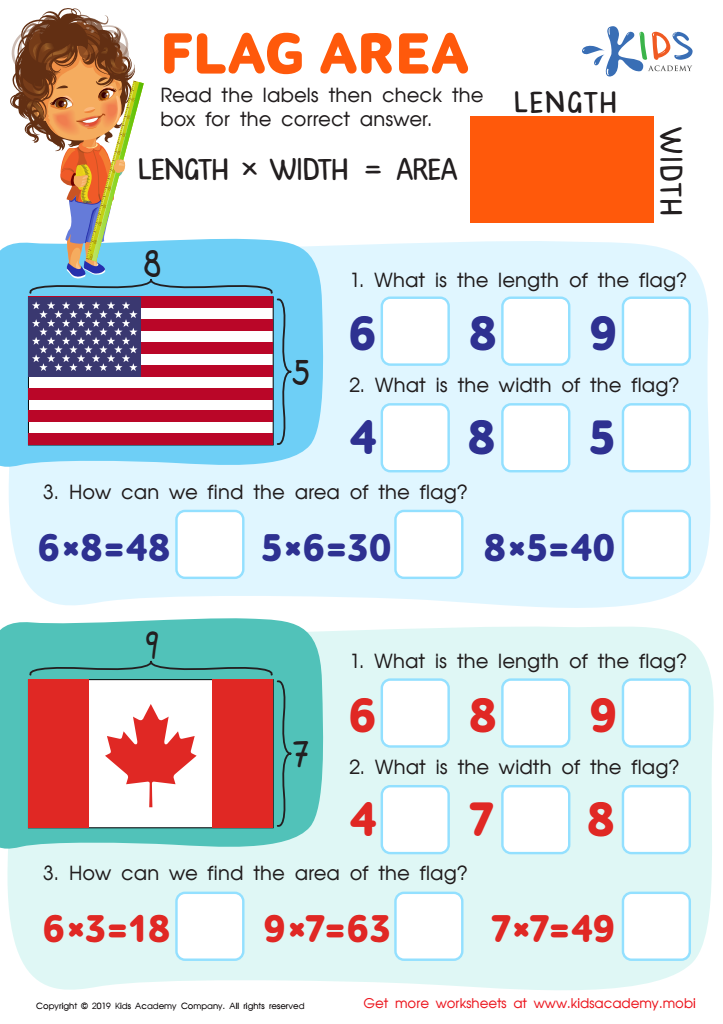
Flag Area Worksheet
 Assign to My Students











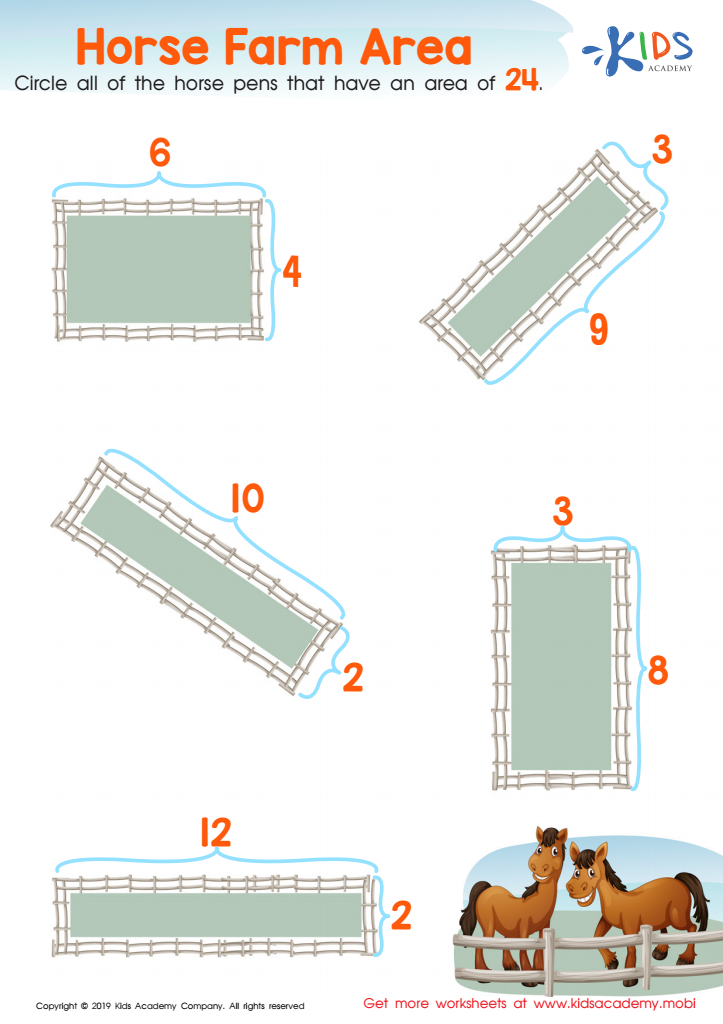
Horse Farm Area Worksheet
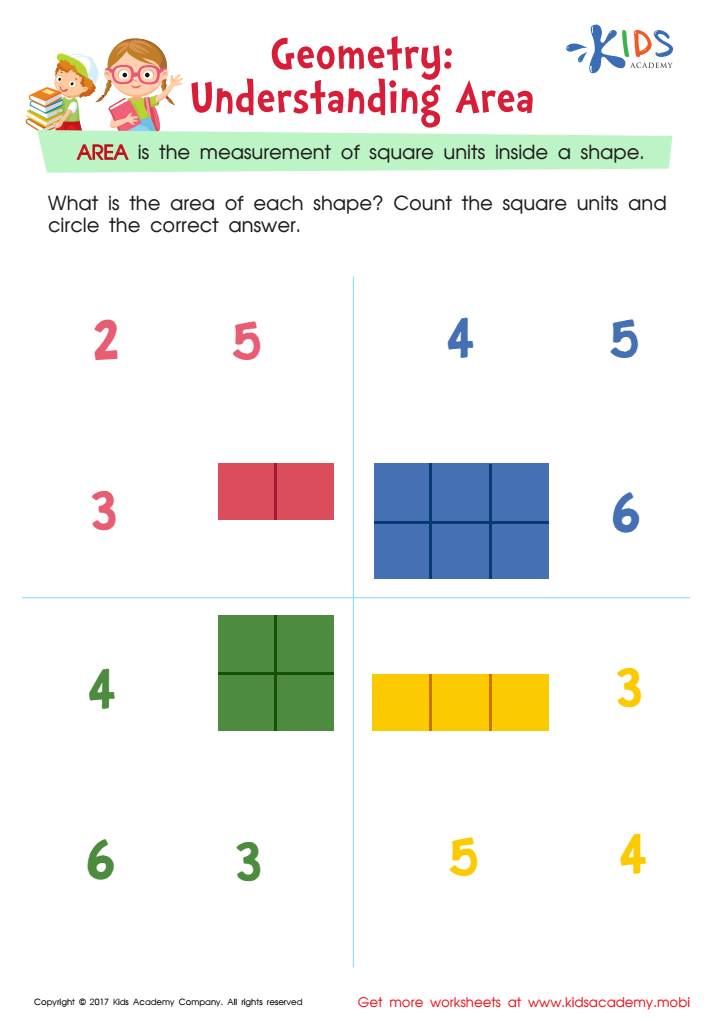
Understanding Area Worksheet








Understanding area and geometry is crucial for children aged 4-9 for several reasons. Firstly, foundational concepts in geometry and area foster spatial awareness, which is essential for everyday activities and further mathematical learning. Engaging with shapes and understanding their properties helps children develop critical thinking skills and problem-solving abilities that are vital in early education and beyond.
Moreover, geometry is intertwined with various subjects, including art, science, and even physical education. For instance, recognizing patterns, symmetry, and shapes enhances creativity and observational skills. This comprehension is also linked to real-world applications. For example, knowledge of area is beneficial when drawing out spaces—be it for playing in the yard or arranging furniture.
Furthermore, developing a strong grasp of these concepts builds confidence in math—an area in which many students struggle as they progress in school. When parents and teachers emphasize understanding area and geometric concepts, they equip children with essential tools for academic success and lifetime problem-solving skills. Overall, nurturing this understanding in early childhood lays a robust groundwork for more complex mathematical concepts and real-life applications, underscoring its importance in educational development.








