Understanding subtraction Numbers Worksheets for Ages 4-9
4 filtered results
-
From - To
Welcome to our "Understanding Subtraction Numbers Worksheets" designed specifically for children aged 4-9! This engaging resource enhances math skills through fun and interactive activities, making learning subtraction enjoyable. Our worksheets focus on foundational concepts, helping young learners grasp the idea of taking away and number relationships. Children will explore subtraction with visual aids and hands-on exercises, reinforcing their understanding at their own pace. Ideal for teachers and parents, these worksheets encourage independent practice while building confidence in math skills. Join us in nurturing your child's math abilities and fostering a love for learning through our comprehensive subtraction resources!
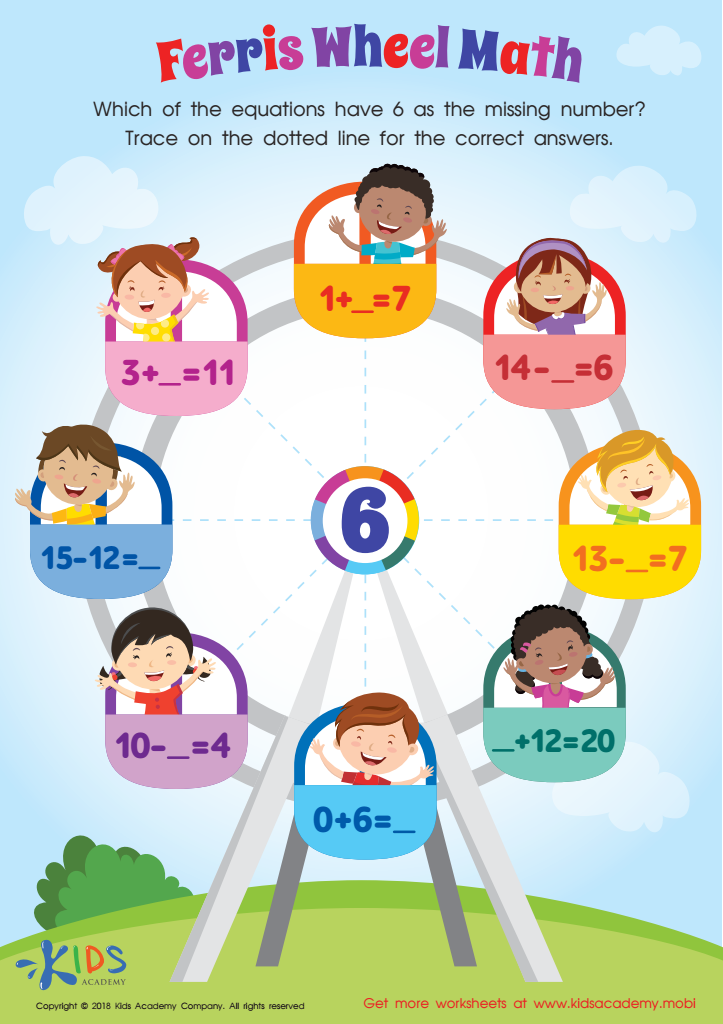
Missing Number: Ferris Wheel Math Worksheet
 Assign to My Students
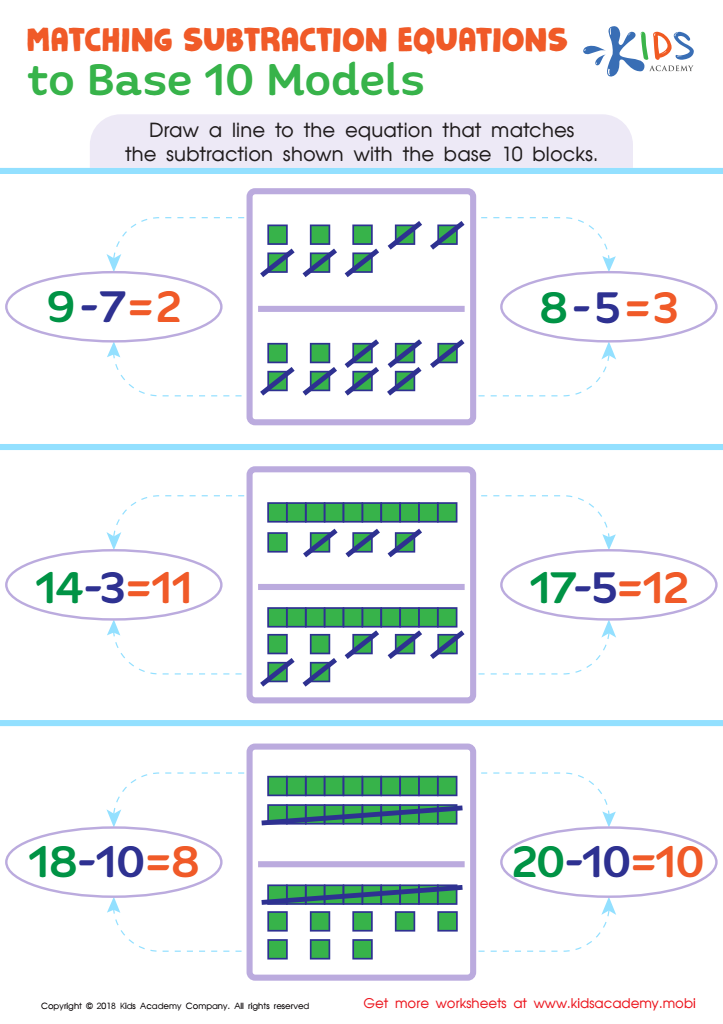
Matching Subtraction Equations To Base 10 Models Worksheet
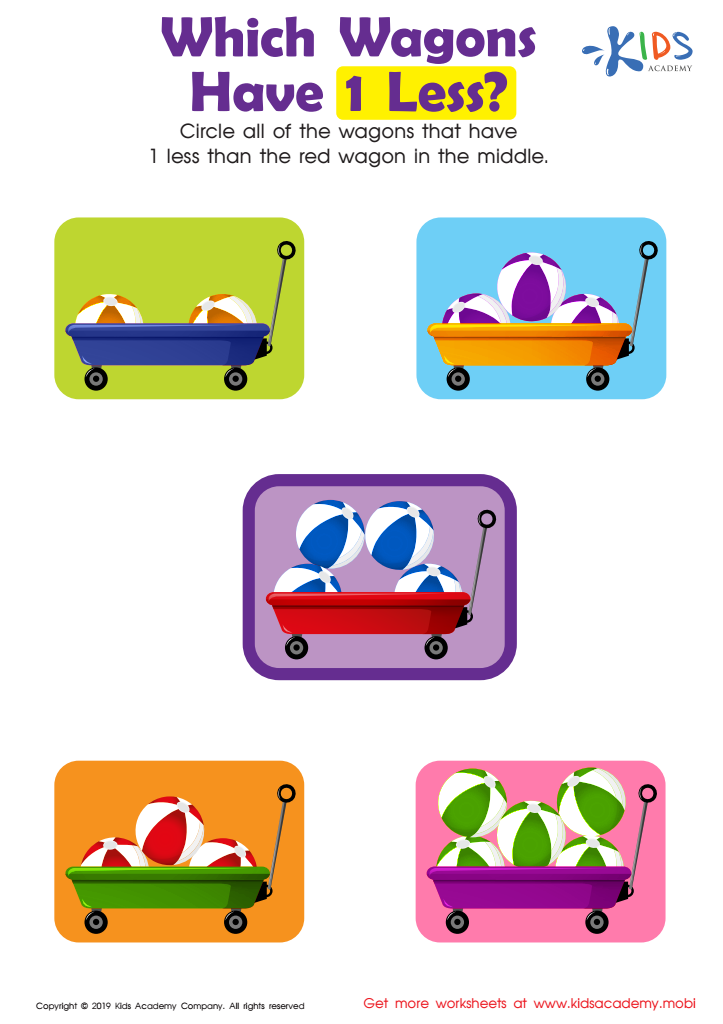
Which Wagons Have 1 Less? Worksheet
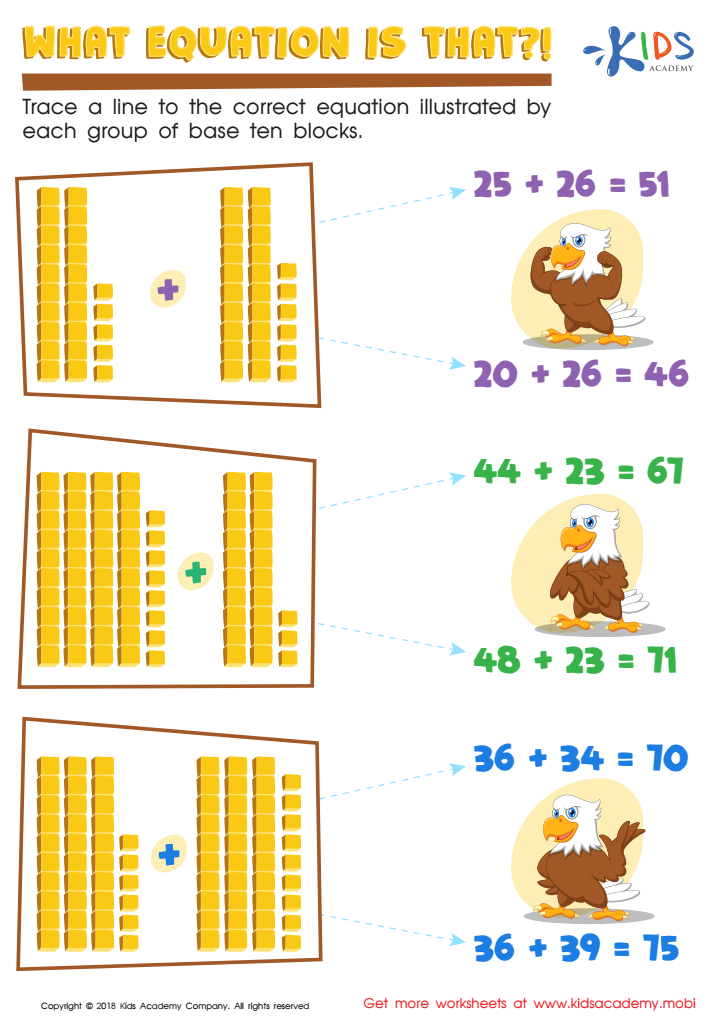
What Equation Is That? Worksheet







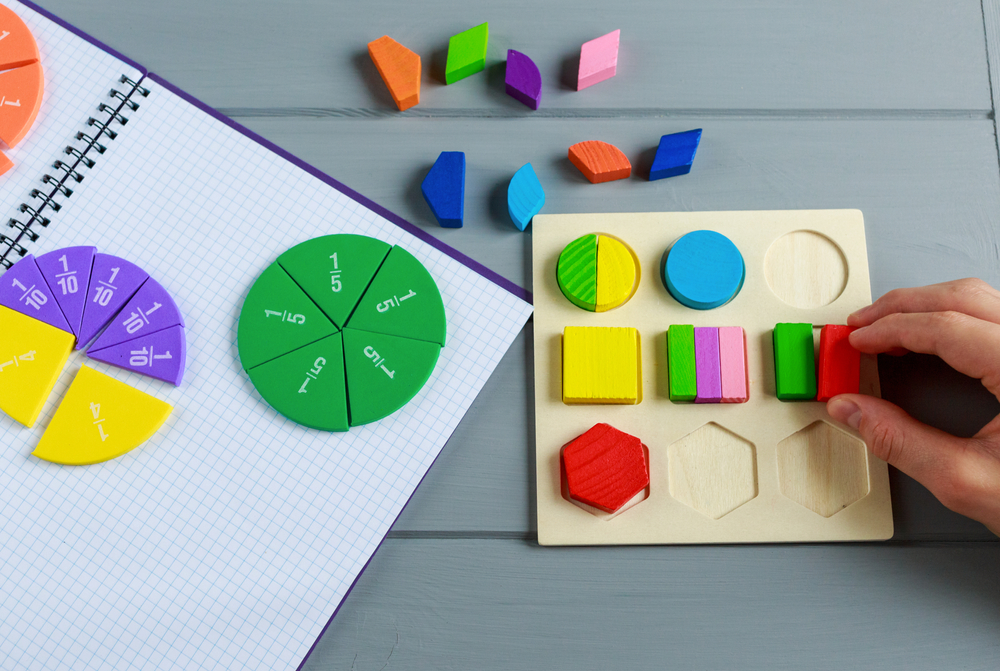
Understanding subtraction is crucial for children aged 4-9 as it lays the foundation for their mathematical skills and problem-solving abilities. At this developmental stage, children are not only learning basic arithmetic but also enhancing their cognitive skills, critical thinking, and logical reasoning. Subtraction teaches them how to navigate real-life situations, such as managing money, sharing supplies, and understanding changes in quantity.
For parents and teachers, fostering a strong grasp of subtraction encourages confidence in young learners. This confidence can lead to a positive attitude toward math, reducing anxiety around the subject as they progress through school. Moreover, comprehension of subtraction supports other mathematical concepts, such as addition, multiplication, and division, ensuring students are better prepared for more complex learning in the future.
Engaging children through various methods—like games, fingers, or visual aids—makes the learning process enjoyable and relatable. Promoting a curiosity about subtraction not only helps in academic success but also teaches valuable life skills, such as critical thinking and perseverance. In essence, understanding subtraction empowers children, equips them for future challenges, and inspires a lifelong love for math. Thus, it is vital for parents and teachers to actively promote and support this understanding in early education.








