Basic Math knowledge Math Worksheets for Ages 4-9
3 filtered results
-
From - To
Unlock your child's potential with our collection of Basic Math Knowledge worksheets designed for ages 4-9. These engaging and printable resources introduce essential math concepts in a fun and interactive way. Suitable for home or classroom use, our worksheets cover vital skills such as counting, addition and subtraction, patterns, and number recognition. Each activity encourages critical thinking and problem-solving, ensuring children build a solid foundation in math while enjoying the learning process. Plus, our thoughtfully designed exercises cater to various learning styles and are perfect for diverse educational settings. Start your child's mathematical journey today with our comprehensive worksheets!
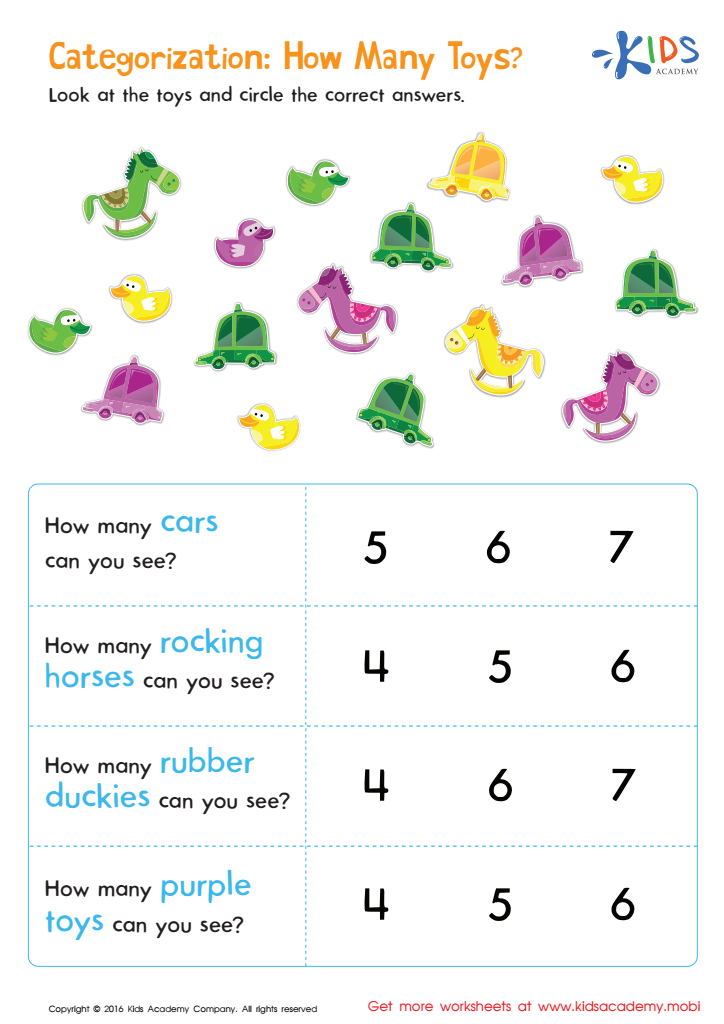
Classifying Toys by Type and Color Sorting Worksheet
 Assign to My Students
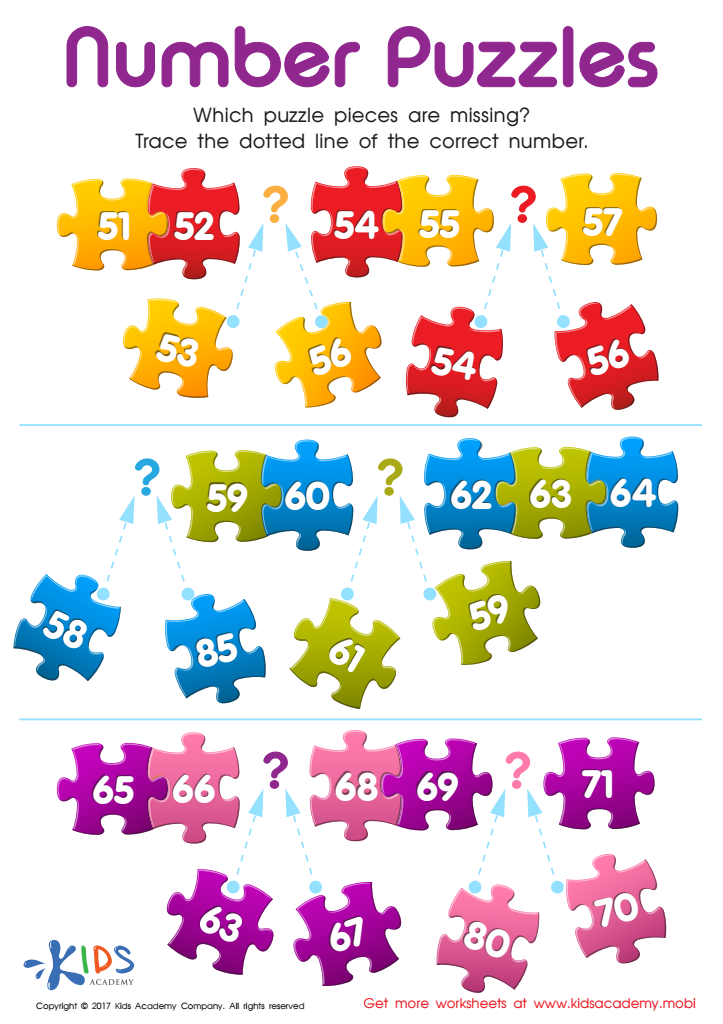
Number Puzzles Worksheet








Basic math knowledge is foundational for children aged 4-9, acting as a stepping stone for their academic and everyday success. At this critical developmental stage, children begin to understand numbers, counting, and simple operations such as addition and subtraction. This early exposure fosters numerical literacy, which is essential not only for future math classes but also for problem-solving skills and logical thinking.
Moreover, strong math knowledge enhances critical cognitive abilities, including pattern recognition and memory. Children often engage with math in real-life situations, from counting fruits at the grocery store to measuring ingredients while cooking. Therefore, a solid understanding of basic math equips them to navigate daily tasks effectively.
Parents and teachers play a vital role in nurturing this skill, as it can significantly boost a child's confidence. Children who feel competent in math are more likely to engage positively with the subject, paving the way for advanced studies in STEM fields. Furthermore, promoting math knowledge helps bridge the educational gap between different learning abilities, ensuring equitable learning experiences. In essence, investing time and resources into fostering basic math knowledge during ages 4-9 lays the groundwork for lifelong learning and problem-solving capabilities.








