Comparing objects Math Worksheets for Ages 4-9
8 filtered results
-
From - To
Discover exciting Comparing Objects Math Worksheets tailored for children aged 4-9! These engaging, printable worksheets from Kids Academy are designed to develop critical early math skills. Kids will learn to compare sizes, lengths, weights, and capacities in a fun, visually appealing format. Perfect for home or classroom use, these activities not only enhance mathematical reasoning but also foster observation and analytical skills. Our worksheets ensure learning is enjoyable and interactive, motivating young learners to excel. Give your child a solid foundation in math through creative and educational comparing objects worksheets from Kids Academy!
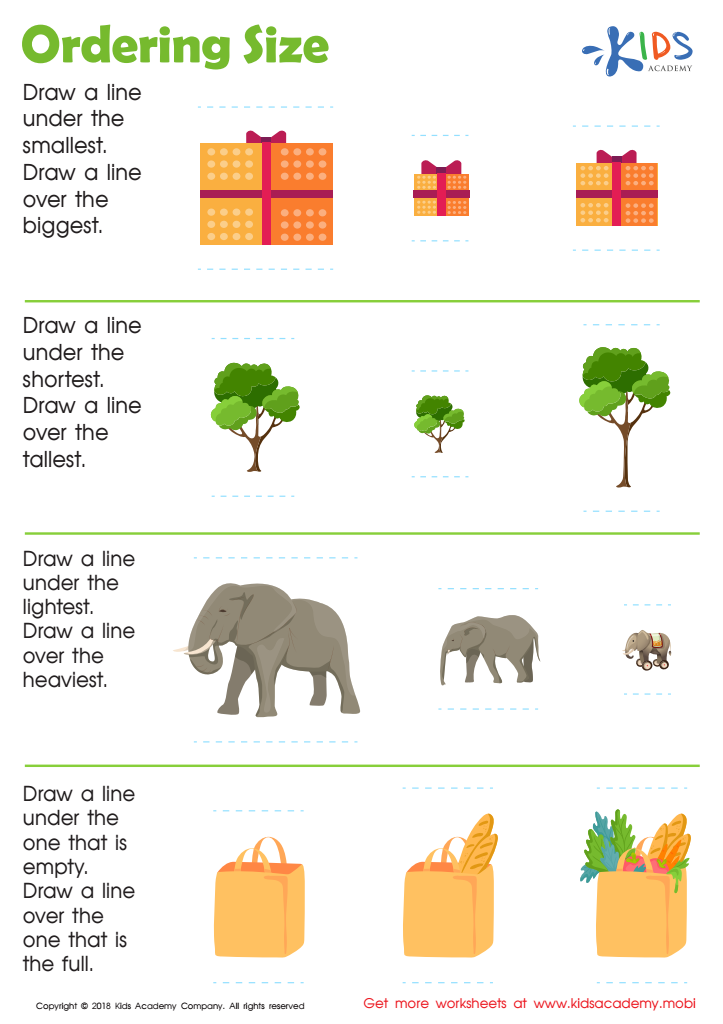
Ordering Size Worksheet
 Assign to My Students
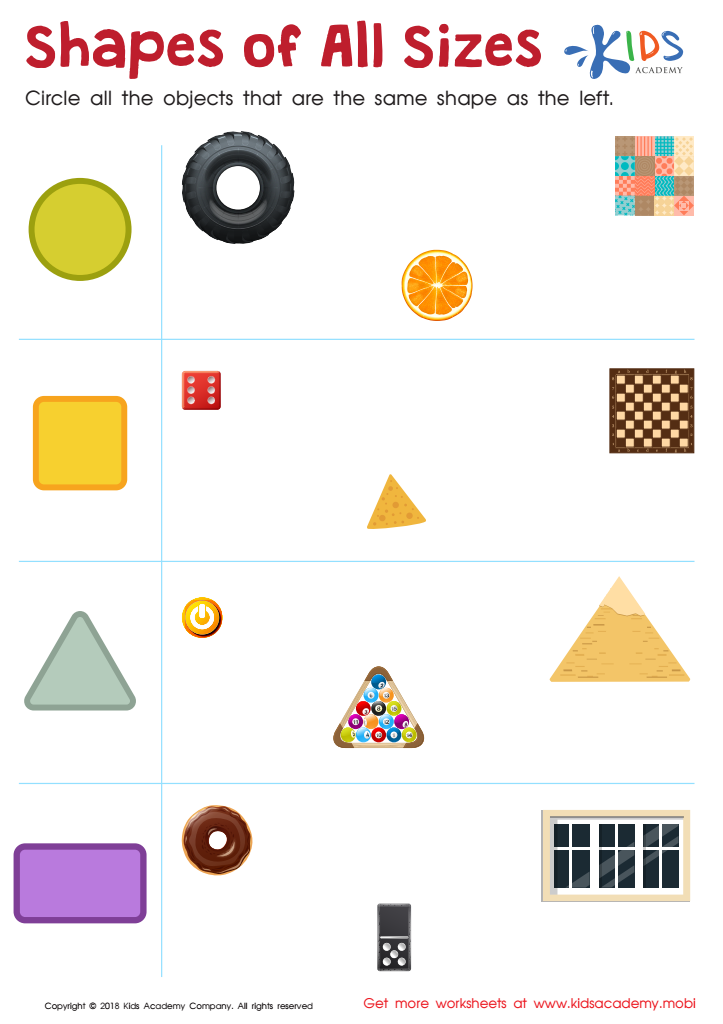
Shapes of All Sizes Worksheet
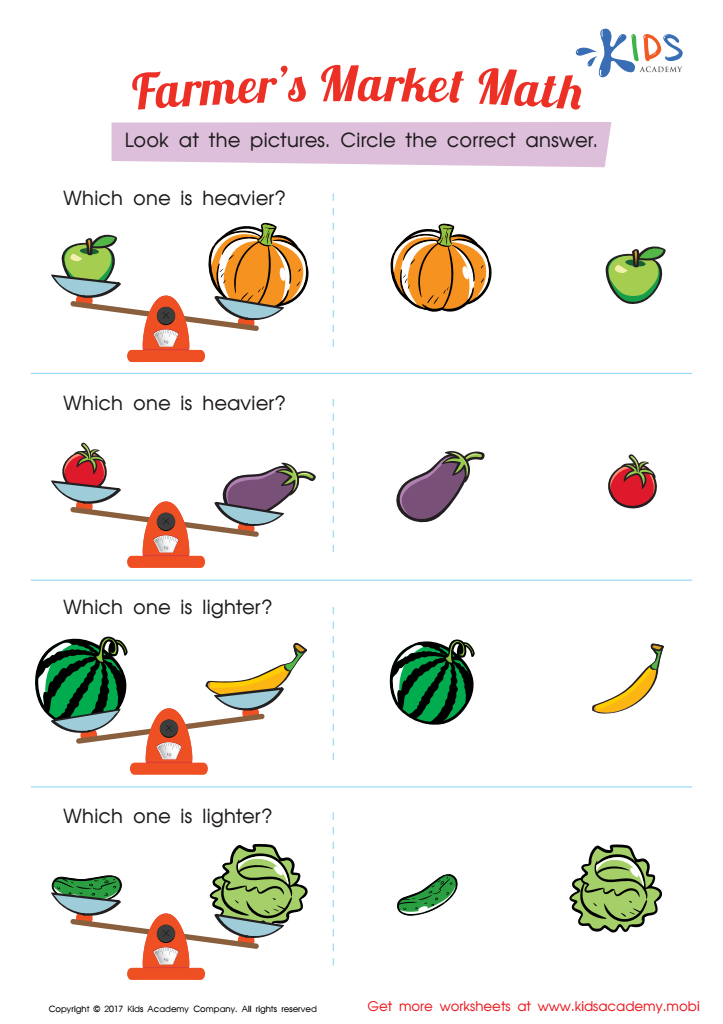
Which One Is Heavier Worksheet
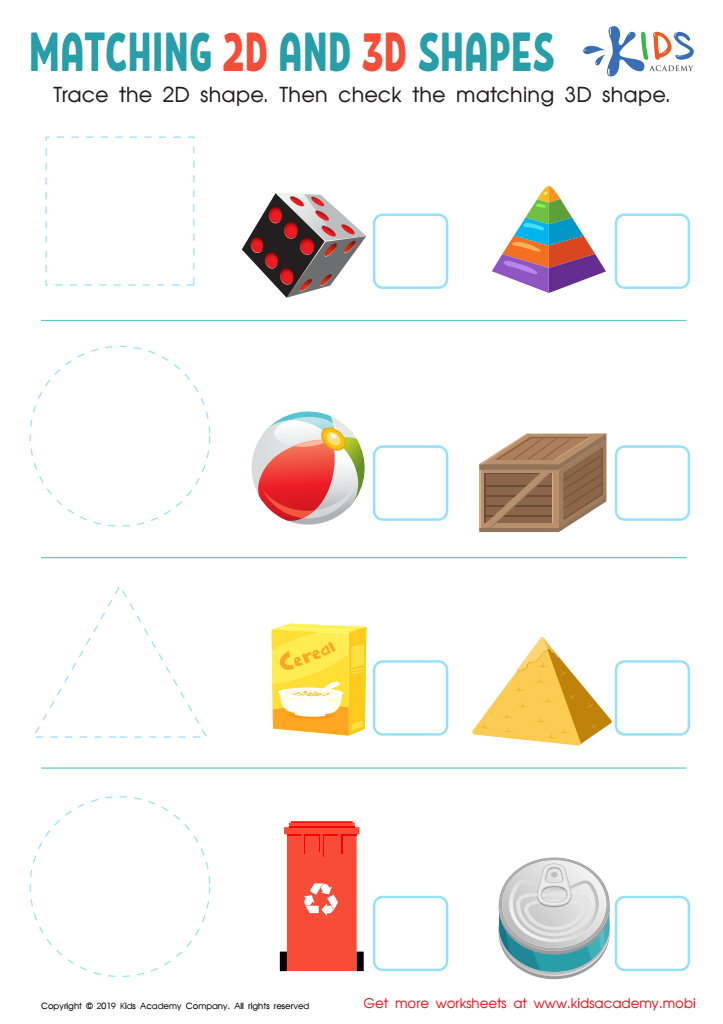
Matching 2D and 3D Shapes Worksheet
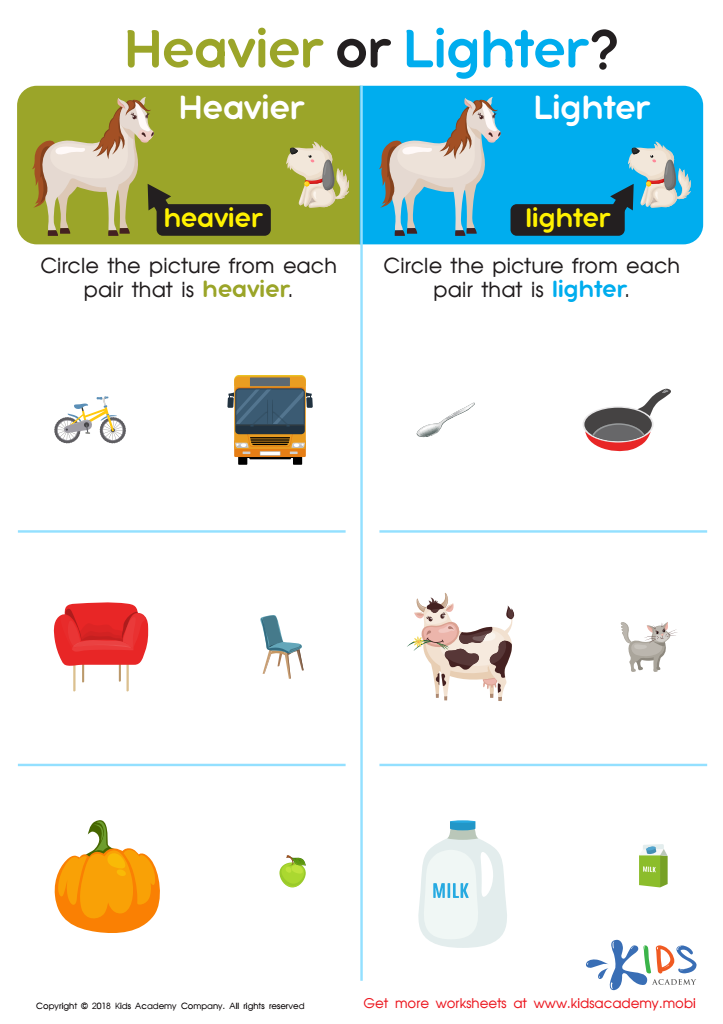
Heavier or Lighter? Worksheet
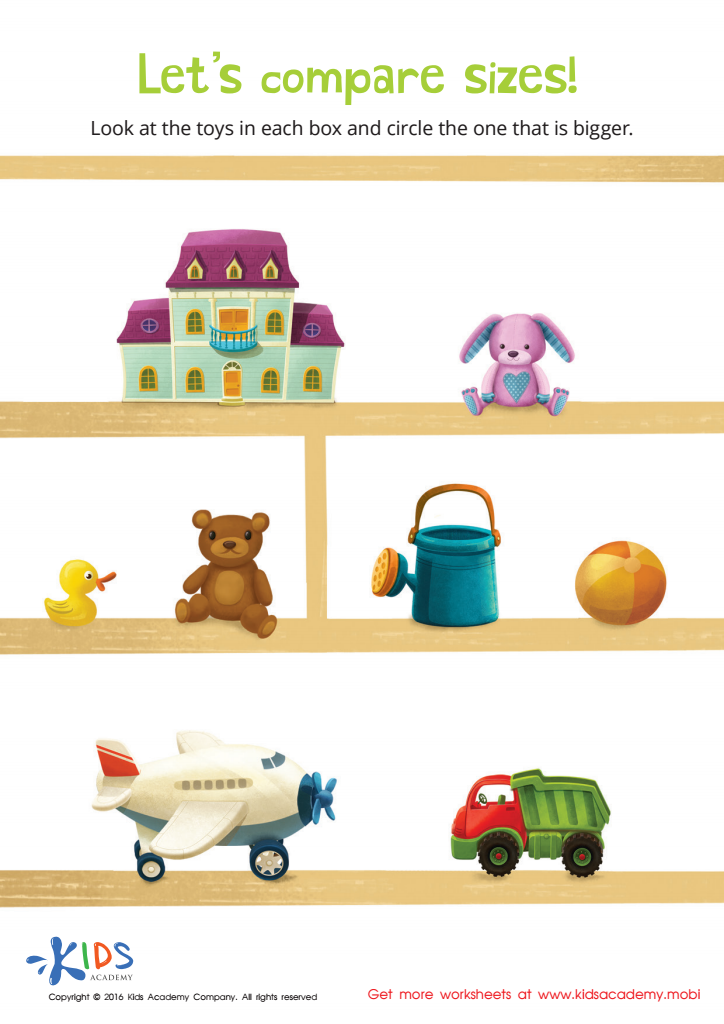
Classifying by Size Sorting Worksheet






Comparing objects in math for children aged 4-9 is a critical foundational skill that parents and teachers should prioritize. At these early ages, children are rapidly developing their cognitive abilities, and understanding the concept of comparison supports a multitude of essential mathematical principles. When children compare objects, they learn to observe differences in size, length, quantity, and weight, fostering their ability to analyze and interpret the world around them.
Developing these skills promotes logical thinking and reasoning. For example, distinguishing between which of two objects is heavier or which set has more items cultivates number sense and prepares children for more complex mathematical operations, such as addition, subtraction, and measurement. Additionally, comparison activities can be both fun and interactive, fostering engagement and a positive attitude towards math.
Beyond academics, comparing objects aids in developing language skills. By describing attributes and using comparative vocabulary (e.g., bigger, smaller, more, less), children enhance their descriptive abilities and communication skills. Also, these activities tend to integrate well with everyday scenarios, making learning relevant and meaningful.
Ultimately, focusing on comparing objects equips children with critical thinking skills, laying a strong mathematical foundation while also supporting overall cognitive development. It's an investment in their academic future and everyday problem-solving capabilities.








