Data analysis Math Worksheets for Ages 4-9
4 filtered results
-
From - To
Discover engaging Data Analysis Math Worksheets for ages 4-9, designed to build essential analytical skills. Our carefully crafted worksheets stimulate young minds while making learning fun and interactive. Children will explore concepts like sorting, graphing, and interpreting data to enhance their mathematical understanding and critical thinking abilities. Each worksheet is visually appealing and tailored to meet the developmental needs of early learners. Whether in the classroom or at home, these resources are perfect for reinforcing essential math skills. Encourage your child’s curiosity and confidence in data analysis through enjoyable activities that lay the foundation for future academic success. Start exploring today!
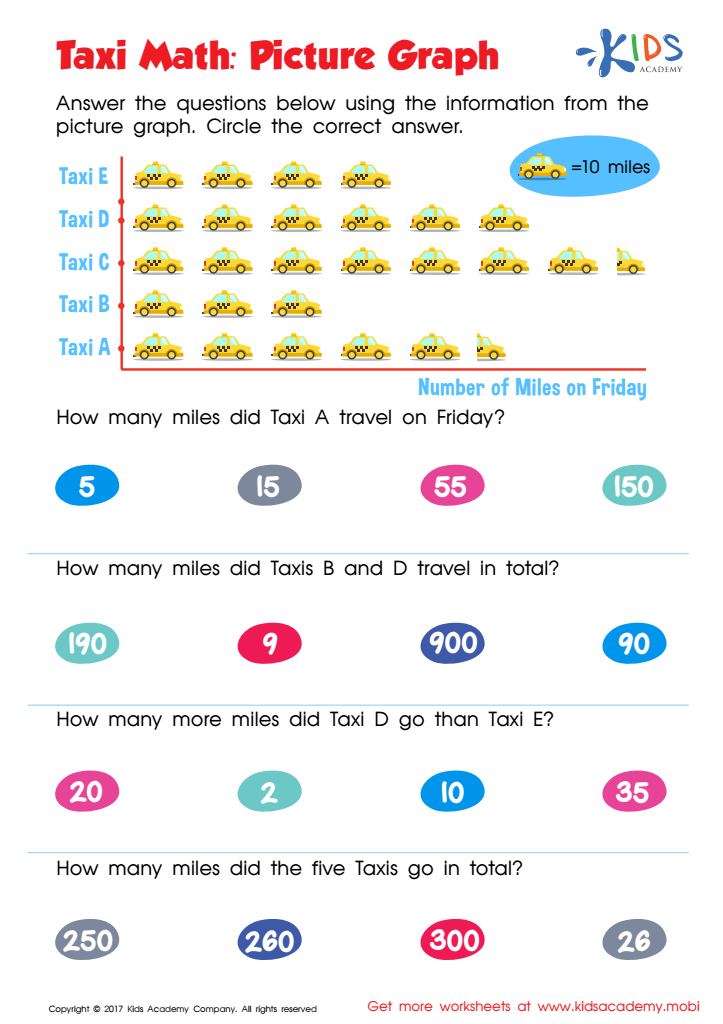
Taxi Math Worksheet
 Assign to My Students
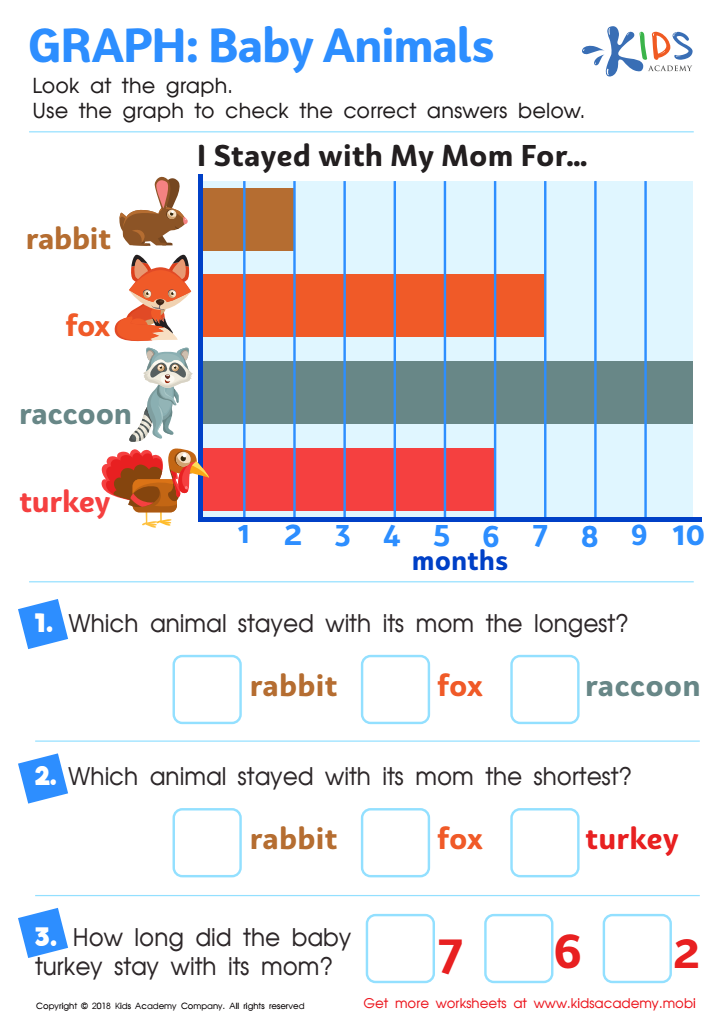
Graph: Baby Animals Worksheet
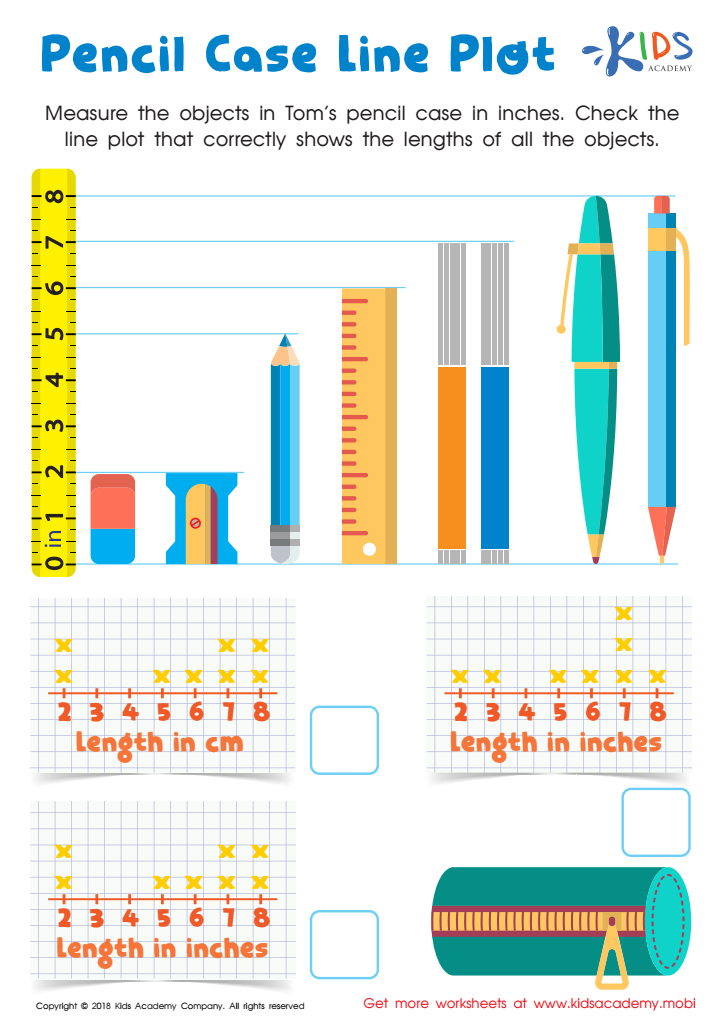
Pencil Case Line Plot Worksheet
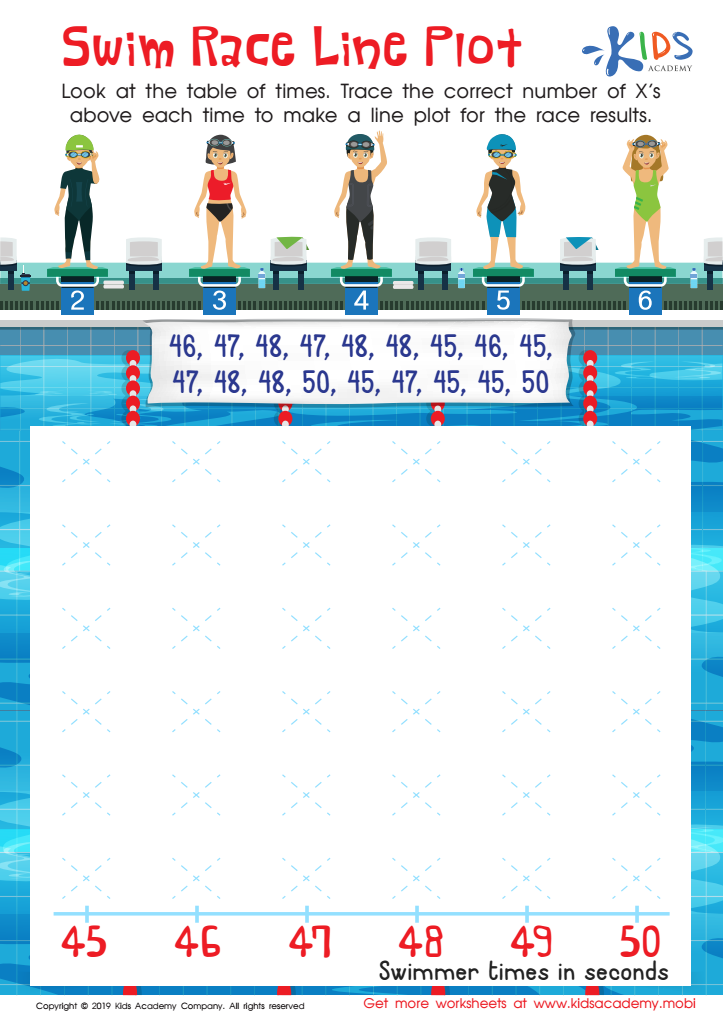
Swim Race Line Plot Worksheet






.jpg)
Data analysis in mathematics is essential for children ages 4-9 as it lays the foundation for critical thinking and informed decision-making. At this early age, children are naturally curious and eager to explore the world around them. Teaching data analysis helps them make sense of the information they encounter daily. Engaging students with simple charts, graphs, and collection of data encourages them to ask questions, recognize patterns, and derive meaningful conclusions, boosting their analytical skills.
Moreover, understanding data analysis fosters early numeracy, helping children relate mathematical concepts to real-life situations. For instance, when they collect information about their favorite fruits or toys, they learn to organize data meaningfully, facilitating skills in sorting, counting, and classification.
Parents and teachers play a vital role in promoting these skills. By encouraging exploration, discussing findings, and prompting inquiries, they ignite a passion for learning that extends beyond mathematics. Furthermore, these foundational skills in data analysis prove invaluable in later academic pursuits and in navigating a data-driven world. In essence, instilling an appreciation for data analysis in young learners empowers them to be more informed and thoughtful individuals as they grow.








