Improving observation Math Worksheets for Ages 4-9
3 filtered results
-
From - To
Unlock the power of observation with our "Improving Observation Math Worksheets" designed for children aged 4 to 9. These engaging, printable activities focus on enhancing critical thinking and observational skills, essential for early math success. From spotting patterns to completing visual puzzles, each worksheet promotes interactive learning while making math fun. Tailored to meet developmental standards, our resources make it easy for teachers and parents to support children's growth. Foster curiosity and confidence in young learners as they develop their math skills through creative exercises. Explore our collection and watch your child's problem-solving abilities flourish!
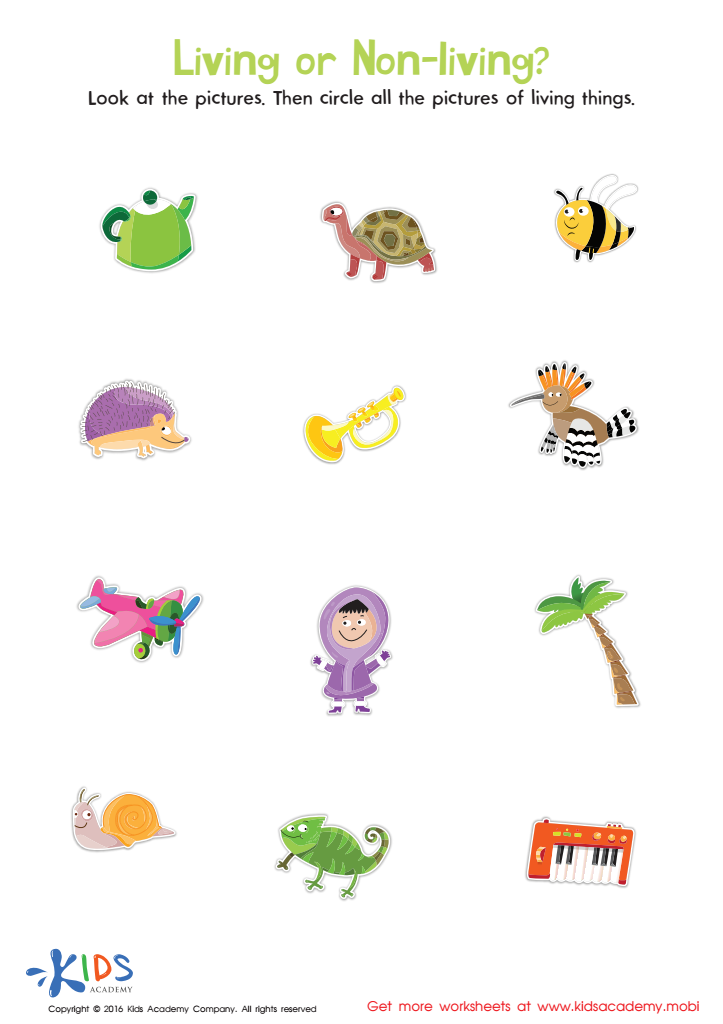
Identifying Living and Non–living Things Sorting Worksheet
 Assign to My Students
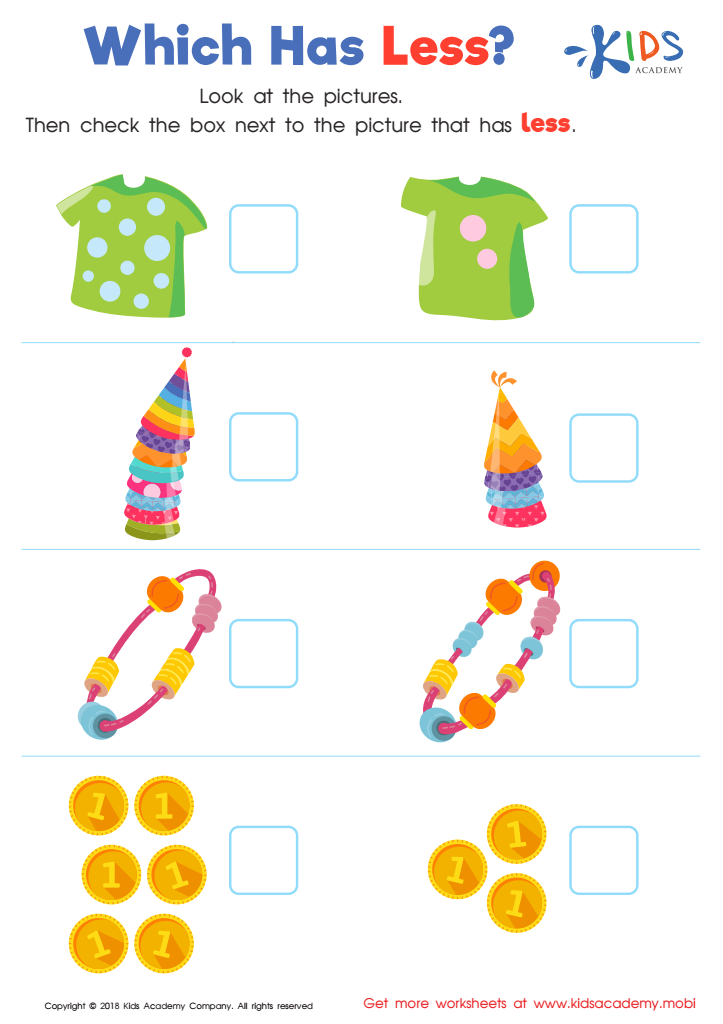
Which Has Less? Worksheet
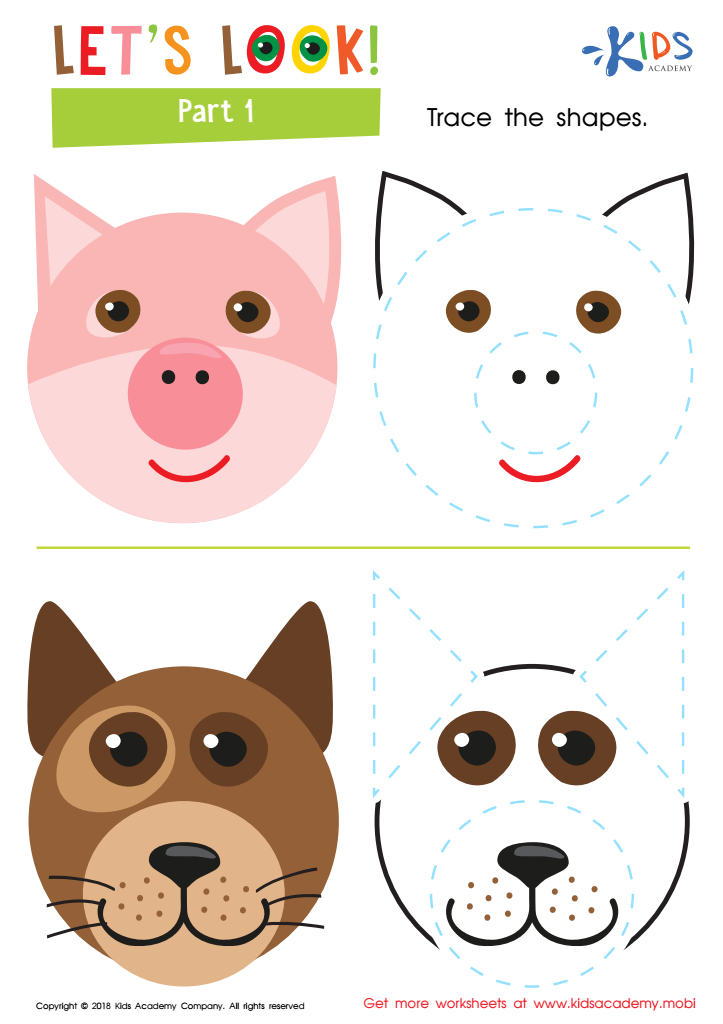
Let's Look! Part 1 Worksheet








Improving observation in math for children aged 4-9 is crucial for fostering a strong foundation in mathematical understanding. At this young age, children are naturally curious and explore their surroundings, making it an ideal time to cultivate observational skills that deepen their comprehension of math concepts.
Teachers and parents should care about enhancing these skills because observation helps children make connections between mathematics and real-world situations. By observing patterns, shapes, and quantities in their environment, children develop critical thinking and problem-solving abilities that are essential for future learning.
Additionally, refining observational skills supports the development of language related to mathematics, enabling children to articulate their thoughts and engage in discussions about their findings. This verbalization reinforces their understanding and promotes a greater interest in math.
Furthermore, strong observational skills enable educators and parents to identify individual learning styles and difficulties early on, allowing for tailored instructional strategies that meet each child’s needs. By closely observing children as they explore mathematical concepts, adults can provide timely interventions and encouragement, promoting a positive attitude towards math that lasts a lifetime. Overall, improving observational math not only builds essential skills but also creates a joyful learning environment.








