Number representation Math Worksheets for Ages 4-9
4 filtered results
-
From - To
Welcome to our engaging "Number Representation Math Worksheets" designed for children ages 4-9! Our carefully crafted worksheets aim to cultivate number recognition and understanding among young learners. Through a mix of fun activities, visual aids, and interactive exercises, students will explore various ways to represent numbers, enhancing their mathematical skills. From counting objects to identifying numbers in different formats, these worksheets offer comprehensive practice suitable for preschool through early elementary levels. Our resources are perfect for home or classroom use, making math an enjoyable experience for every child. Foster a love for numbers and boost confidence in math with our creative worksheets today!
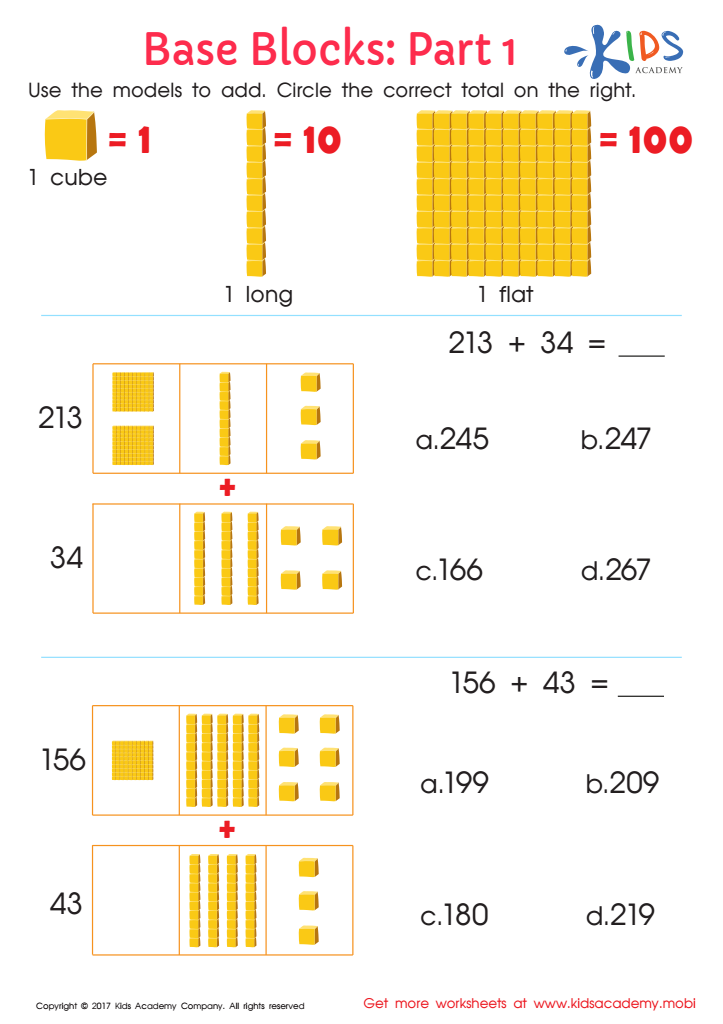
Base Ten Blocks Worksheet: Part 1
 Assign to My Students
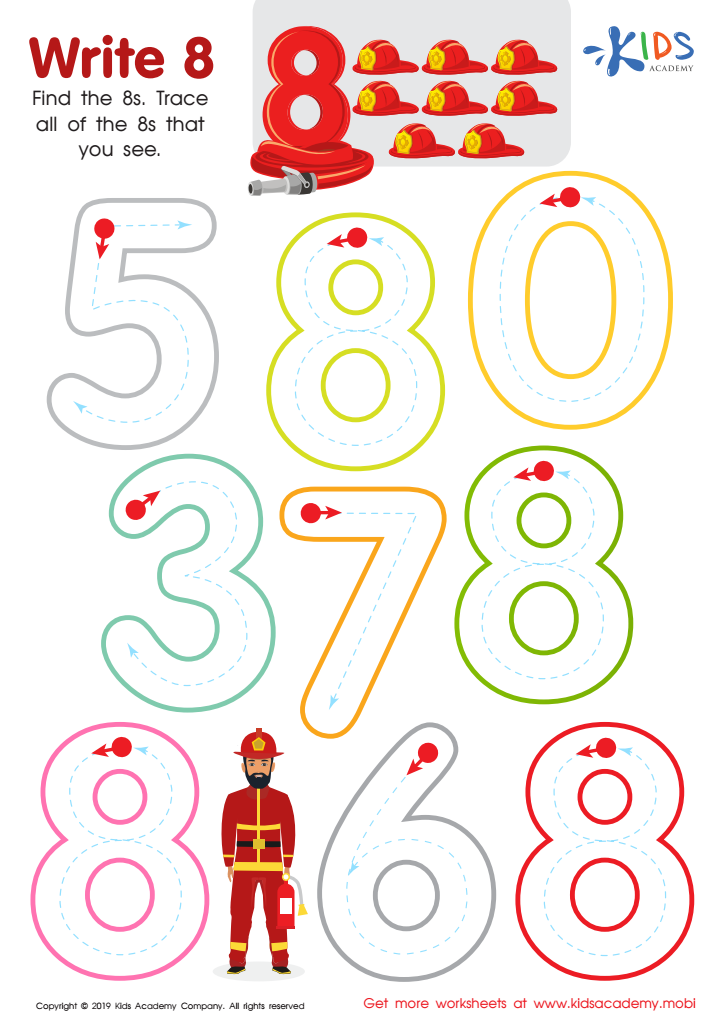
Write 8 Worksheet
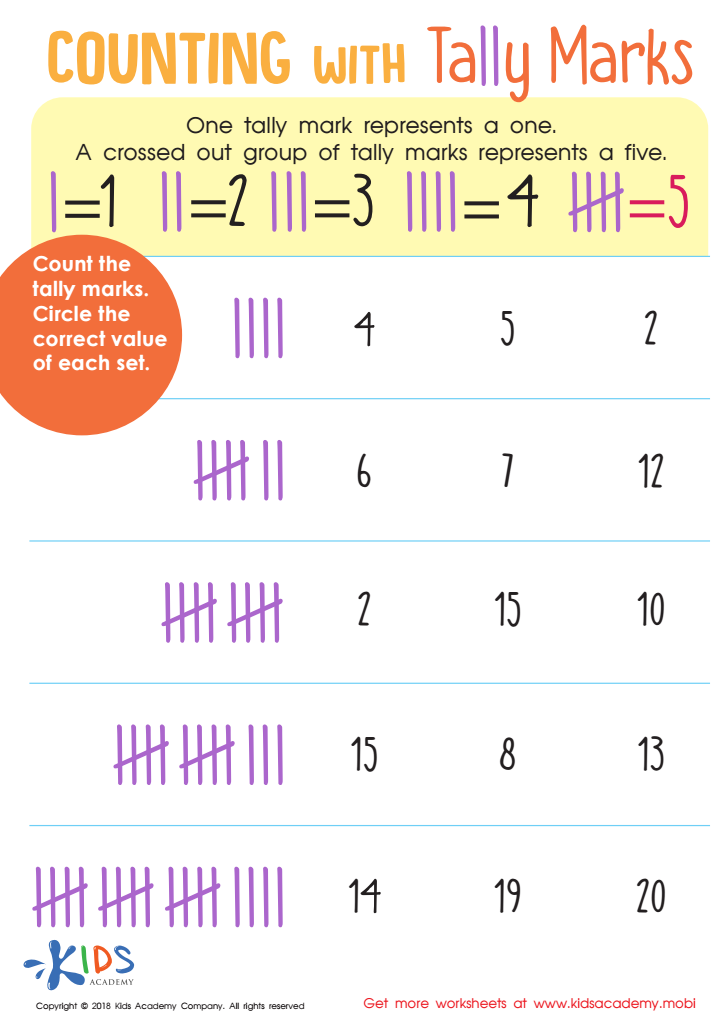
Counting with Tally Marks Worksheet
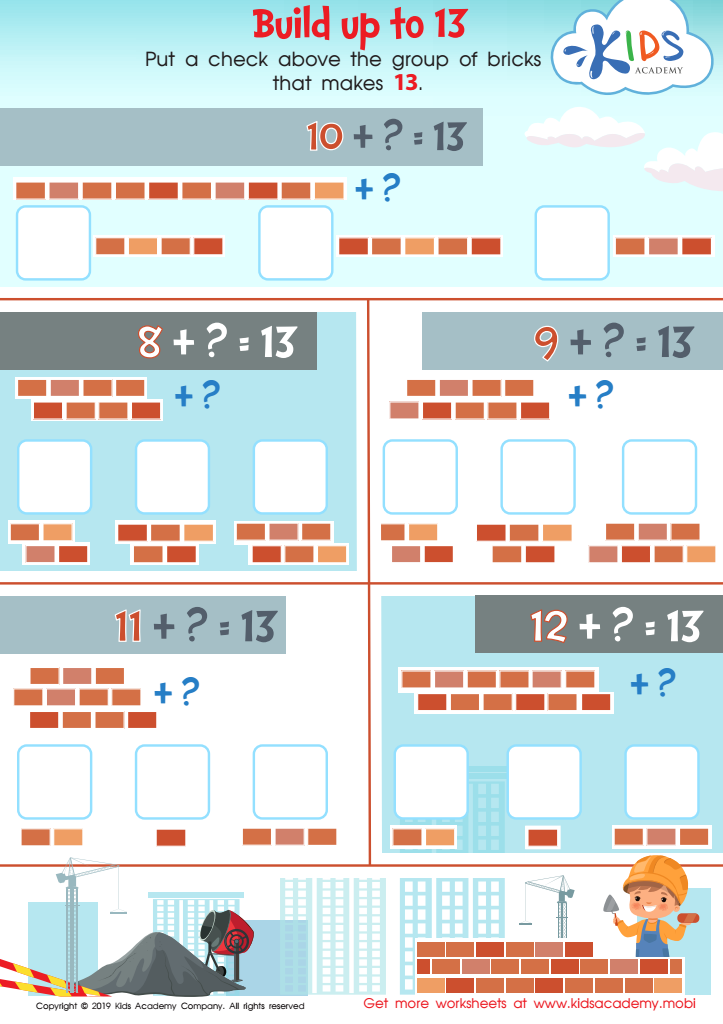
Build up to 13 Worksheet




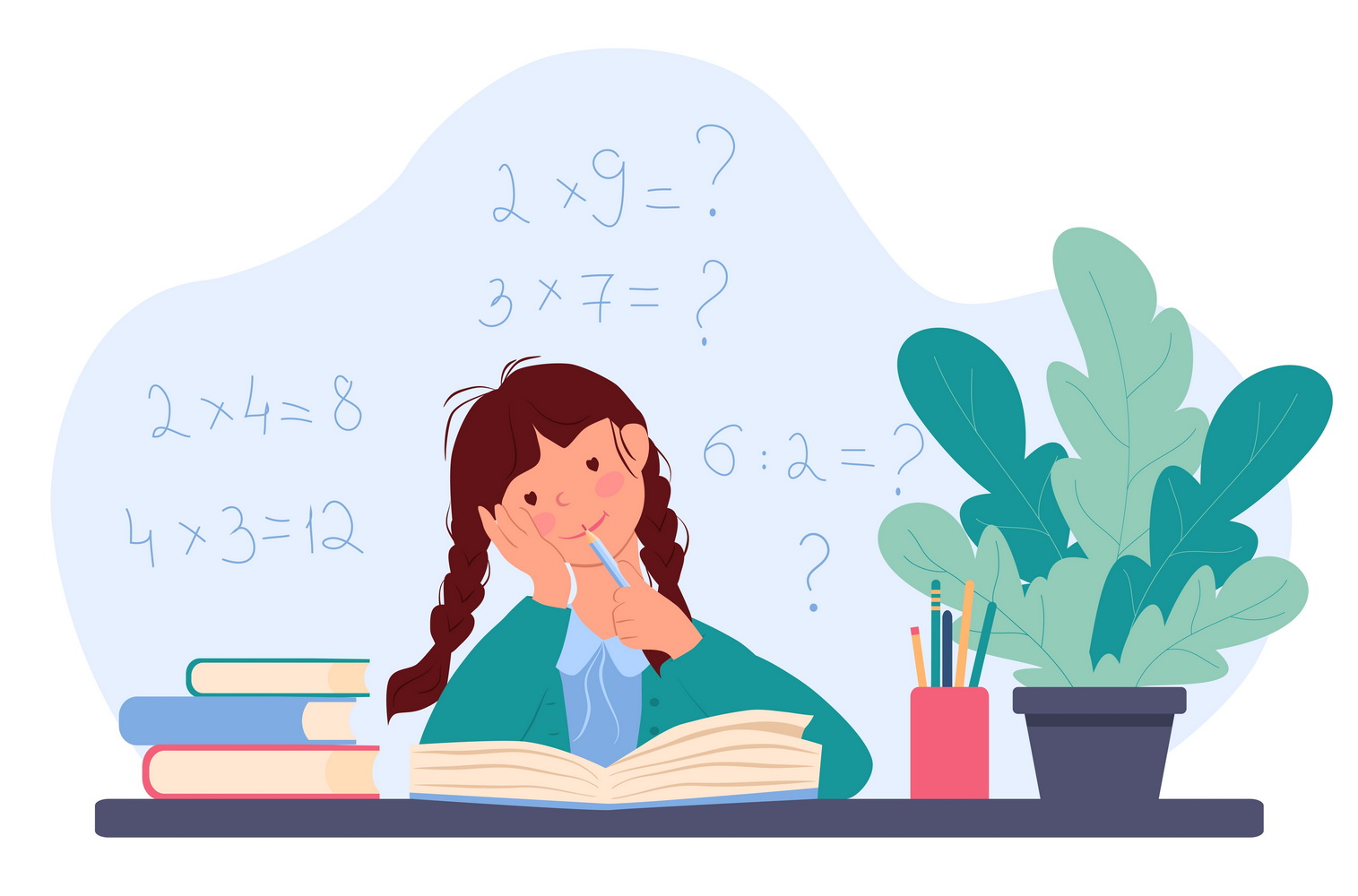


Understanding number representation is crucial for young learners aged 4 to 9, as it lays the foundation for all future mathematical understanding. At this age, children develop their number sense, which involves recognizing, understanding, and speculating how numbers work in various contexts.
Parents and teachers should care about number representation because it fosters essential cognitive skills like counting, comparing, and problem-solving. By learning to represent numbers through various methods—such as visual aids, number lines, or manipulatives—children can grasp abstract mathematical concepts more effectively. This multi-faceted understanding helps accommodate diverse learning styles, ensuring that each child can engage with math in a way that resonates with them.
Moreover, number representation ties directly to everyday life skills, enhancing children's ability to perform basic budgeting, measuring, and other tasks that matter outside the classroom. It builds confidence, essential for encouraging a positive attitude toward math, which can have lasting effects on a child's academic journey.
In essence, focusing on number representation equips young learners with critical skills that promote not only academic success but also a lifelong appreciation for mathematics. Engaged parents and teachers can make this learning experience meaningful, fostering an environment rich in exploration and enthusiasm for learning.








