
Reading clocks Math Worksheets for Ages 4-9
7 filtered results
Difficulty Level
Grade
Age
-
From - To
Subject
Activity
Standards
Discover our engaging Reading Clocks Math Worksheets for children ages 4-9! These user-friendly resources are designed to make learning how to tell time fun and interactive. With colorful illustrations and age-appropriate activities, your little ones will master reading both analog and digital clocks while enhancing their math skills. Our worksheets cater to various learning levels, ensuring each child can progress at their own pace. Whether in the classroom or at home, these printable materials provide an excellent way to reinforce essential time-telling concepts. Start your child's journey to clock mastery today with our expertly crafted worksheets!
Favorites
With answer key
Interactive
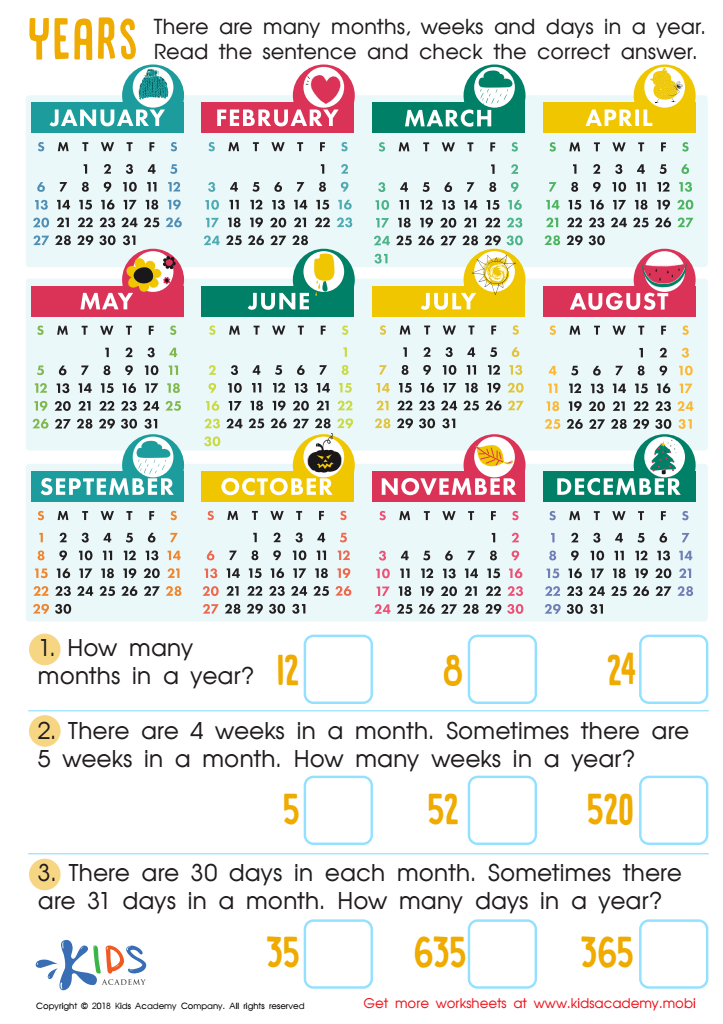
Years Worksheet
This worksheet is a great way to test your children's knowledge of the calendar. Ask them if they can name the days of the week and months in a year. Read and discuss the questions with them and help them find the right answers. Encourage them to check their answers.
 Assign to My Students
Years Worksheet
Worksheet
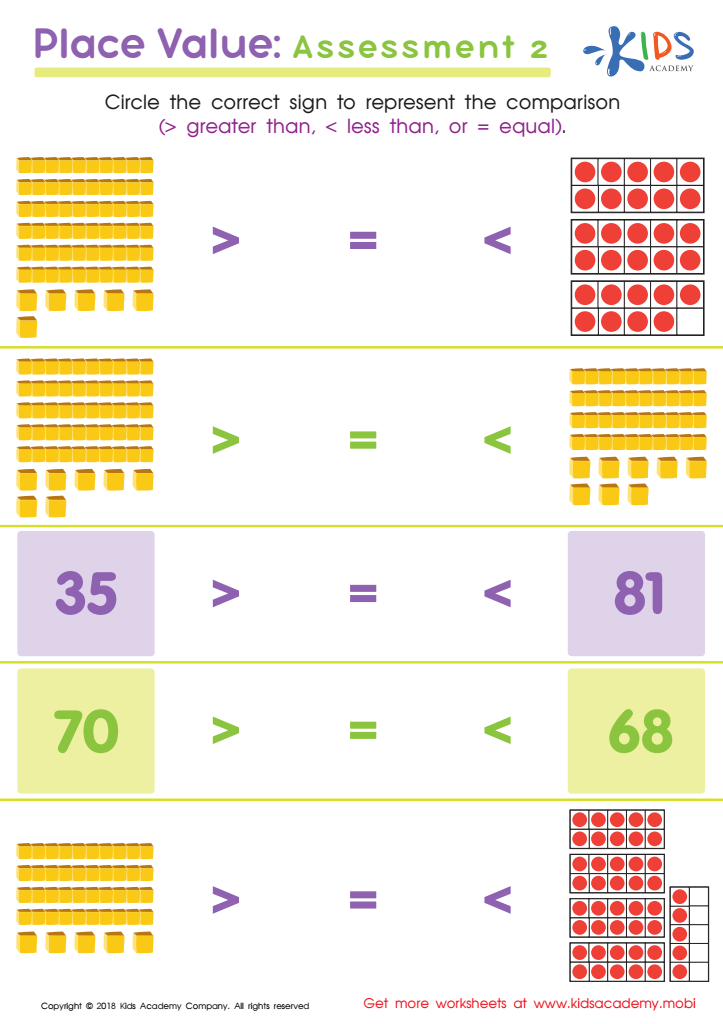
Place Value: Assessment 2 Worksheet
Children must learn to recognize the value of numbers and break them into chunks of ten. They must also be able to compare numbers to know if one is greater, less than or equal to another. The Place Value Assessment PDF is a great tool to assess their skills and identify what requires more practice.
Place Value: Assessment 2 Worksheet
Worksheet
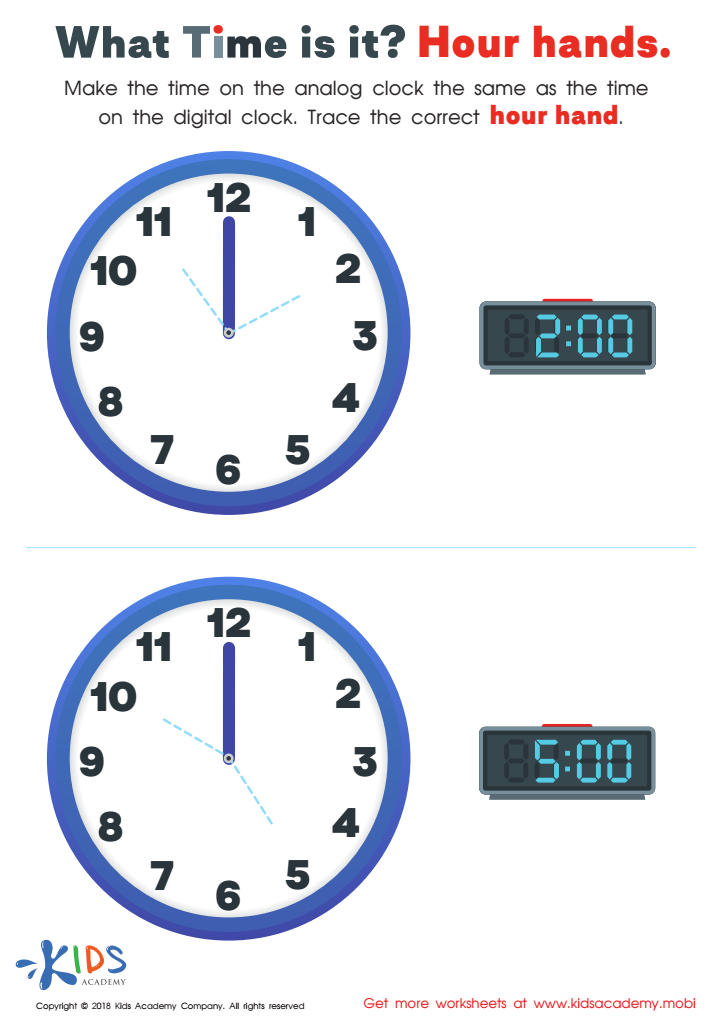
What Time Is it? Hour Hands Worksheet
Does your child know how to read analogue and digital clocks? This worksheet will help them learn. Trace the correct hour hand to match the time on a digital clock to the analogue clock. Help them read the time correctly, both on analogue and digital clocks.
What Time Is it? Hour Hands Worksheet
Worksheet
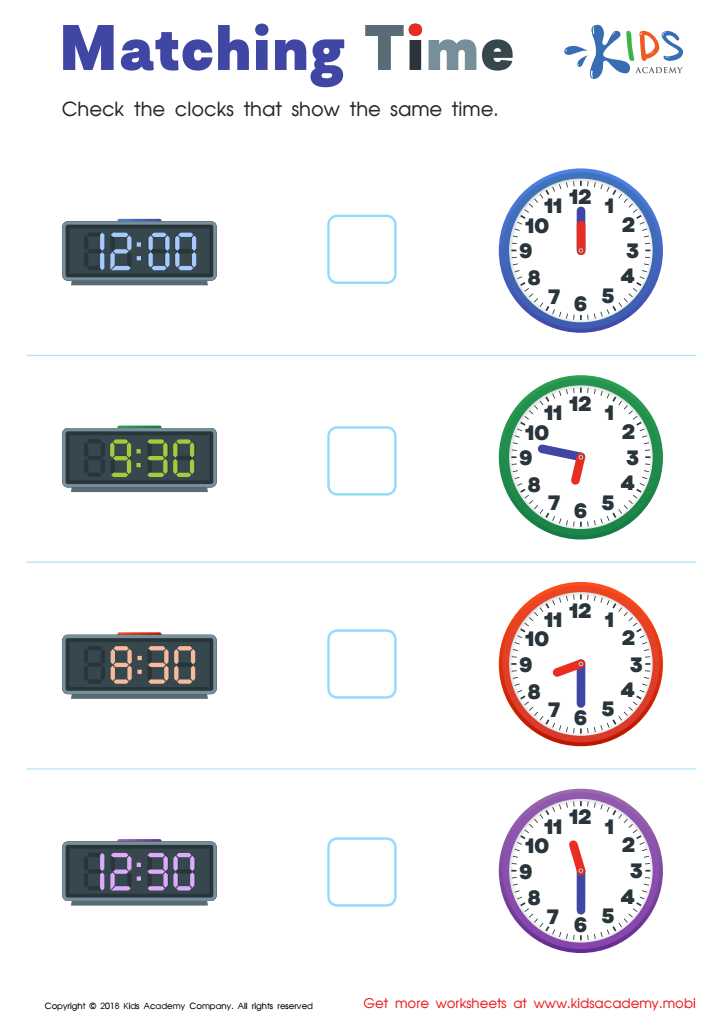
Matching Time Worksheet
Teach your child to read time in both digital and analog formats with this helpful printout. They'll identify clocks that match in both formats and check them off. Colorful and engaging, it's a great way to help your child understand the concept of time-telling.
Matching Time Worksheet
Worksheet
Join Kids Academy for Free
Who is primarily going to use this learning content?




.jpg)


Teaching children to read clocks and understand time is a vital mathematical skill that uOpens a world of practical applications in daily life and enhances overall cognitive development. For children aged 4-9, grasping the concepts of time fosters critical thinking, curiosity, and independence.
Firstly, learning to tell time cultivates children's analytical skills, as they learn to break down numbers and patterns, essential components of mathematical reasoning. This foundation aids in their understanding of more complex concepts they will encounter later in their education.
Secondly, appreciating time management is crucial for developing responsibility. When children can refer to a clock, they gain awareness of routines and punctuality, aiding in transitions between activities like school, chores, and playtime.
Furthermore, possessing clock-reading skills encourages communication, as kids begin to discuss their schedules and plans with parents and teachers. It builds confidence as they become empowered to take control of their time.
Finally, partnering with parents, educators can enrich learning experiences through engaging and interactive activities, such as games and storytelling, making the process enjoyable. By prioritizing clock-reading lessons, we equip children with essential life skills that foster independence and self-regulation as they grow.








