Real-world application Math Worksheets for Ages 4-9
5 filtered results
-
From - To
Discover our engaging "Real-World Application Math Worksheets" designed specifically for kids aged 4-9. These worksheets help young learners connect mathematical concepts to everyday situations, enhancing their understanding and relevance of math in daily life. With fun activities that cover essential skills like counting, addition, subtraction, and measurement, children will develop their problem-solving abilities in a context they can easily relate to. Ideal for both classroom and home learning, our printable worksheets make math enjoyable and practical. Watch your child build confidence and enthusiasm for math while exploring real-world scenarios that encourage meaningful learning experiences!
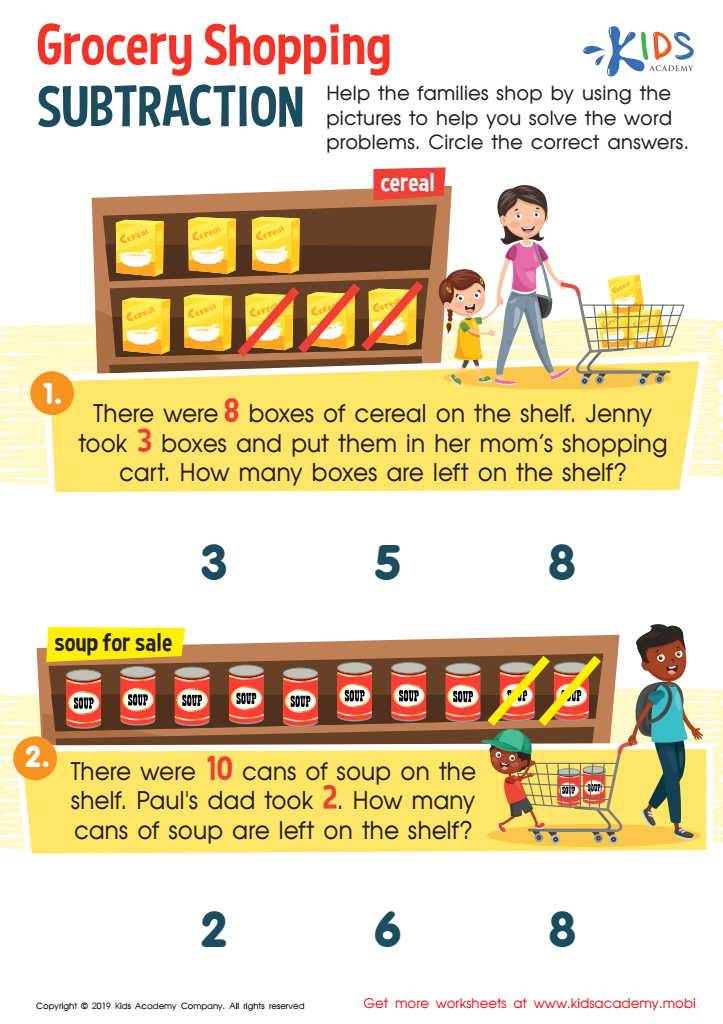
Grocery Shopping Subtraction Worksheet
 Assign to My Students
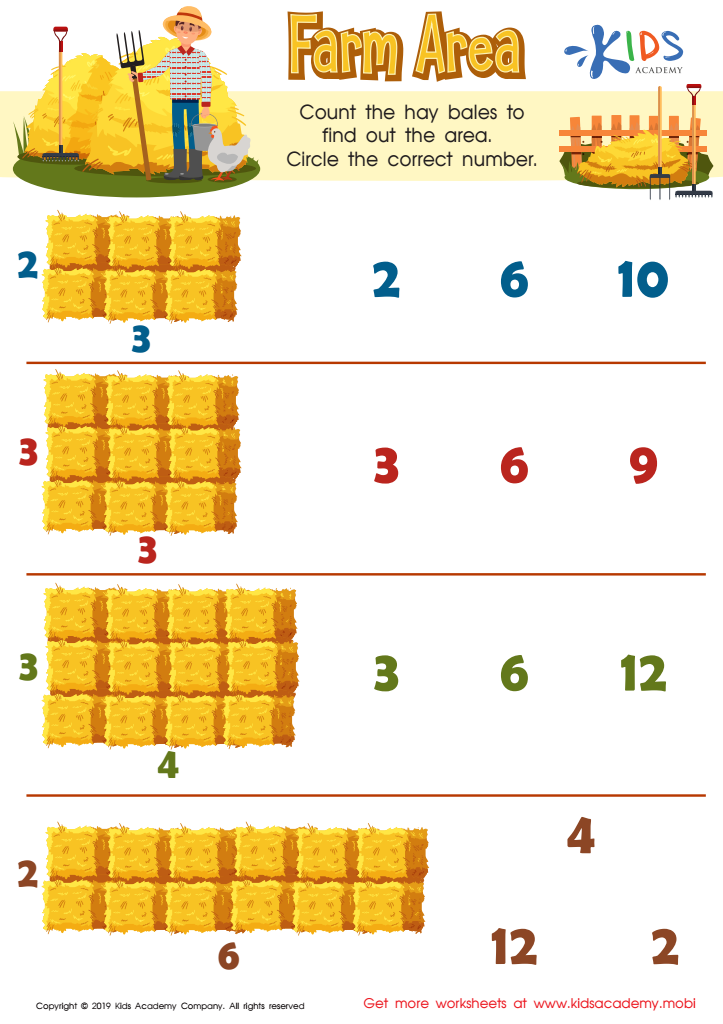
Farm Area Worksheet
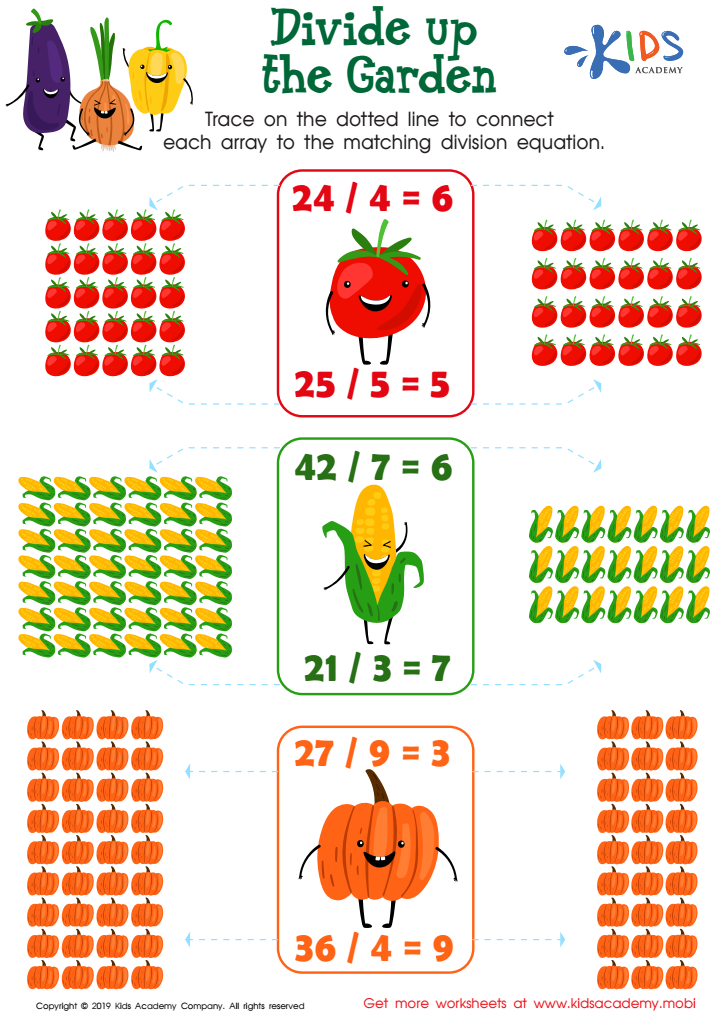
Divide up the Garden Worksheet
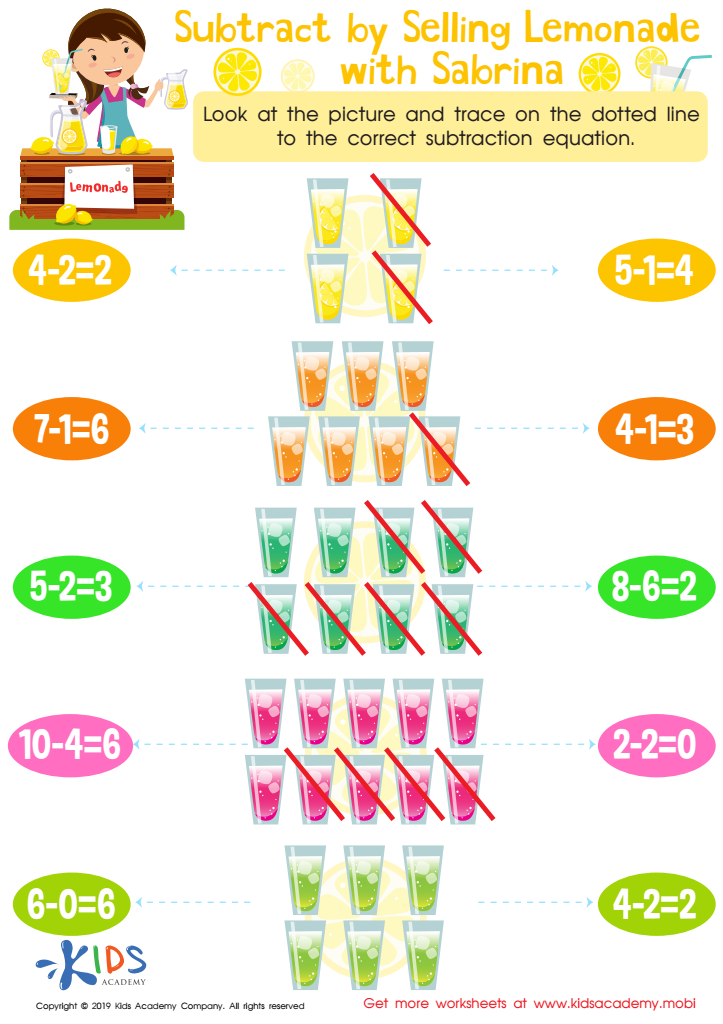
Subtract by Selling Lemonade with Sabrina Worksheet
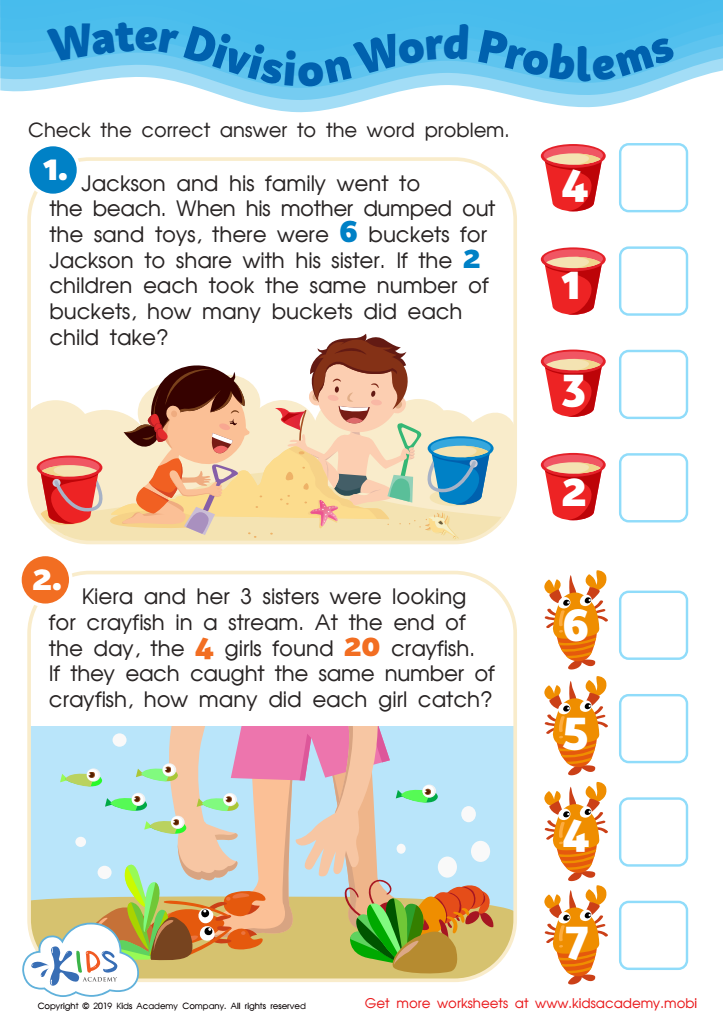
Water Division Word Problems Worksheet






.jpg)

Real-world application of math for children aged 4-9 is crucial as it provides a foundation for both academic success and everyday problem-solving skills. Engaging young learners with practical math concepts helps demystify numbers and fosters a genuine curiosity about the world around them. When parents and teachers incorporate everyday scenarios—like counting fruits during grocery shopping, measuring ingredients for a recipe, or telling time—into math education, they're bridging the gap between theory and practice.
This engagement not only makes learning enjoyable but also encourages critical thinking and logical reasoning. Children learn that math is not just a subject confined to the classroom; it is a fundamental tool for navigating daily life. By solving real-world problems, they develop a toolkit of skills that promotes independence and confidence. Additionally, such experiences encourage collaboration and communication as children share their thoughts and reasoning with peers and adults.
By understanding the relevance of math in their own lives, children become more motivated learners. Both parents and teachers play an integral role in shaping positive attitudes towards math—ensuring that children not only grasp concepts but also value their implications, setting the stage for future learning and success.








