Recognizing numbers Math Worksheets for Ages 4-9
8 filtered results
-
From - To
Explore our engaging Recognizing Numbers Math Worksheets tailored for children aged 4-9! Designed to make learning fun, these worksheets help young learners build foundational math skills by effectively recognizing and understanding numbers. Featuring colorful illustrations and various activities, kids will enhance their number identification and counting abilities through hands-on practice. Our printable worksheets cater to different learning styles, ensuring that every child can thrive. Whether at home or in the classroom, these resources serve as an excellent way to reinforce number recognition while keeping young minds engaged. Start nurturing a love for math with our interactive and educational worksheets today!
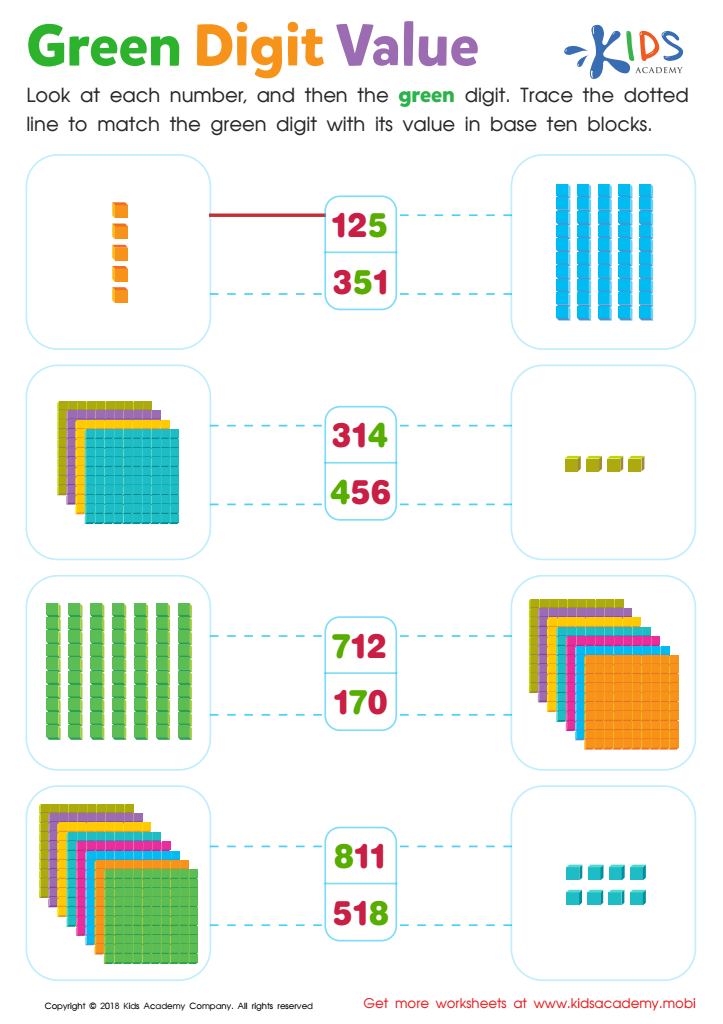
Green Digit Value Worksheet
 Assign to My Students
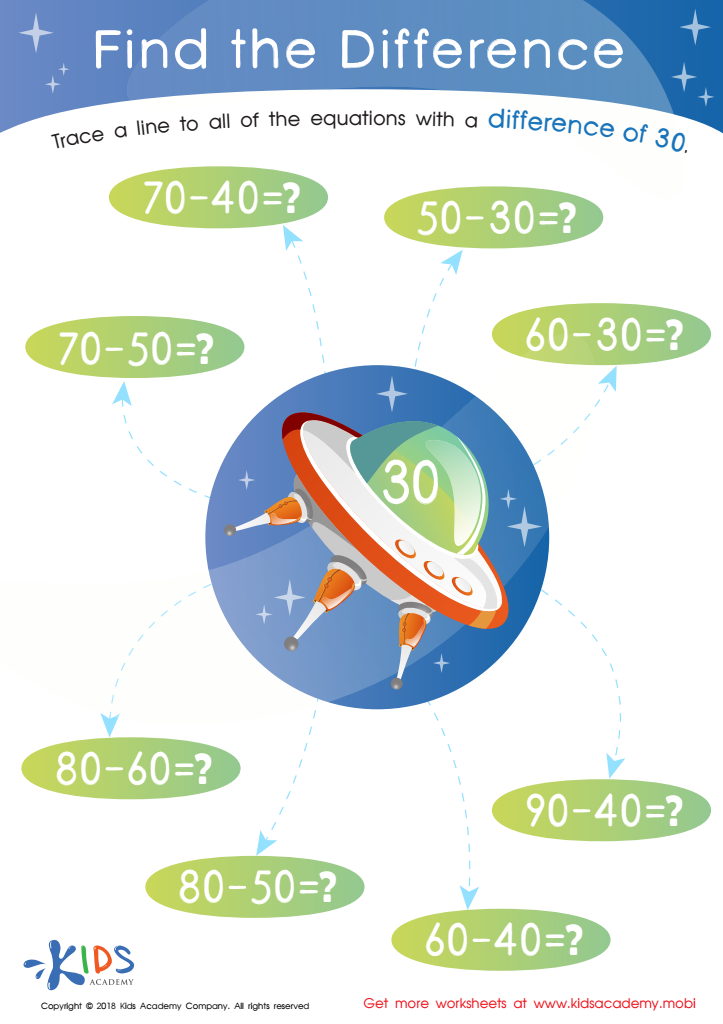
Find The Difference Worksheet
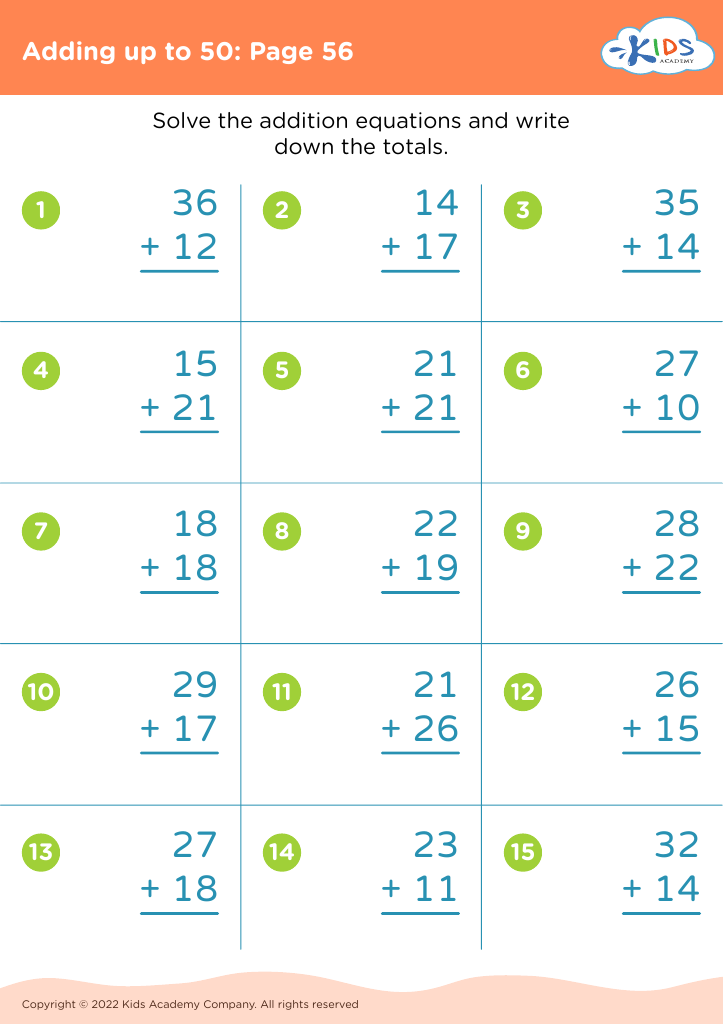
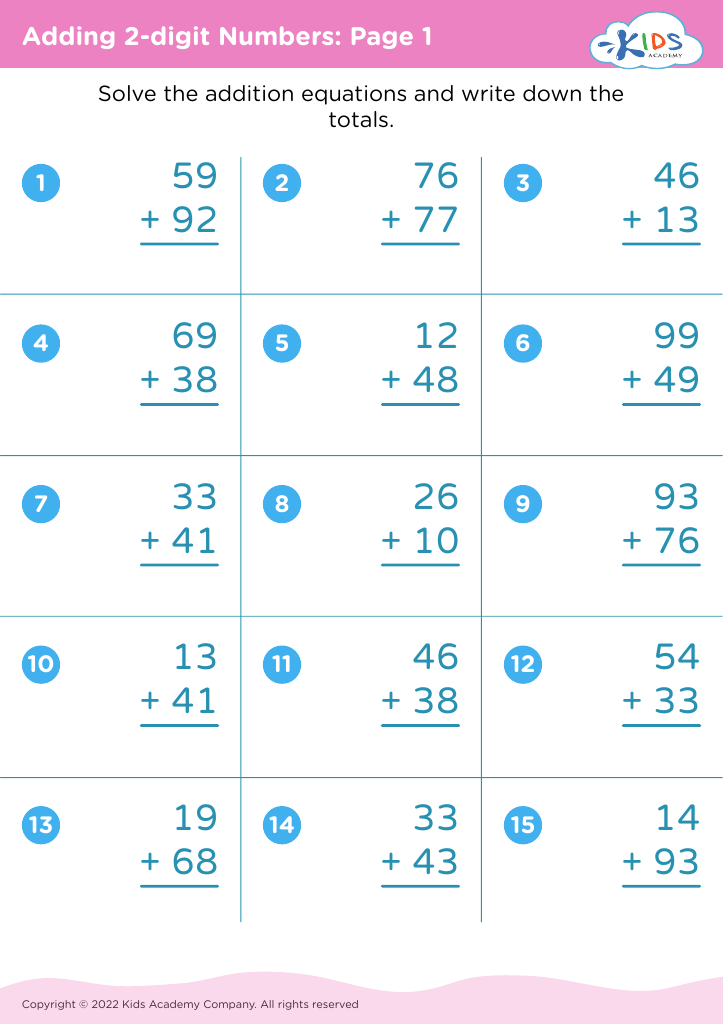
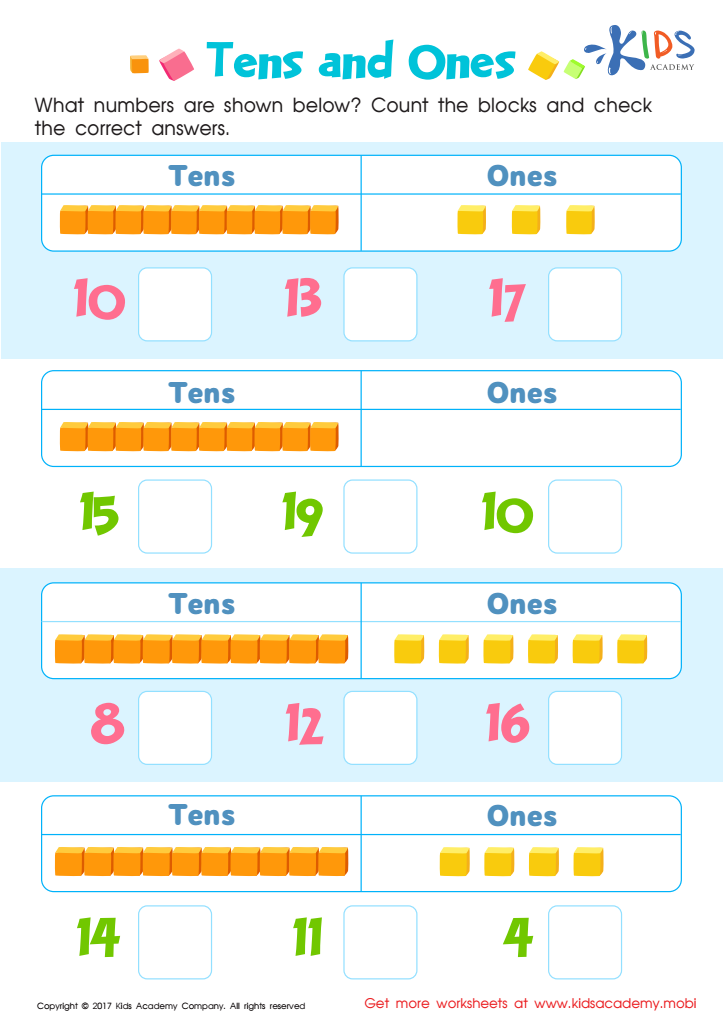
Tens and Ones Worksheet
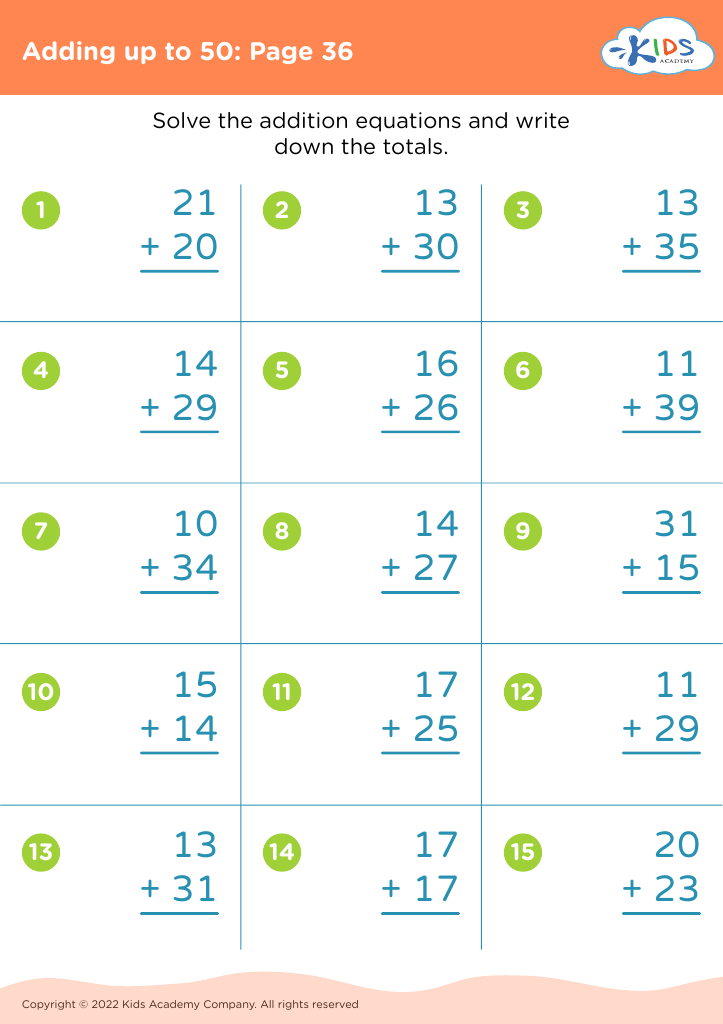
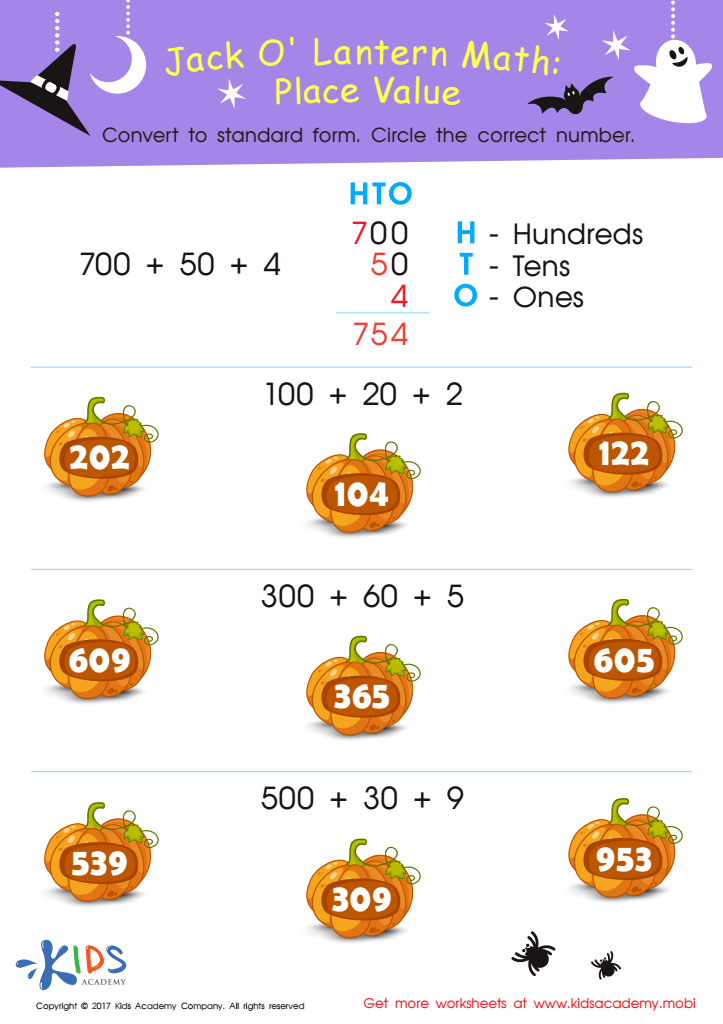
Free Place Value Worksheet
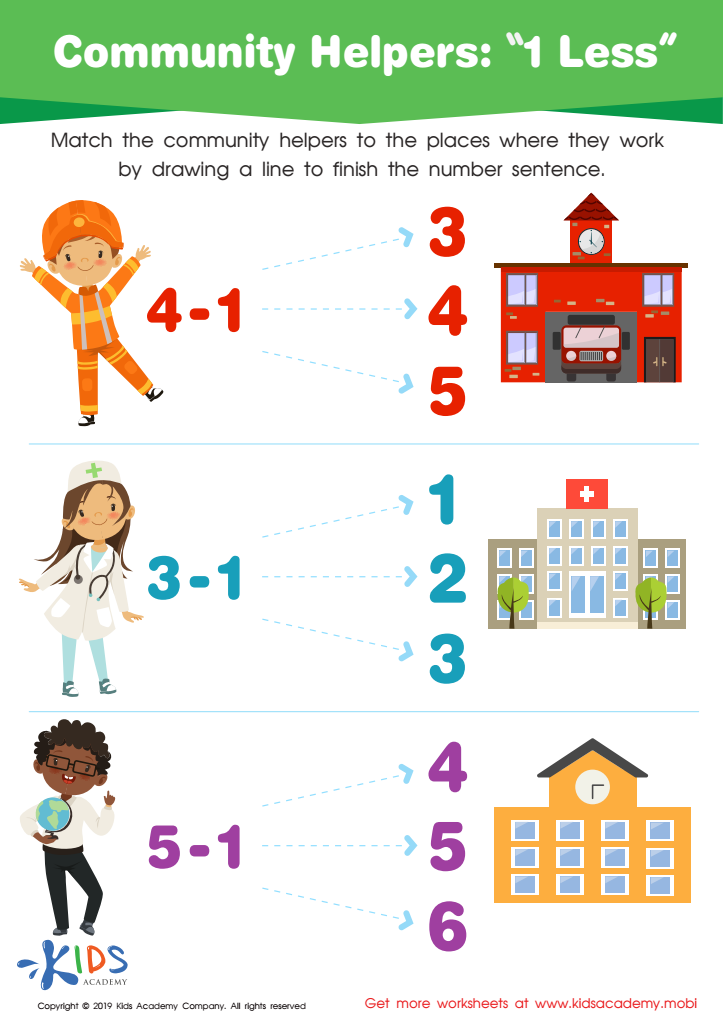
Community Helpers: 1 less Worksheet







Recognizing numbers is a foundational skill that plays a crucial role in a child's early mathematical development. For children aged 4-9, this skill is not just about memorizing by rote; it lays the groundwork for future learning in mathematics and critical thinking. When children can recognize numbers, they begin to understand the concept of quantity, sequences, and patterns, all of which form the basis for addition, subtraction, and more complex operations.
Parents and teachers should care about this because strong number recognition enhances a child's confidence and prepares them for more advanced math concepts later in school. Early number recognition also fosters problem-solving abilities and logical reasoning, contributing to overall cognitive development. Moreover, engaging children in number activities promotes social and emotional skills, as they often collaborate and communicate with peers during these exercises.
Additionally, developing number recognition within an enjoyable framework encourages a positive attitude toward math, minimizing math anxiety as they progress. As parents and educators model enthusiasm for numbers, children are more likely to see math as a fun challenge rather than a daunting subject. Investing time in number recognition is essential for building a strong mathematical foundation that will benefit children throughout their education and beyond.








