Shape comparison Math Worksheets for Ages 4-9
4 filtered results
-
From - To
Enhance your child’s understanding of shapes with our engaging Shape Comparison Math Worksheets, designed for ages 4-9! These worksheets provide a fun and interactive way for young learners to develop crucial math skills by comparing sizes, dimensions, and attributes of various shapes. Our carefully crafted exercises encourage critical thinking and promote visual recognition through vibrant illustrations and engaging activities. Ideal for both classroom and home learning settings, these worksheets help children gain confidence in their abilities while making math enjoyable. Explore an exciting journey into shape comparison and watch your little ones grow in their mathematical skills!
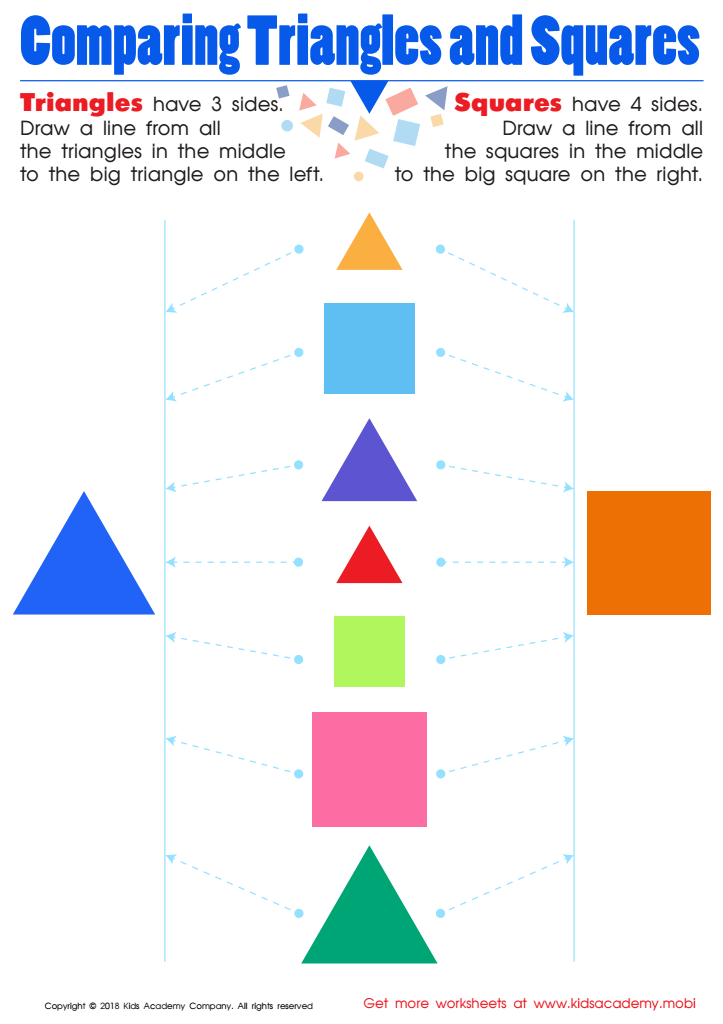
Comparing Triangles Squares Worksheet
 Assign to My Students
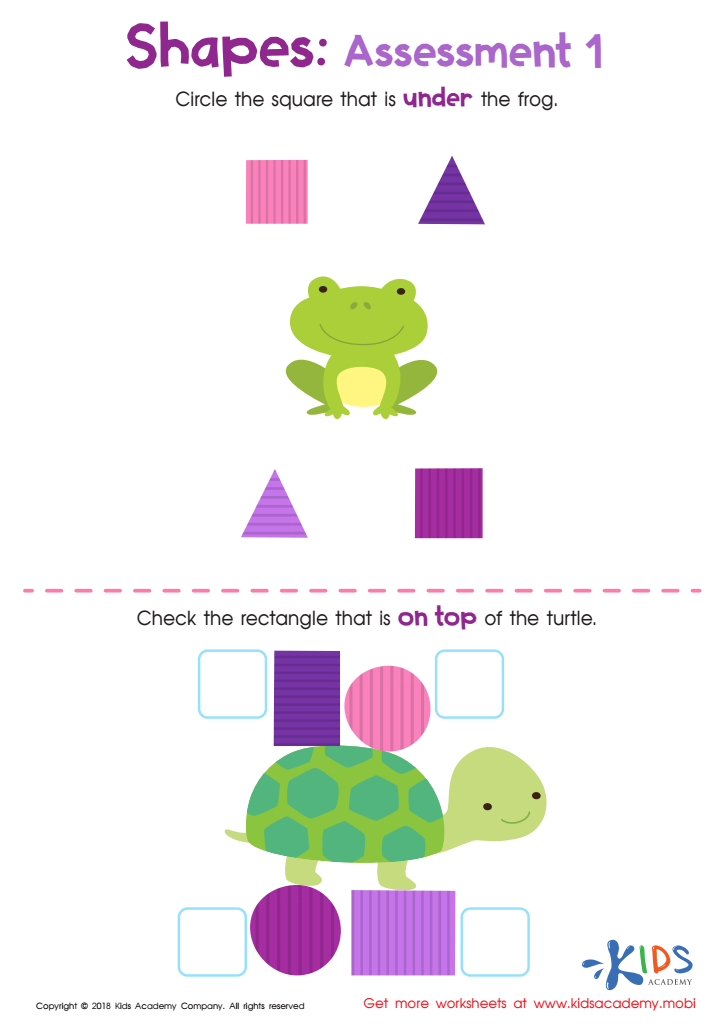
Geometry – Assessment 1 Worksheet
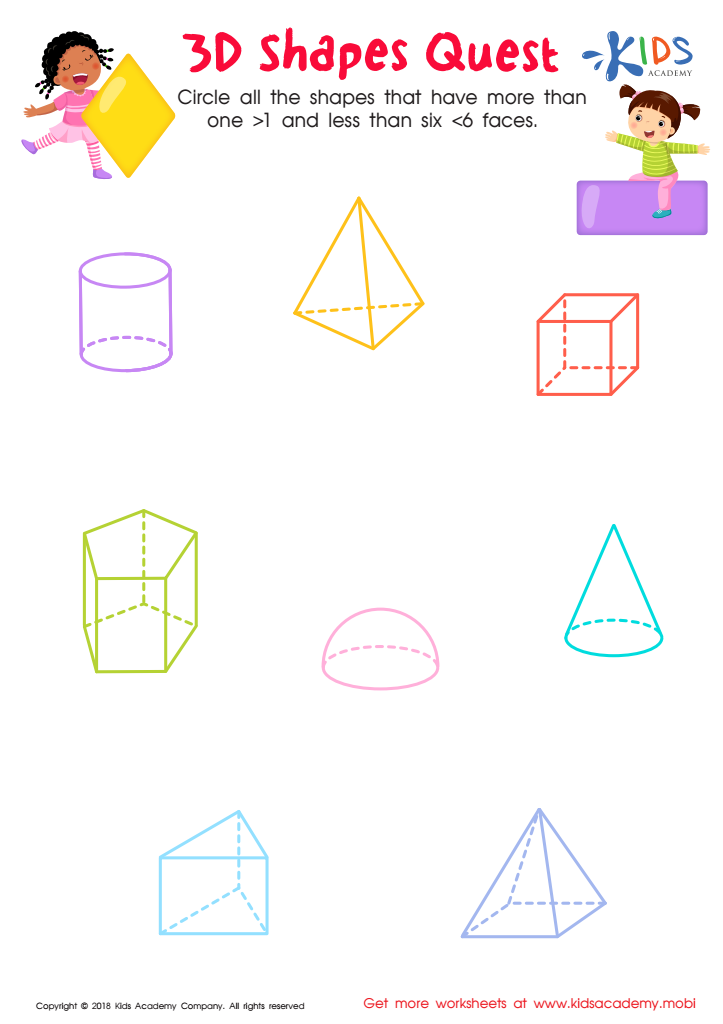
3D Shapes Quest Worksheet
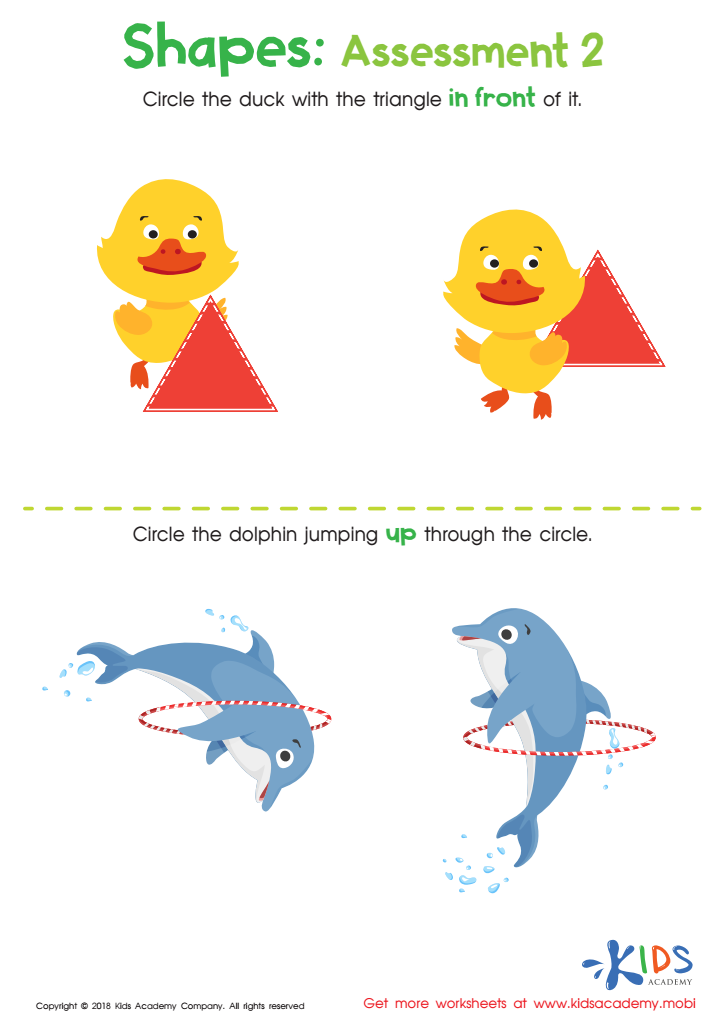
Geometry – Assessment 2 Worksheet


.jpg)





Shape comparison math is fundamental for children aged 4-9 as it lays the groundwork for essential cognitive and analytical skills. At this age, children are naturally curious and actively engage with their surroundings, making it the perfect time to introduce concepts related to shapes and spatial awareness. Understanding shape attributes—such as size, color, dimensions, and symmetry—promotes critical thinking and problem-solving abilities.
For parents and teachers, encouraging shape comparison supports early mathematical understanding. Recognizing and categorizing shapes helps children develop foundational skills necessary for more complex mathematical concepts, including measurements, geometry, and eventually algebra. Moreover, engaging with shapes enhances fine motor skills through activities like drawing, cutting, or construction, which also aid in overall cognitive development.
Furthermore, shape comparison activities foster communication skills as children learn to describe and articulate their reasoning. Encouraging children to compare shapes and discuss their features provides opportunities for vocabulary development. This social interaction promotes cooperation, confidence, and a positive attitude towards math.
In summary, shape comparison is not just an exercise in classification; it promotes a holistic approach to early learning by intertwining math, language, fine motor skills, and social interactions, all of which are vital for young learners' growth and development.








