
Subtraction skills Math Worksheets for Ages 4-9
29 filtered results
Difficulty Level
Grade
Age
-
From - To
Subject
Activity
Standards
Enhance your child's math abilities with our "Subtraction Skills Math Worksheets for Ages 4-9" at Kids Academy. Tailored for young learners, these engaging worksheets cover fundamental subtraction concepts, from basic to advanced problems. With colorful and interactive designs, they make mastering subtraction both fun and educational. Ideal for classroom use or at-home practice, our worksheets are perfect to build confidence and improve problem-solving skills. Spark a love for math in your child today with resources crafted by educational experts. Encourage continual learning with Kids Academy's premier subtraction worksheets, designed for success!
Favorites
With answer key
Interactive
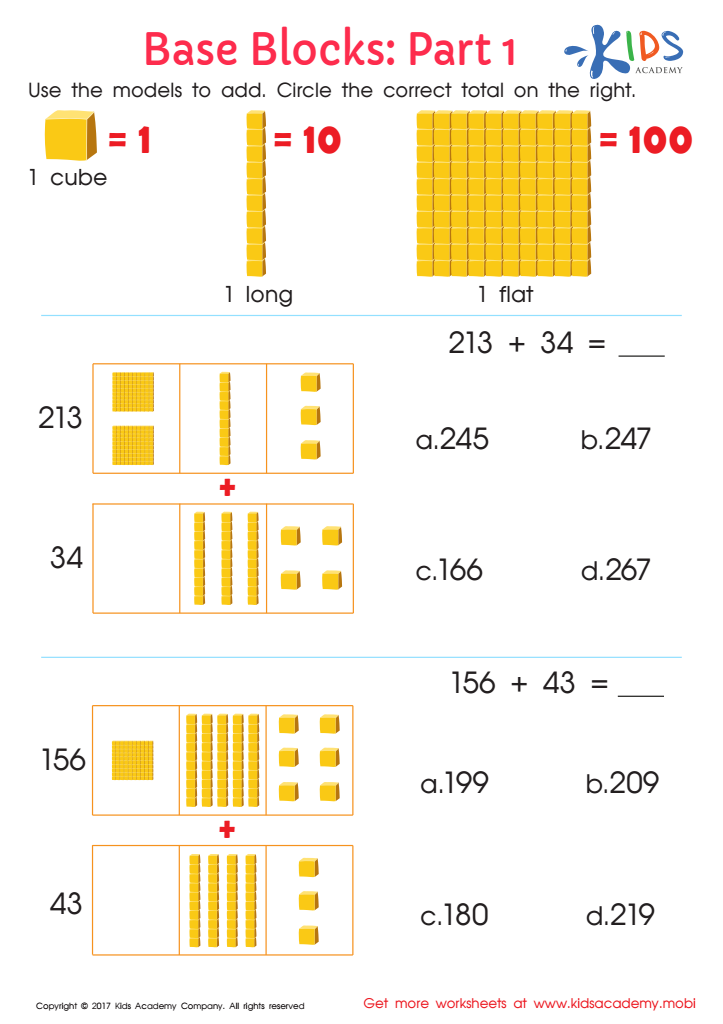
Base Ten Blocks Worksheet: Part 1
They promote numeracy and are a great substitute when kids don't have access to physical blocks.
 Assign to My Students
Base Ten Blocks Worksheet: Part 1
Worksheet
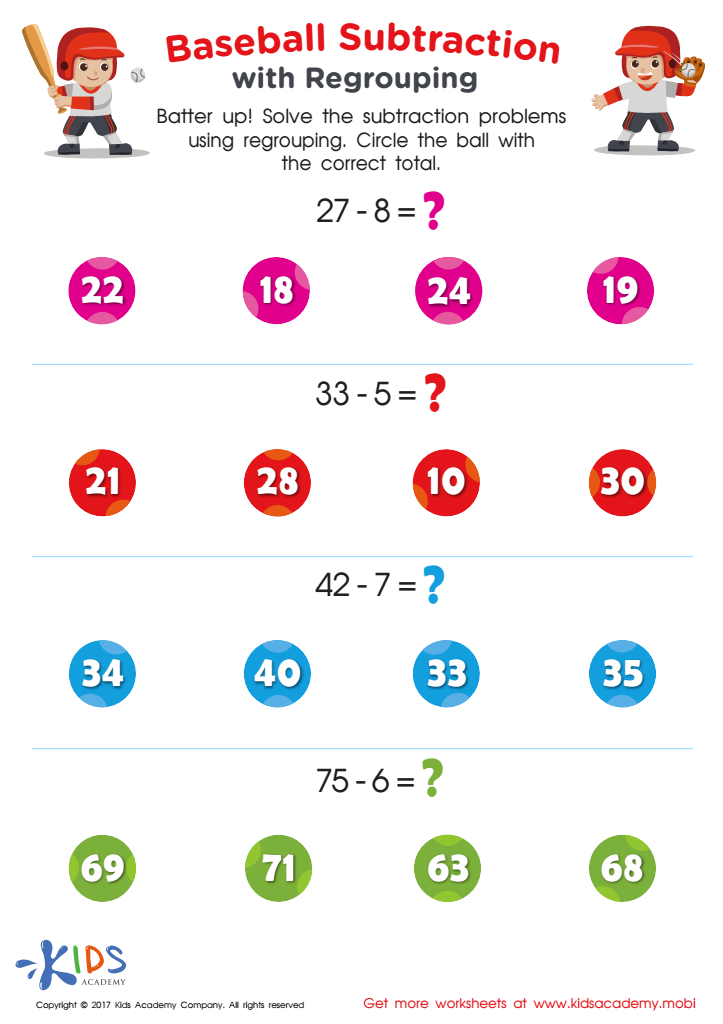
Subtraction With Regrouping for 2nd Grade Worksheet
Kids solve two-digit subtraction problems using regrouping and color in the baseballs.
2nd graders may find regrouping for subtraction tricky, so give them a helping hand with this fun worksheet! They practice two-digit subtraction and regrouping by coloring in baseballs as they solve the problems. Let them practice the skill and enjoy the game at the same time.
Subtraction With Regrouping for 2nd Grade Worksheet
Worksheet
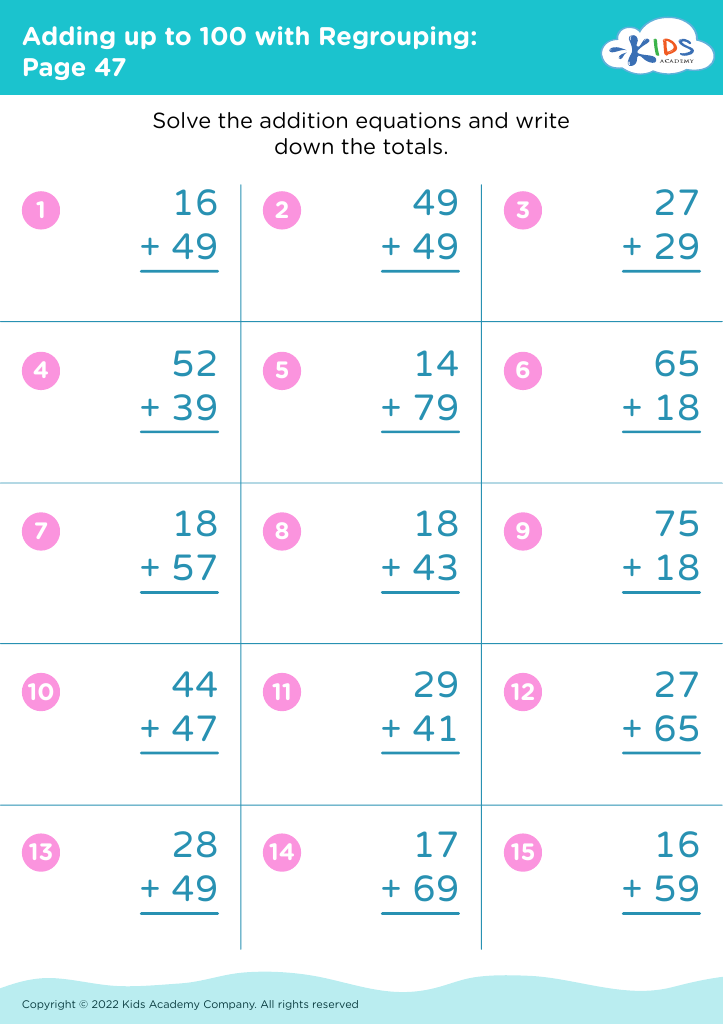
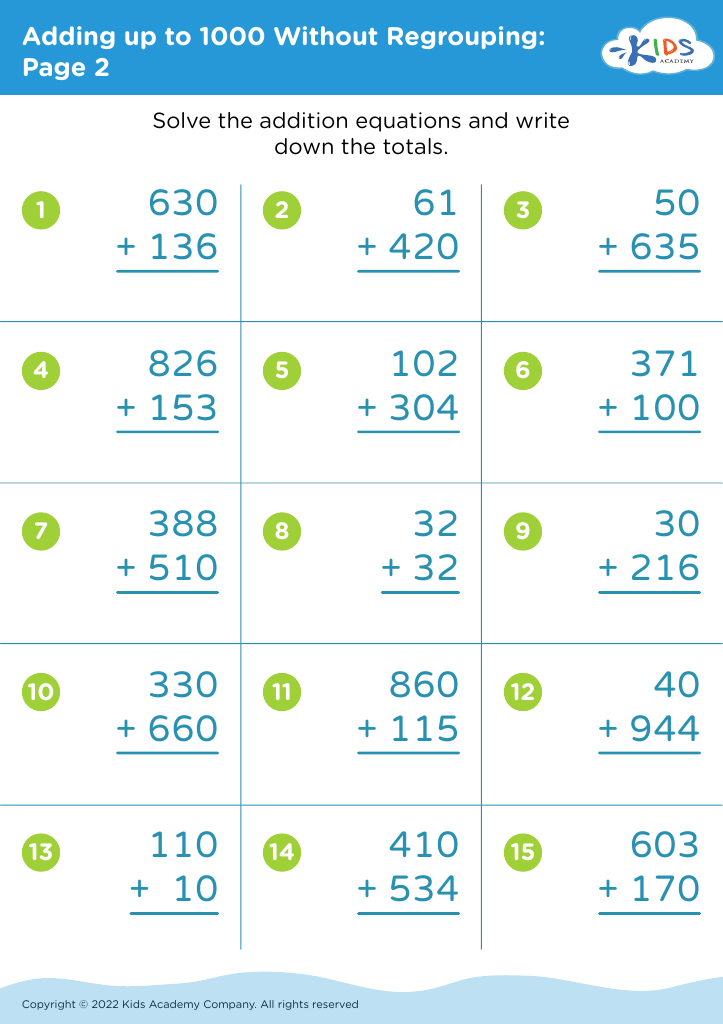
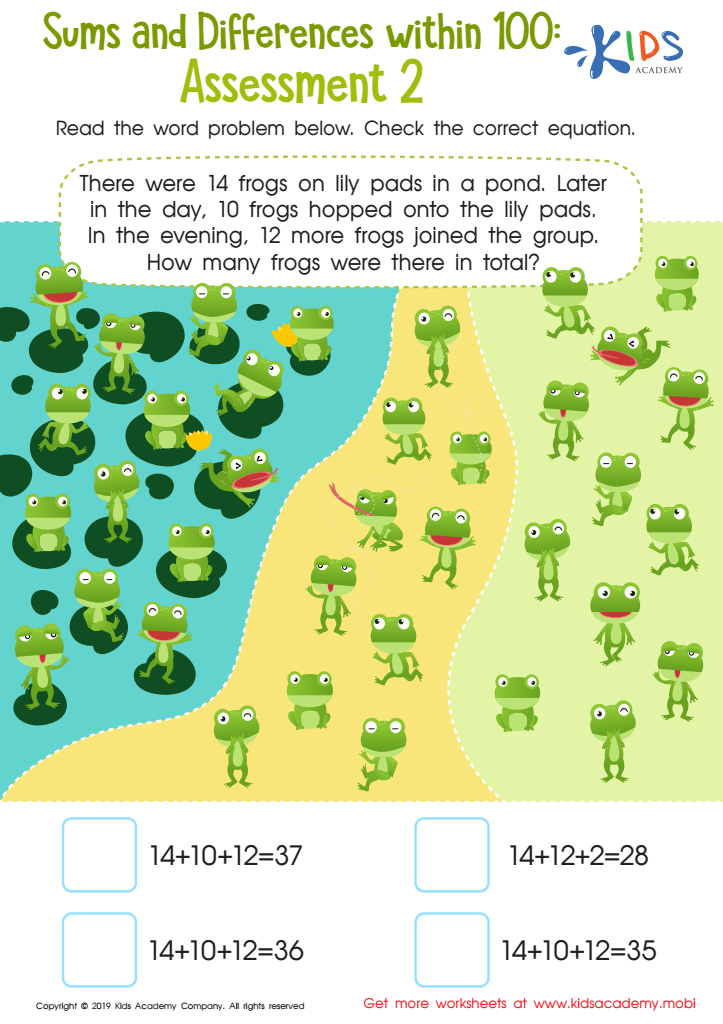
Sums and Differences Within 1 - Assessment 2 Worksheet
Help your kids practice math with these simple word problems. Read the question, discuss with them to form the equation and then check the answer. Give them a chance to sharpen their math skills!
Sums and Differences Within 1 - Assessment 2 Worksheet
Worksheet
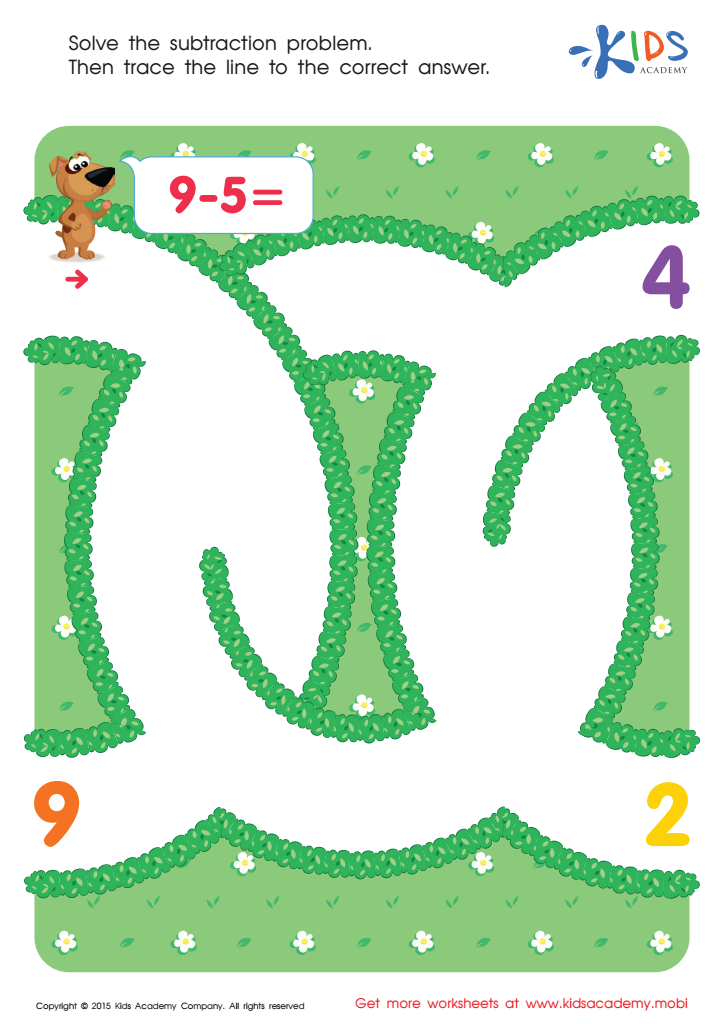
Subtraction Nine And Five Worksheet
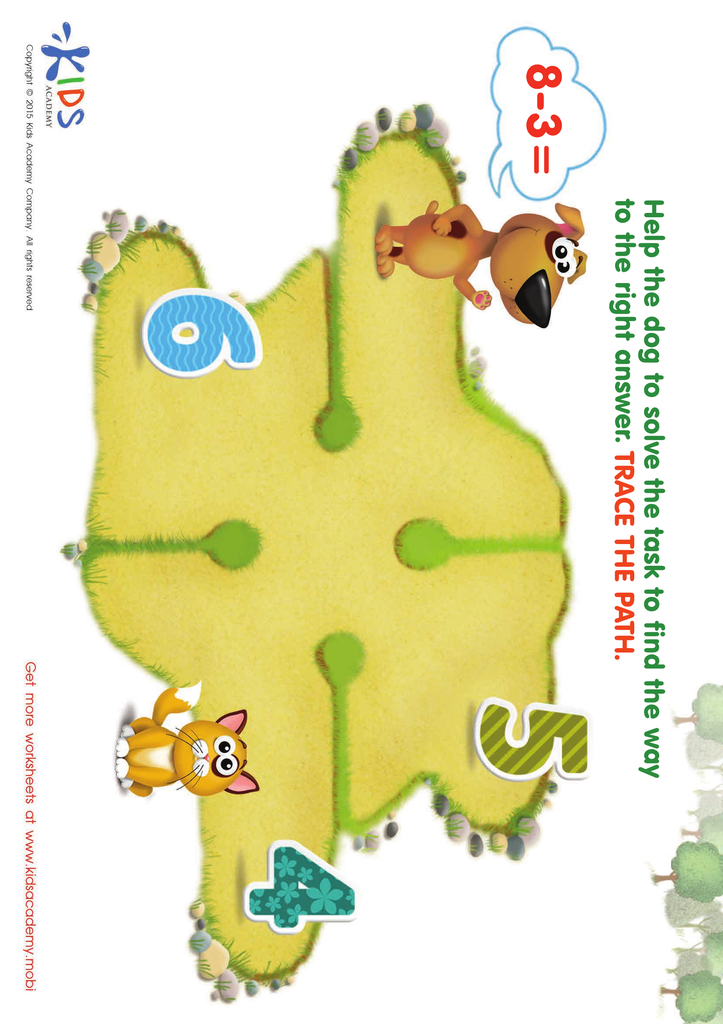
Trace the path to the right answer and help the dog find its way out of the maze. Have fun while learning subtraction! (80 words)
Subtraction Nine And Five Worksheet
Worksheet
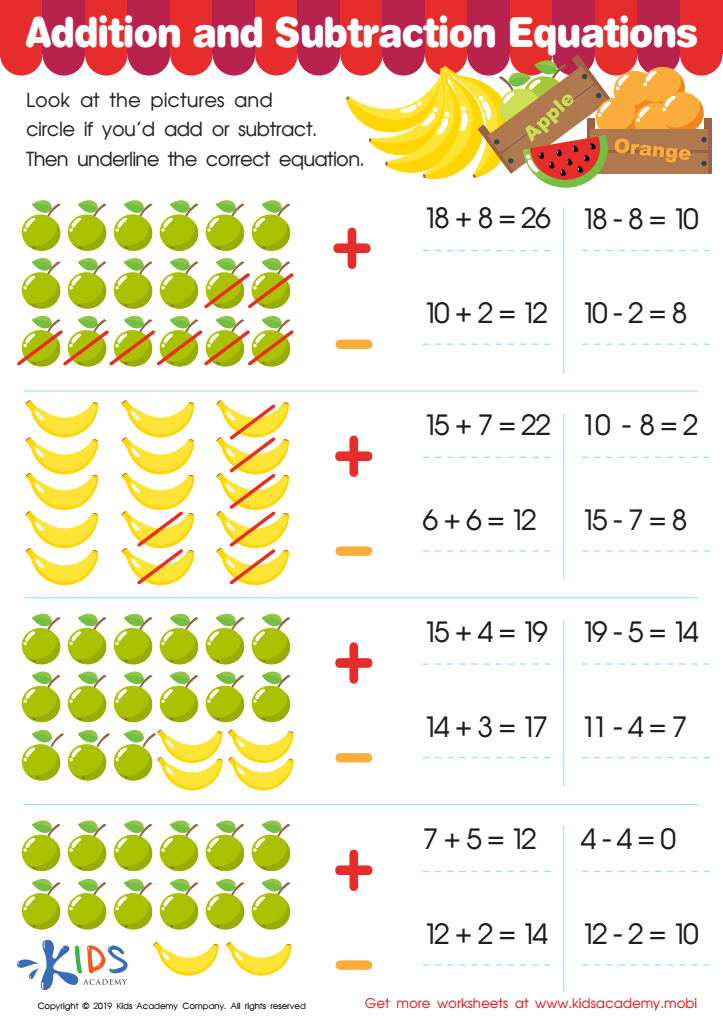
Addition and Subtraction: Equations Worksheet
This worksheet sharpens your child's visual processing, math equation solving and order of operations skills. It features colorful pictures to help them add and subtract, and traceable lines to identify the correct equation. A great way to practice these skills! (80 words)
Addition and Subtraction: Equations Worksheet
Worksheet
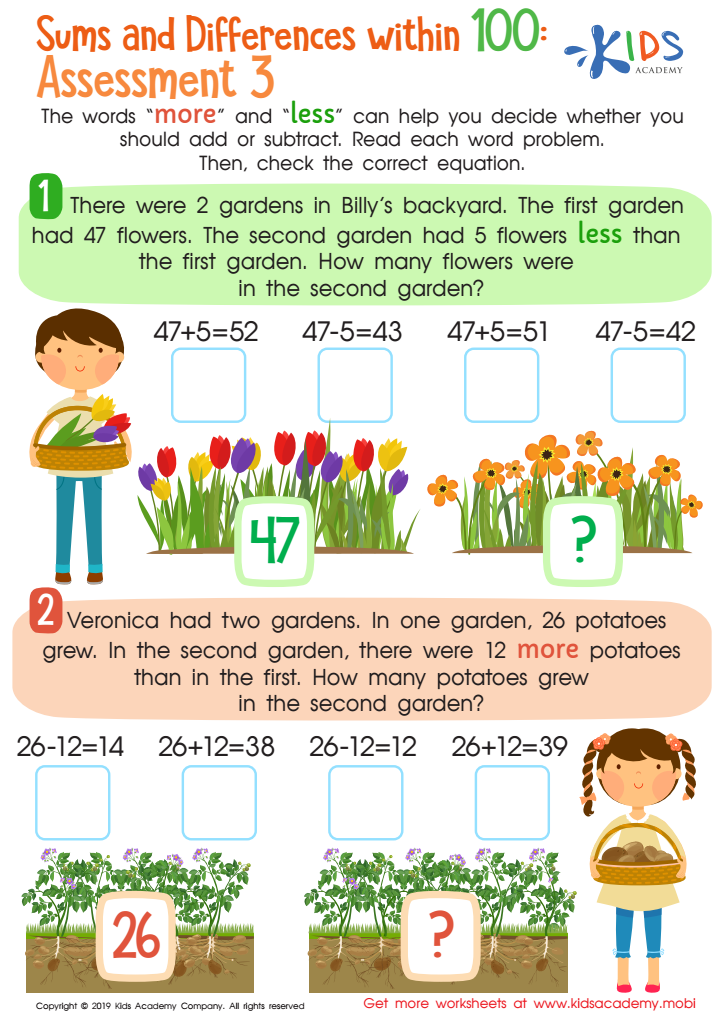
Sums and Differences Within 1 - Assessment 3 Worksheet
When we see 'more' or 'less', they usually refer to quantity. In Math, they indicate addition or subtraction. Help kids read aloud two simple word problems and figure out the correct equations for each. Check the correct equation afterwards.
Sums and Differences Within 1 - Assessment 3 Worksheet
Worksheet
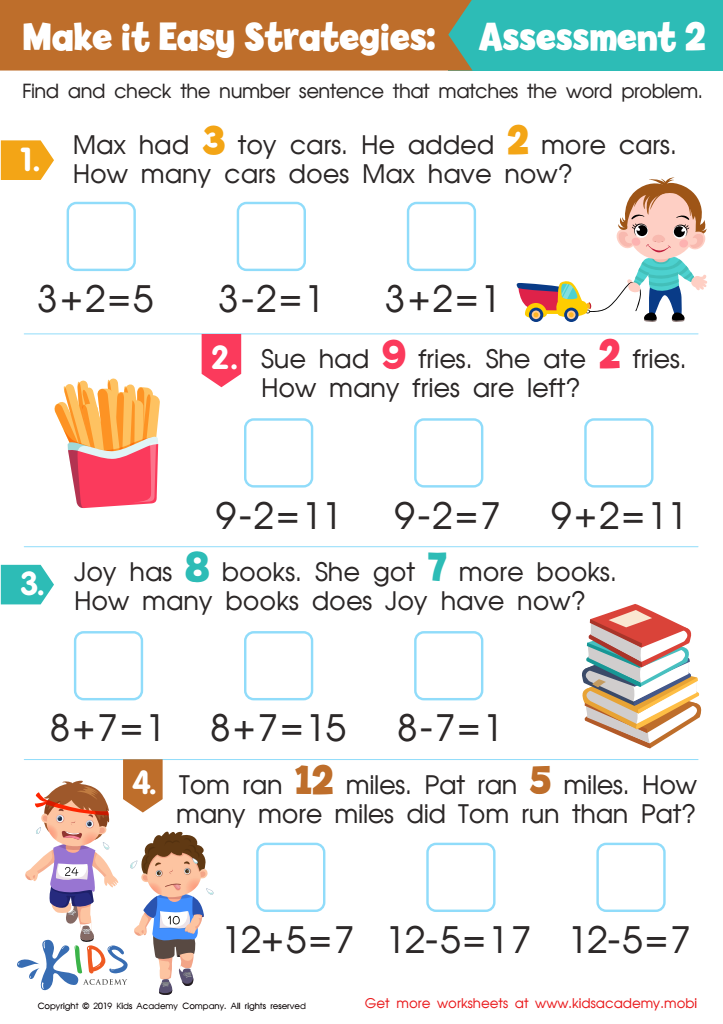
Make it Easy Strategies: Assessment 2 Worksheet
Utilize images and objects your students know to facilitate learning. Simple math problems should be a cinch for kindergartners who can count to 30. Ask them to identify the picture's subject. Then read word problems and help them find the right number sentences to match.
Make it Easy Strategies: Assessment 2 Worksheet
Worksheet
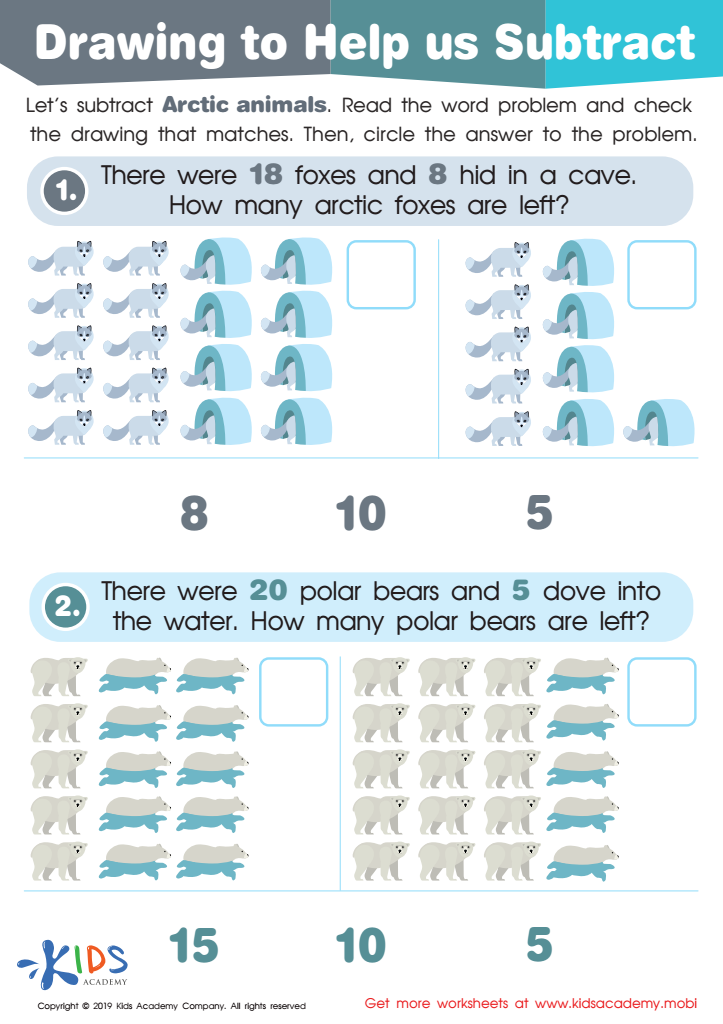
Drawing to Help Us Subtract Worksheet
Math is made fun with this free worksheet featuring Arctic animal pictures to solve basic subtraction word problems. Kids read the problem and choose the correct drawing of the animals to represent the solution. They'll have a blast with their cool animal friends while learning math!
Drawing to Help Us Subtract Worksheet
Worksheet
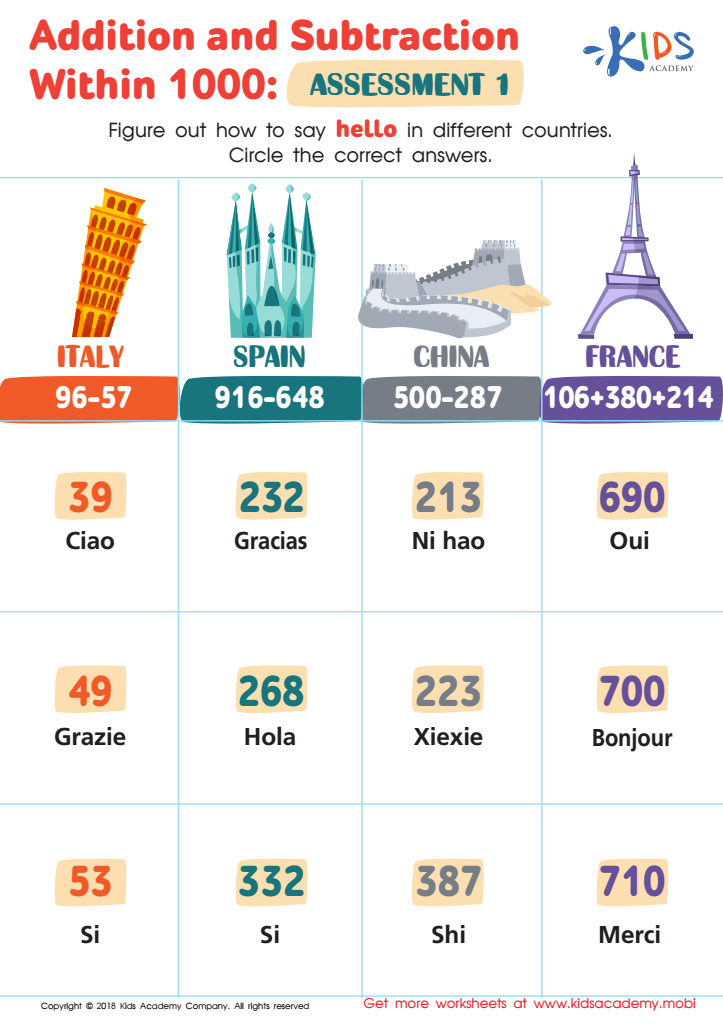
Addition and Subtraction Within 1000: Assessment 1 Worksheet
As your students grow, their knowledge and skills do too. Use this worksheet to test their adeptness in adding and subtracting numbers in the 1000s and introduce them to different ways to say hello. Let them circle the correct answers.
Addition and Subtraction Within 1000: Assessment 1 Worksheet
Worksheet
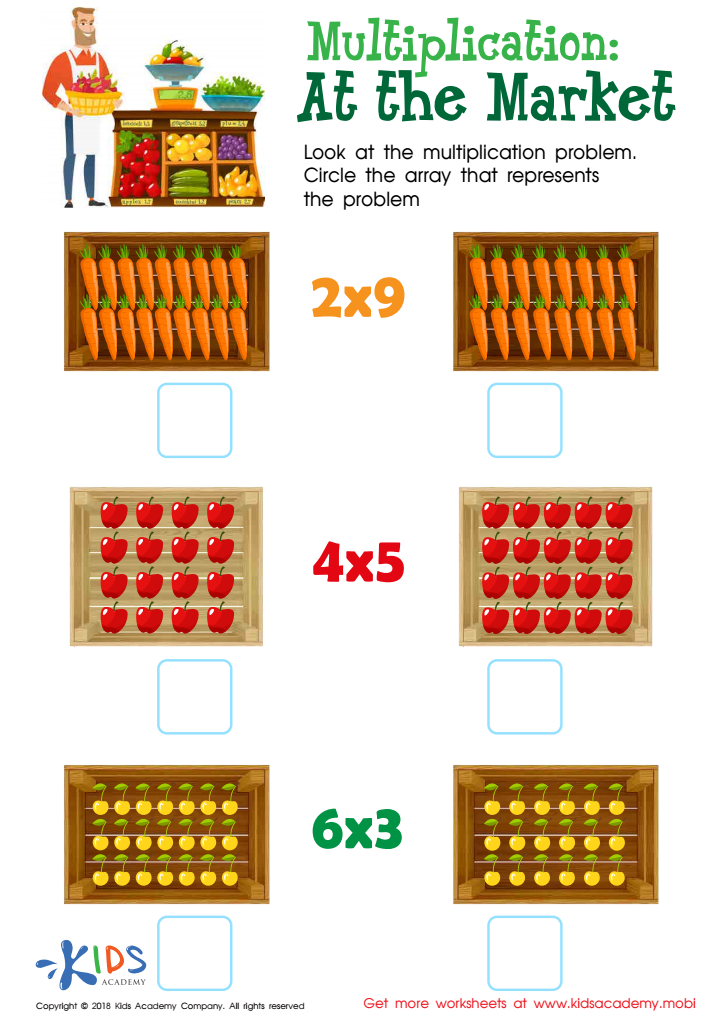
At the Market Worksheet
Head to At the Market! This attractive worksheet features arrays of delicious fruits and veggies that'll have 3rd graders working on their multiplication. Solve the problems, choose the correct answer, and learn while having fun!
At the Market Worksheet
Worksheet
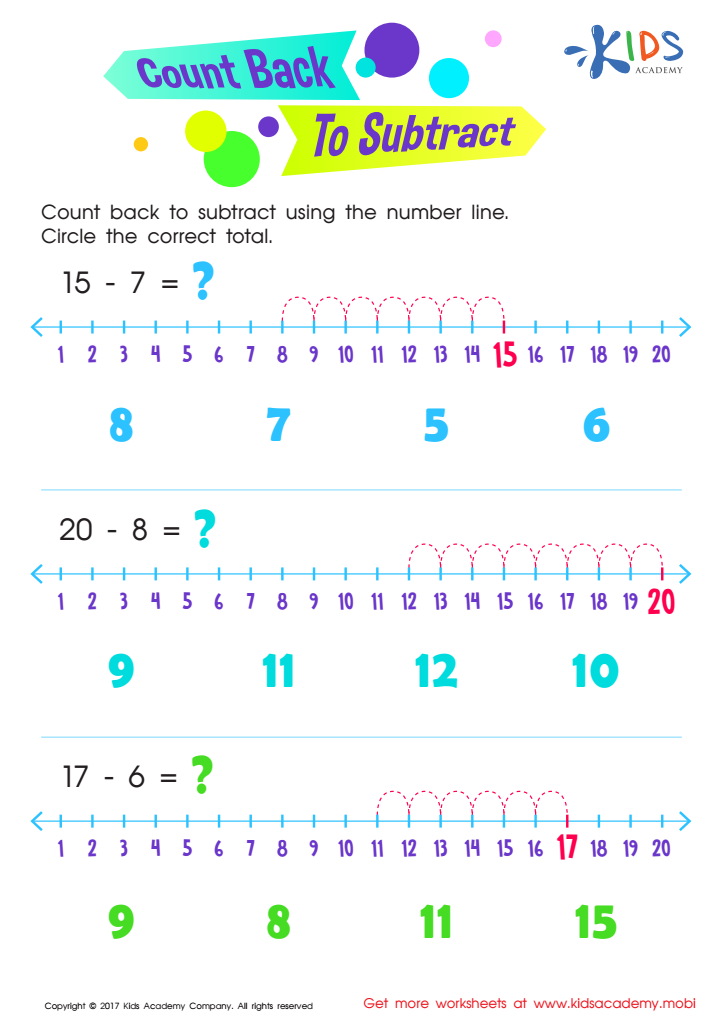
Count Back to Subtract Substraction Worksheet
With this worksheet, your child can visually see and count each number they’re subtracting.
This worksheet provides a number line to help your child master subtraction visually. Counting back on the line will give them a deeper understanding of the concept. It's a great way to teach subtraction and help children gain confidence with the subject.
Count Back to Subtract Substraction Worksheet
Worksheet
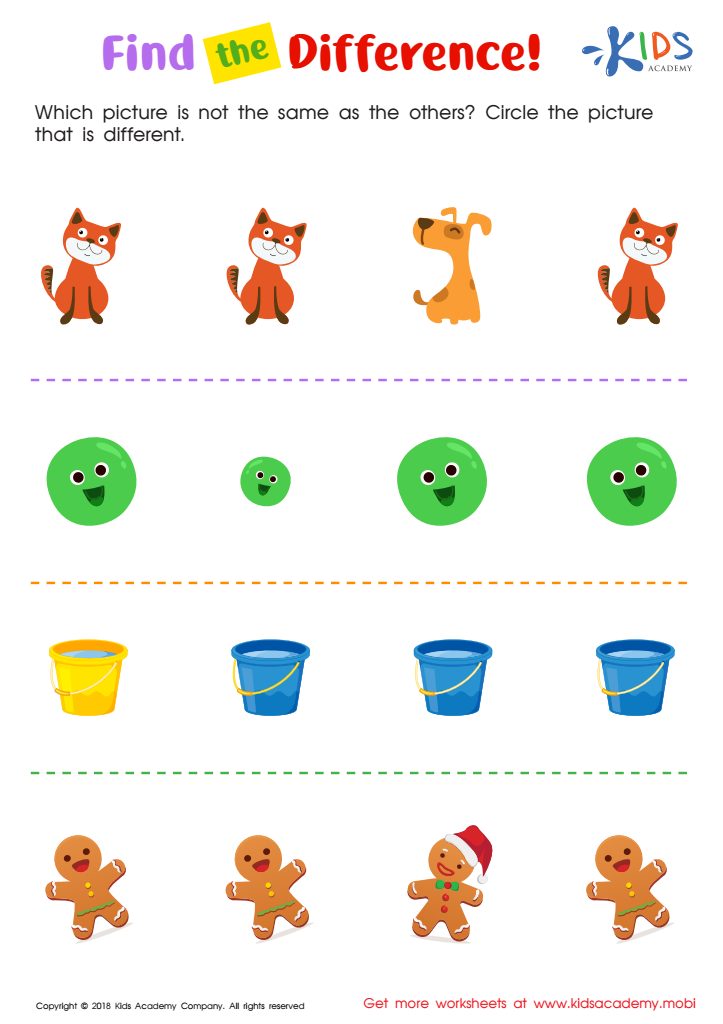
Find the Difference Worksheet
Test your kids' skills with this worksheet! Ask them to look at the pictures in each row and tell you what the objects are. Help them identify the odd item in each row by circling it. See if they can spot the difference!
Find the Difference Worksheet
Worksheet
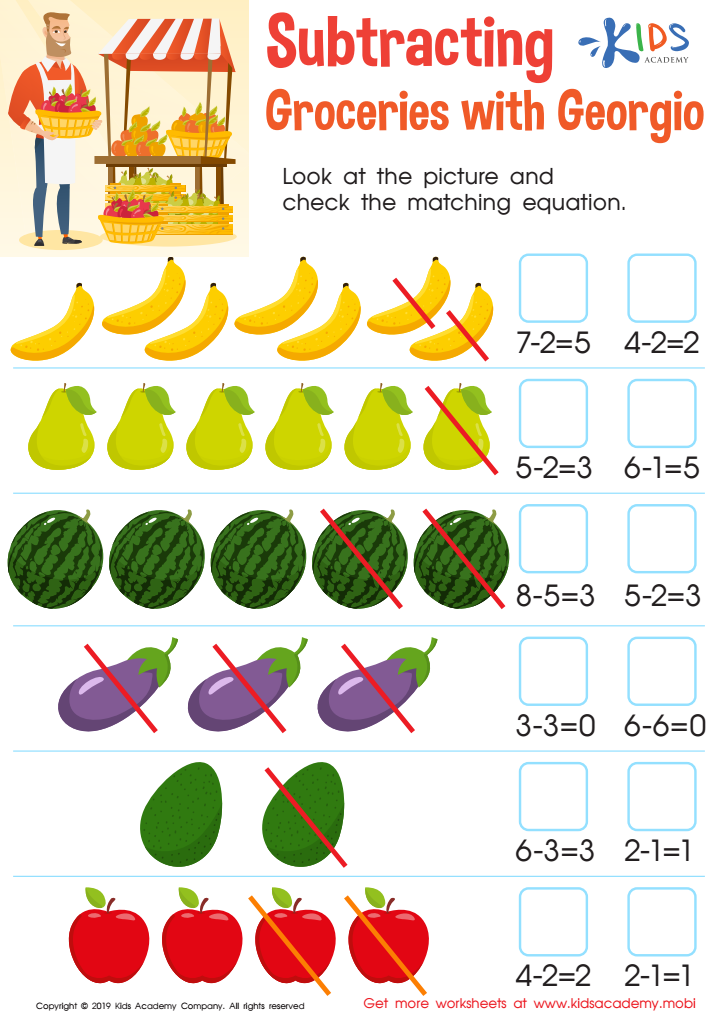
Subtracting: Groceries with Georgio Worksheet
Help Georgio in his grocery orders with this fun worksheet! Using colorful pictures and one-to-one representation, kids can intuitively choose the correct subtraction equation to match the picture. The free PDF makes it easy to practice basic subtraction equations without even realizing they're learning.
Subtracting: Groceries with Georgio Worksheet
Worksheet
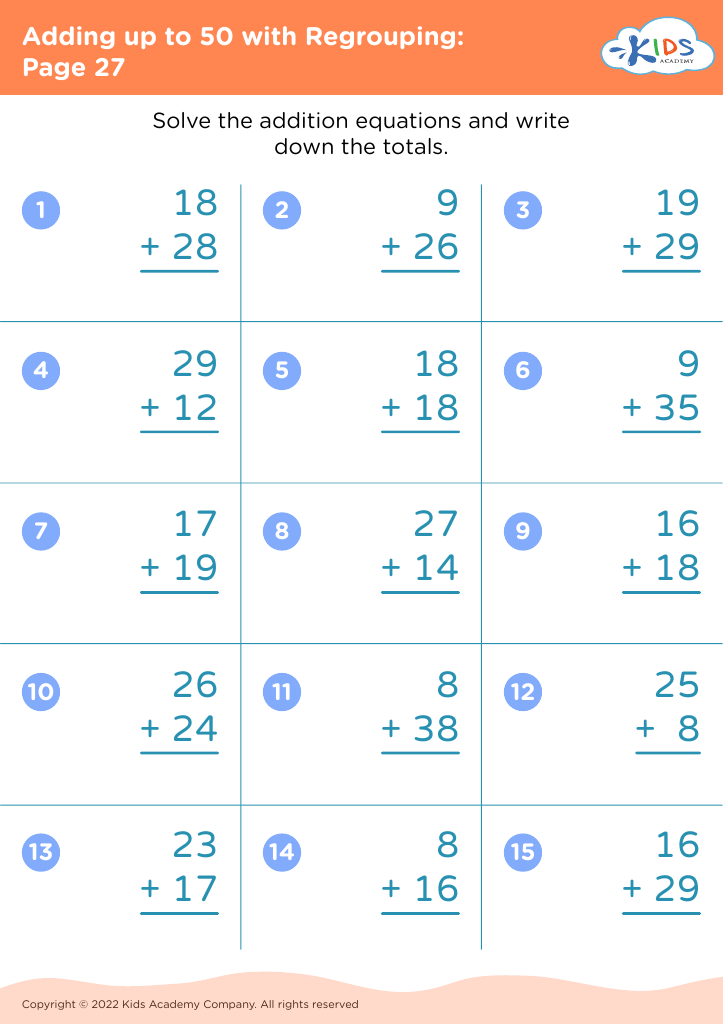
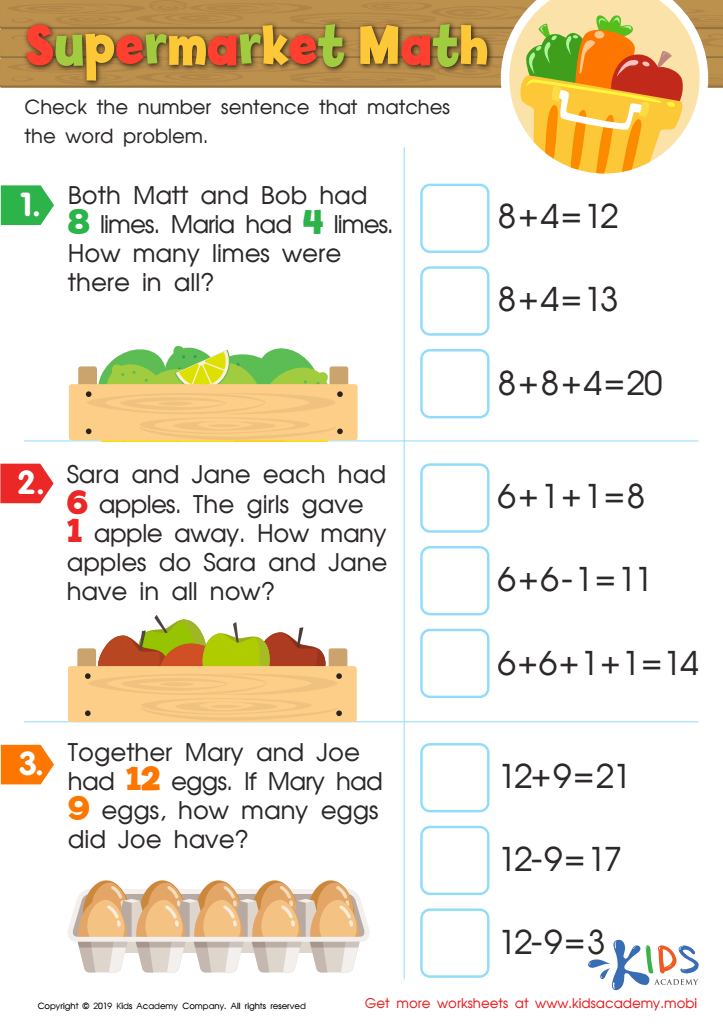
Supermarket Math Worksheet
Take your kids to the supermarket and ask what they're looking forward to buying. Help them solve the three questions in the worksheet by interpreting each one into an equation, then choose the right answer.
Supermarket Math Worksheet
Worksheet
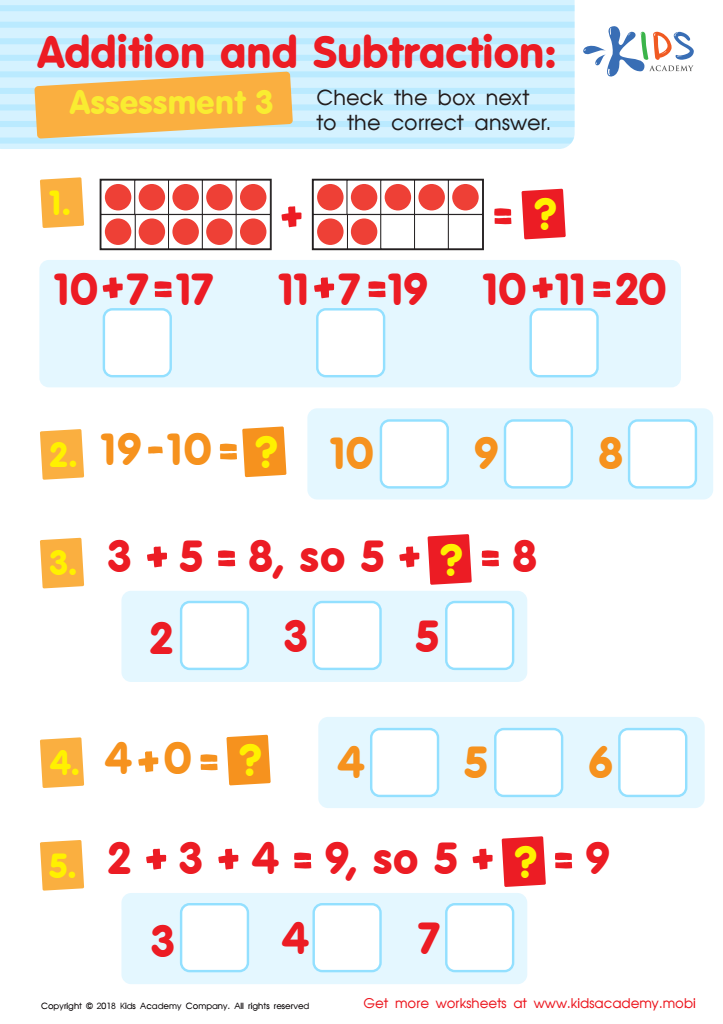
Addition and Subtraction Assessment 3 Worksheet
Help your child improve their math skills with this printable worksheet! Start with simple questions such as 1 + 1 to check their understanding. The pdf contains five equations for them to solve, with answers at the end. With practice, your child will become more confident and able to tackle the subject.
Addition and Subtraction Assessment 3 Worksheet
Worksheet
Join Kids Academy for Free
Who is primarily going to use this learning content?







Parents and teachers should prioritize subtraction skills for children aged 4-9 because these foundational years are critical for developing strong mathematical comprehension. Subtraction is one of the core arithmetic operations that children must master to succeed in higher-level math. Early proficiency in subtraction helps kids build confidence in their math abilities, which positively influences their overall academic performance.
Subtraction is not just about taking away numbers; it develops problem-solving skills and logical thinking. Young children use subtraction in everyday situations, such as determining how many apples are left after eating a few or figuring out how much money they have left after spending some. This practical application makes it essential for functional numeracy.
Moreover, mastering subtraction sets a groundwork for more complex concepts like multiplication, division, fractions, and algebra. It helps improve mental math abilities, essential for quick and effective decision-making later in life. Students who struggle with basic subtraction often face difficulties in other mathematical areas, leading to lowered self-esteem and academic challenges.
Encouraging the development of subtraction skills at an early age equips children with a crucial tool for understanding the world mathematically, ensuring they are better prepared for future educational endeavors and daily decision-making processes.








