Time reading skills Math Worksheets for Ages 4-9
12 filtered results
-
From - To
Develop your child's ability to read the clock with our engaging Time Reading Skills Math Worksheets for Ages 4-9! These printable worksheets from Kids Academy teach crucial time-telling skills through fun exercises and vibrant illustrations. Perfect for young learners beginning to understand hours, minutes, and seconds, these activities help children confidently read both analog and digital clocks. By incorporating interactive tasks and relatable scenarios, our worksheets ensure kids practice and apply their knowledge seamlessly. Boost your child’s confidence and understanding of time with our expertly designed resources. Download now for free to start your child on the path to mastering time reading!
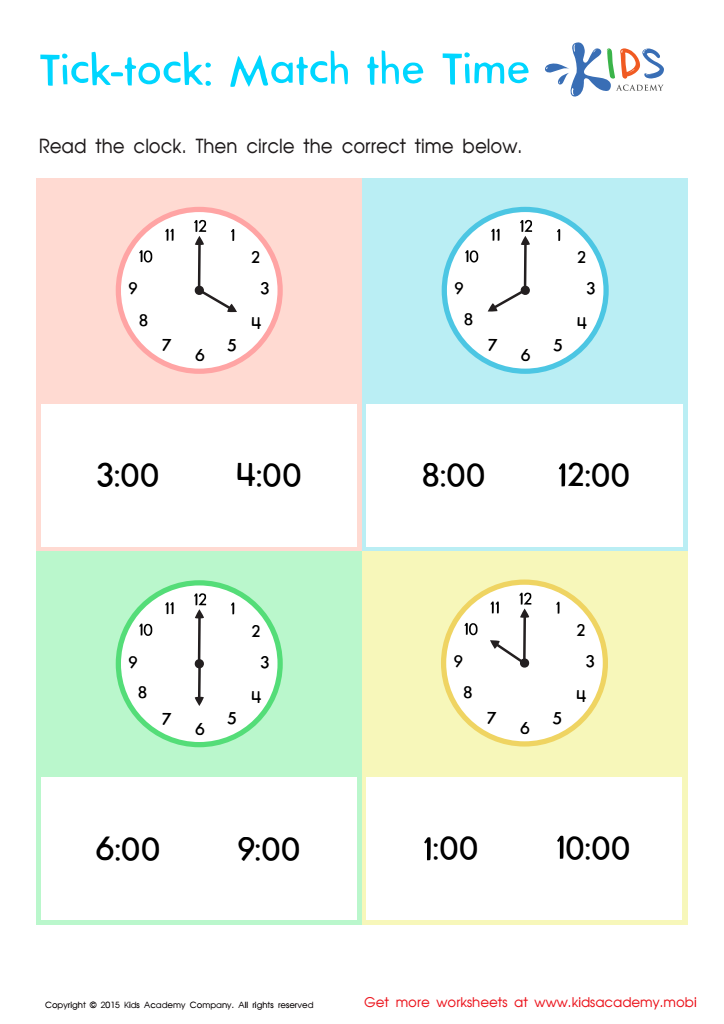
Telling The Time Worksheet: Part 4
 Assign to My Students
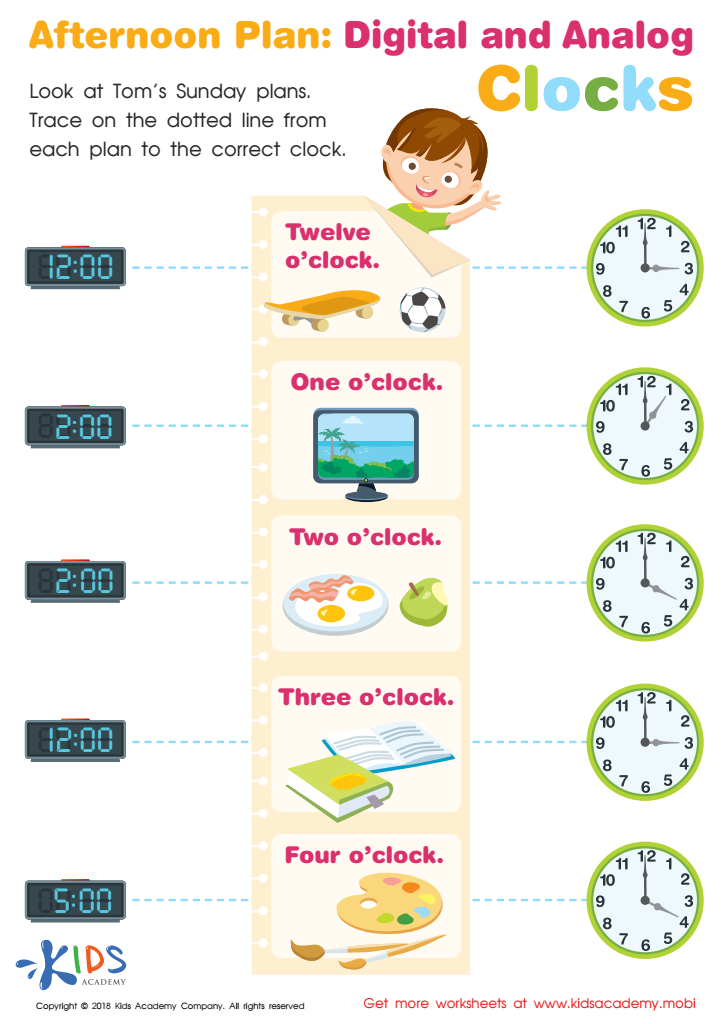
Afternoon Plan: Digital and Analog Clocks Worksheet
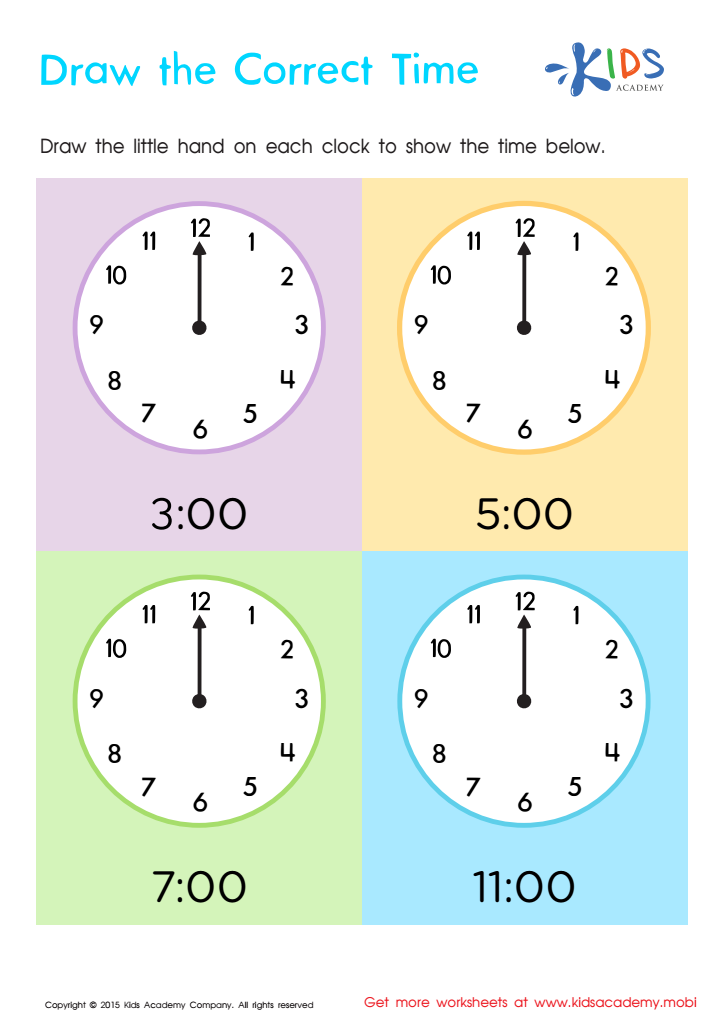
Telling The Time Worksheet: Part 1
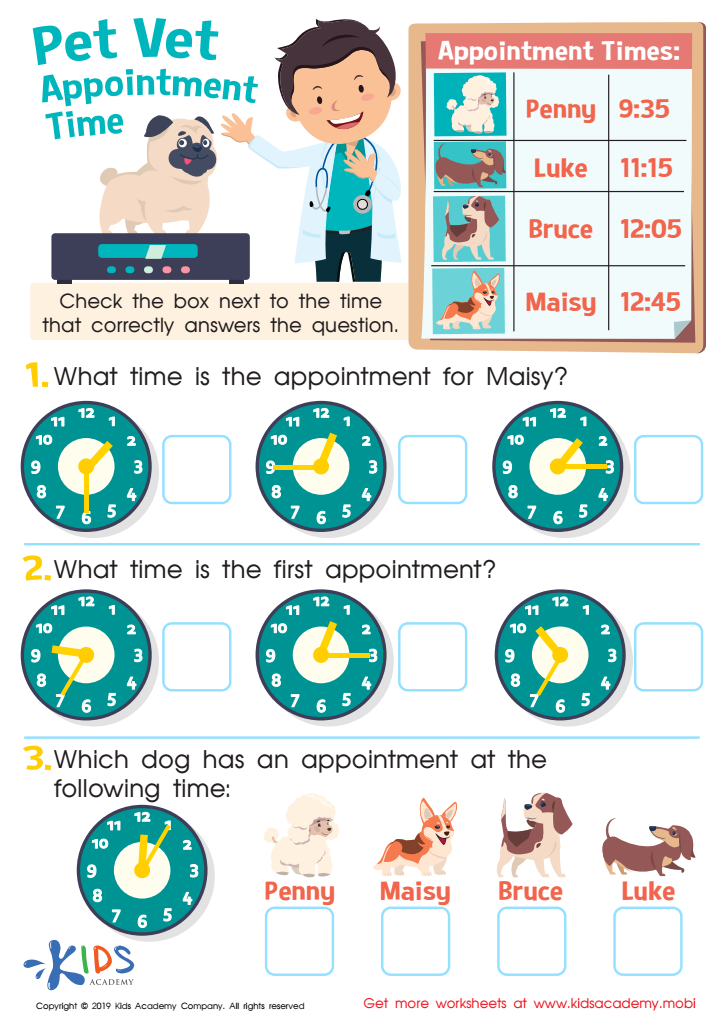
Pet Vet Appointment Time Worksheet
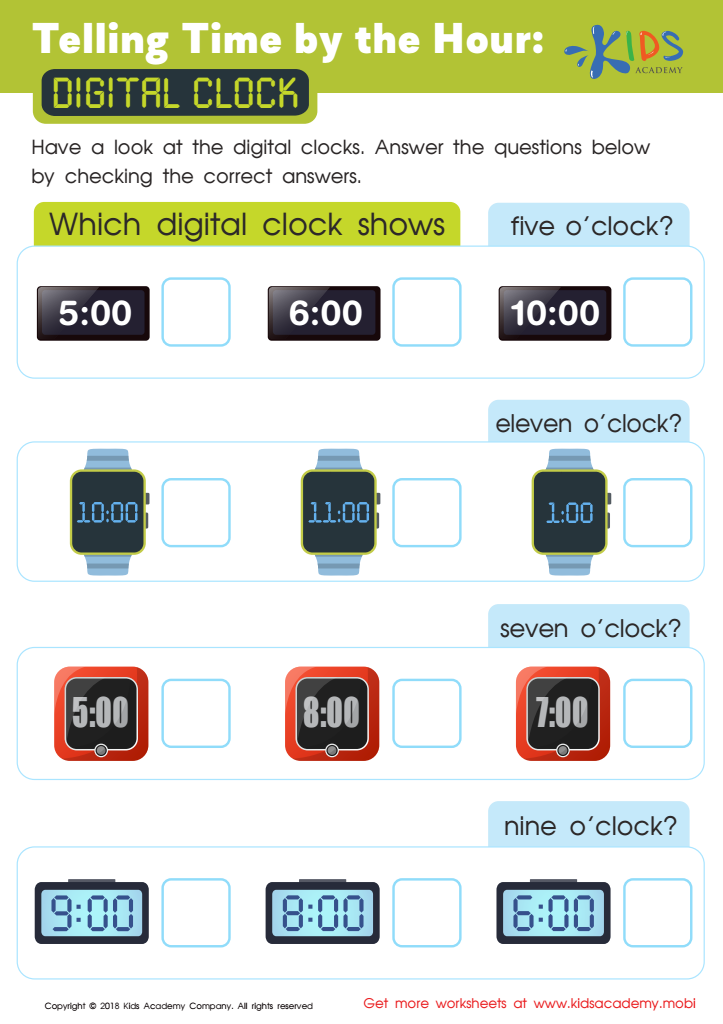
Telling Time by the Hour: Digital Clock Worksheet
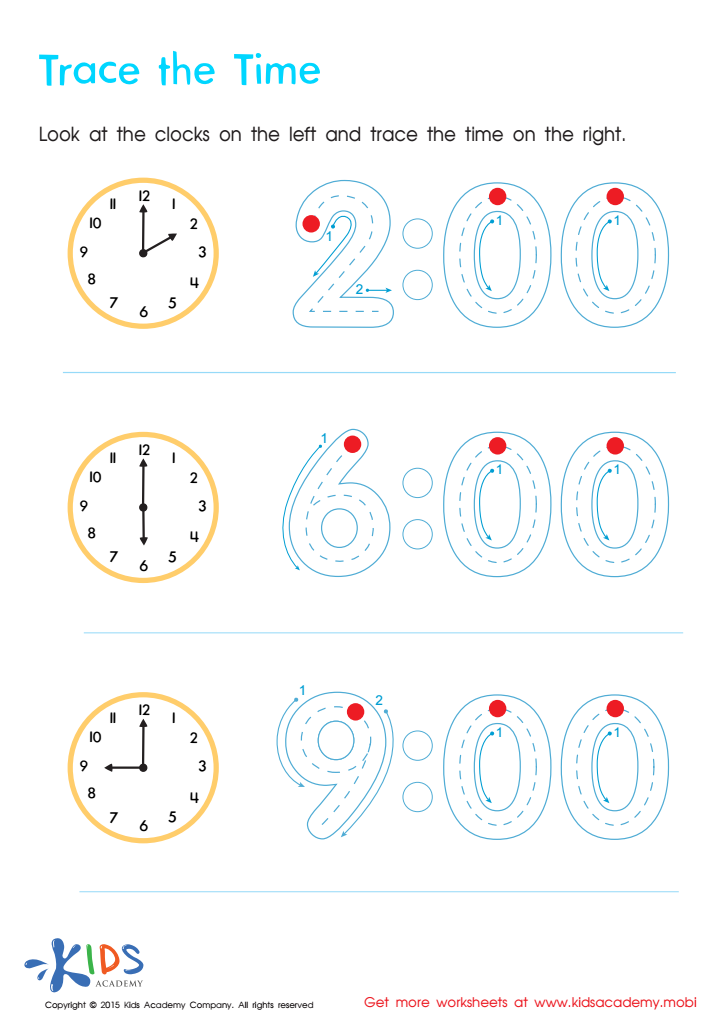
Telling The Time Worksheet: Part 2
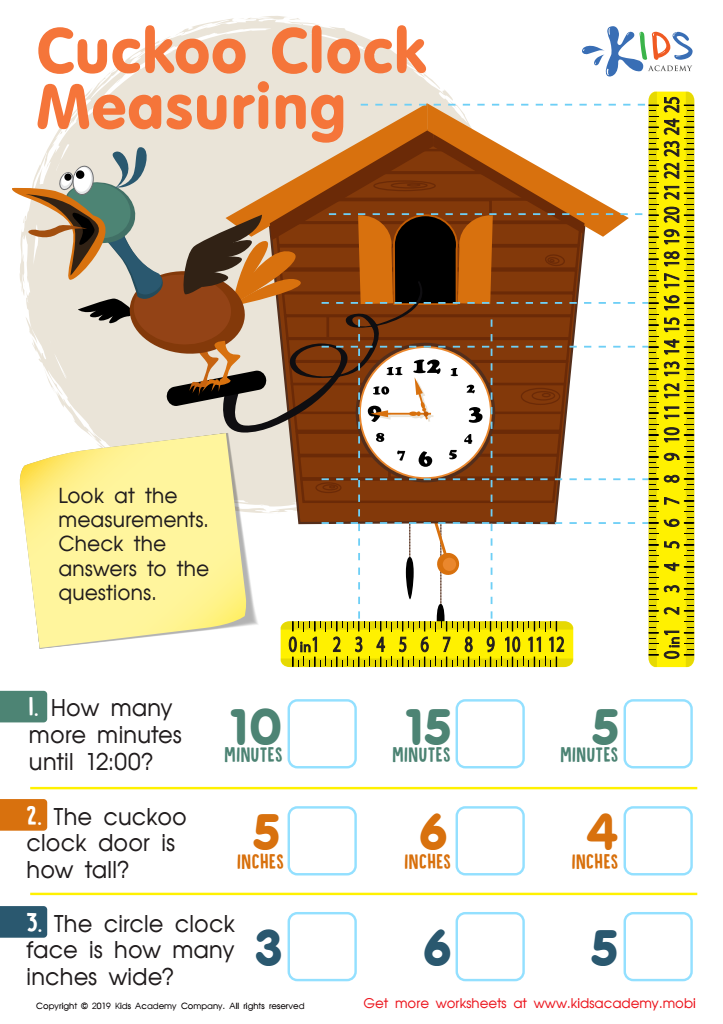
Cuckoo Clock Measuring Worksheet
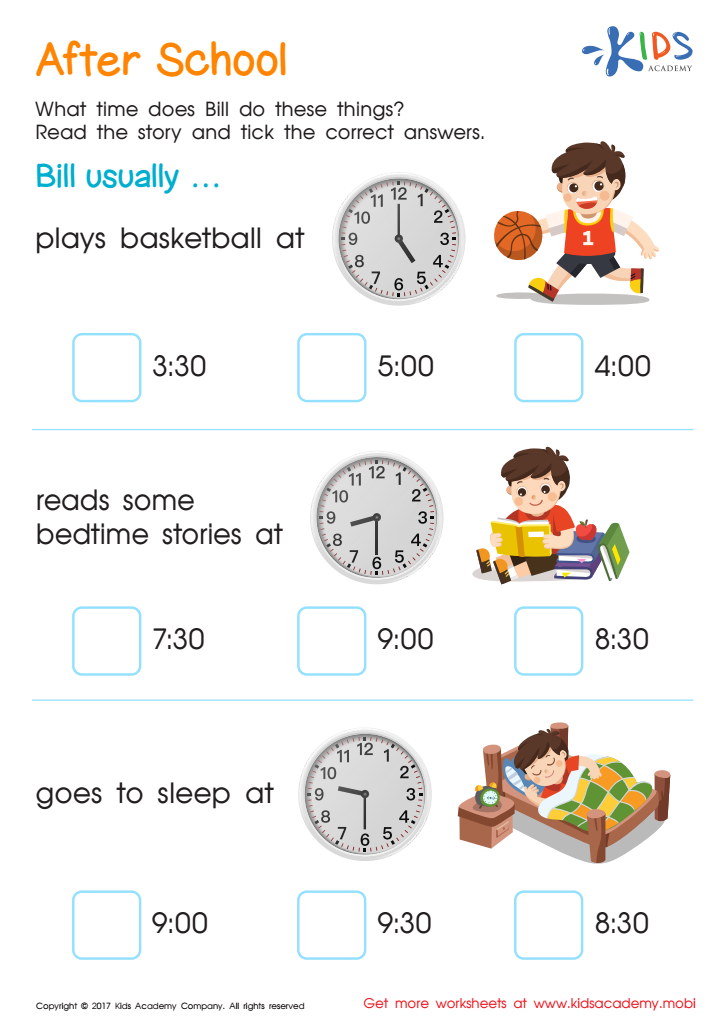
After School Time Printable
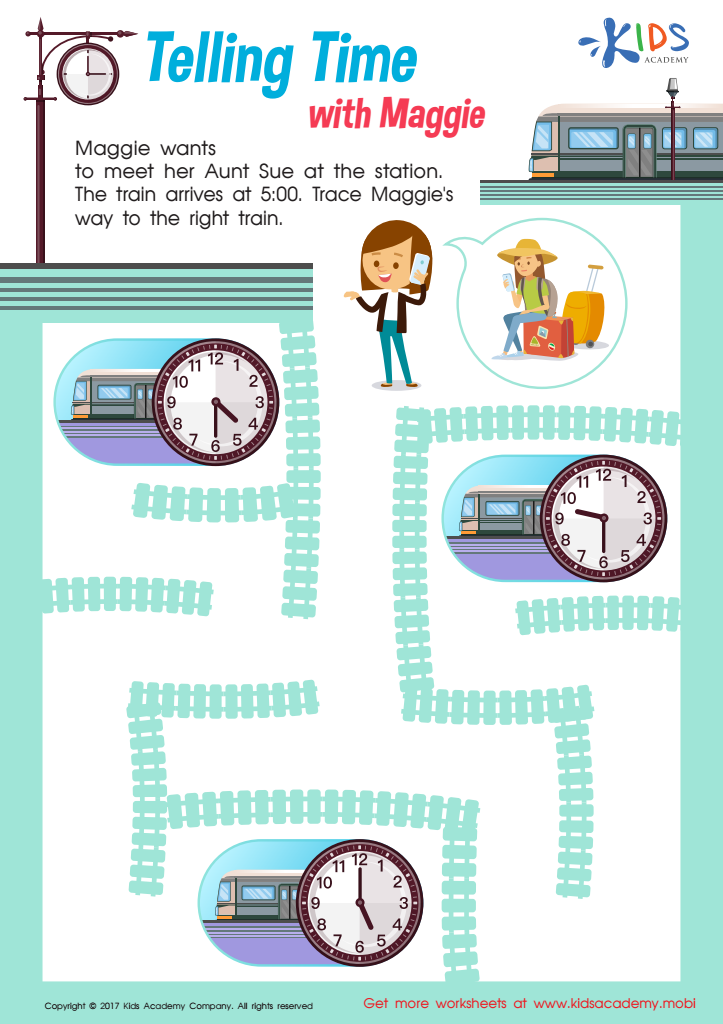
Telling Time With Maggie Time Worksheet
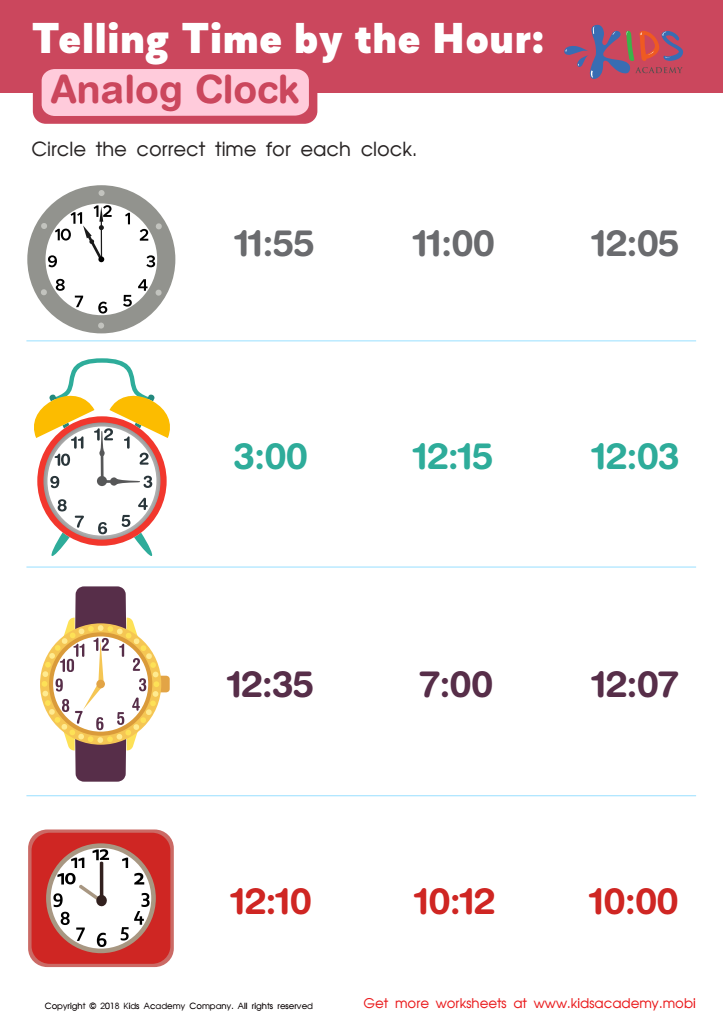
Telling Time by the Hour: Analog Clock Worksheet
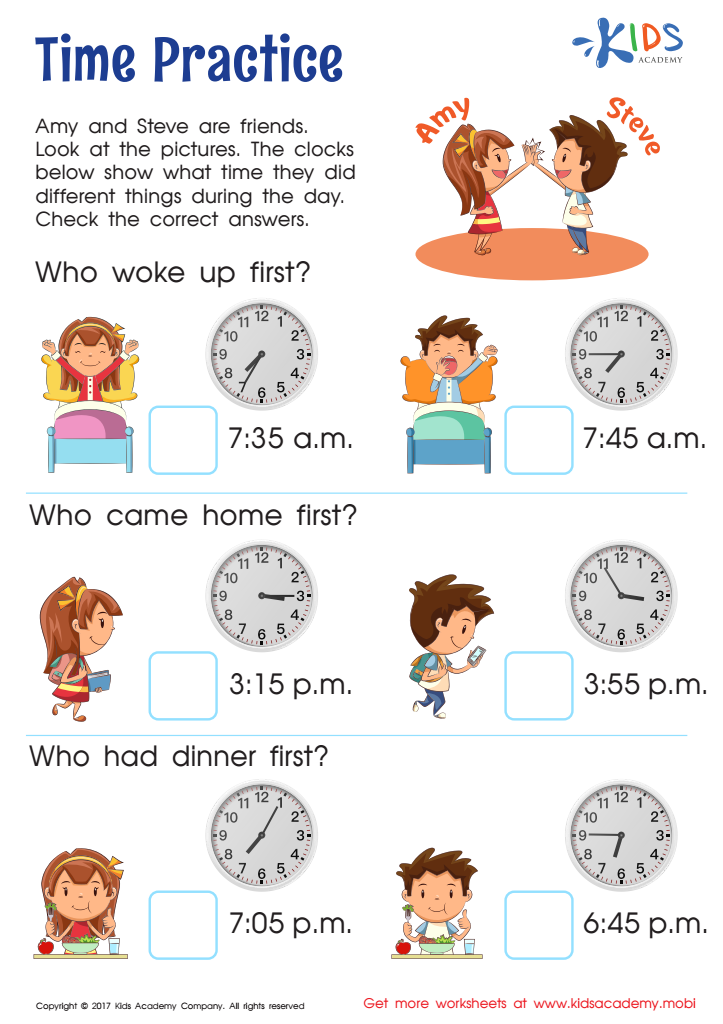
Time Practice Worksheet
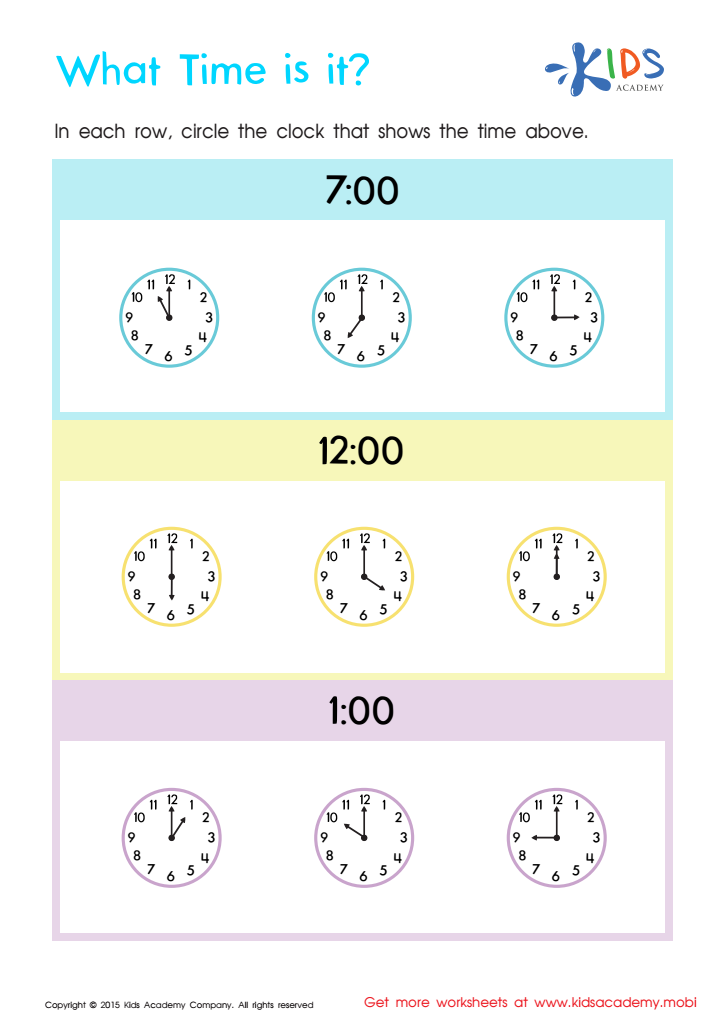
Telling The Time Worksheet: Part 3







Time reading skills are essential for young children ages 4-9 as they lay the foundation for academic and everyday success. Learning to read the clock enhances math skills, particularly understanding numbers, sequencing, and intervals—all of which are crucial for future mathematical concepts. Being able to tell time also fosters a sense of responsibility and independence, allowing children to manage their daily activities better. This early skill supports routines, helping children grasp the concepts of punctuality and time management, which are vital for school and life.
From a parental and educational standpoint, teaching time-reading skills also strengthens critical thinking and problem-solving abilities. It integrates practical and abstract thinking, as children must understand both the mechanics of clock reading and the broader concept of time passage. Additionally, it creates opportunities for interactive learning—parents and teachers can engage children with fun, hands-on activities that sustain interest and enthusiasm.
Moreover, time literacy correlates with other areas of learning, such as language arts and science, confirming its interdisciplinary value. Overall, fostering strong time-reading skills sets a solid academic and functional literacy foundation, preparing children for future educational challenges and life skills development. Ensuring they grasp these concepts early on empowers children with the tools they need for holistic growth.








