
Understanding bar graphs Math Worksheets for Ages 4-9
5 filtered results
Difficulty Level
Grade
Age
-
From - To
Subject
Activity
Standards
Explore our engaging "Understanding Bar Graphs" math worksheets, designed for children ages 4-9! These worksheets help young learners develop essential skills in interpreting and creating bar graphs, contributing to their mathematical literacy. Each activity is crafted to nurture analytical thinking and promotes hands-on learning through colorful visuals and interactive exercises. Teachers and parents can easily incorporate these resources to enhance classroom lessons or at-home learning. With various skill levels, our worksheets ensure every child can grow in confidence and understanding of data representation. Start your child's journey in mastering bar graphs today for a fun and educational experience!
Favorites
With answer key
Interactive
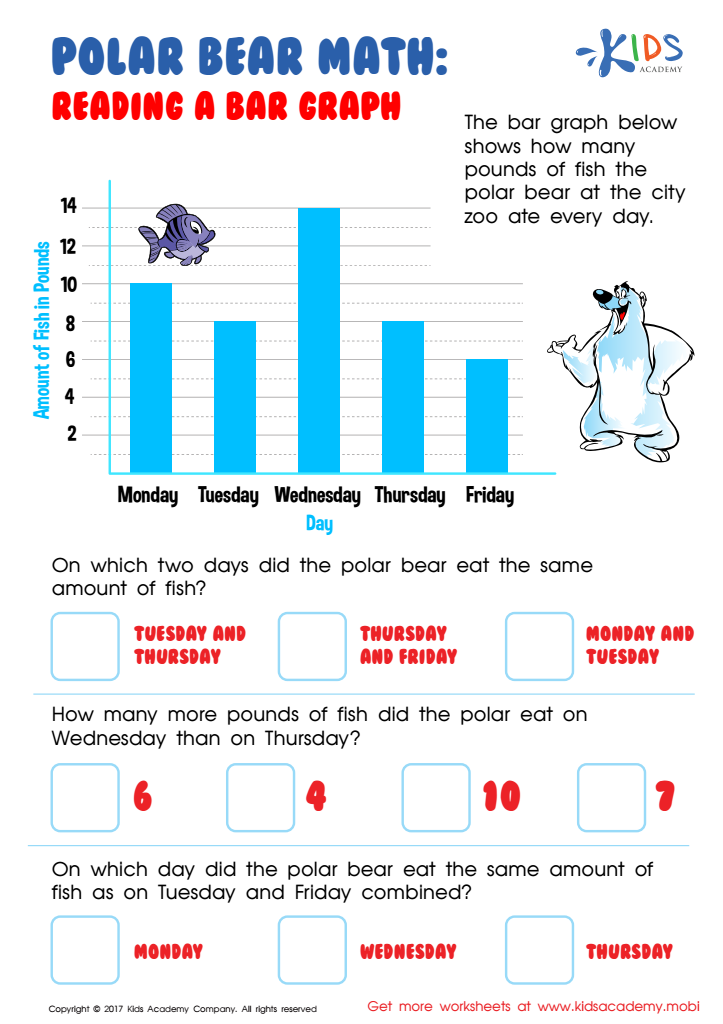
Reading Bar Graph Worksheet
Take your child north to practice data reading with a polar bear friend! This worksheet challenges 3rd graders to interpret data on a graph and solve related math problems.
 Assign to My Students
Reading Bar Graph Worksheet
Worksheet
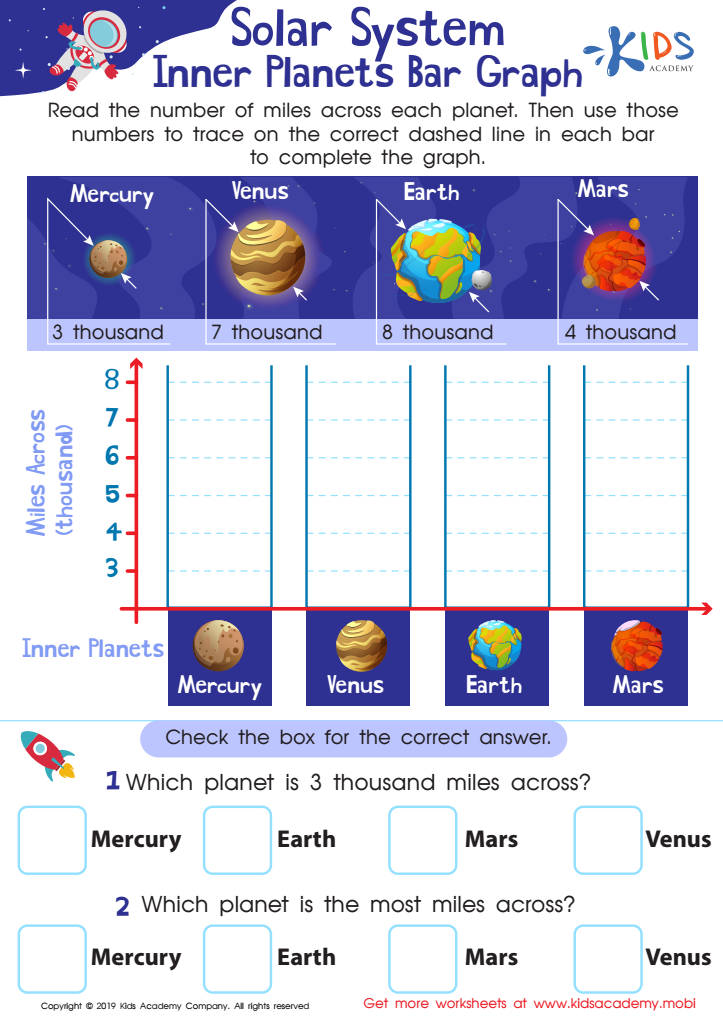
Planets Bar Graph Worksheet
With this fun, educational worksheet, kids can learn about bar graphs and the solar system simultaneously. Introduce them to the concept by reading out the number of miles for each planet, then help them trace the dashed lines in each bar to complete the graph.
Planets Bar Graph Worksheet
Worksheet
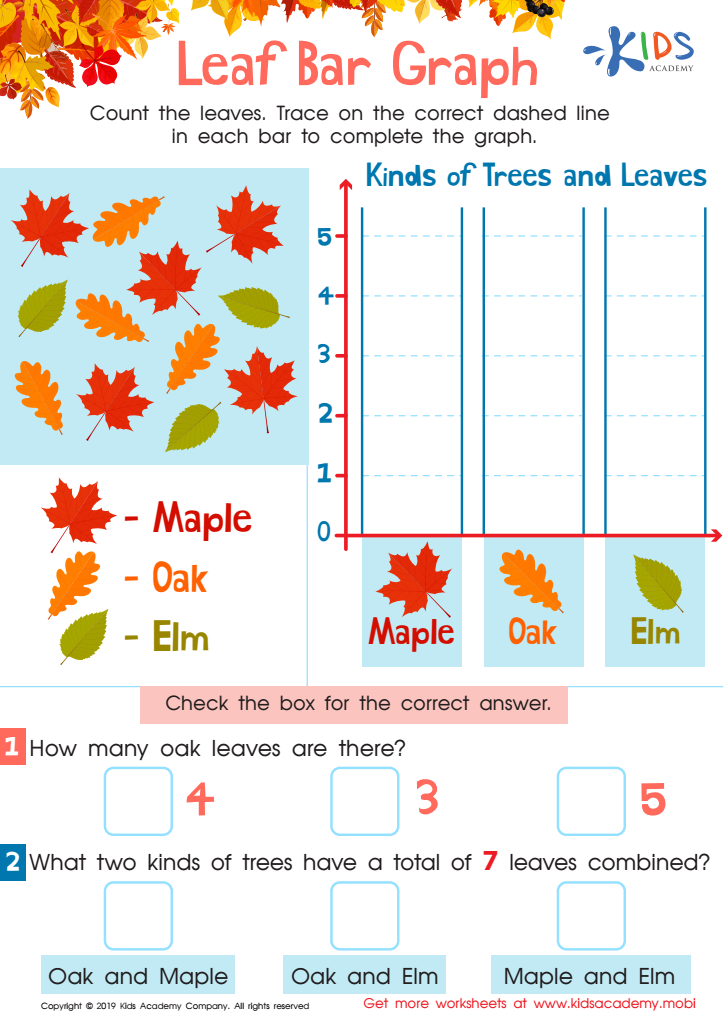
Leaf Bar Graph Worksheet
You can help your kids make learning easier and more enjoyable. While their teachers provide lessons and homework, you can take their education further. This worksheet can assist them in mastering bar charts. Count the leaves, then trace the correct line for each bar to complete the graph.
Leaf Bar Graph Worksheet
Worksheet
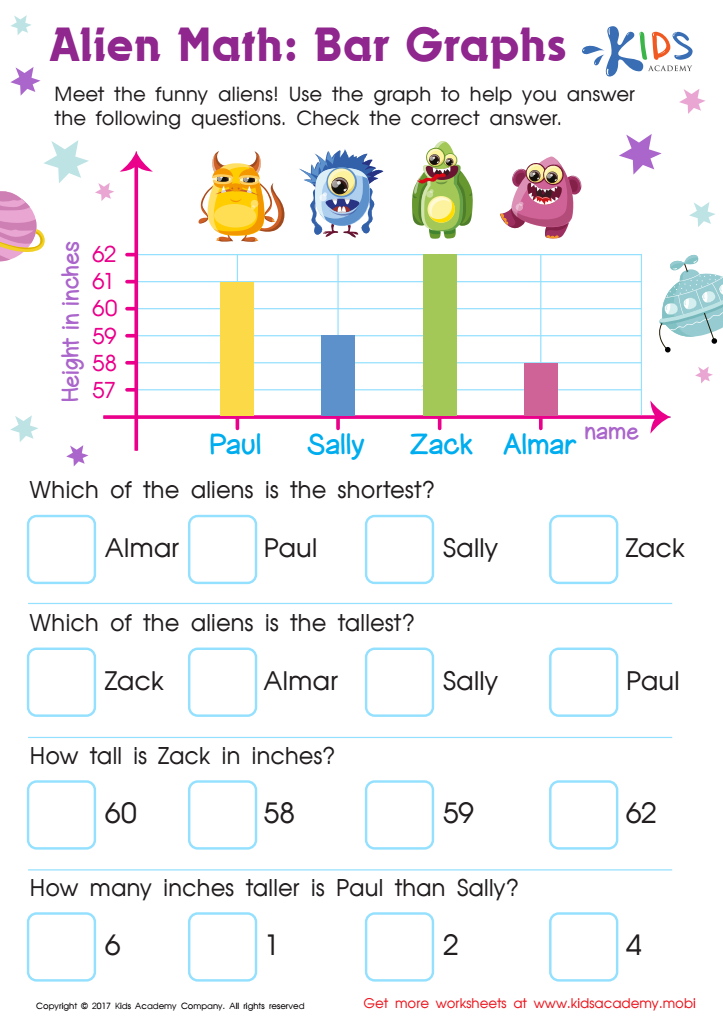
Bar Graphs Worksheet
Let's blast off to outer space and visit our funny alien friends with this bar graphs worksheet PDF! Kids gain valuable measurement and data analysis skills by comparing sizes of the aliens and working with bar graphs.
Bar Graphs Worksheet
Worksheet
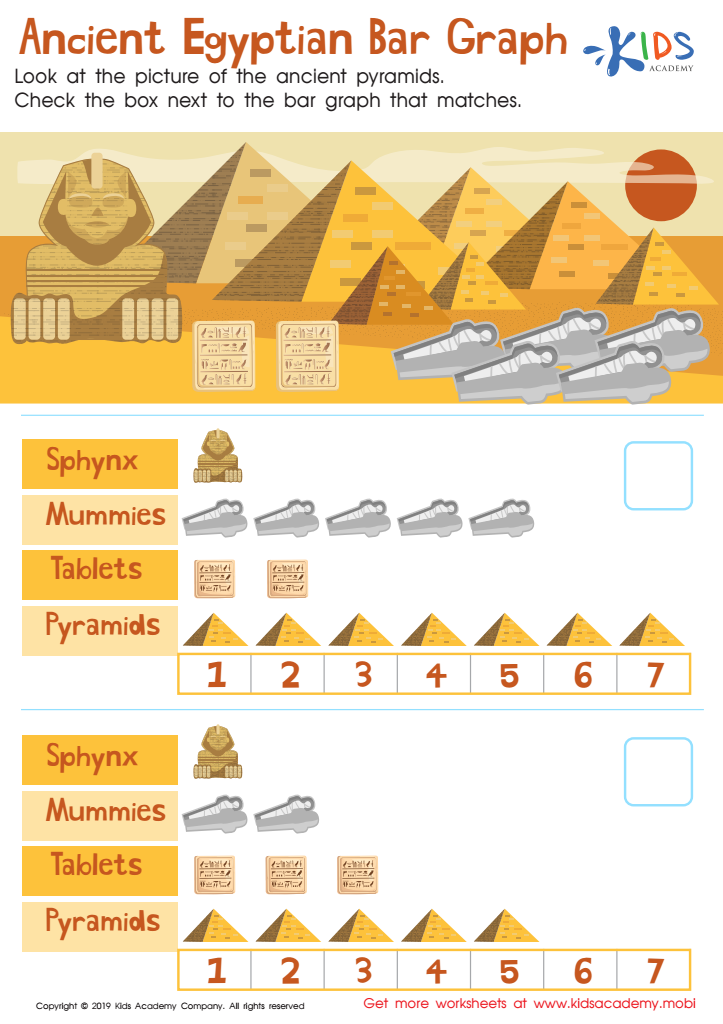
Egyptian Bar Graph Worksheet
Help your kids get a hang of bar graphs with this fun worksheet. Examine the picture of the ancient pyramids and help them match the bar graph to it. Check the box next to the correct bar graph and watch your little ones learn quickly!
Egyptian Bar Graph Worksheet
Worksheet
Join Kids Academy for Free
Who is primarily going to use this learning content?







Understanding bar graphs is a fundamental skill that holds significant importance for children aged 4-9, making it crucial for both parents and teachers to emphasize this learning area. Bar graphs provide a visual representation of data, fostering a child's ability to interpret and analyze information. By engaging with bar graphs, children develop critical thinking and mathematical reasoning skills essential for real-world problem-solving.
Parents and teachers can utilize bar graphs to introduce basic concepts of counting, comparison, and categorization. These visuals make abstract numbers more concrete, allowing young learners to see and understand differences, similarities, and trends at a glance. Furthermore, bar graphs can enhance students’ ability to ask questions and draw conclusions, promoting a sense of inquiry and curiosity.
As children practice creating and interpreting bar graphs, they also build important communication skills. They learn to present information clearly, encouraging collaboration and discussion. This not only aids in their mathematical understanding but also ties into literacy skills as they explain their findings. By supporting the mastery of bar graphs, parents and teachers equip children with tools necessary for success in mathematics and beyond, fostering a strong foundation for future learning.








