
Understanding comparisons Math Worksheets for Ages 4-9
5 filtered results
Difficulty Level
Grade
Age
-
From - To
Subject
Activity
Standards
Unlock your child’s potential with our "Understanding Comparisons" math worksheets designed specifically for ages 4-9. These engaging resources help young learners grasp essential comparison concepts such as more/less, bigger/smaller, and greater/less than. Whether you’re at home or in the classroom, these worksheets provide a fun and effective way to develop critical thinking and foundational math skills. Each activity is crafted to foster curiosity and understanding, making learning enjoyable. Explore colorful illustrations and interactive exercises that will captivate your child’s attention while reinforcing key skills. Start your journey to math mastery today with our comprehensive, easy-to-use worksheets!
Favorites
With answer key
Interactive
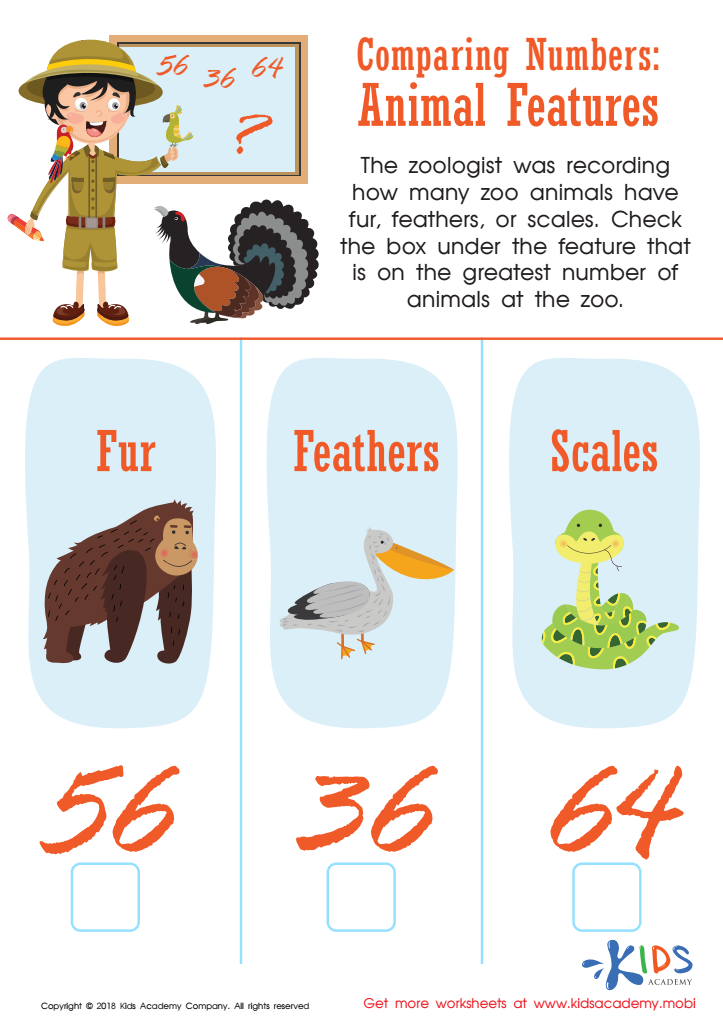
Animal Features Worksheet
Let your kids join a budding zoologist! They can count zoo animals' fur, feathers or scales, then use numbers and comparison to check the box with the most friends. The PDF will captivate them and help them understand how the value of '6' changes based on its position.
 Assign to My Students
Animal Features Worksheet
Worksheet
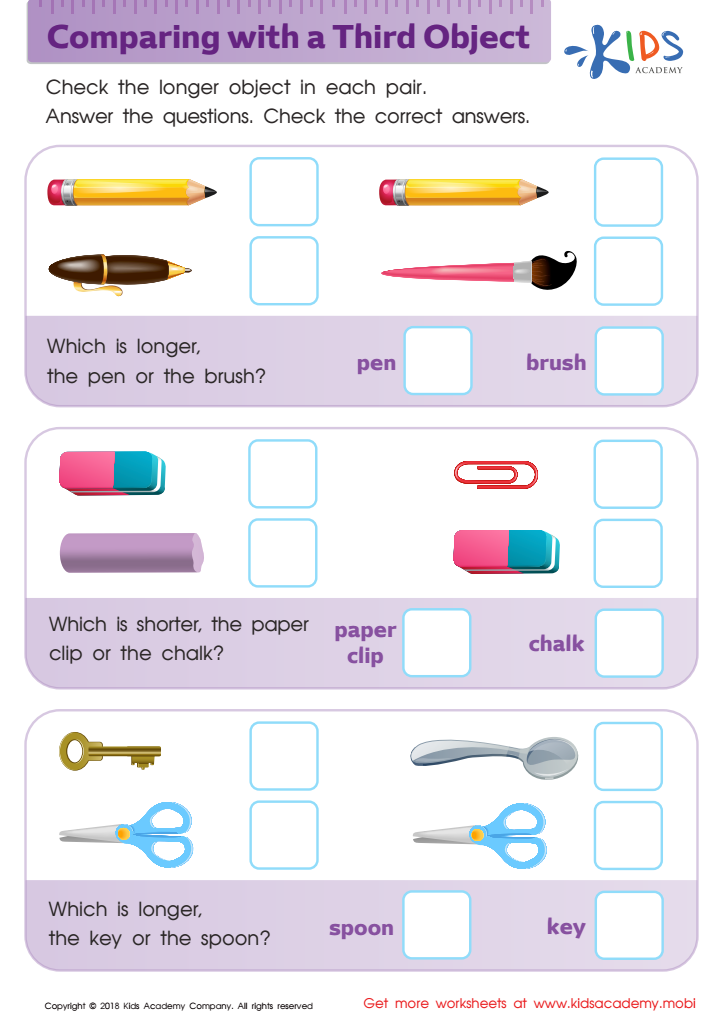
Comparing with a Third Object Worksheet
Help your child master measurement skills with this free downloadable math worksheet! Ask them to compare each pair of objects, checking the box for the longer one. Then, read the question and compare the objects across the pairs before ticking the box and continuing to the next group of pictures.
Comparing with a Third Object Worksheet
Worksheet
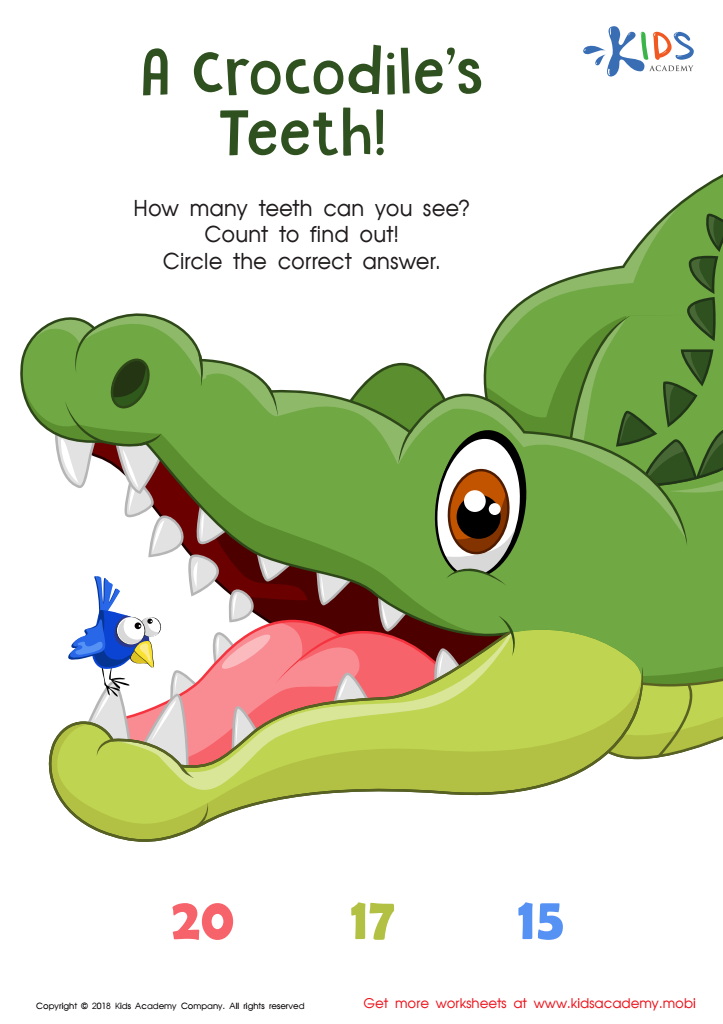
A Crocodile's Teeth Worksheet
Show your child the animal image and ask them to identify it. If they watch animal shows, they'll likely be interested. Count the teeth together, then look at the options and help them circle the right one.
A Crocodile's Teeth Worksheet
Worksheet
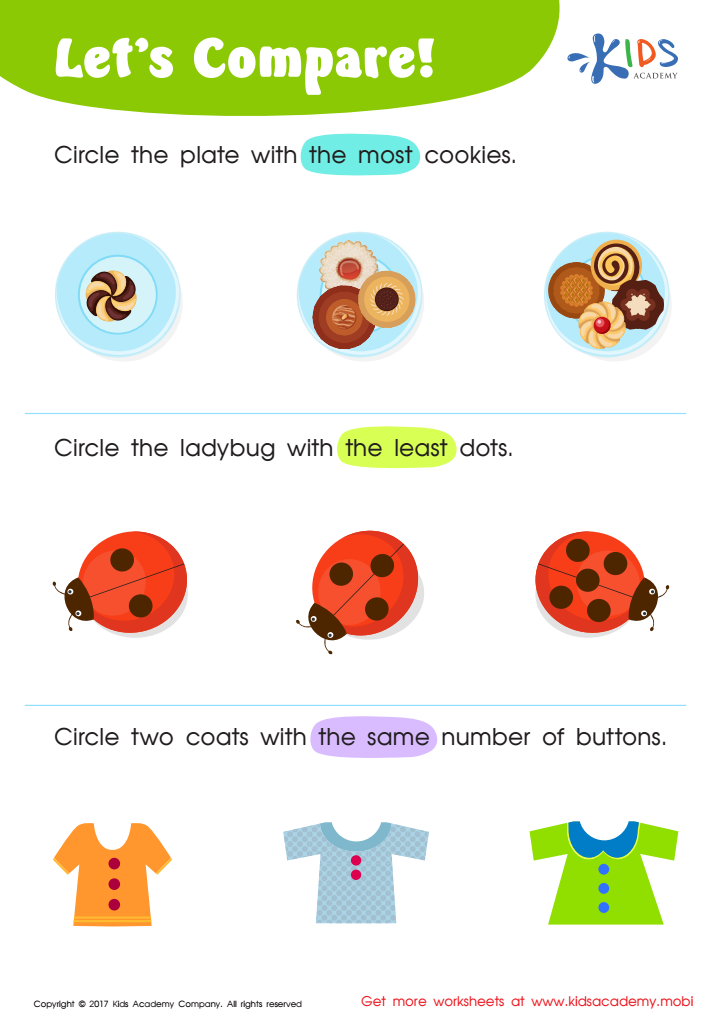
Matching: Classifying Toys by Size Worksheet
.
Have your young one's observation and counting skills ready for this worksheet; carefully look through the images and count the objects, then circle the plates with the least, most or equal number of patterns. Pay attention and have good counting abilities to make this task easy.
Matching: Classifying Toys by Size Worksheet
Worksheet
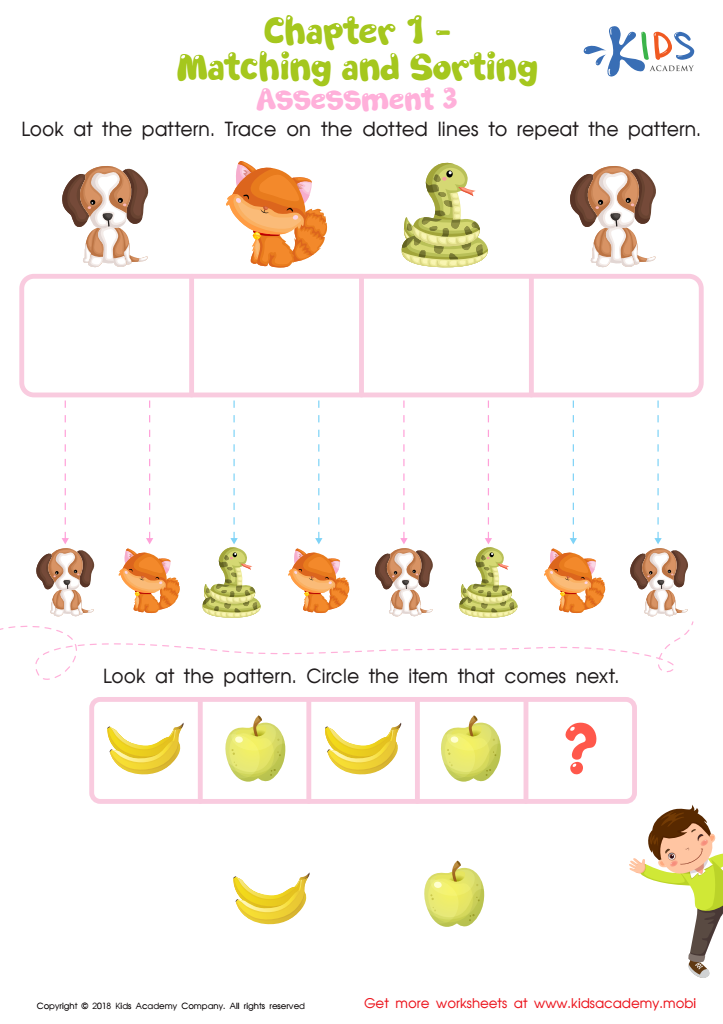
Matching and Sorting for Preschool: Assessment 3 Worksheet
This worksheet helps kids practice and improve pattern recognition and matching skills. Task one: Ask your child to trace the pattern on the dotted lines. Task two: Look at the arrangement of fruits and ask your child to circle the corresponding item in the pattern. With this exercise, your child will gain a better understanding of pattern recognition and matching.
Matching and Sorting for Preschool: Assessment 3 Worksheet
Worksheet
Join Kids Academy for Free
Who is primarily going to use this learning content?



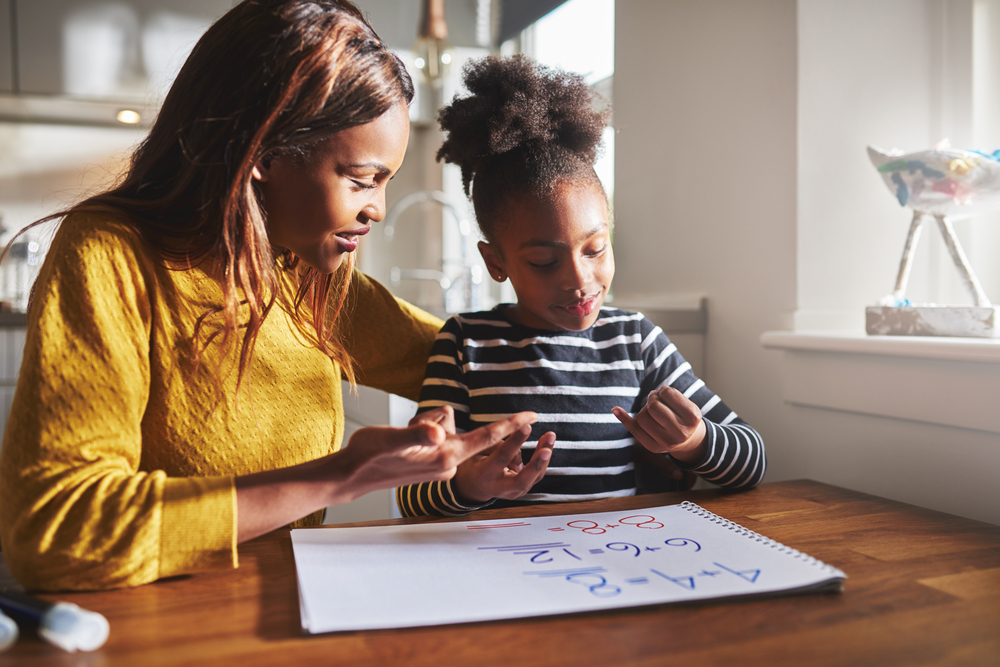



Understanding comparisons in math for children ages 4-9 is fundamental for their cognitive and social development. This skill involves recognizing similarities and differences in quantities, sizes, and values, which lays the groundwork for more complex mathematical concepts. Engaging in comparisons helps children develop critical thinking and problem-solving skills, enabling them to make decisions based on quantitative information.
For parents and teachers, fostering an understanding of comparisons can enhance a child's confidence in their mathematical abilities. Early mastery of these concepts encourages a positive attitude toward math, reducing anxiety and fostering a love for learning. Moreover, these skills are transferable beyond math; they help children navigate everyday situations, such as sharing, trading, or deciding which objects are larger or smaller.
Additionally, understanding comparisons aids in language development, as children learn to articulate their reasoning and emotions. This engagement promotes effective communication skills and enhances interactions with peers, further enriching their social experiences. In fostering this understanding, caregivers contribute to a solid foundation for lifelong learning, ensuring children are well-equipped to tackle future academic challenges. Ultimately, prioritizing comparisons in math is essential for holistic child development.








