Check out this FREE Trial Lesson on Math for age 4-9!

Addition with Arrays - Part 2

Favorites
With answer key
Interactive
  • 4-9
  • Understanding fractions
  • Math
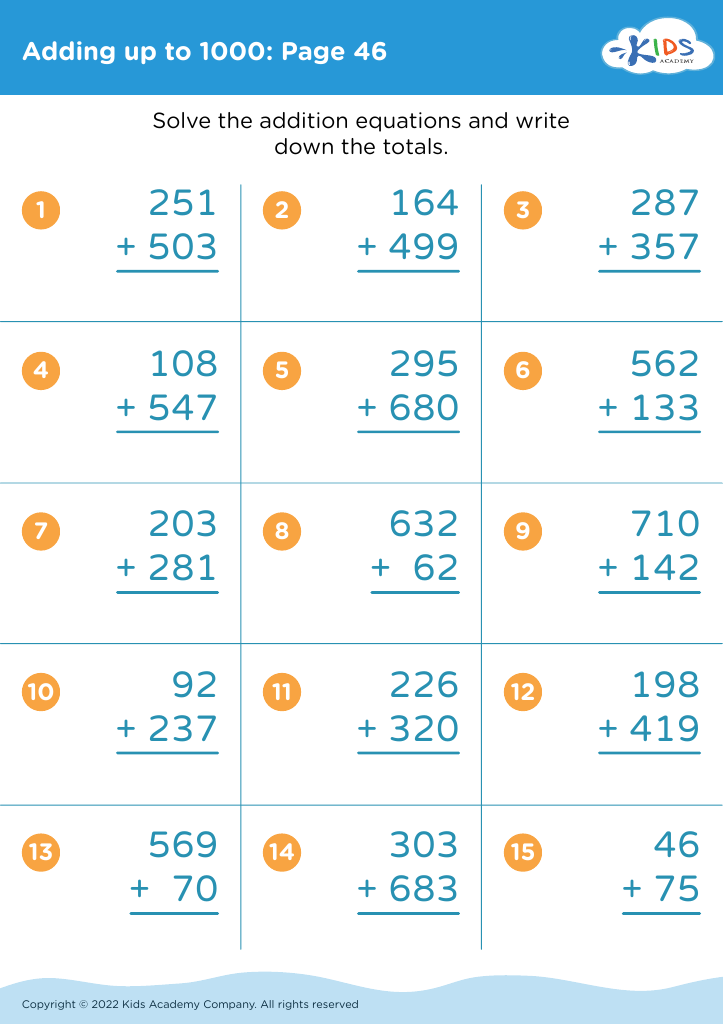
Adding up to 1000: Page 46

Adding up to 1000: Page 46

Adding up to 1000: Page 46
Worksheet
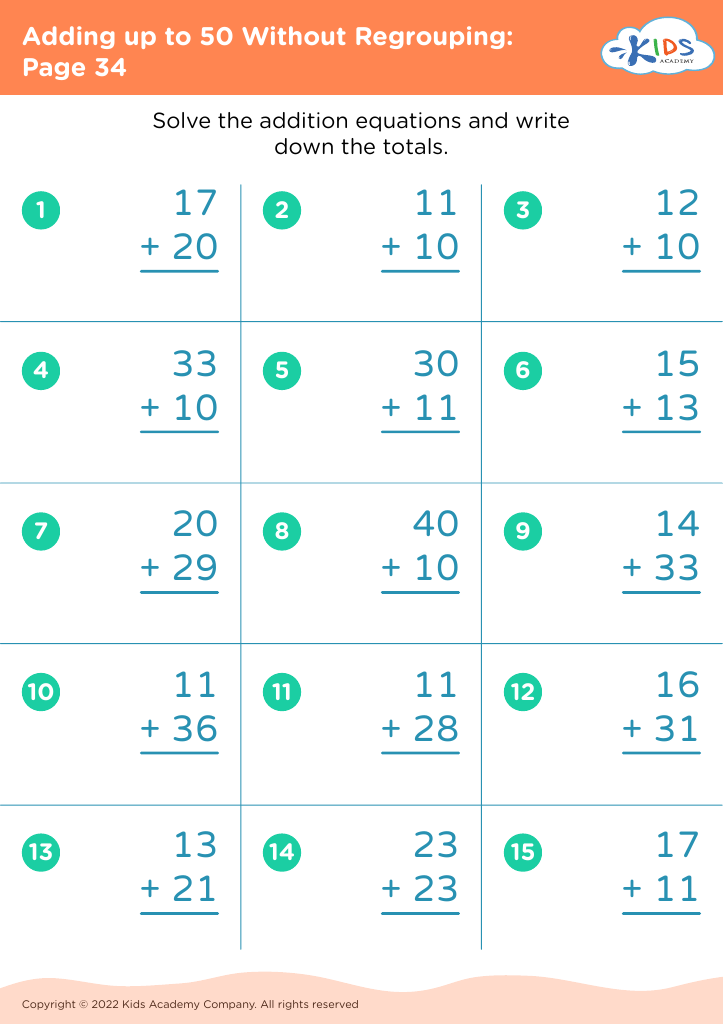
Adding up to 50 Without Regrouping: Page 34
Worksheet
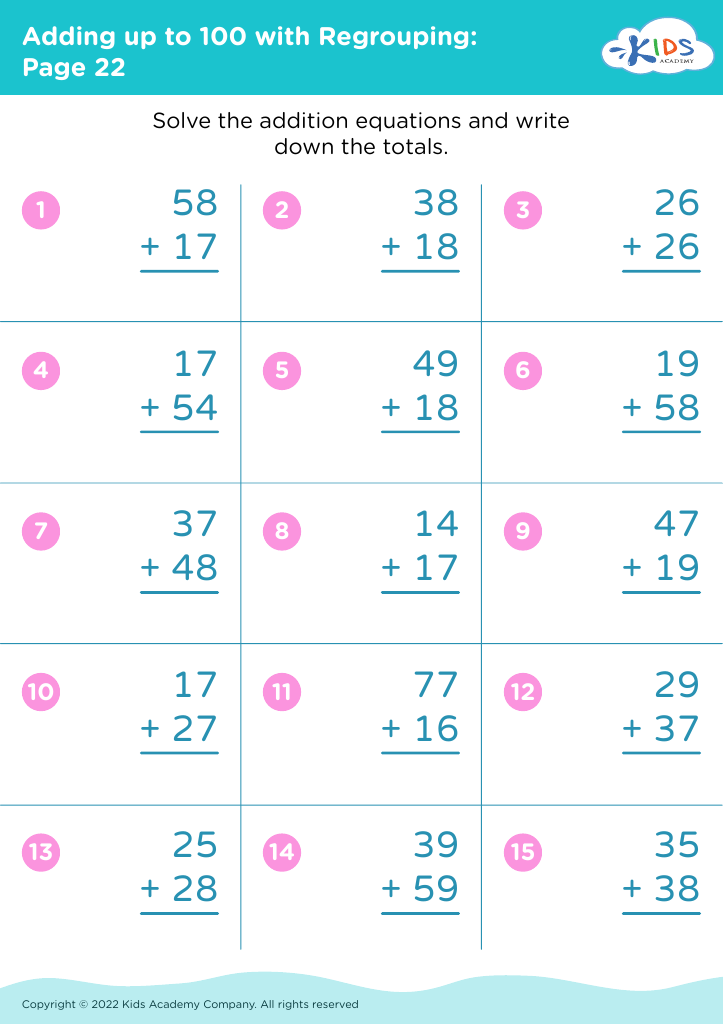
Adding up to 100 with Regrouping: Page 22
Worksheet
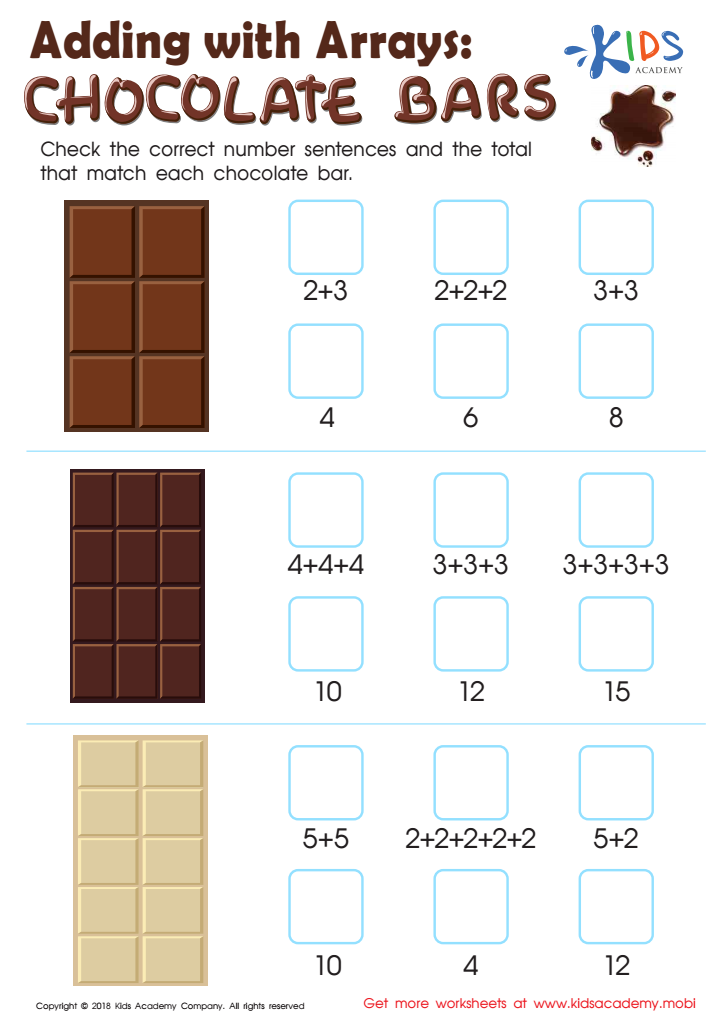
Adding with Arrays: Chocolate Bars Worksheet

Adding with Arrays: Chocolate Bars Worksheet

Kids love chocolates! Gauge how enthused your kids get when you mention them. This worksheet is a fun exercise about chocolates - get your kids to check the correct number sentences and totals for each chocolate bar. Reward their hard work with some chocolates - extra incentive for a job well done!
Adding with Arrays: Chocolate Bars Worksheet
Worksheet
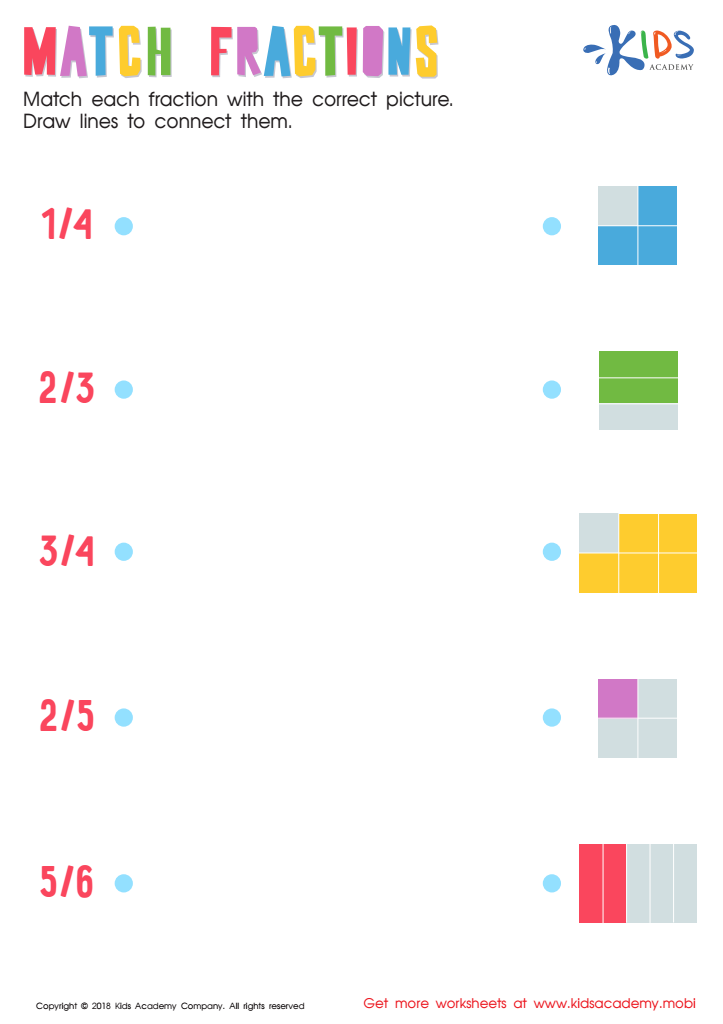
Match Fractions Worksheet

Match Fractions Worksheet

Have your child match fractions to images with this worksheet. There are five fractions on the left and five pictures on the right. Ask them to draw lines to connect each fraction to the right image. It's a great way to learn while having fun!
Match Fractions Worksheet
Worksheet
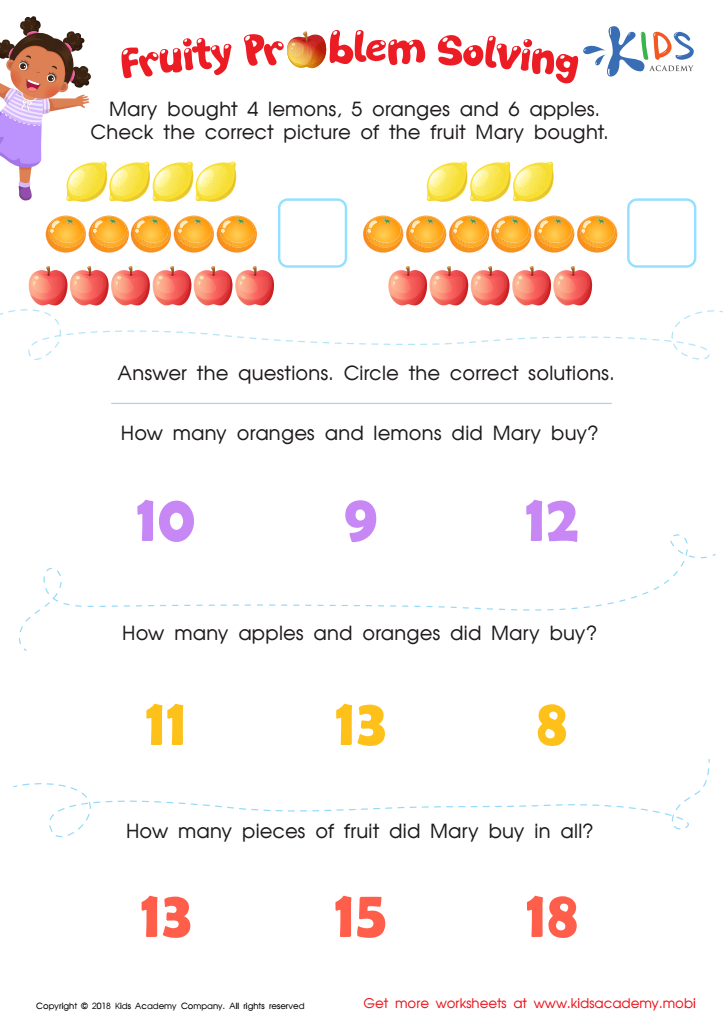
Fruity Problem Solving Worksheet

Fruity Problem Solving Worksheet

Practice addition word problems with young mathematicians using this PDF worksheet featuring fruit. As they read each problem carefully and circle the correct sums, they'll reinforce attention to detail and fine motor skills. Tangible representations are key to helping them with basic addition.
Fruity Problem Solving Worksheet
Worksheet
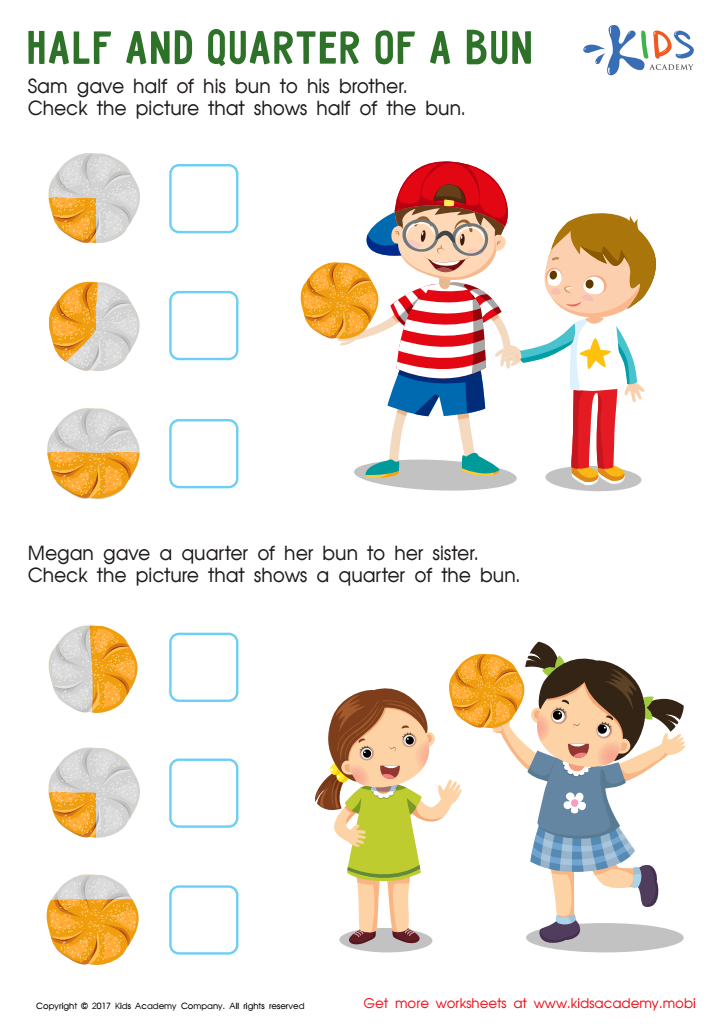
Half and Quarter of a Bun Worksheet
Half and Quarter of a Bun Worksheet
This worksheet introduces Sam, his brother and Megan, her sister, who are sharing buns. Show kids the picture of half and quarter to help them understand. Ask if they know what half and quarter of a shape is before progressing. Help them check the picture showing half and quarter of a bun.
Half and Quarter of a Bun Worksheet
Worksheet
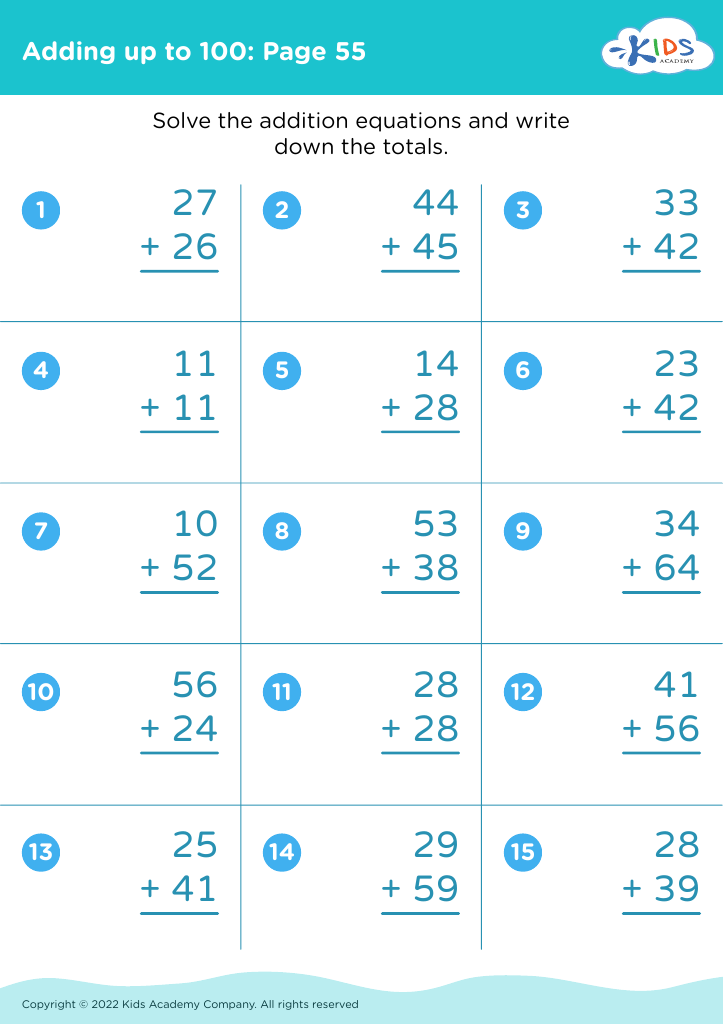
Adding up to 100: Page 55

Adding up to 100: Page 55

Adding up to 100: Page 55
Worksheet
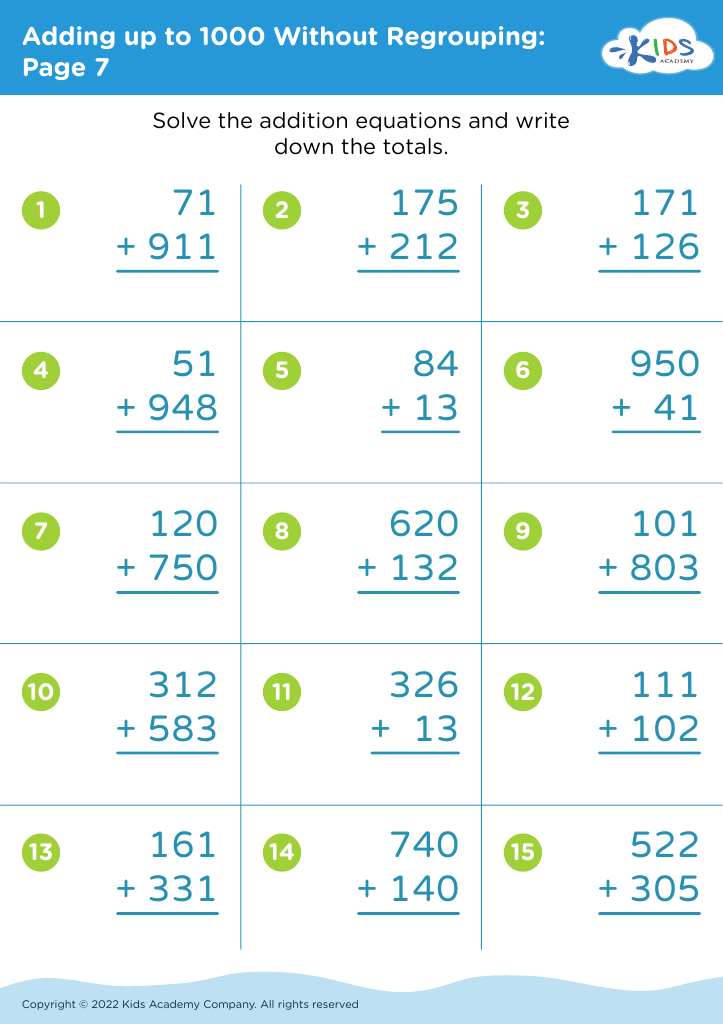
Adding up to 1000 Without Regrouping: Page 7
Worksheet
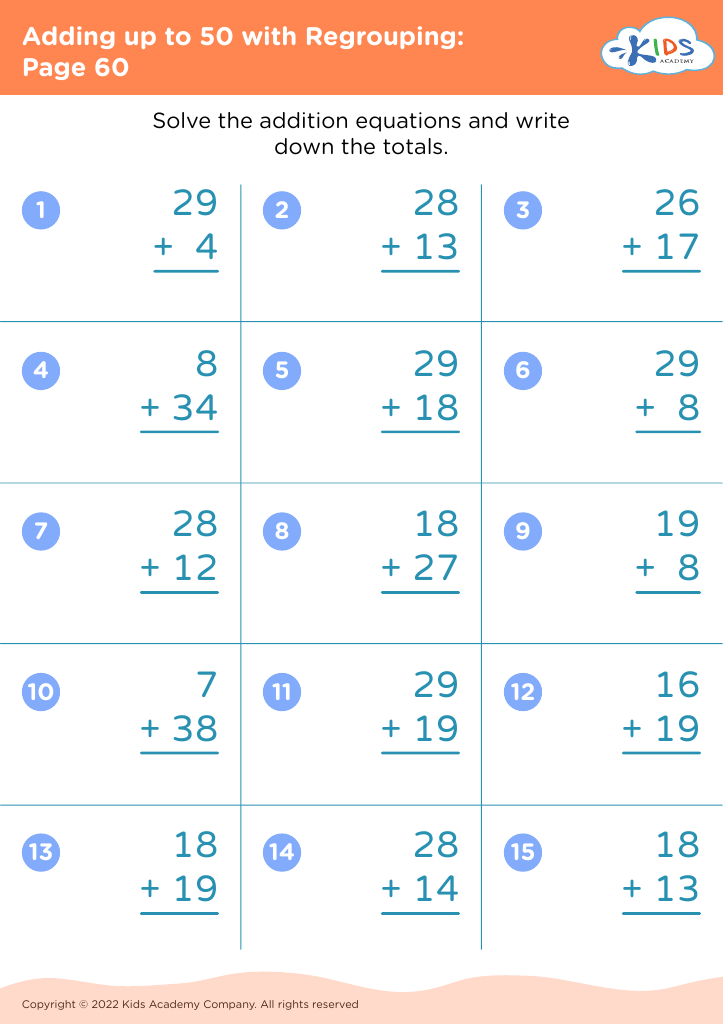
Adding up to 50 with Regrouping: Page 60
Worksheet
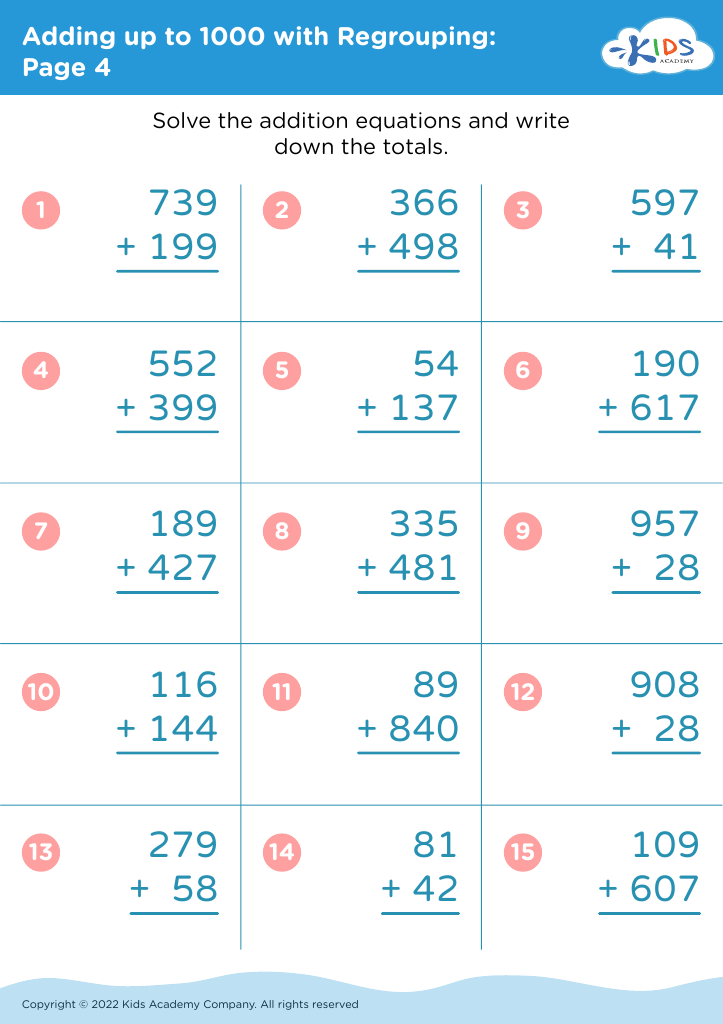
Adding up to 1000 with Regrouping: Page 4
Worksheet
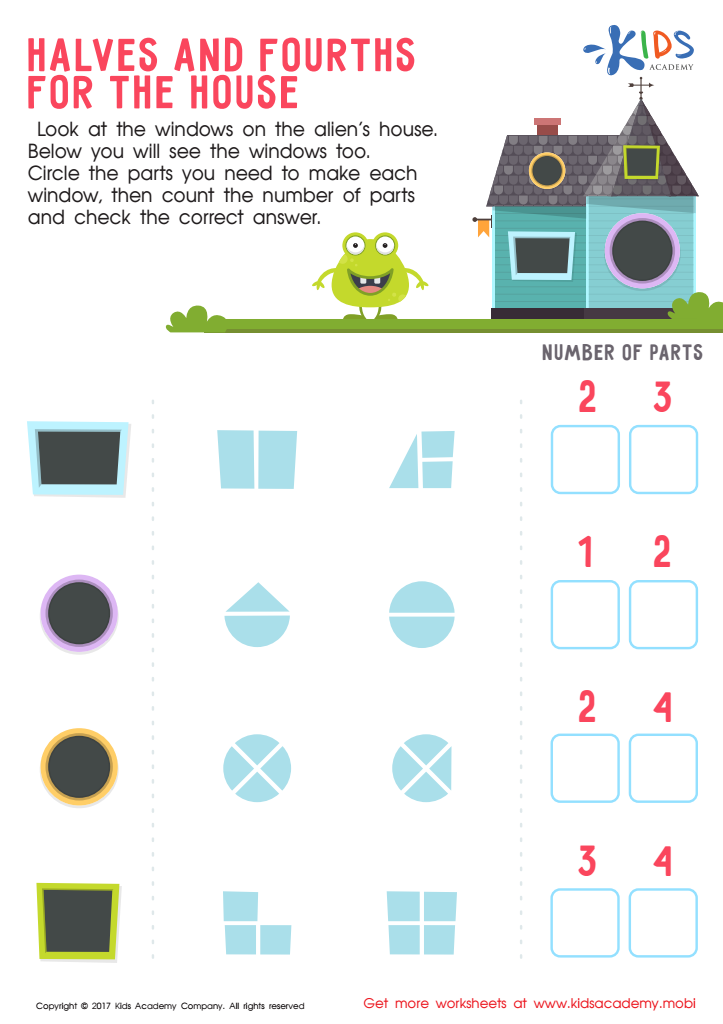
Halves and Fourths for the House Worksheet
Halves and Fourths for the House Worksheet
Help your child become friends with the alien in this worksheet! If they're fans of alien books and movies, they'll love it. Ask them to circle the parts at the bottom that make each window, then count the number of parts and check the correct answer.
Halves and Fourths for the House Worksheet
Worksheet
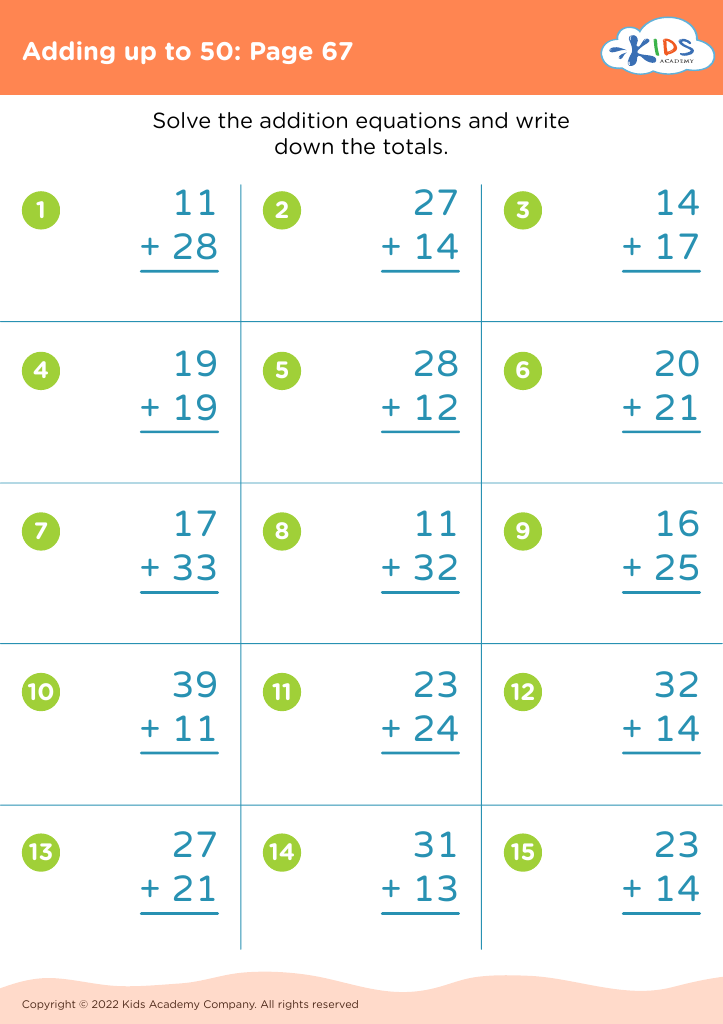
Adding up to 50: Page 67

Adding up to 50: Page 67

Adding up to 50: Page 67
Worksheet
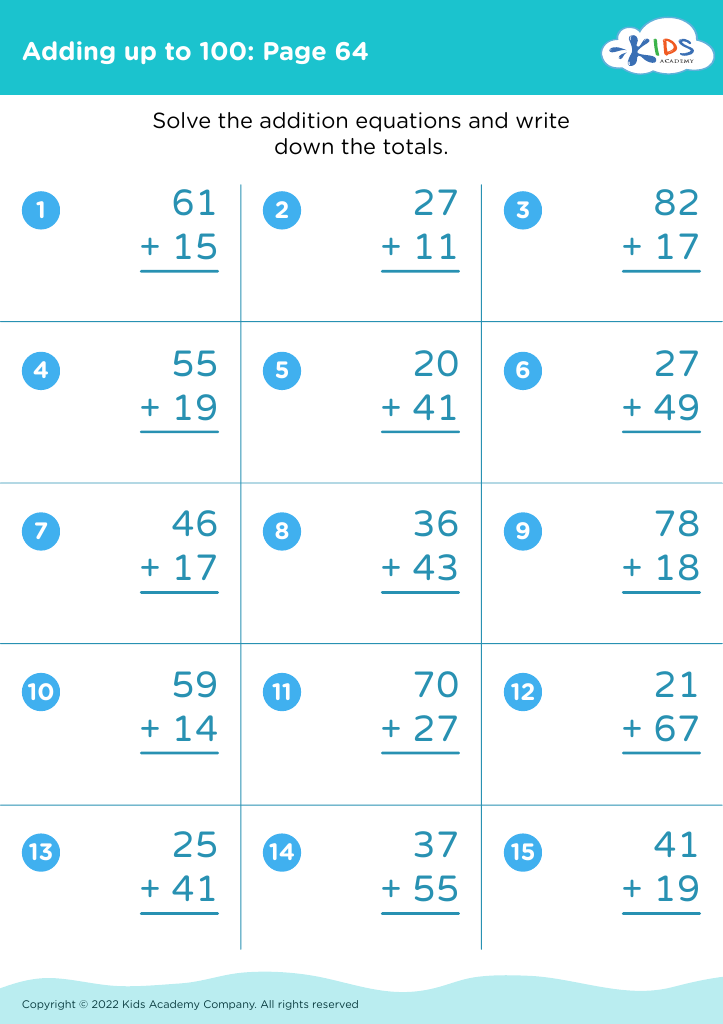
Adding up to 100: Page 64

Adding up to 100: Page 64

Adding up to 100: Page 64
Worksheet
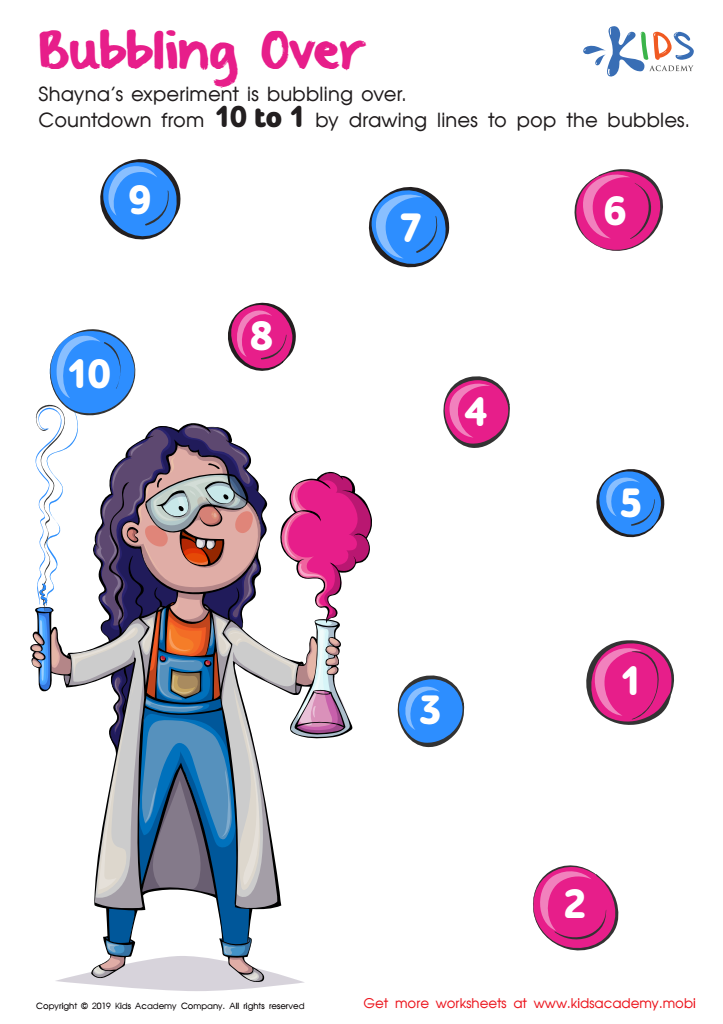
Bubbling Over Worksheet
Bubbling Over Worksheet
Students love science experiments at the lab! They get to practice their counting skills while creating a masterpiece or an unexpected catastrophe! Ask them to count down from 10 to 1 by drawing lines to 'pop' the bubbles coming out of Shayna's experiment in the worksheet.
Bubbling Over Worksheet

Worksheet
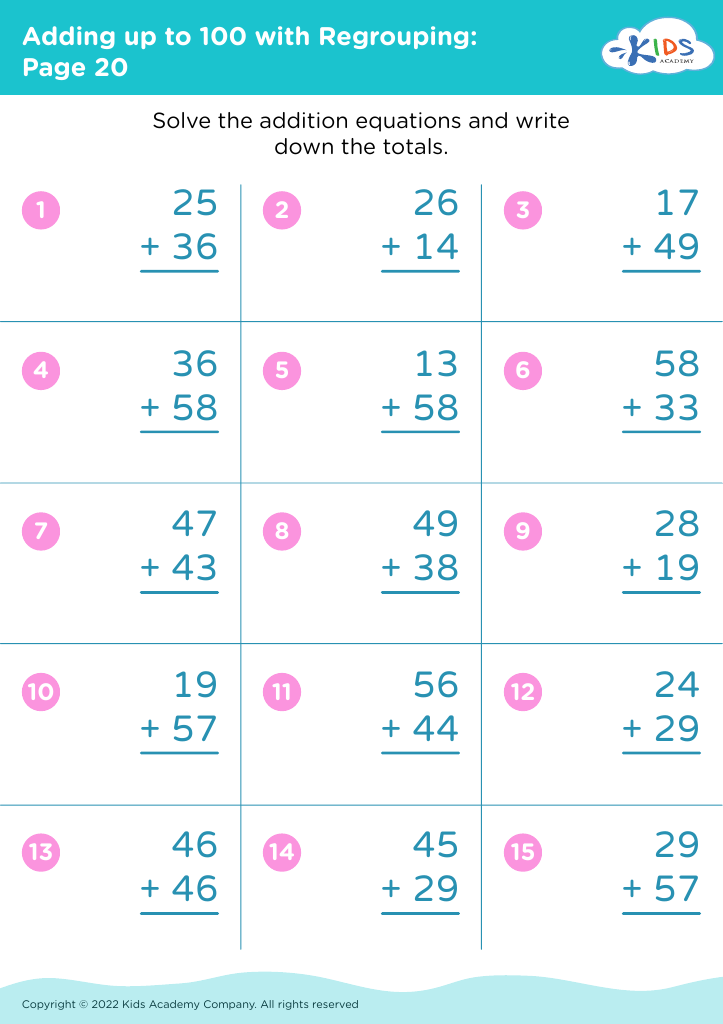
Adding up to 100 with Regrouping: Page 20
Worksheet
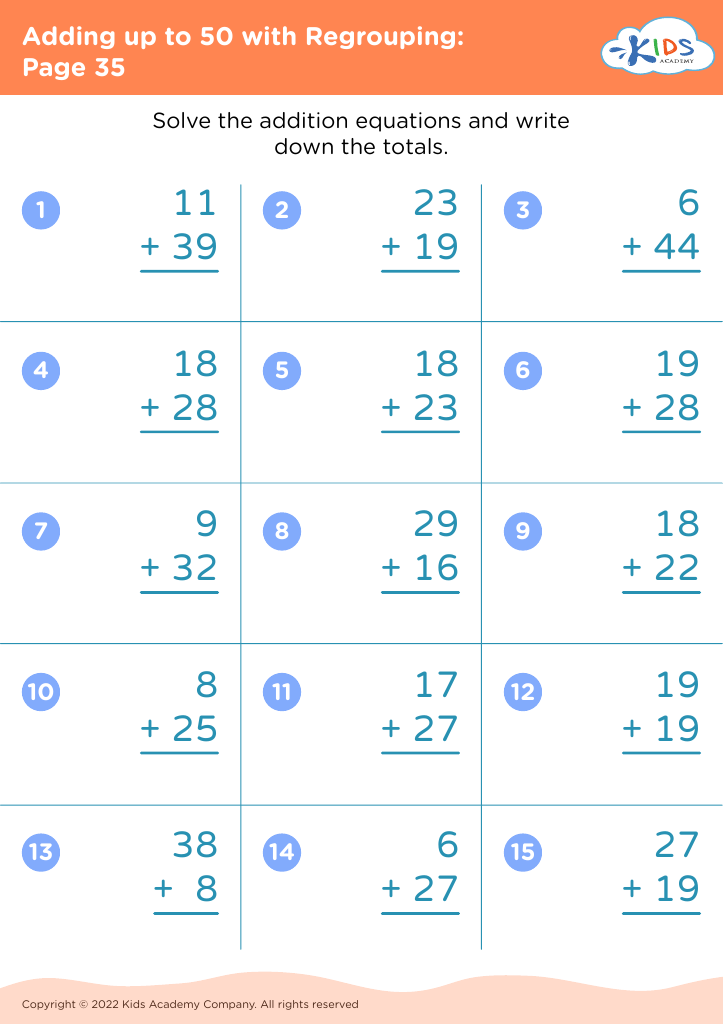
Adding up to 50 with Regrouping: Page 35
Worksheet
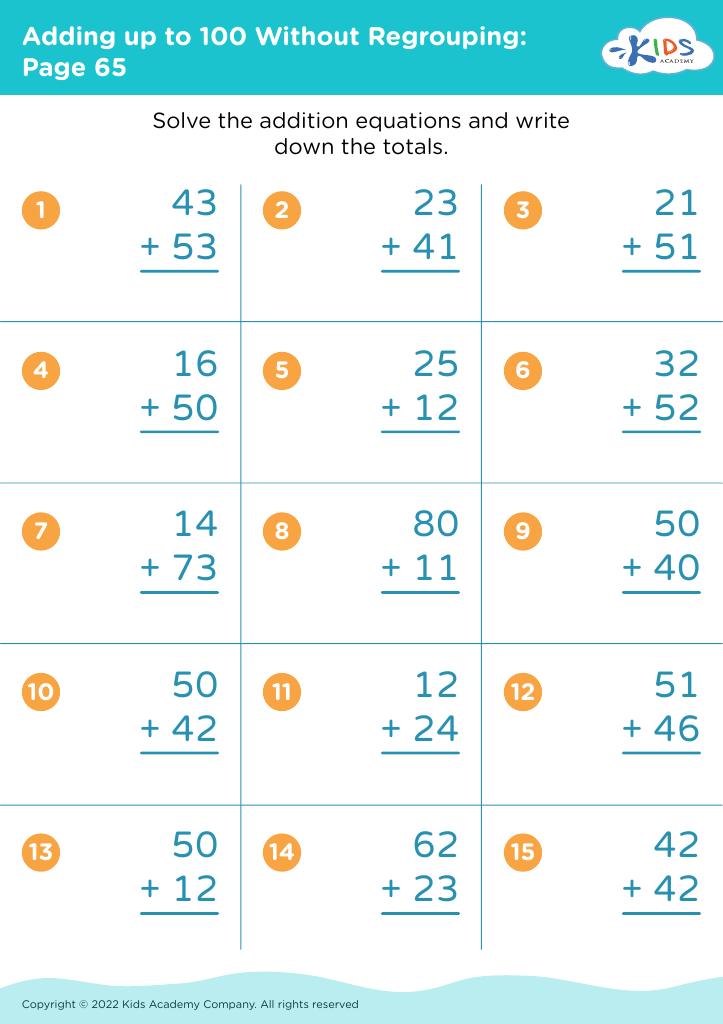
Adding up to 100 Without Regrouping: Page 65
Worksheet
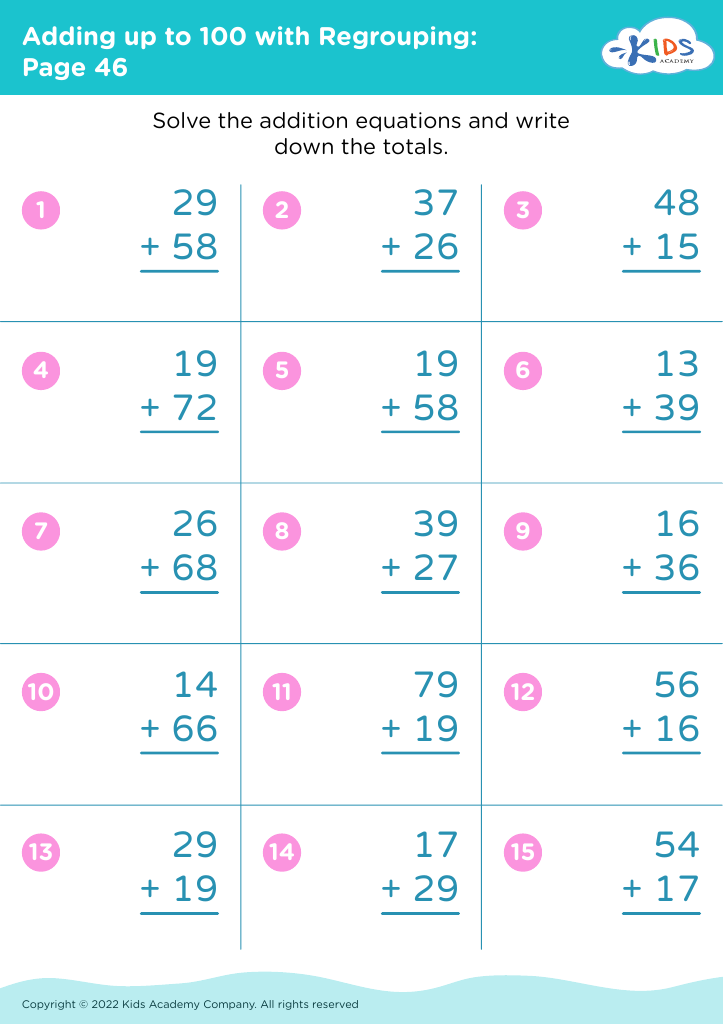
Adding up to 100 with Regrouping: Page 46
Worksheet
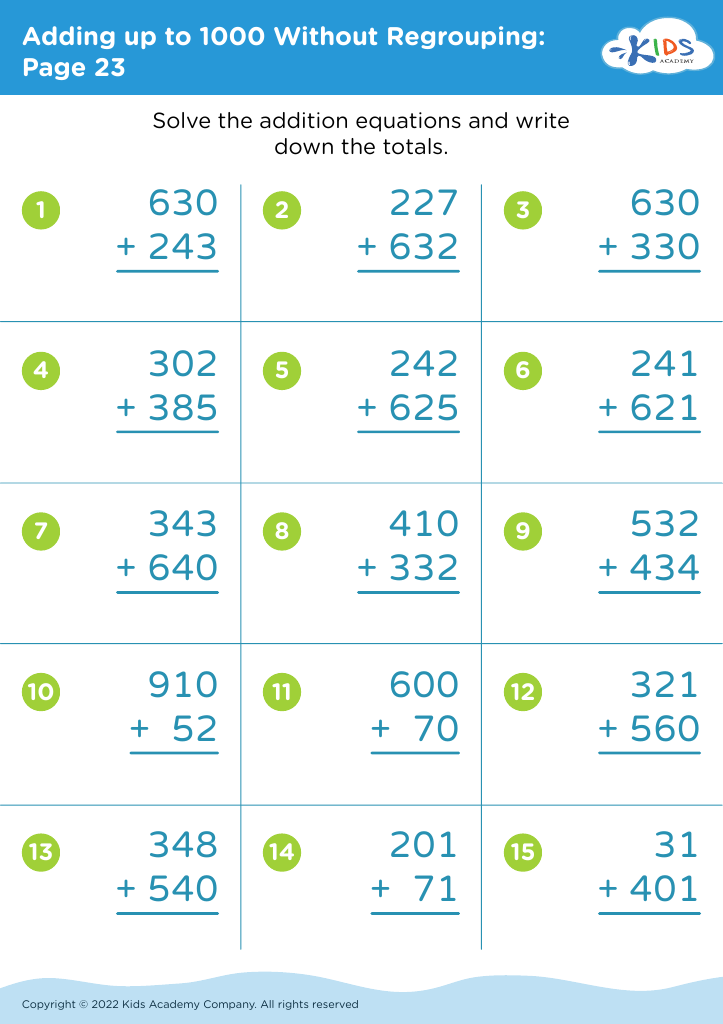
Adding up to 1000 Without Regrouping: Page 23
Worksheet
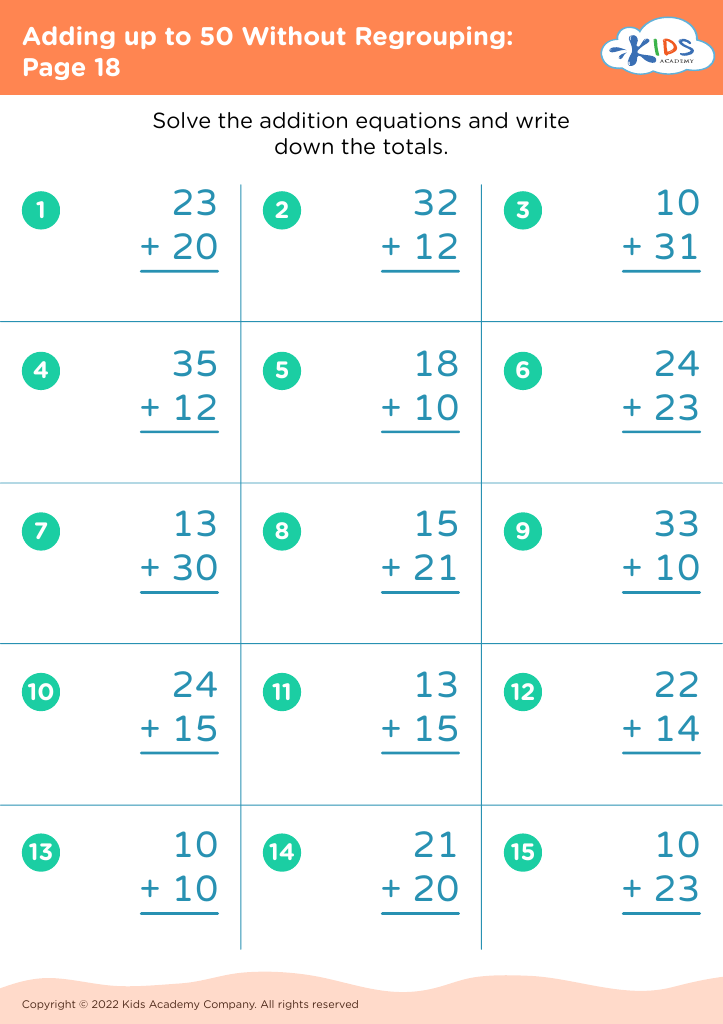
Adding up to 50 Without Regrouping: Page 18
Worksheet
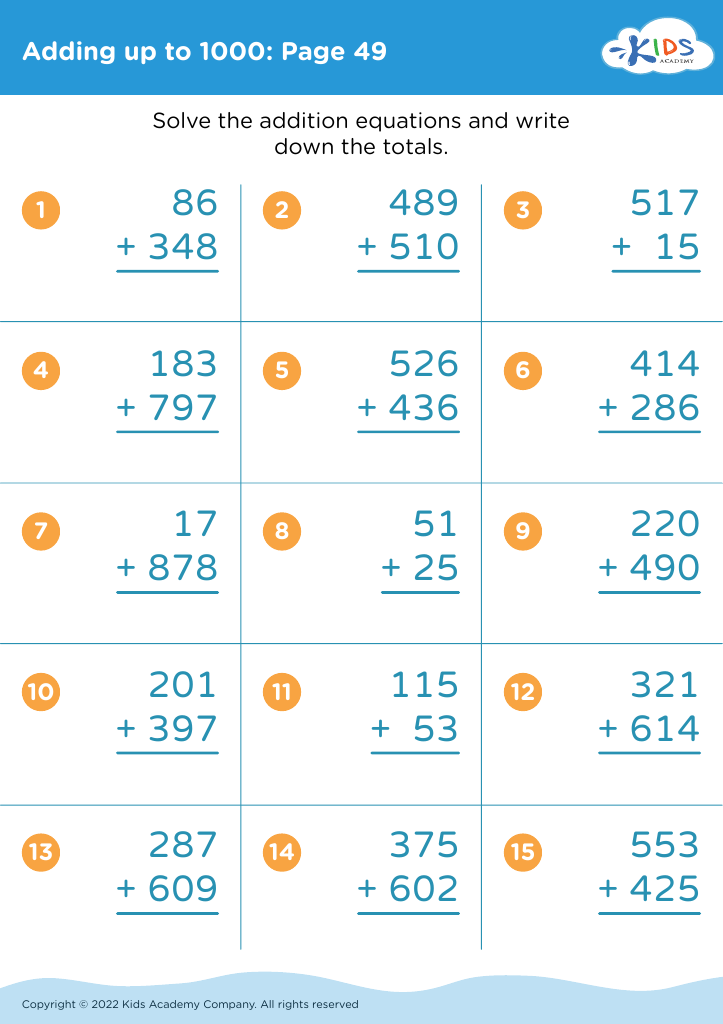
Adding up to 1000: Page 49

Adding up to 1000: Page 49

Adding up to 1000: Page 49
Worksheet
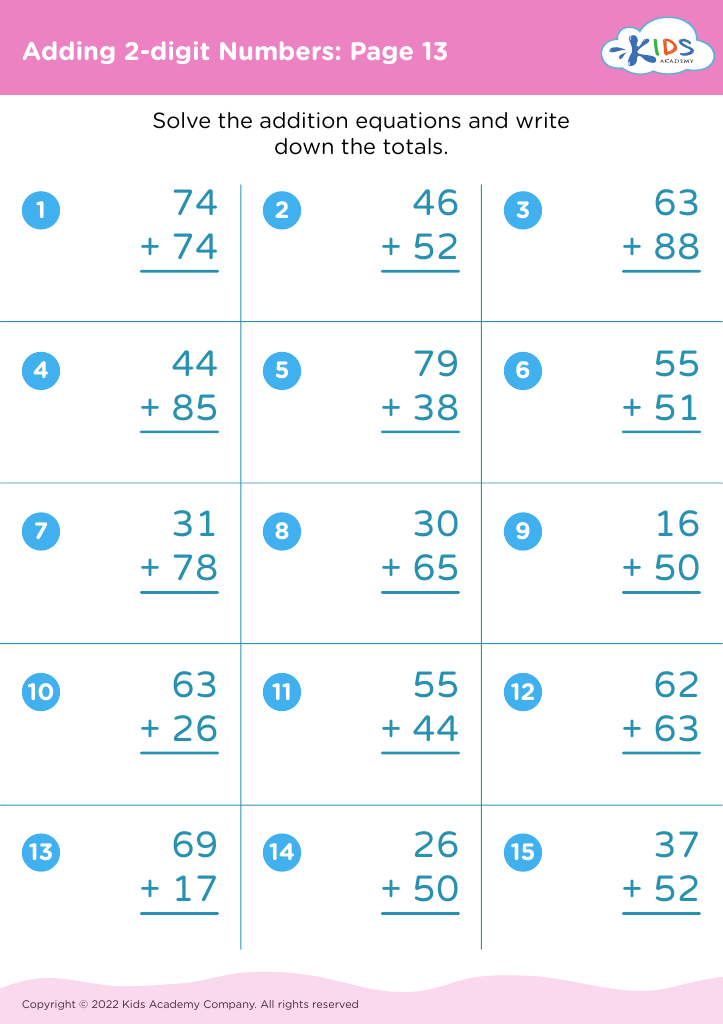
Adding 2-digit Numbers: Page 13

Adding 2-digit Numbers: Page 13

Adding 2-digit Numbers: Page 13
Worksheet
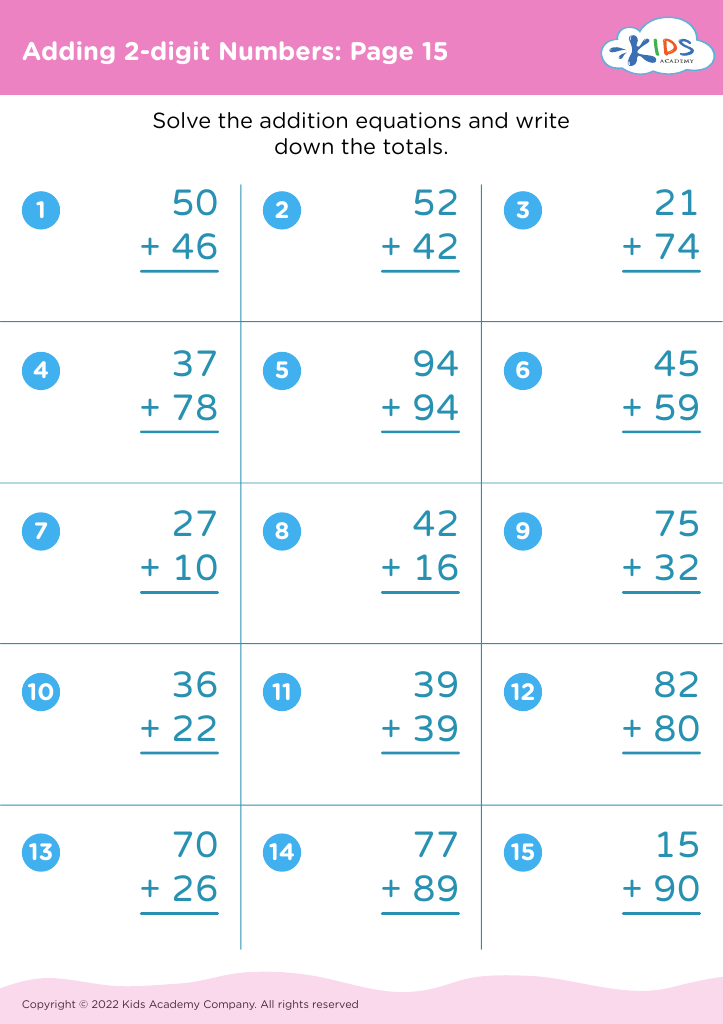
Adding 2-digit Numbers: Page 15

Adding 2-digit Numbers: Page 15

Adding 2-digit Numbers: Page 15
Worksheet


Understanding fractions during the early years, ages 4-9, is crucial because it forms the foundation for advanced math skills and everyday problem-solving. At this stage, children's minds are highly receptive to new concepts, and acquiring a solid understanding of fractions can enhance their number sense.

Fractions are integral to many aspects of daily life, ranging from dividing food portions to understanding time. Introducing them early helps children to see math in the world around them, making learning relevant and engaging. Early familiarity with fractions can prevent future mathematics anxiety as students encounter more complex operations involving fractions, decimals, and percentages.

Moreover, learning fractions improves cognitive skills such as critical thinking, reasoning, and the ability to compare and estimate. These skills are not only valuable academically but also in everyday decision-making and problem-solving.

Parents and teachers play a pivotal role by providing hands-on experiences and visual aids, such as fraction circles or everyday objects, to make the concept actionable. Therefore, a strong grasp of fractions achieved through supportive teaching strategies will pave the way for confidence and proficiency in mathematics, empowering children during their educational journey and beyond. Investing in this understanding now promotes lasting mathematical success and practical life skills.