Understanding measurements Math Worksheets for Ages 4-9 - Page 2
26 filtered results
-
From - To
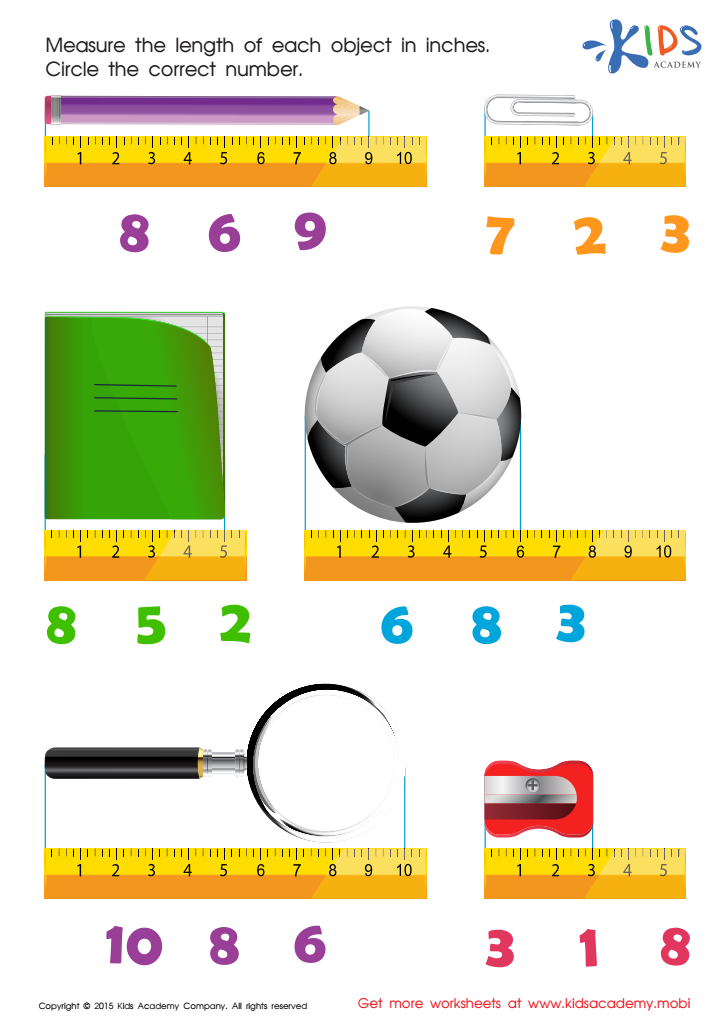
Learning measuring objects in inches Worksheet
 Assign to My Students
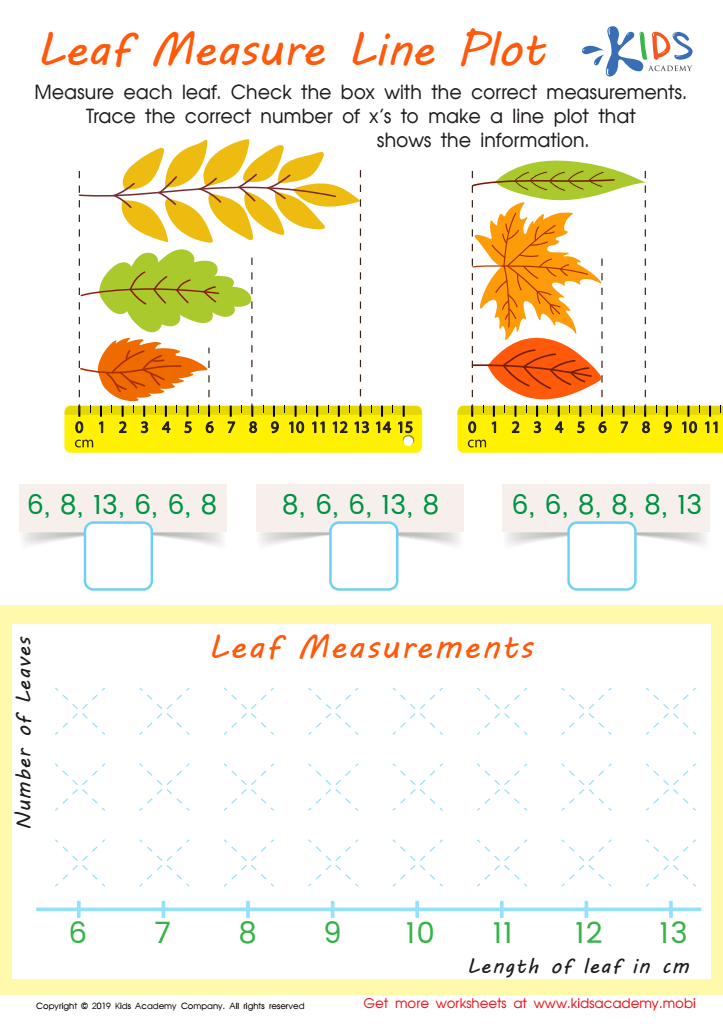
Leaf Measure Line Plot Worksheet


.jpg)



Understanding measurements in mathematics is crucial for children aged 4-9, as it lays the foundation for various key life skills and future academic success. At this age, children are naturally curious about their environment, making it an opportune time to introduce concepts of length, weight, volume, and time. When parents and teachers emphasize measurements, they foster essential problem-solving abilities and critical thinking skills.
Measuring physical objects helps children develop fine motor skills and spatial awareness, as they engage in hands-on activities that require them to manipulate tools like rulers, measuring cups, and scales. This experiential learning makes abstract mathematical concepts tangible and relatable. Furthermore, measurement activities can stimulate a child's interest in math, combating any early perceptions that numbers are merely theoretical.
Beyond academic achievement, understanding measurements equips children with everyday skills such as cooking, planning, and even budgeting, which are paramount as they grow older. Encouraging measurement skills during these formative years also builds confidence and encourages a positive attitude toward mathematics, enhancing their overall learning experience. Ultimately, fostering measurement understanding in young children serves as an important stepping stone toward becoming competent, numerically literate individuals in a rapidly changing world.








