
Visual learning enhancement Math Worksheets for Ages 4-9
9 filtered results
Difficulty Level
Grade
Age
-
From - To
Subject
Activity
Standards
Unlock your child's potential with our Visual Learning Enhancement Math Worksheets, designed specifically for ages 4-9. These worksheets utilize engaging visuals to help young learners grasp mathematical concepts through exciting, interactive activities. Kids will reinforce essential skills such as counting, addition, and subtraction while enjoying colorful graphics and relatable scenarios. Ideal for parents and educators alike, our printable resources promote a hands-on learning experience that makes math fun! Support your child's academic journey and boost their confidence in numbers through these thoughtfully crafted worksheets that cater to visual learners and enhance their understanding of foundational math concepts.
Favorites
With answer key
Interactive
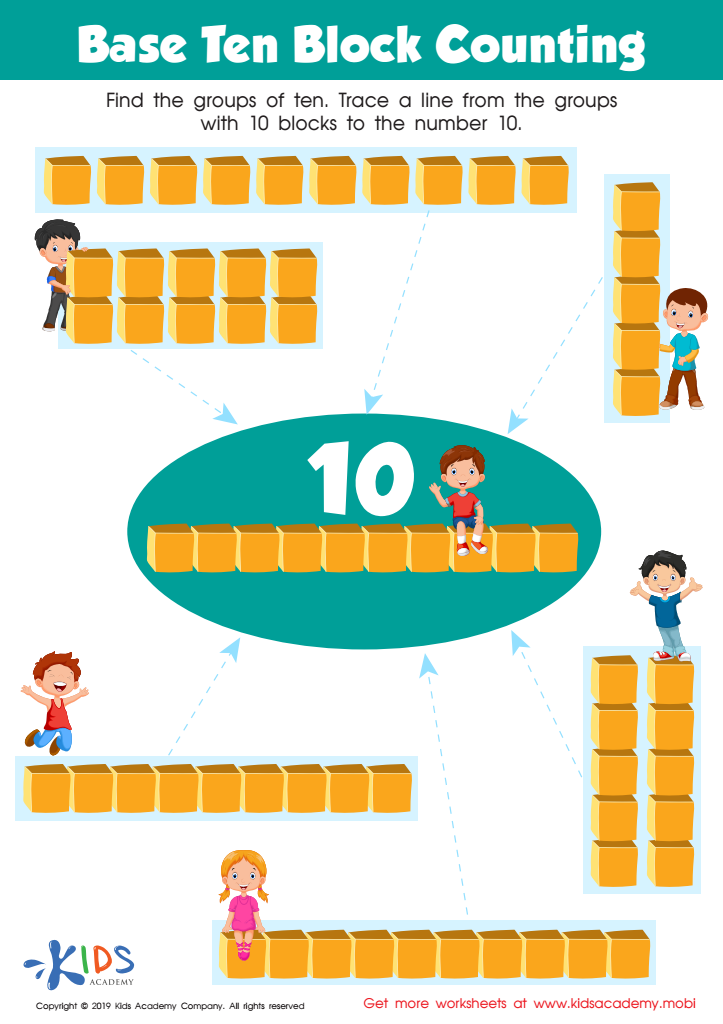
Base Ten Block Counting Worksheet
Introduce your kids to counting with educational DVDs and video games. Then use this worksheet: look at the picture and help them find the groups of ten; trace a line from the groups with 10 blocks to the number 10. This will help them practice and gain a better understanding of counting.
 Assign to My Students
Base Ten Block Counting Worksheet
Worksheet
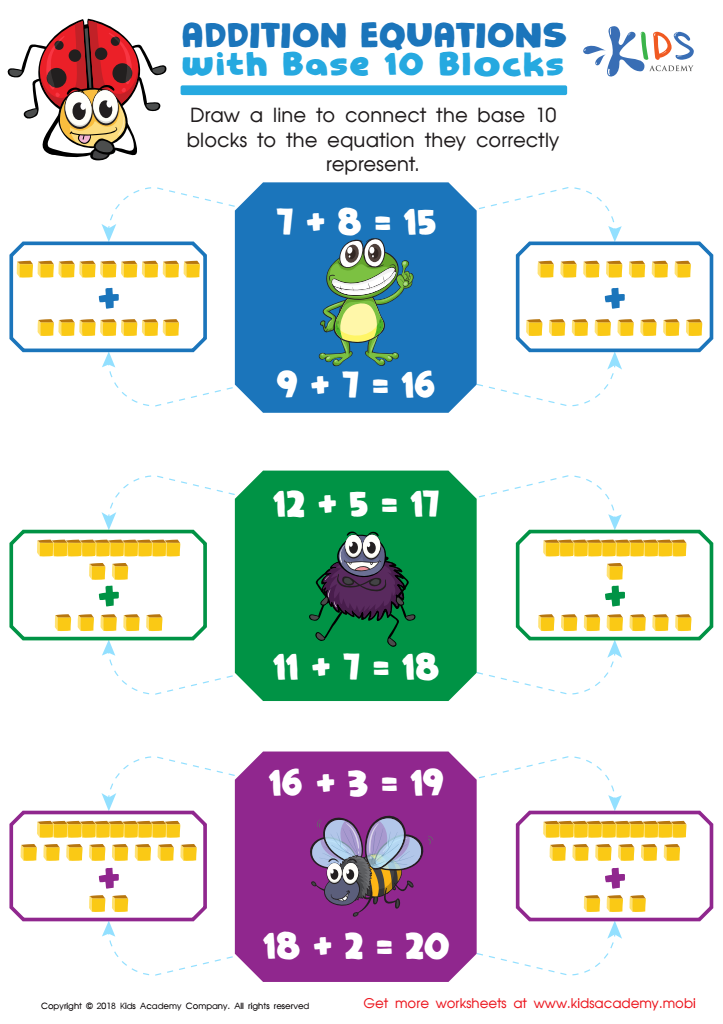
Addition Equations With Base 10 Blocks Worksheet
If your students are struggling with base 10 addition, this worksheet is here to help. Guide them with connecting the blocks to the equation with a line. It's a fun and colourful way to encourage learning.
Addition Equations With Base 10 Blocks Worksheet
Worksheet
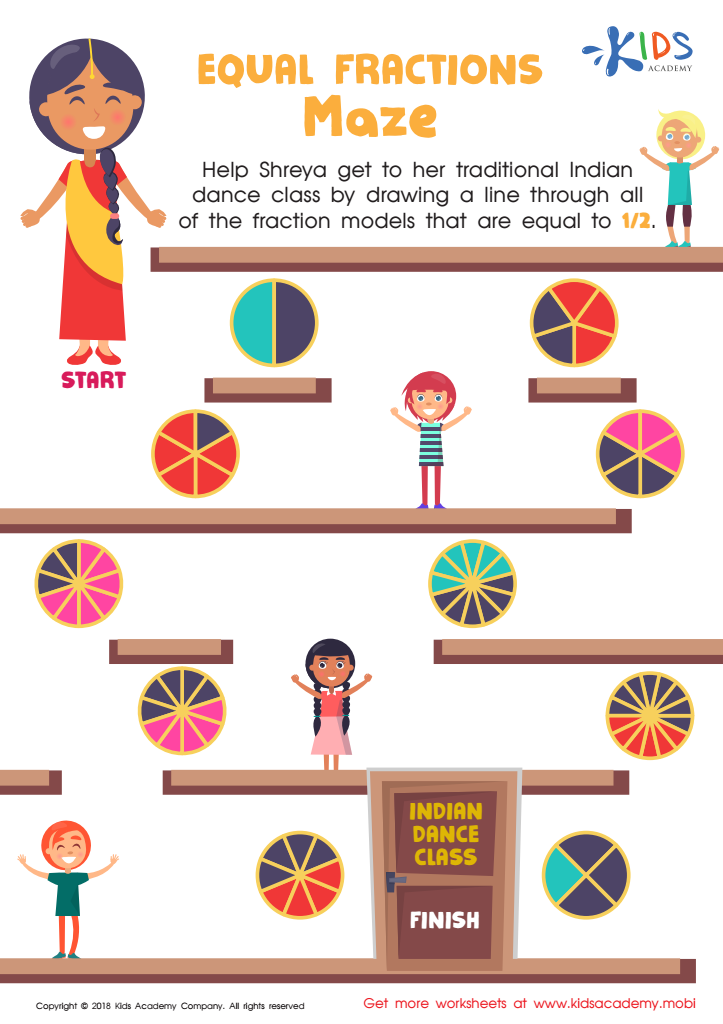
Equal Fractions Maze Worksheet
Help Shreya get to dance class! Draw a line through all fraction models that are equal to ½, starting at the entrance marked 'start'. Guide your kids through the maze paths and help Shreya -- she's an Indian girl who practices her cultures and traditions -- reach the door to her class.
Equal Fractions Maze Worksheet
Worksheet
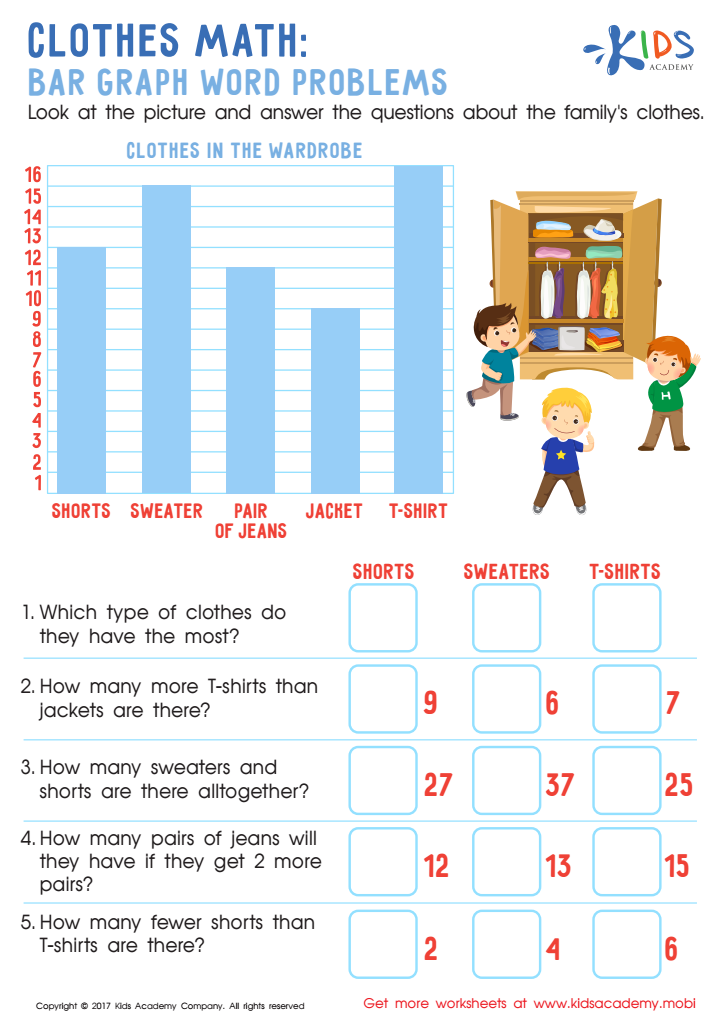
Clothes Math: Bar Graph Word Problems Worksheet
Introduce your kids to a family like theirs with this worksheet. They'll look at the picture of three children in front of a wardrobe and the graph of clothes inside. Ask them questions about the number of items like jeans, sweaters, shorts, jackets, and t-shirts. Let them explore their understanding of counting and family similarity.
Clothes Math: Bar Graph Word Problems Worksheet
Worksheet
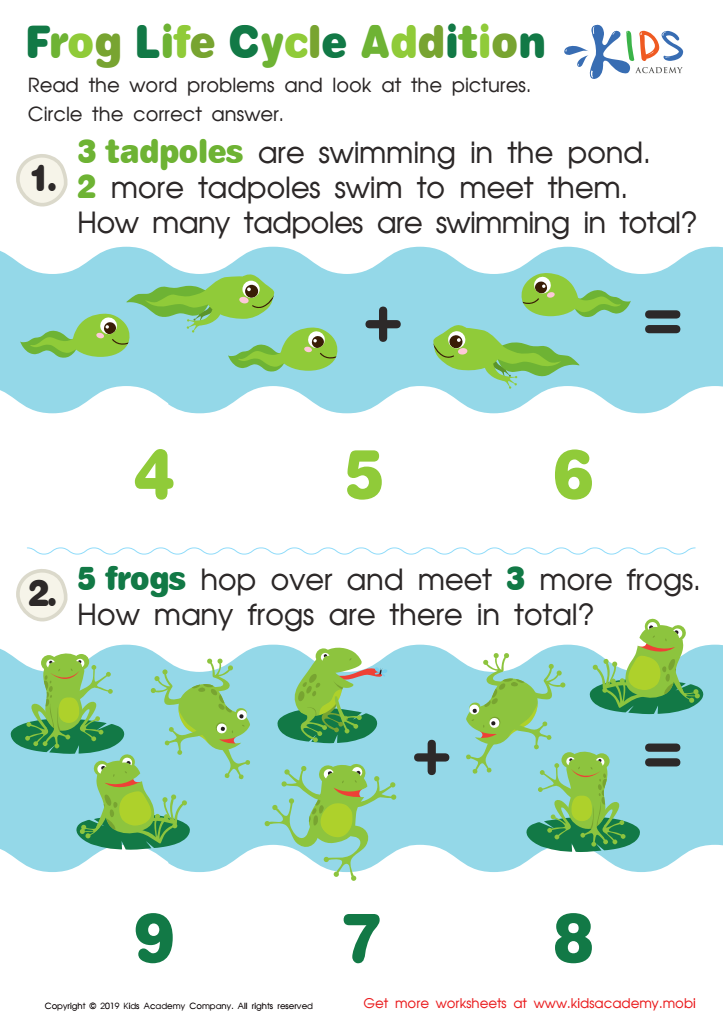
Frog Life Cycle Addition Worksheet
Look at this worksheet with your kids. Read the two word problems aloud, pointing at the pictures showing the frog's life cycle. Help your kids add simple equations and circle the correct answer. Fascinating creatures, frogs go through a cycle before becoming an adult.
Frog Life Cycle Addition Worksheet
Worksheet
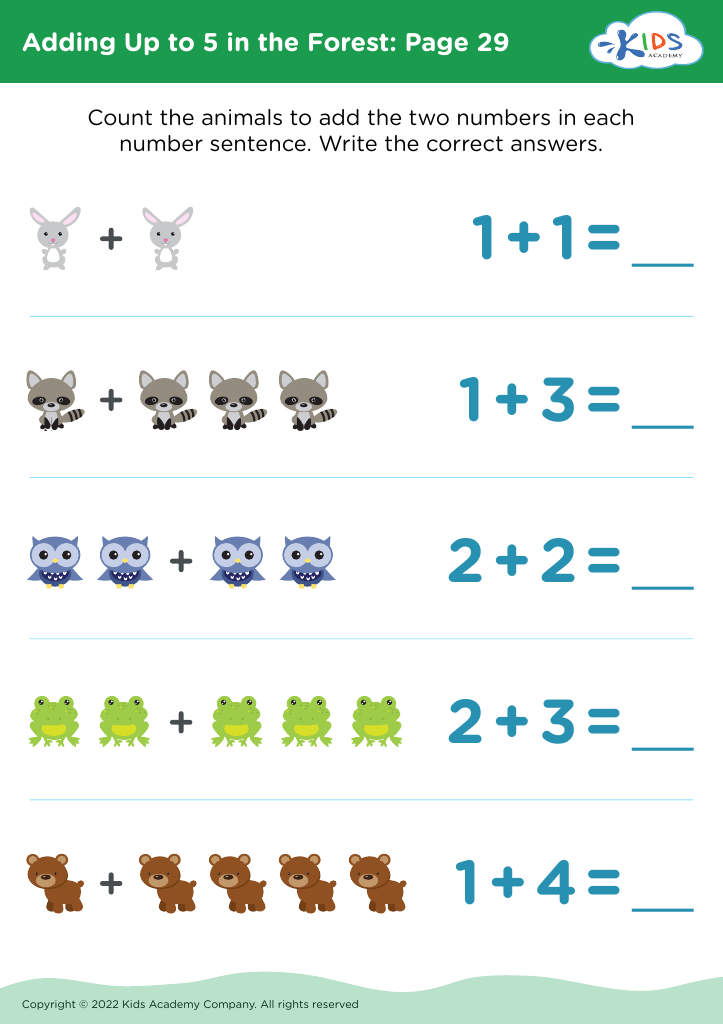
Join Kids Academy for Free
Who is primarily going to use this learning content?




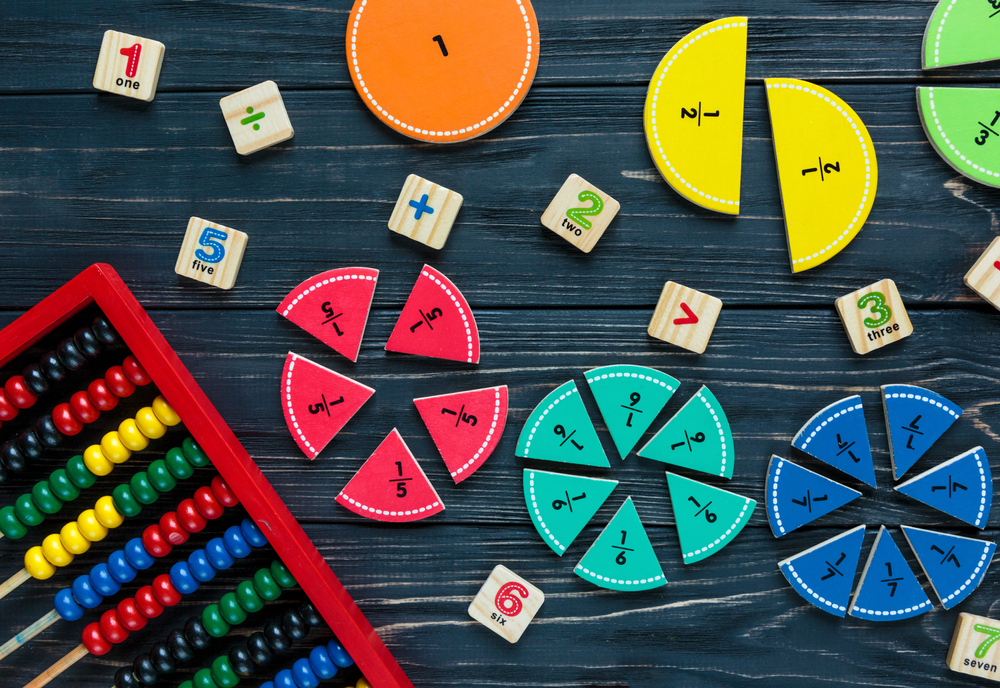



Visual learning enhancement in math for children aged 4-9 is vital for several reasons. During this developmental stage, children are naturally curious and learn best through engaging, hands-on experiences. Visual tools, such as pictures, diagrams, and manipulatives, cater to their need to see and touch concepts, making abstract mathematical ideas more concrete and understandable.
Introducing visual learning techniques can significantly aid cognitive development, promoting critical thinking and problem-solving skills. When children visualize mathematical concepts, they grasp relationships and patterns, making it easier to understand addition, subtraction, and basic geometry. This foundational understanding is crucial as it sets the stage for more complex mathematics in later years.
Moreover, visual learning boosts motivation and engagement. Children are generally more willing to participate in activities that incorporate visual elements, helping them sustain interest over time. For parents and teachers, adopting these approaches ultimately fosters a love for math, reducing anxiety around the subject that can develop as they progress in their education.
In summary, nurturing visual learning in math for young learners not only enhances their comprehension and retention of mathematical concepts but also instills a positive attitude towards learning that lasts a lifetime.








