Understanding place values Place Value Worksheets for Ages 4-9
11 filtered results
-
From - To
Help your child master the foundational concept of place values with our expertly designed Place Value Worksheets for ages 4-9! Kids Academy brings engaging resources to foster your child's understanding of units, tens, hundreds, and beyond. With fun activities and colorful graphics, our worksheets make learning feel like a game, ensuring your young mathematician remains enthusiastic and confident. Through structured exercises, students build essential skills crucial for future math success. Perfect for both classroom and at-home practice, our printable worksheets cater to your child’s learning pace, making grasping place values a seamless and enjoyable experience.
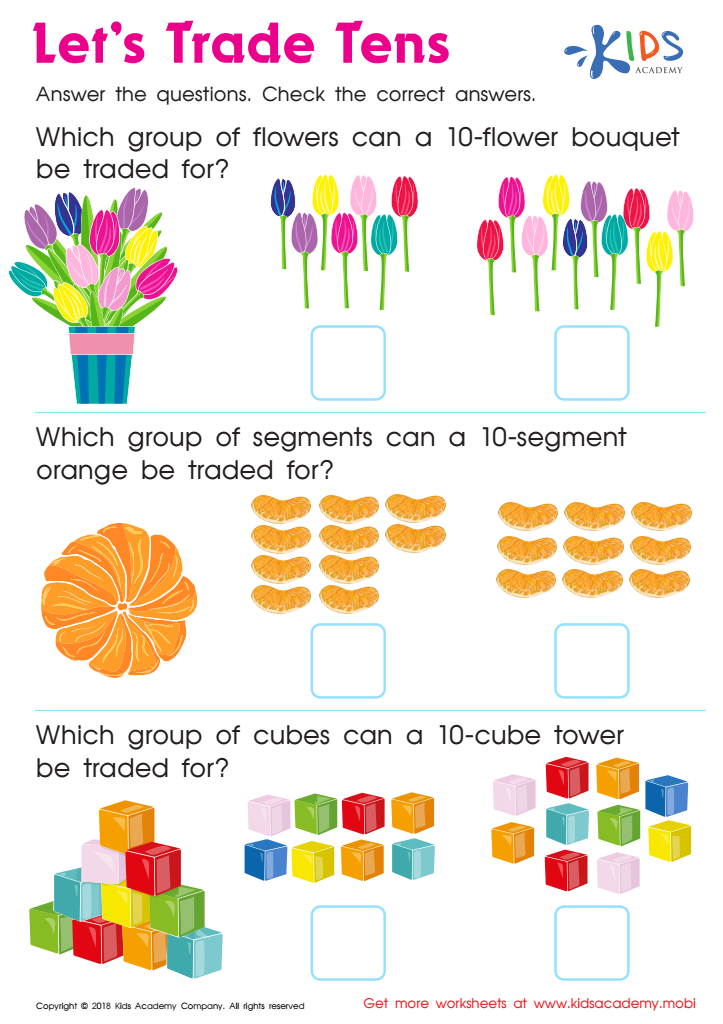
Lets Trade Tens Worksheet
 Assign to My Students
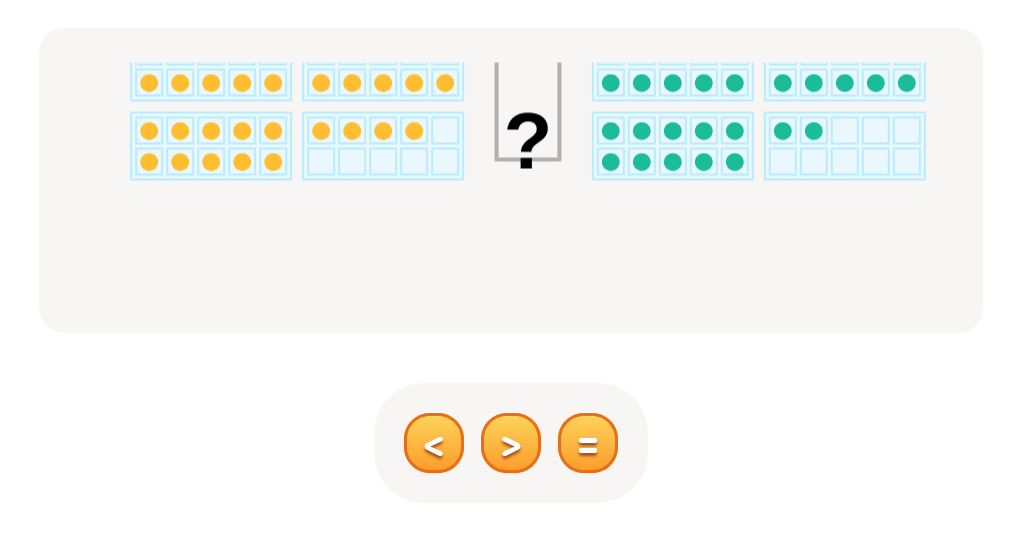

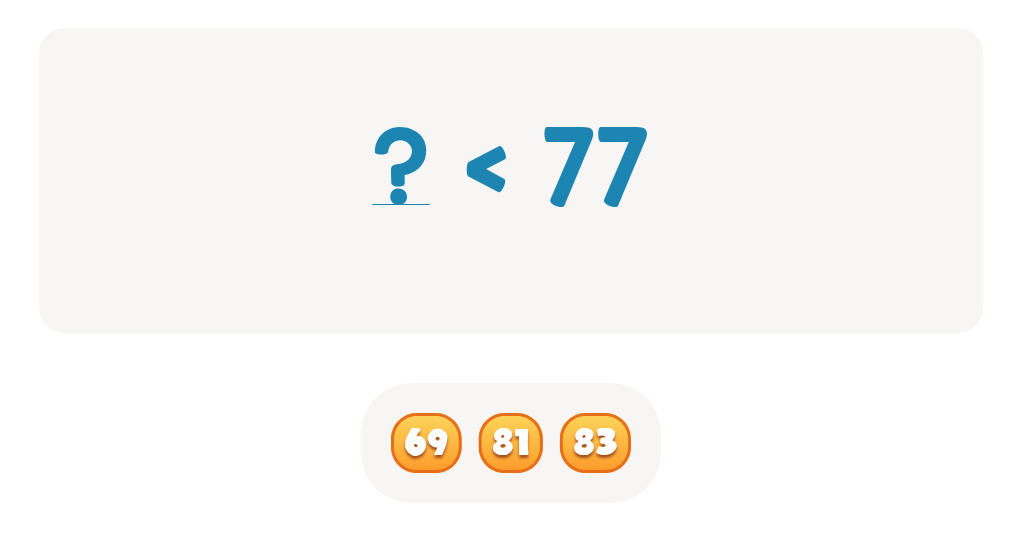
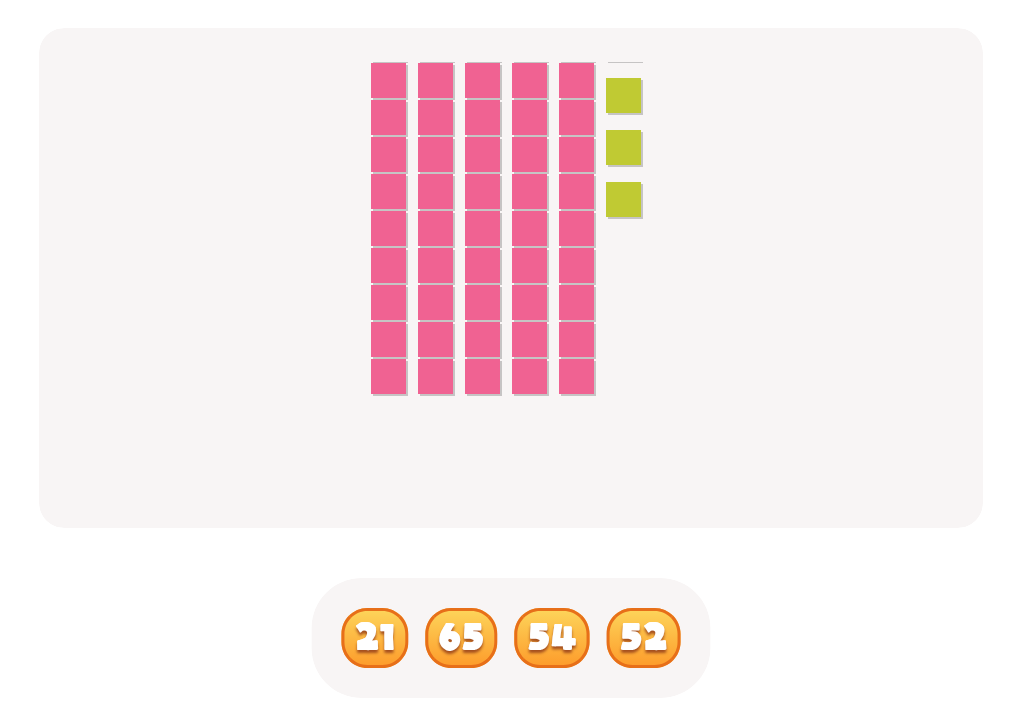
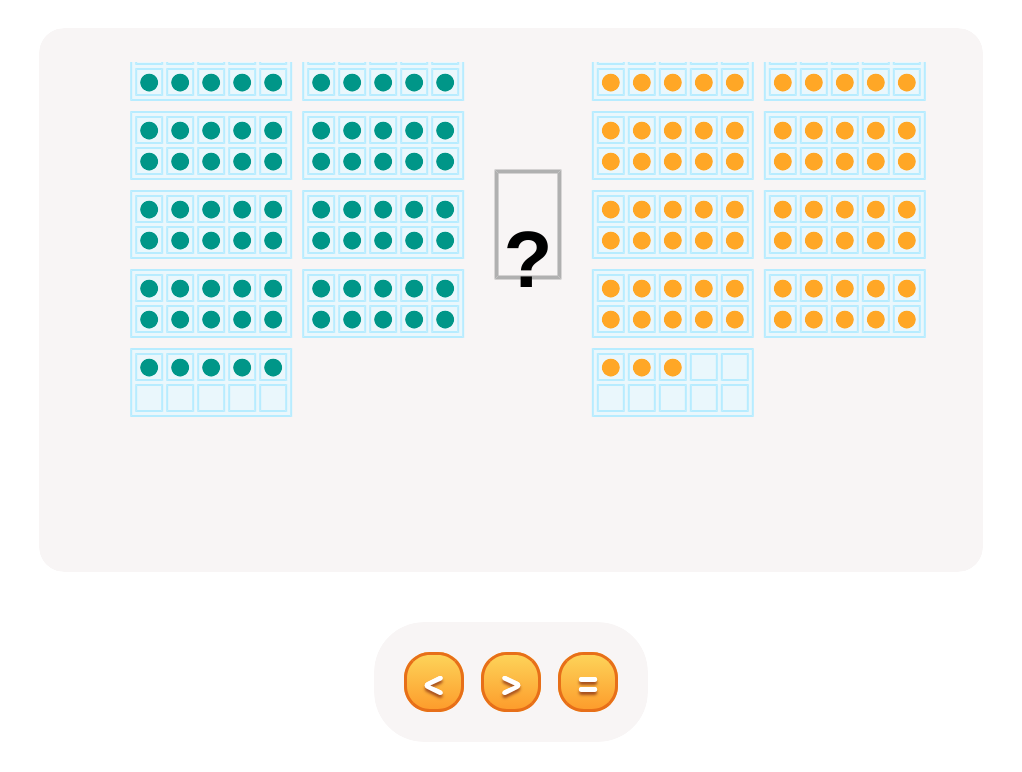
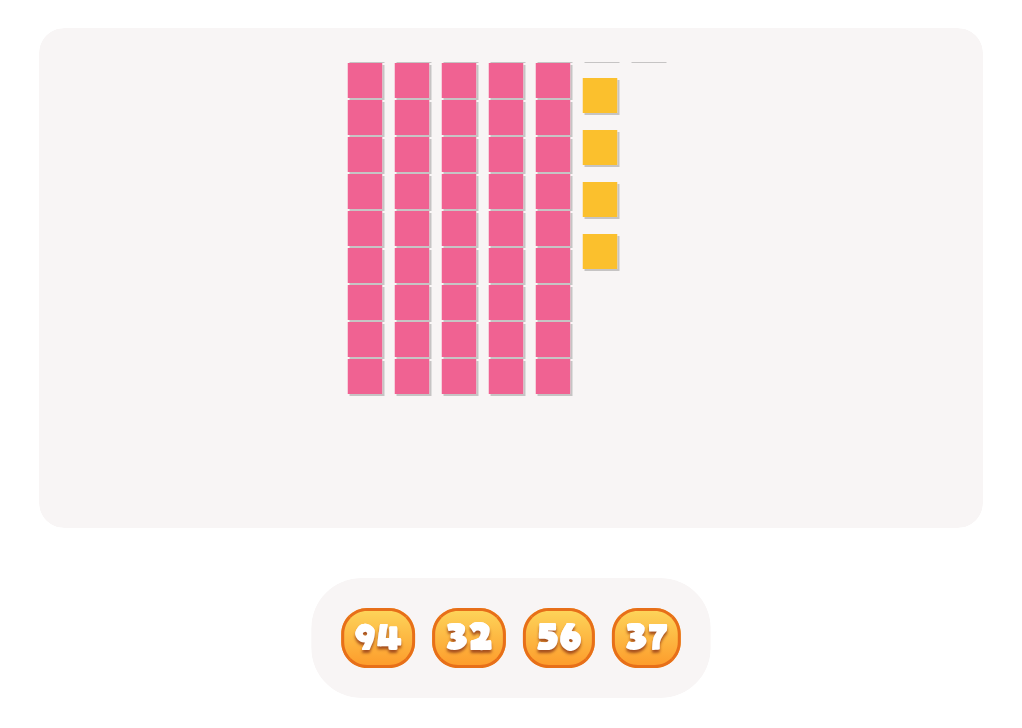
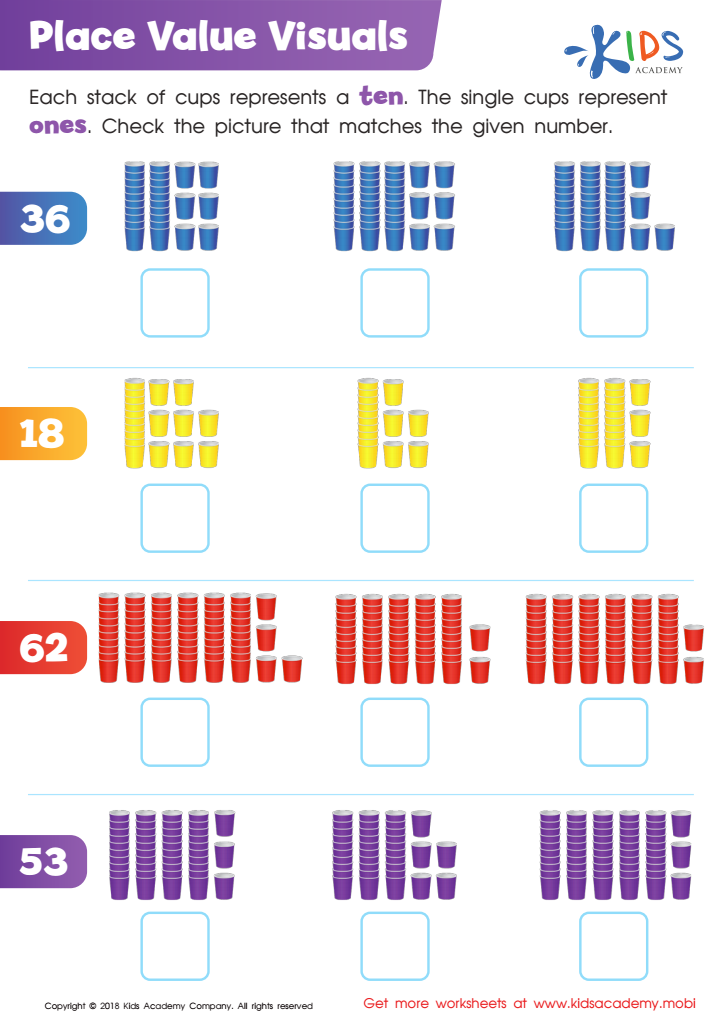
Place Value Visuals Worksheet
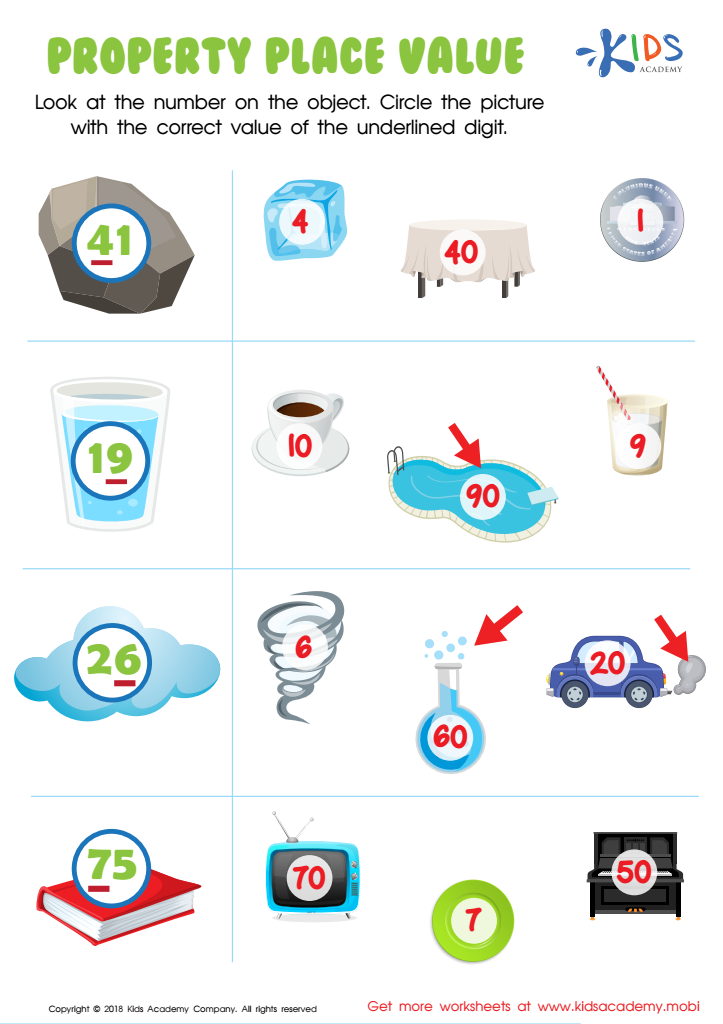
Property Place Value Worksheet
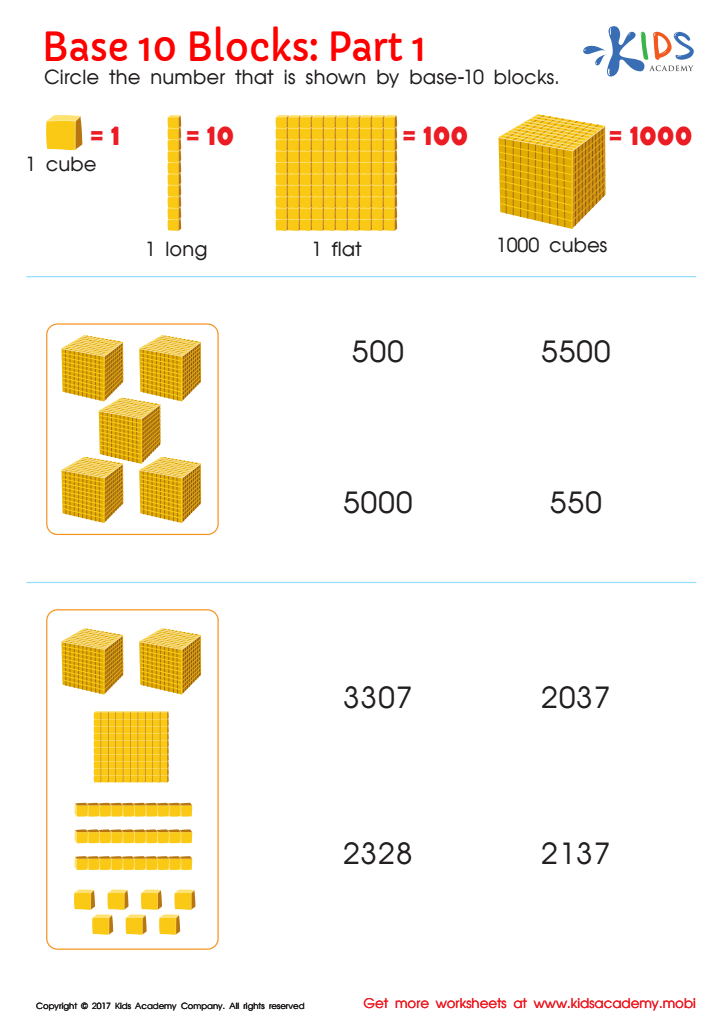
Place Value Thousands Worksheet
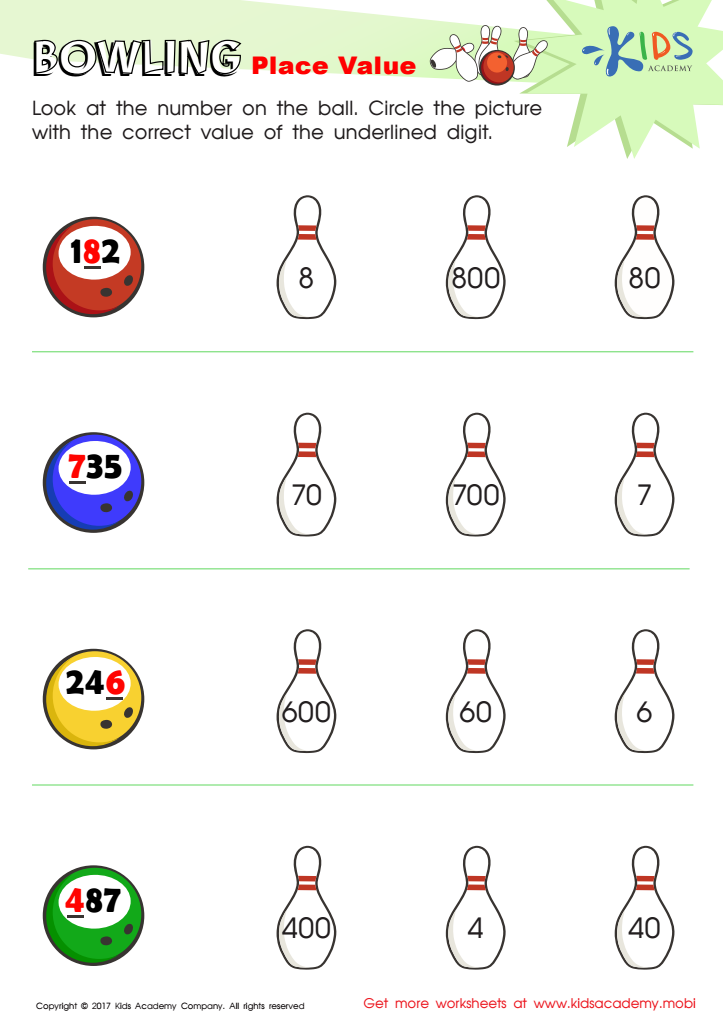
Place Value Worksheet
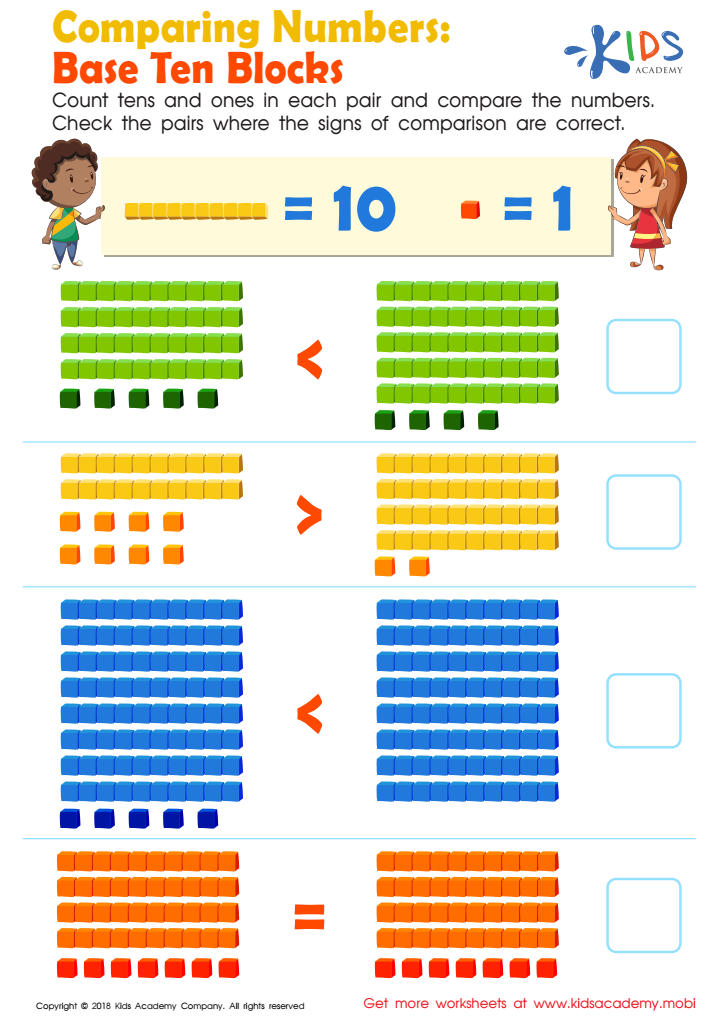
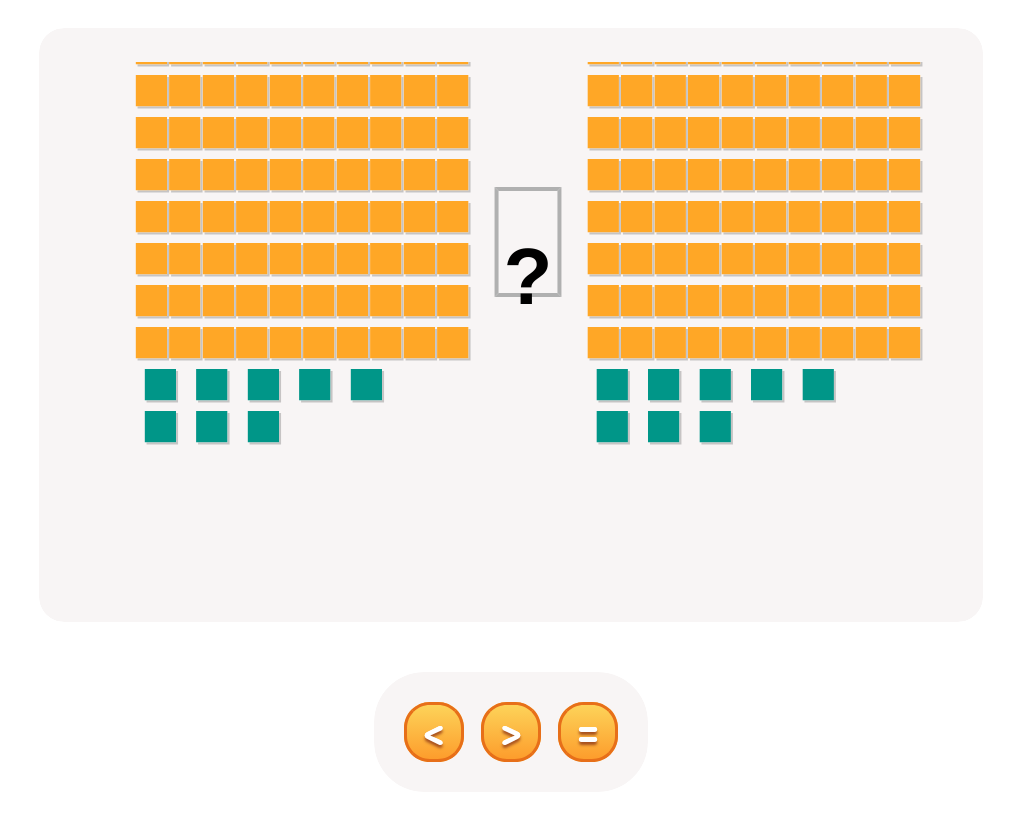
Comparing Numbers: Base Ten Blocks Worksheet
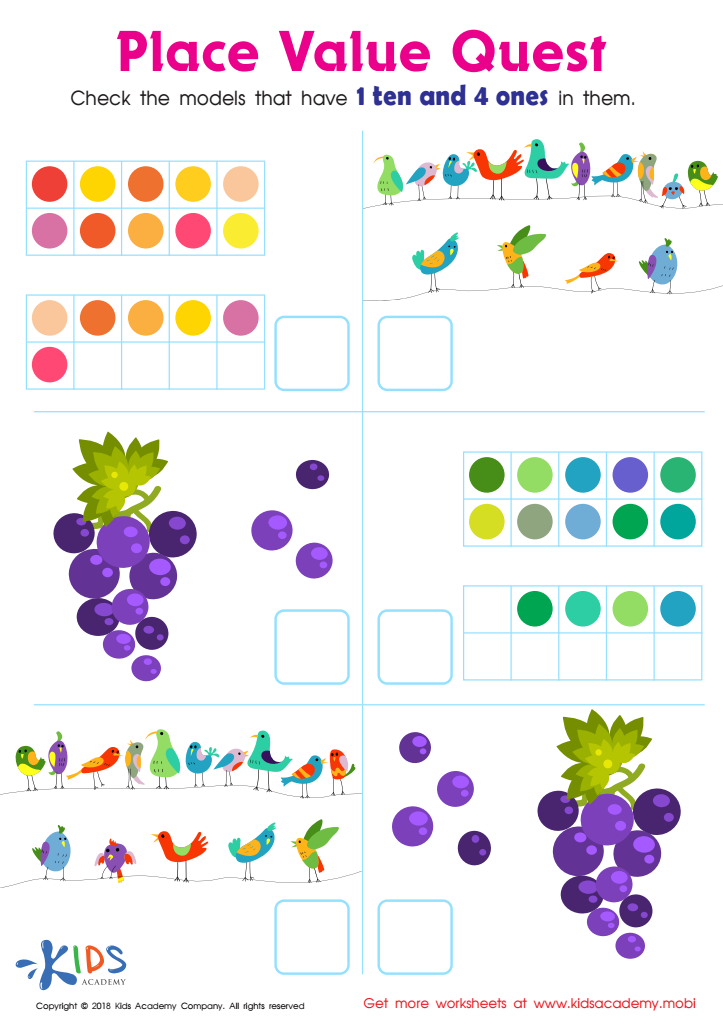
Place Value Quest Worksheet
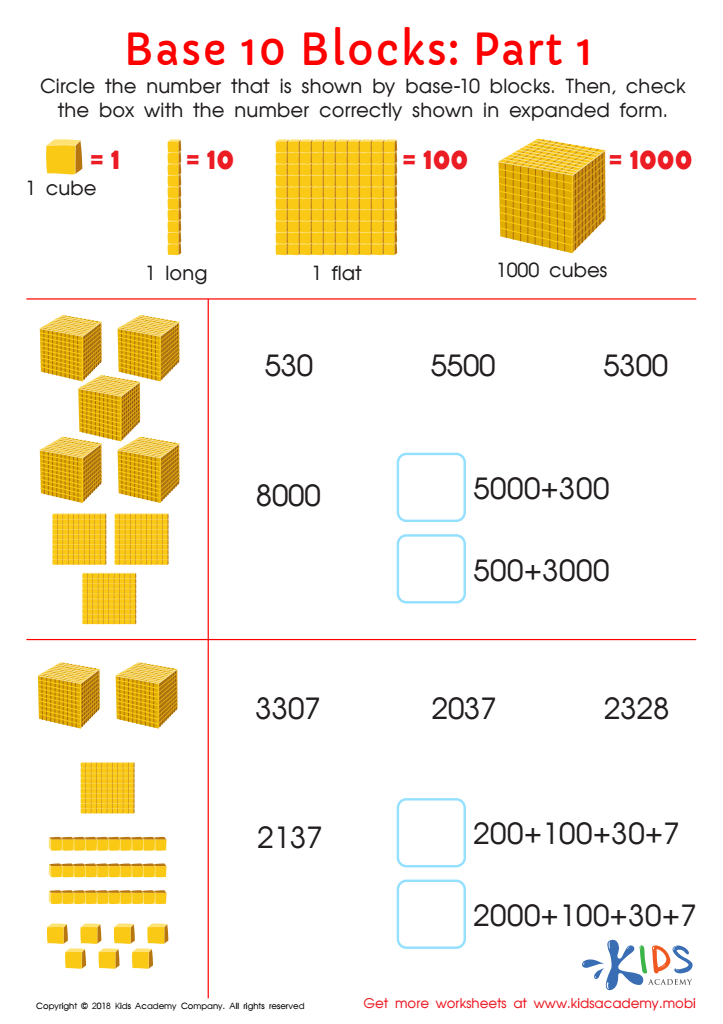
Base 10 Blocks Worksheet: Part 1
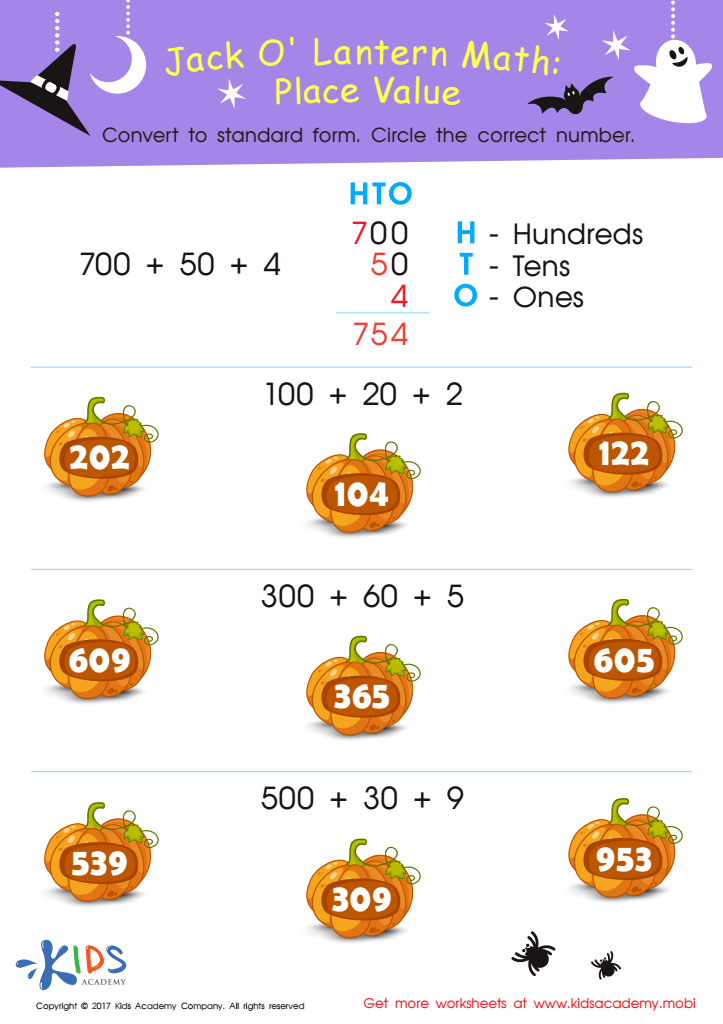
Free Place Value Worksheet
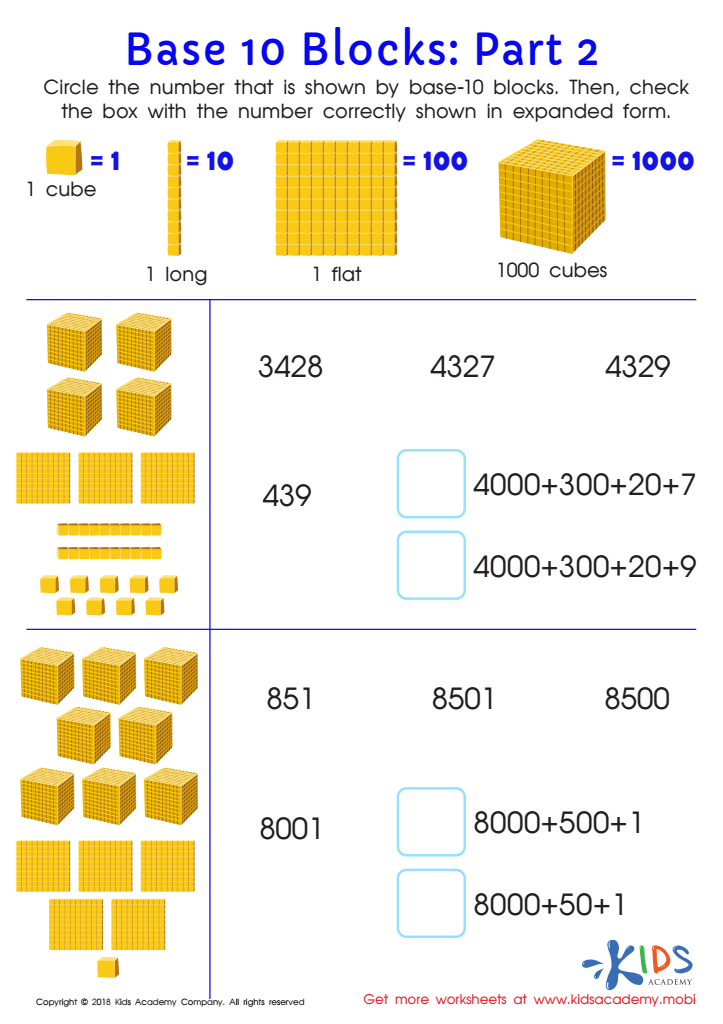
Base 10 Blocks Worksheet: Part 2
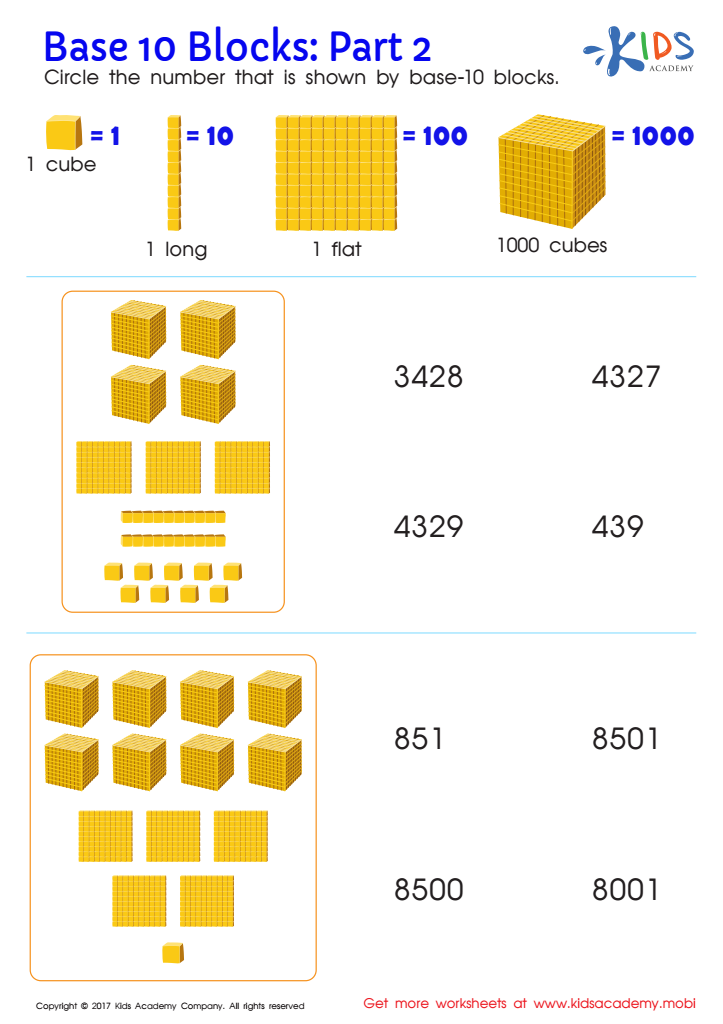
Place Value Worksheet: Thousands








Understanding place value is fundamental for children aged 4-9, as it sets the groundwork for more advanced mathematical skills. Place value is the concept that the position of a digit in a number determines its value (e.g., in the number 543, the digit 5 represents 500 due to its position). Here’s why parents and teachers should prioritize this foundational concept:
-
Numerical Literacy: Grasping place value aids children in recognizing how numbers work. It transforms a confusing string of digits into organized, comprehensible units, enhancing their overall numerical literacy.
-
Arithmetic Skills: Place value is crucial for performing addition, subtraction, multiplication, and division accurately. Understanding the magnitude of digits in different positions helps kids carry out these operations correctly and with confidence.
-
Problem-Solving: A solid understanding of place value sharpens problem-solving skills. Children learn to break down complex numbers into simpler components, making it easier to tackle more complicated math problems as they advance in their education.
-
Future Readiness: As students progress to higher grades, math concepts build on one another. Establishing a strong foundation in place value prepares them for future topics such as fractions, decimals, and algebra.
By emphasizing place value, parents and teachers can ensure sustainable math comprehension, instilling boost confidence, and a genuine interest in mathematics among young learners. This foundational knowledge paves the path for educational success.