Basic arithmetic skills Word Problems Worksheets for Ages 4-9
4 filtered results
-
From - To
Welcome to our collection of Basic Arithmetic Skills Word Problems Worksheets, specially designed for ages 4-9! These engaging worksheets help young learners practice essential math concepts such as addition, subtraction, multiplication, and division through fun, real-life scenarios. By solving entertaining word problems, children will enhance their critical thinking, comprehension, and problem-solving abilities while building a solid foundation in arithmetic. Our resources cater to various skill levels, ensuring that every child can progress at their own pace. Explore our thoughtfully crafted worksheets to make math enjoyable and accessible for your little ones, setting them on the path for mathematical success!
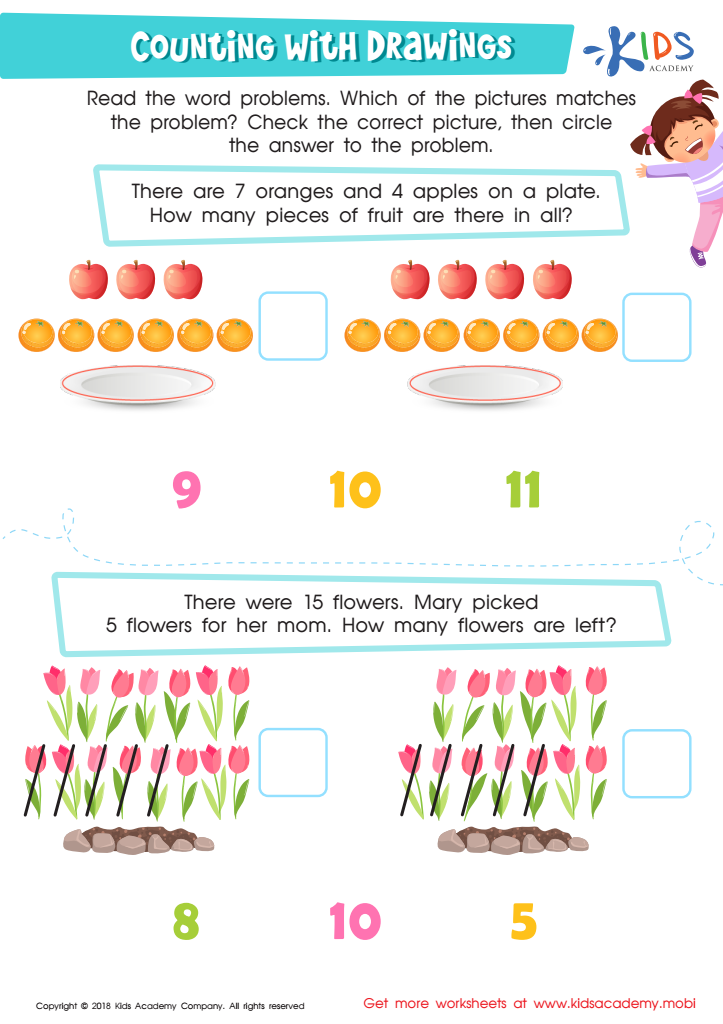
Counting with Drawings: Fruits & Chocolates Worksheet
 Assign to My Students
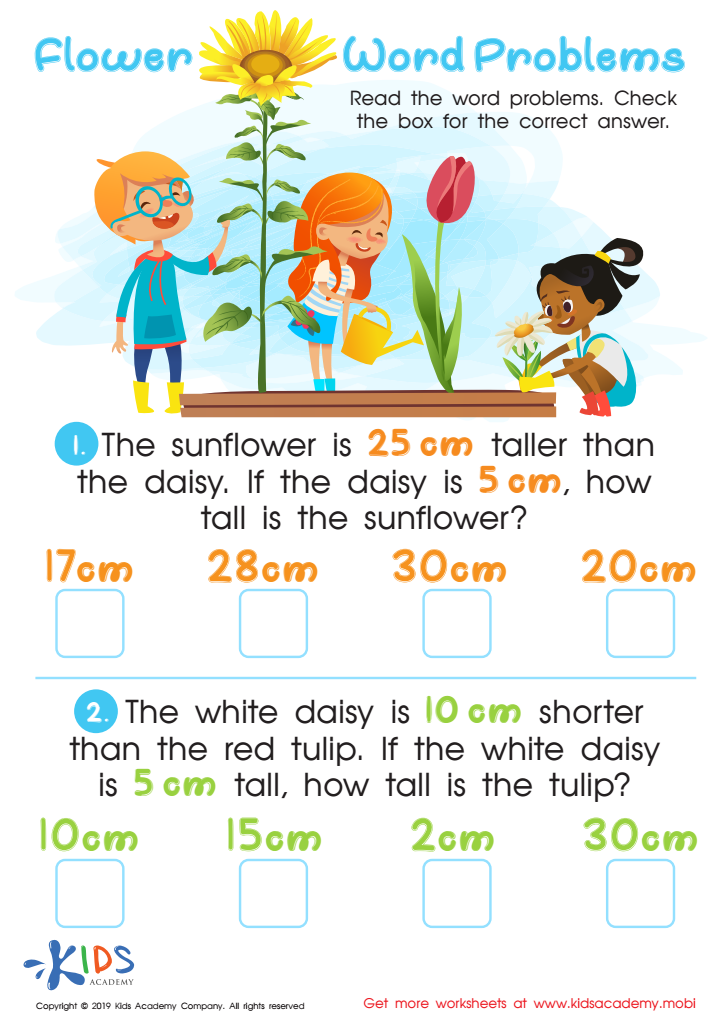
Flower Word Problems Worksheet
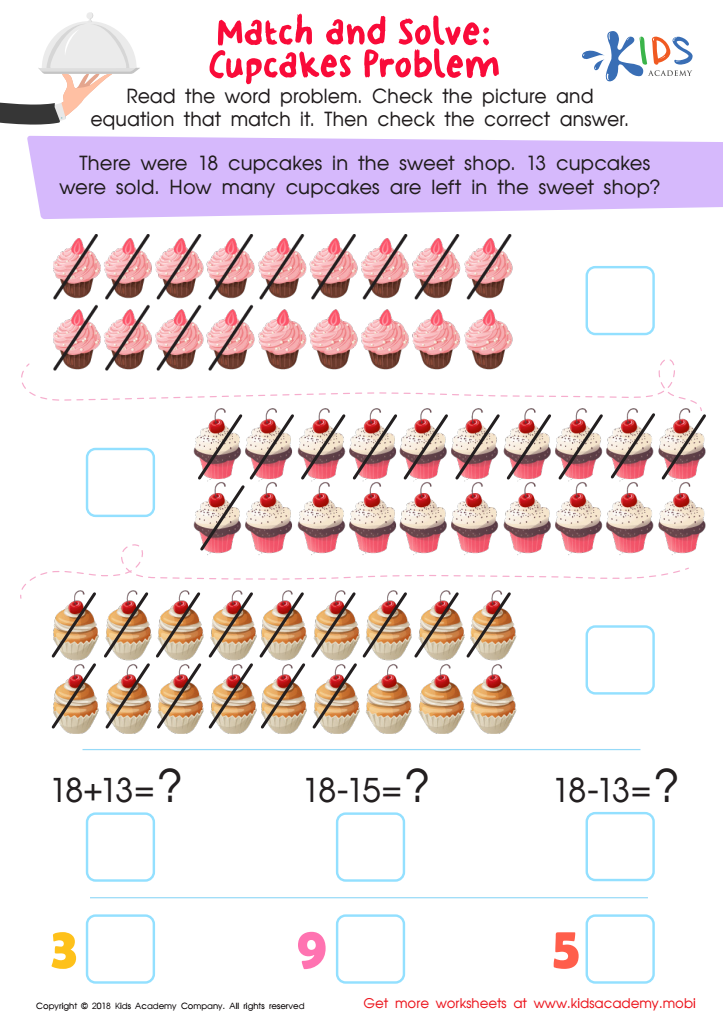
Match and Solve: Cupcakes Problem Worksheet
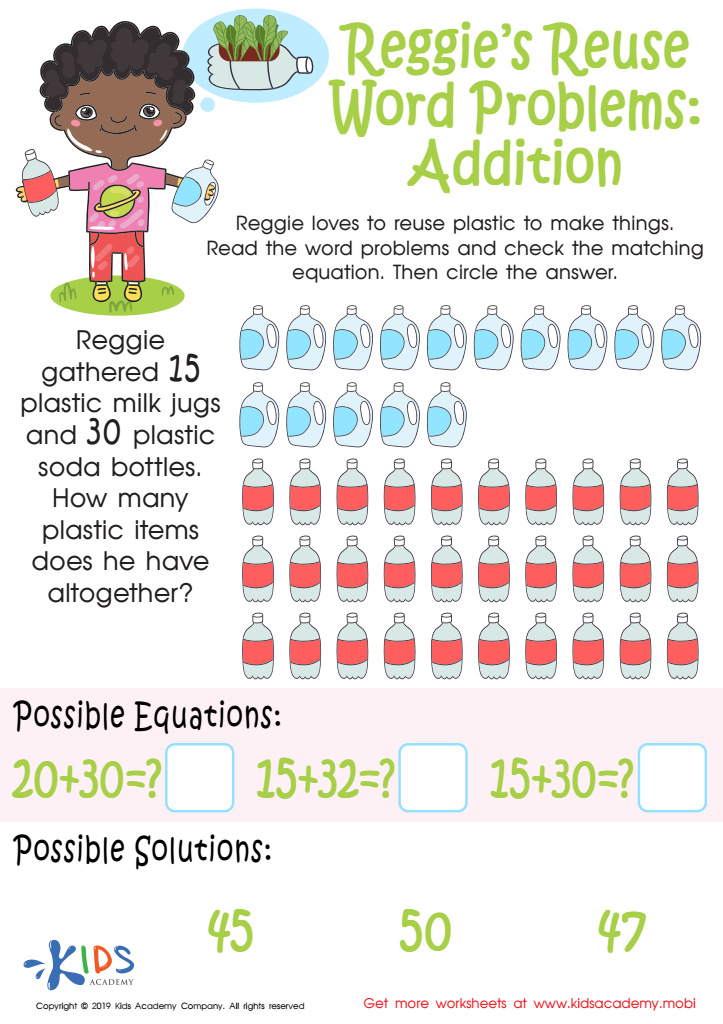
Reggie's Reuse Word Problems: Addition Worksheet








Basic arithmetic skills through word problems are essential for children aged 4-9 because they lay a foundation for critical thinking, problem-solving, and real-world application of math concepts. As young learners engage with word problems, they learn to decipher language, understand situations, and identify mathematical operations required to find solutions. This activity enhances their comprehension skills, enabling them to relate numeric concepts to everyday experiences—like sharing toys or counting fruits.
Moreover, problem-solving fosters resilience, as children learn to approach challenges systematically. Mastery of these skills builds confidence, which is fundamental as they progress to more complex mathematical concepts. Early exposure also helps identify any learning difficulties that may develop, allowing for timely interventions.
For parents and teachers, nurturing these skills is pivotal in shaping a child's attitude towards math. A positive experience in early education sets the stage for lifelong learning and willingness to tackle challenging subjects. Encouraging children to explore word problems cultivates curiosity, making math a fun and engaging subject rather than a daunting one. Ultimately, developing basic arithmetic problem-solving skills in young learners is crucial not only for academic success but also for practical life skills they will use outside the classroom.








