Logical Reasoning Building Vocabulary Worksheets for Ages 4-9
8 filtered results
-
From - To
Unlock the power of critical thinking with our Logical Reasoning Building Vocabulary Worksheets designed for ages 4-9. These engaging, age-appropriate worksheets provide an excellent way for young learners to expand their vocabulary while enhancing their logical reasoning skills. Through fun and interactive activities, children will practice identifying relationships, distinguishing differences, and making connections between words. Perfect for home or classroom use, our worksheets support language development and cognitive growth, setting a solid foundation for future learning. Foster curiosity and analytical thinking in your child today with our comprehensive collection of logical reasoning vocabulary exercises.
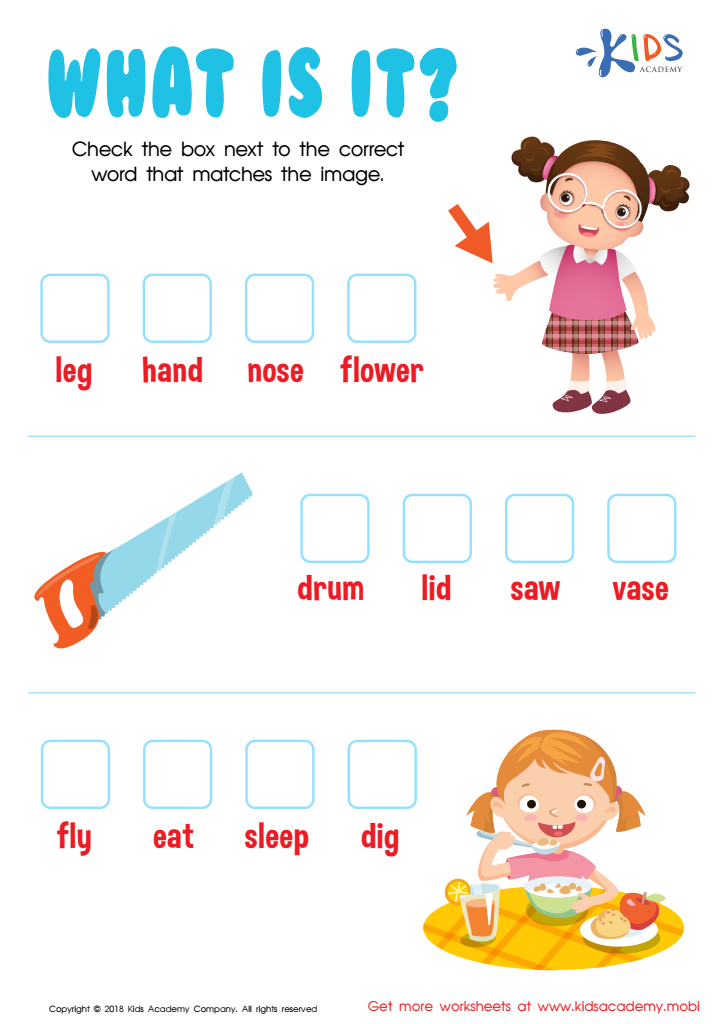
What Is It? Worksheet
 Assign to My Students











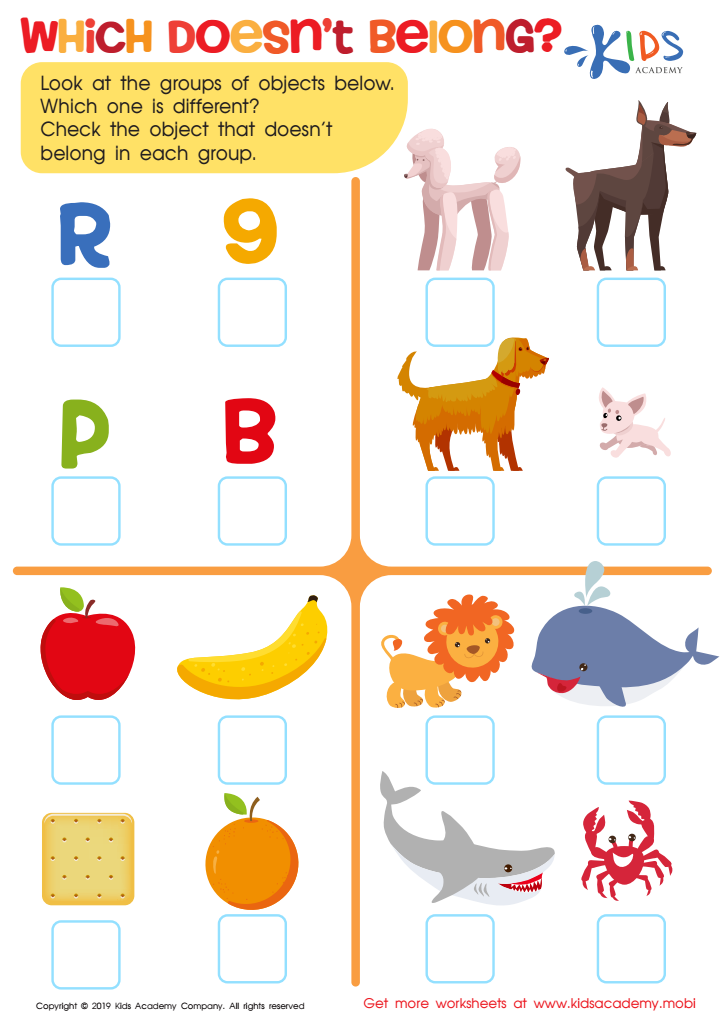
Which Doesn't Belong? Worksheet
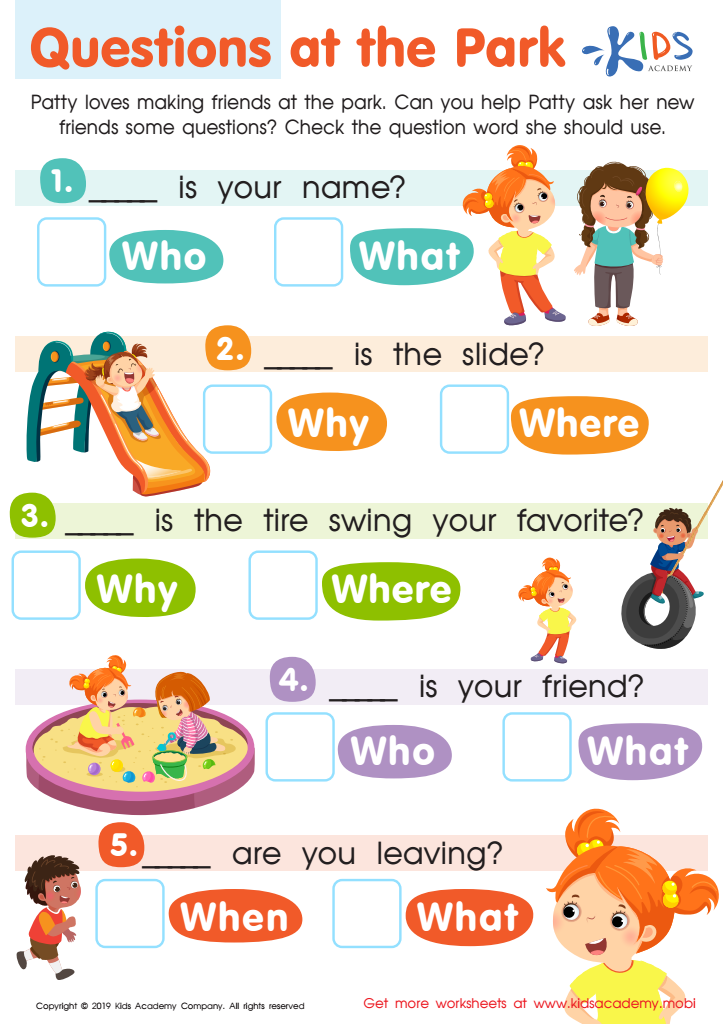
Questions at the Park Worksheet
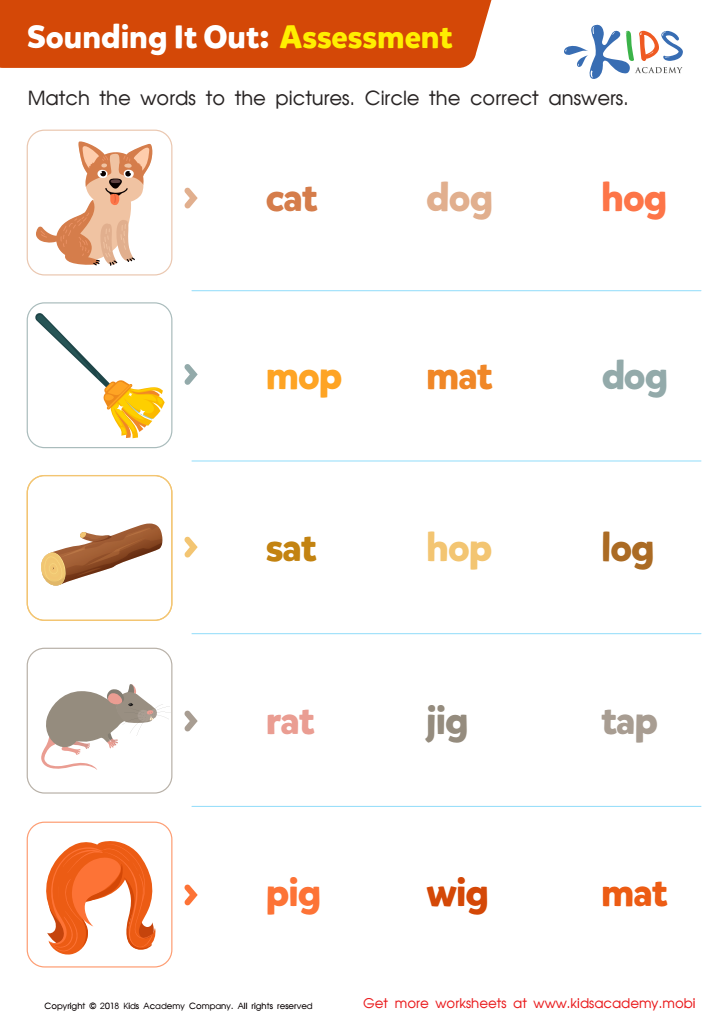
Sounding it Out: Assessment Worksheet
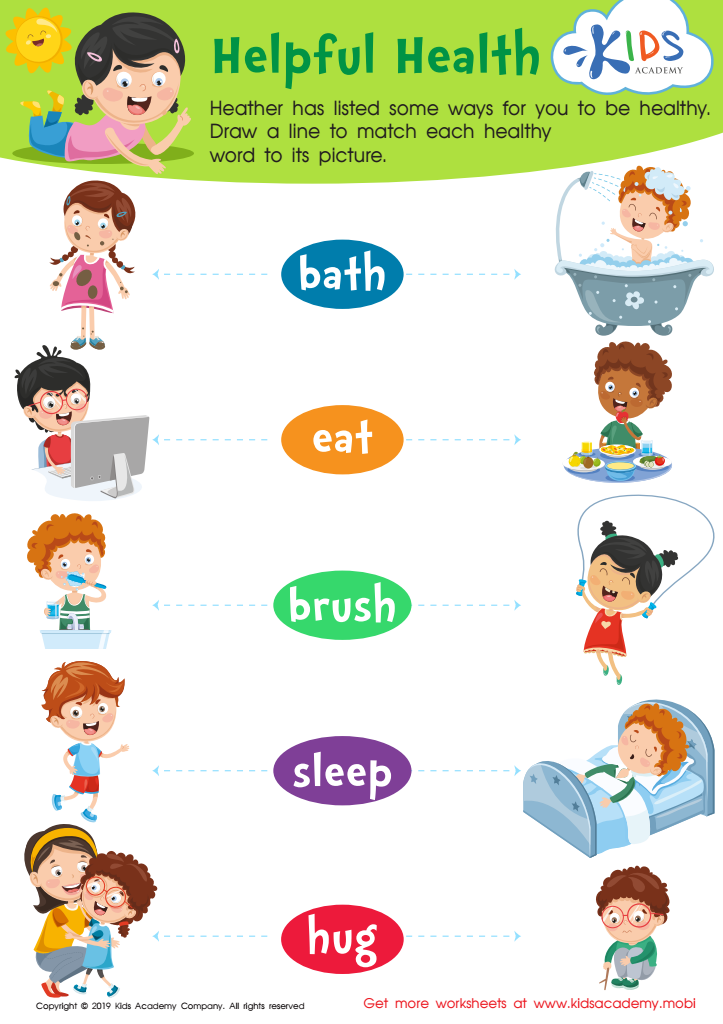
Helpful Health Worksheet








Parents and teachers should prioritize building logical reasoning vocabulary for children aged 4-9 because it lays the groundwork for critical thinking and problem-solving skills essential for lifelong learning. At this developmental stage, children are highly receptive to new concepts and are naturally curious about the world around them. By introducing logical reasoning terms—such as "if," "then," "because," "compare," and "contrast"—parents and teachers help children articulate and understand complex relationships between ideas.
When children learn to comprehend and use logical reasoning vocabulary, they can better follow instructions, understand sequences, and ask insightful questions. These skills are fundamental for success in subjects like math and science, which require pattern recognition and systematic thinking. Moreover, the ability to explain their thinking process boosts language skills and enhances academic performance.
Additionally, strong logical reasoning skills help in daily decision-making and social interactions. For instance, children can use logical reasoning to resolve conflicts by understanding cause and effect, and considering alternatives. This early instruction builds confidence and prepares them for more intricate cognitive tasks in higher grades.
Ultimately, investing in logical reasoning vocabulary equips young learners with essential tools that promote intellectual growth, effective communication, and a confident approach to challenges in both academic and personal realms.








