Verb identification Building Vocabulary Worksheets for Ages 4-9
3 filtered results
-
From - To
Enhance your child's vocabulary with our engaging Verb Identification Worksheets, designed for ages 4-9! These fun and interactive worksheets focus on helping young learners recognize and understand verbs in various contexts. By engaging in a variety of exercises, children will improve their reading comprehension and language skills while having fun! Our resources encourage creativity, critical thinking, and early writing skills. Perfect for homeschoolers, educators, and parents, these worksheet activities foster a love for learning and provide essential building blocks for language development. Explore our collection and watch your child's confidence and vocabulary grow as they master the art of verb identification!
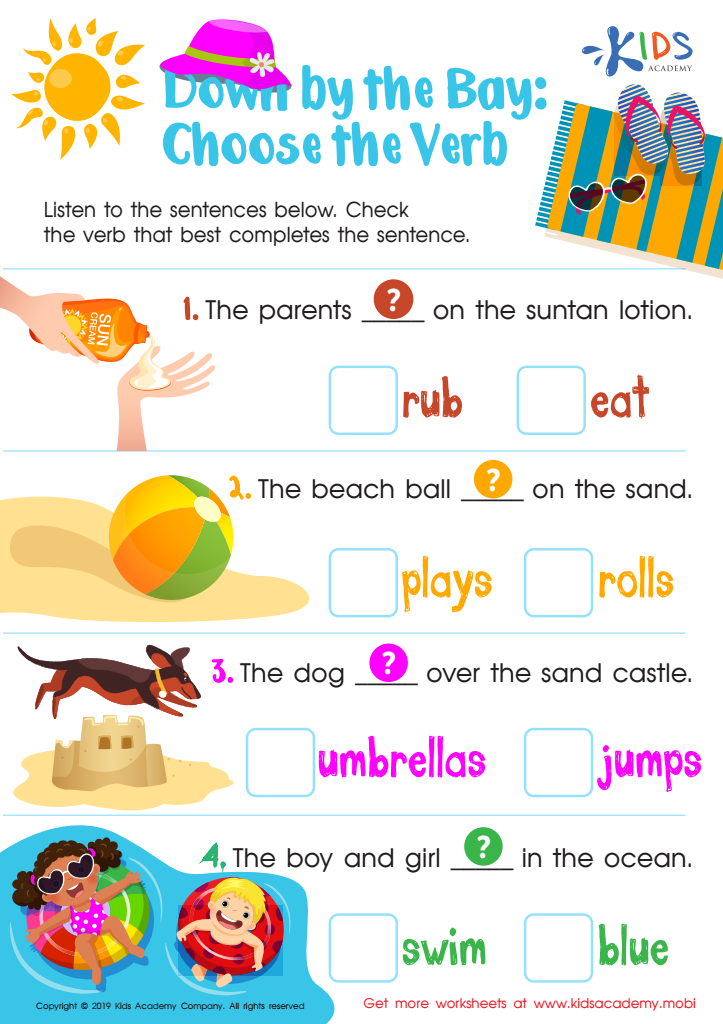
Down by the Bay: Choose the Verb Worksheet
 Assign to My Students











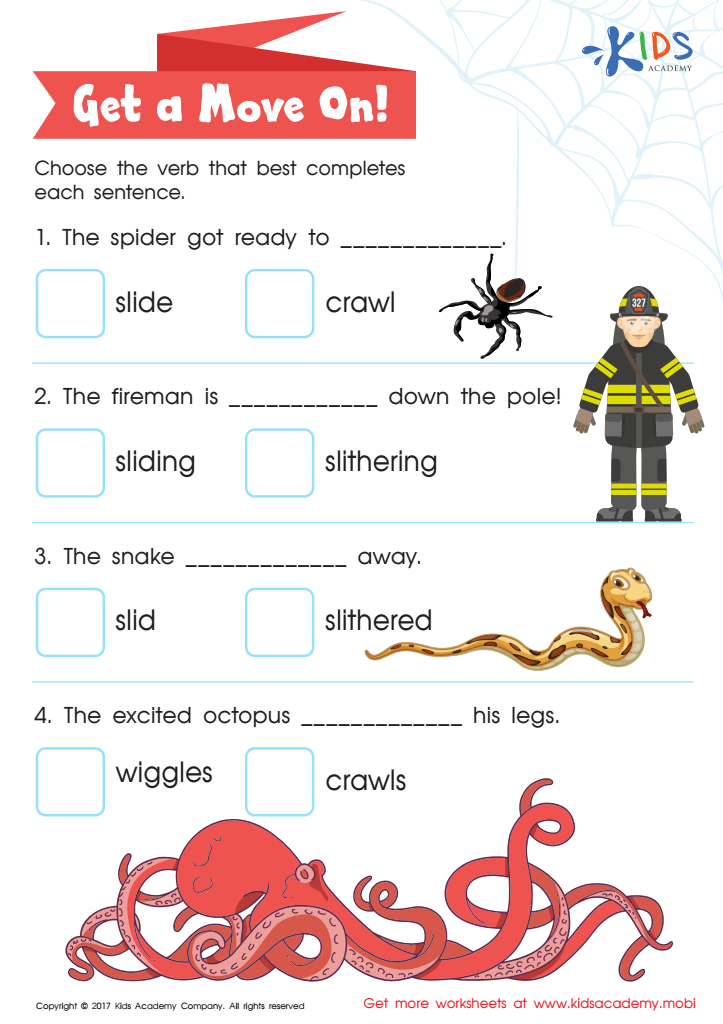
Verb Worksheet
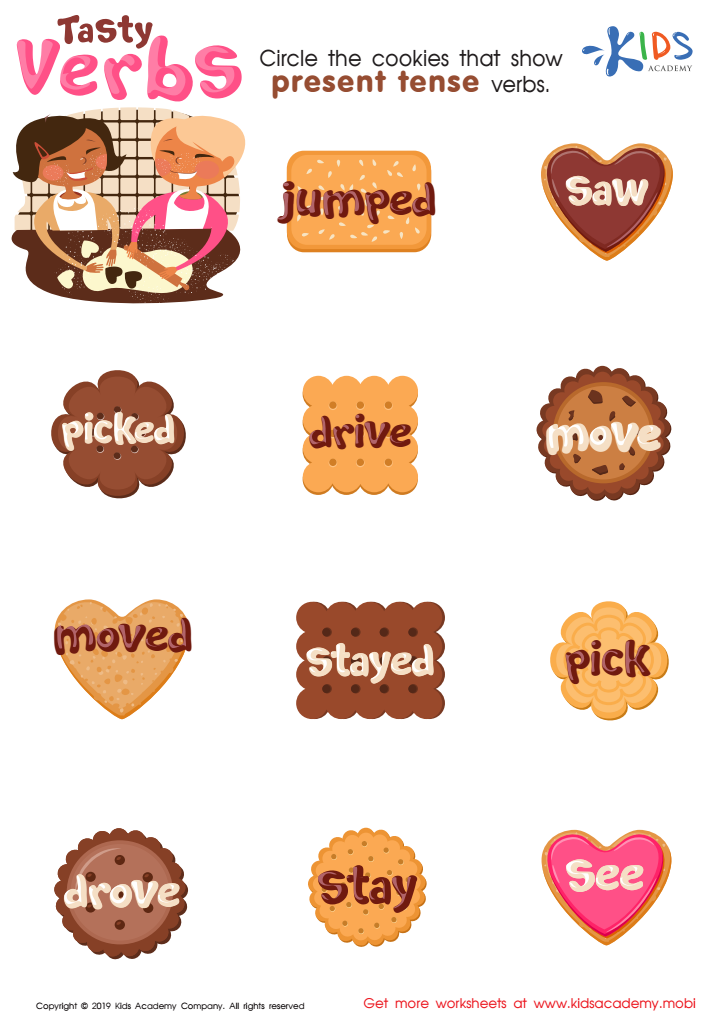
Tasty Verbs Worksheet



.jpg)




Verb identification and building vocabulary are critical for children's language development, especially for ages 4-9. During these formative years, children begin to grasp the fundamentals of language, facilitating their ability to express thoughts and engage in meaningful conversations. Understanding verbs—words that describe actions, states, or occurrences—helps children articulate their experiences and understand the world around them.
When parents and teachers prioritize verb identification, they lay the groundwork for stronger reading and writing skills. Recognizing verbs enhances comprehension during storytelling or when reading books, as children learn to follow plots and character actions effectively. Expanded vocabulary, which includes a rich assortment of verbs, empowers children to convey profound meanings and emotions in their expressions.
Moreover, building a robust vocabulary is linked to academic success. Children with enriched language skills are more likely to excel in various subjects, promoting broader educational development. Incorporating fun activities like games or storytelling that highlight different verbs not only engages children but also makes the learning process enjoyable. Ultimately, fostering verb identification in early learners not only equips them with essential language tools but also nurtures their confidence and curiosity, setting them on a lifelong path of effective communication and learning.








