Data interpretation Reading Worksheets for Ages 4-9
3 filtered results
-
From - To
Enhance your child's reading skills with our engaging Data Interpretation Reading Worksheets for ages 4-9! Designed to introduce young learners to essential data skills, these worksheets offer fun activities that promote understanding of charts, graphs, and other visual information. Through interactive exercises, children will develop their ability to interpret data, boosting their critical thinking and comprehension skills. Perfect for both classroom use and at-home learning, our resources support foundational literacy and analytical abilities while making learning enjoyable. Explore our diverse selection of worksheets and watch your child gain confidence in reading and interpreting data effectively. Start their educational journey today!
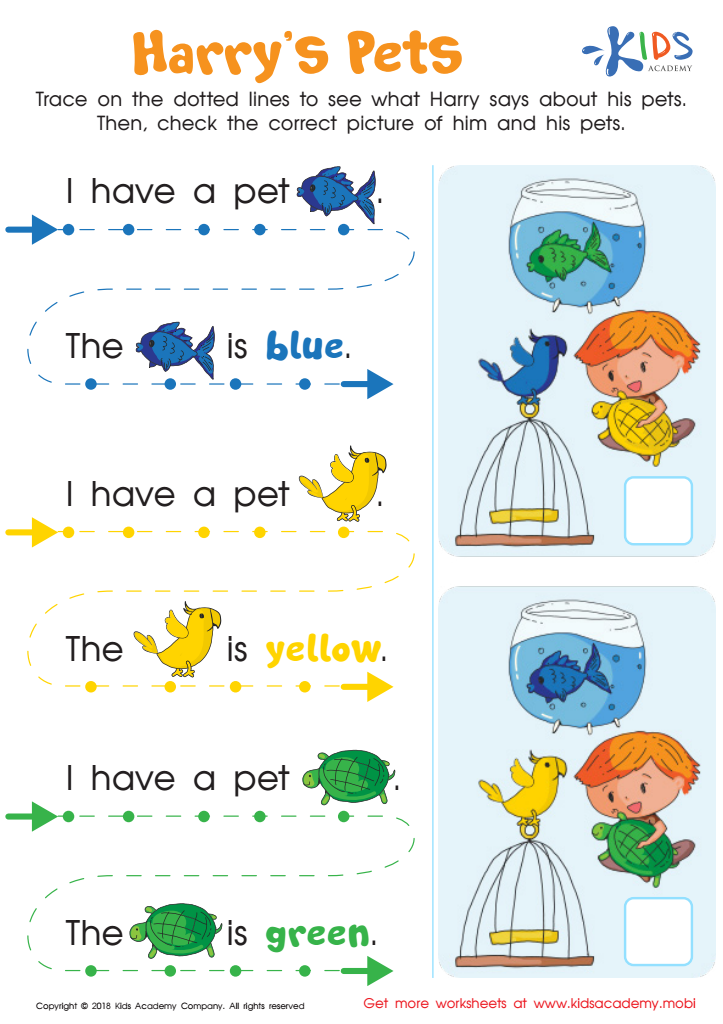
Read from Left to Right: Harry's Pets Worksheet
 Assign to My Students







Data interpretation reading is crucial for children aged 4-9, as it lays a foundational skill set that integrates literacy with critical thinking. At this early stage, children are developing essential reading and comprehension skills that are vital for their overall academic success. When children engage with data—such as graphs, charts, or simple statistics—they not only learn to decode text but also learn to gather and organize information.
Parents and teachers should care because the ability to interpret data enhances a child’s problem-solving capabilities and fosters analytical thinking. In today’s data-driven world, understanding how to read and interpret information from various sources is key to navigating learning material and making informed decisions. By introducing data interpretation in early education, children learn to think critically about the information presented to them and develop skills in analysis and reasoning that will assist in disciplines like math and science.
Additionally, these skills can cultivate a sense of curiosity and an understanding of real-world concepts, encouraging children to ask questions and seek out answers. This not only enriches their educational experience but also prepares them for future challenges in an increasingly complex world. Investing time in data interpretation reading ultimately benefits a child's lifelong learning journey.








