
Drawing skills Reading Worksheets for Ages 4-9
3 filtered results
Difficulty Level
Grade
Age
-
From - To
Subject
Activity
Standards
Unlock creativity and boost reading comprehension with our Drawing Skills Reading Worksheets for ages 4-9! These engaging worksheets combine fun drawing activities with essential reading exercises. As kids illustrate scenes from the text, they develop both their artistic talents and understanding of the material. These worksheets are perfect for young learners who benefit from hands-on activities, making reading interactive and enjoyable. Tailored to various skill levels, our worksheets are ideal for reinforcing critical thinking, fostering imagination, and improving reading skills. Spark a love for reading and art in your child's learning journey with our comprehensive resources.
Favorites
With answer key
Interactive
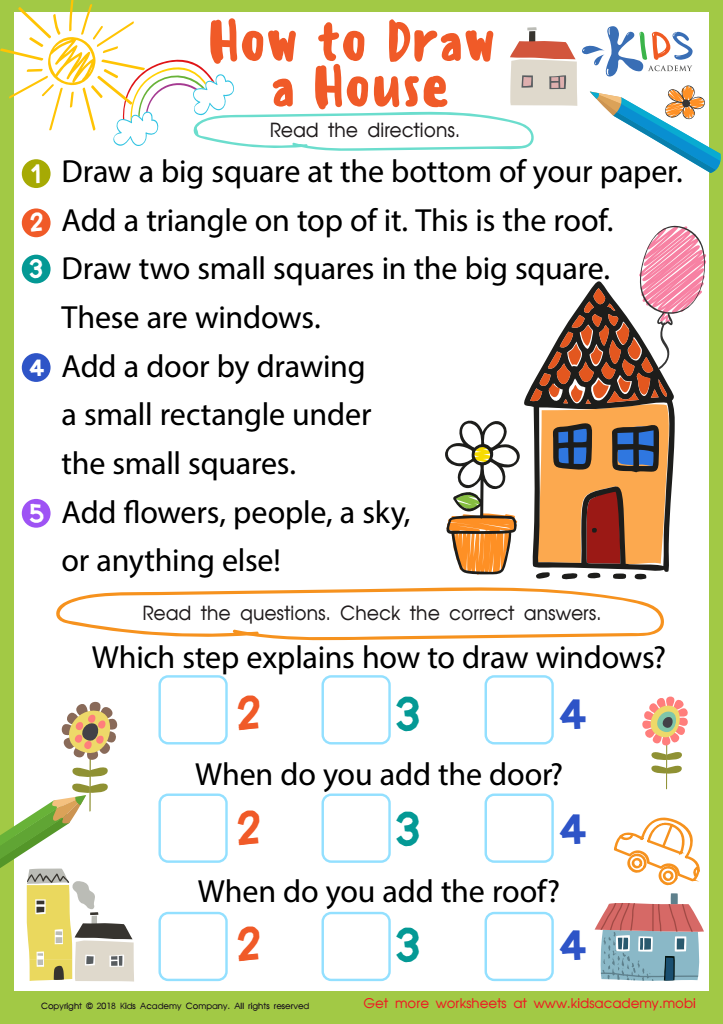
How to Draw House Worksheet
Does your child love to draw? Why not try teaching them some easy tricks? Get them to follow directions on this worksheet and learn how to draw a house. Read the questions at the end and ensure they get the answers right. Your kids will surely love it!
 Assign to My Students
How to Draw House Worksheet
Worksheet
Join Kids Academy for Free
Who is primarily going to use this learning content?






.jpg)

Drawing and reading skills are foundational aspects of a child's early development, particularly for ages 4-9. These activities are essential not just for academic success, but also for overall emotional and cognitive growth. When children draw, they enhance their fine motor skills, which are crucial for writing. Drawing fosters creativity, allowing children to express their thoughts and feelings visually. This form of self-expression can build self-confidence and aid in emotional development.
Equally important is the role of reading. Reading skills serve as the cornerstone for learning in all subject areas. Early exposure to reading increases vocabulary, comprehension, and literacy skills. It lays the groundwork for a lifelong ability to learn and absorb information. Through stories, children learn about different cultures, perspectives, and even moral lessons, nurturing empathy and social understanding.
Both drawing and reading stimulate the brain in unique ways, building neural pathways that complement each other. They improve concentration, memory, and critical thinking. For young children, combining these skills can make learning more interactive and engaging. By encouraging drawing and reading, parents and teachers establish a strong developmental framework, equipping children with the tools they need for future academic and life success.








