Identifying story elements Reading Worksheets for Ages 4-9
4 filtered results
-
From - To
Enhance your child's reading comprehension with our engaging "Identifying Story Elements" worksheets aimed at ages 4-9. These thoughtfully designed resources help young readers understand key components of a story: characters, setting, plot, and more. Each worksheet features fun, age-appropriate exercises that guide children to identify and analyze story elements, promoting critical thinking and literacy skills. Perfect for both classroom and home use, these worksheets foster a deeper enjoyment of reading and build a strong foundation for future learning. Unlock your child's potential with our educational and entertaining materials. Explore our worksheets today!
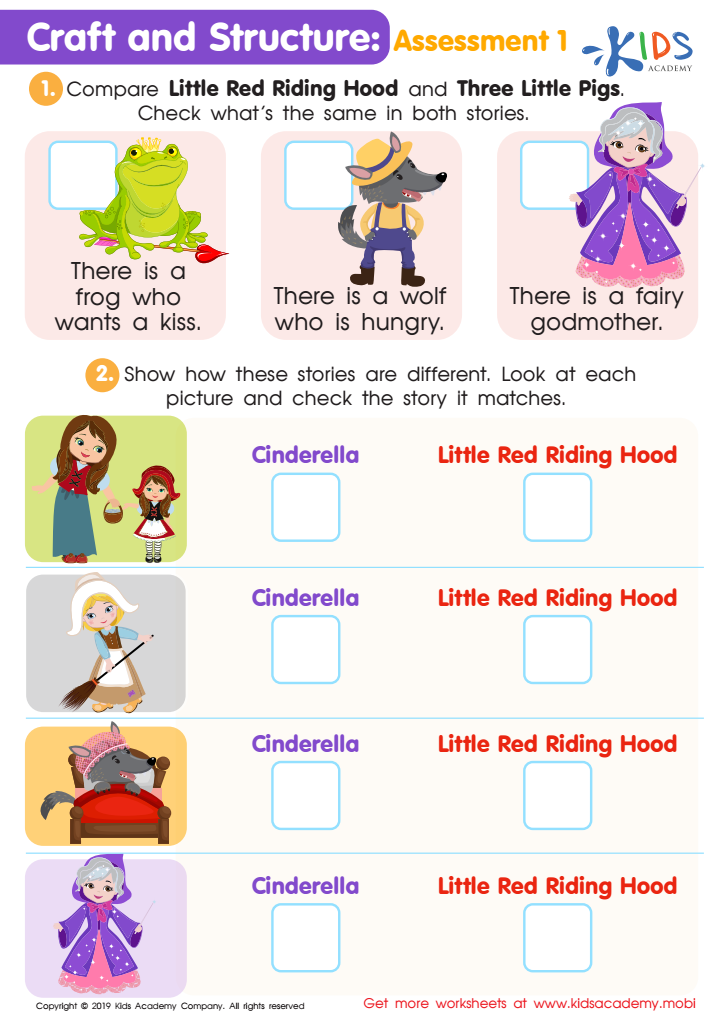
Craft and Structure: Assessment 1 Worksheet
 Assign to My Students
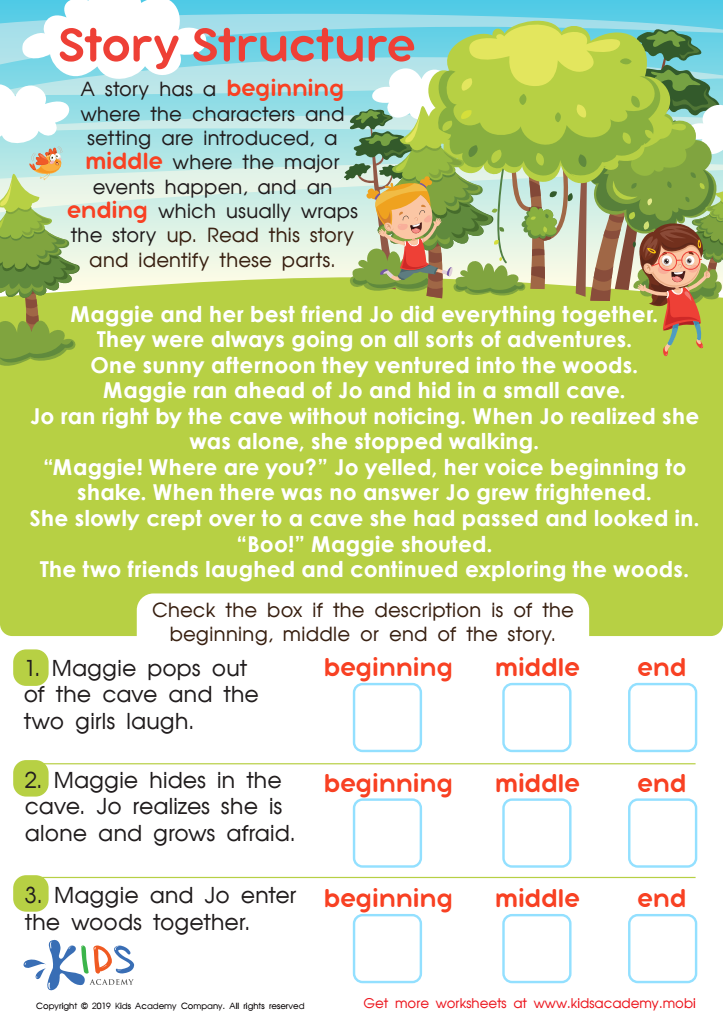
Story Structure Worksheet
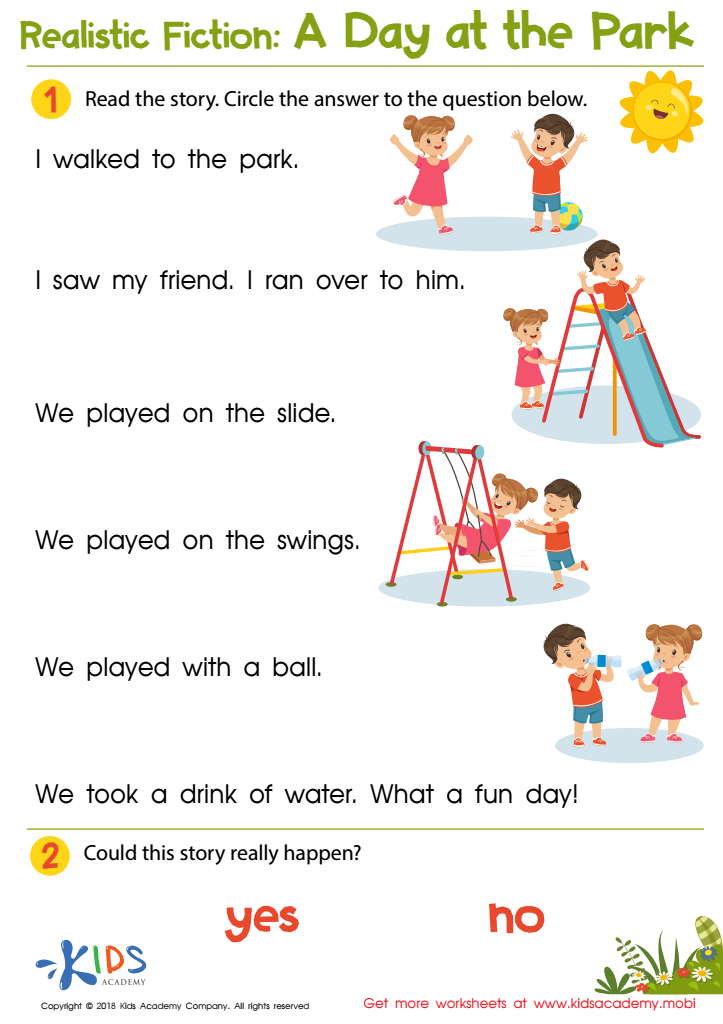
A Day at the Park Worksheet
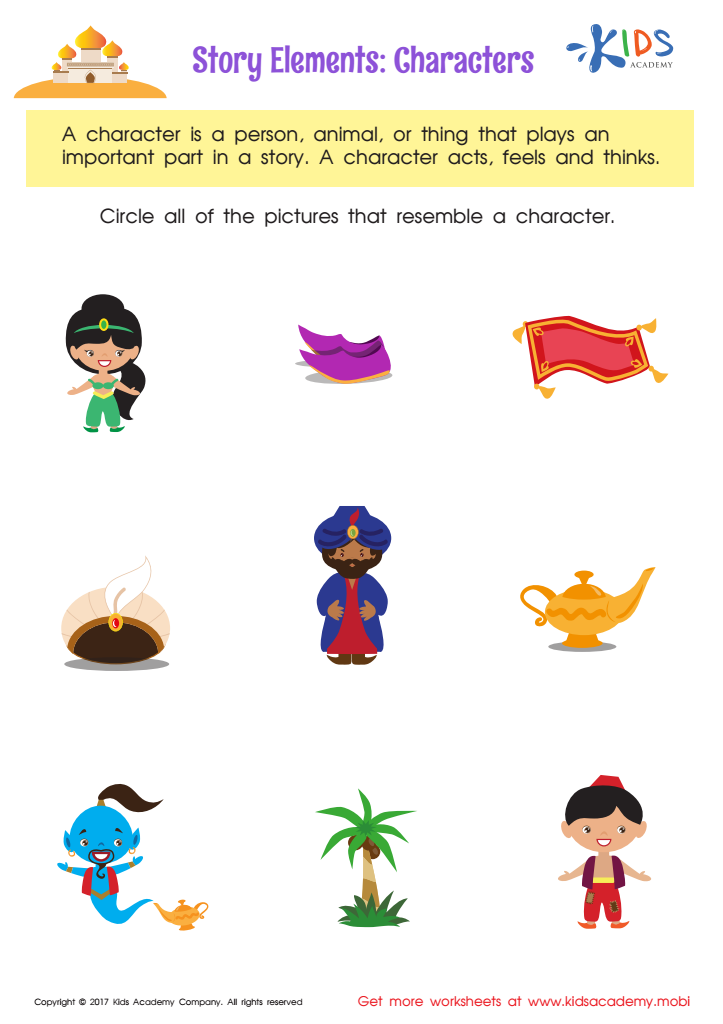
Story Elements Printable







Identifying story elements is crucial for young children aged 4-9 as it builds foundational literacy skills essential for their academic and personal growth. Key story elements include characters, setting, plot, conflict, and resolution. By recognizing these components, children improve their comprehension, which allows them to understand and enjoy stories more deeply.
For parents and teachers, fostering this skill is especially important. Early identification of story elements enhances listening and reading comprehension. This makes it easier for children to follow narratives and recall details, essential for academic success across subjects.
Additionally, differentiating these elements bolsters critical thinking and analytical abilities. Children learn to distinguish main ideas from supporting details, identify cause and effect, and predict outcomes. These skills are transferrable and critical in real-world problem-solving and decision-making contexts.
Moreover, understanding story structure encourages creativity and expressive skills. When children grasp how stories are built, they can create their own narratives, improving their language proficiency and boosting their confidence in communication.
In conclusion, attention to story elements sets a solid foundation for literacy, critical thinking, creativity, and overall intellectual growth, making it a pivotal aspect of early childhood education that caregivers and educators should actively nurture.








