Vocabulary development Reading Worksheets for Ages 4-9 - Page 2
26 filtered results
-
From - To
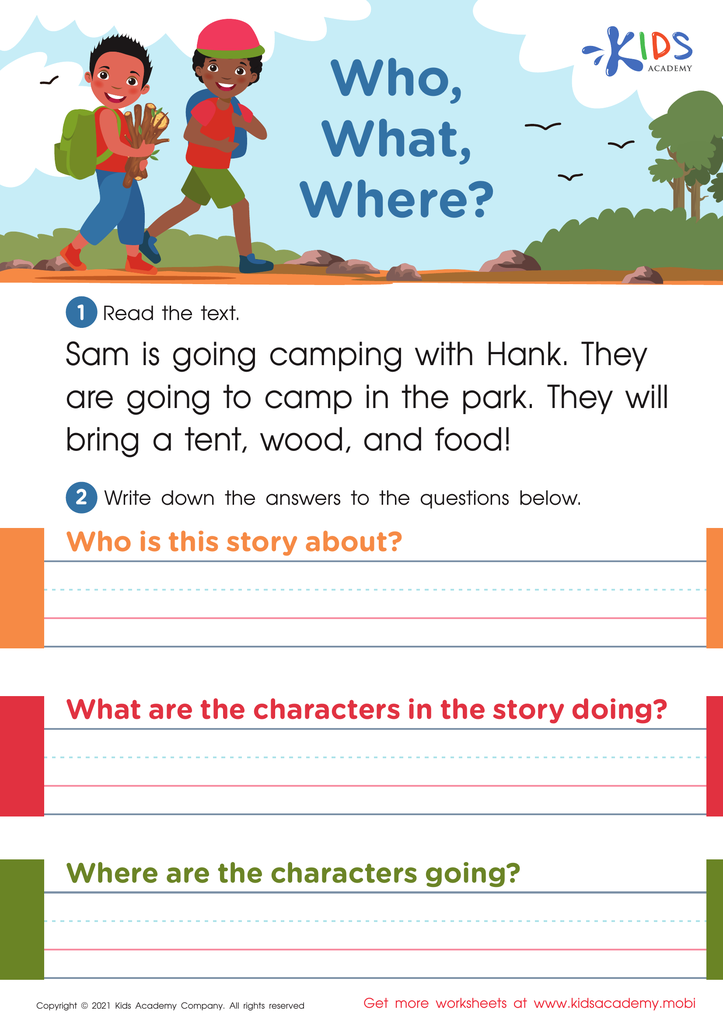
Who, What, Where? Worksheet
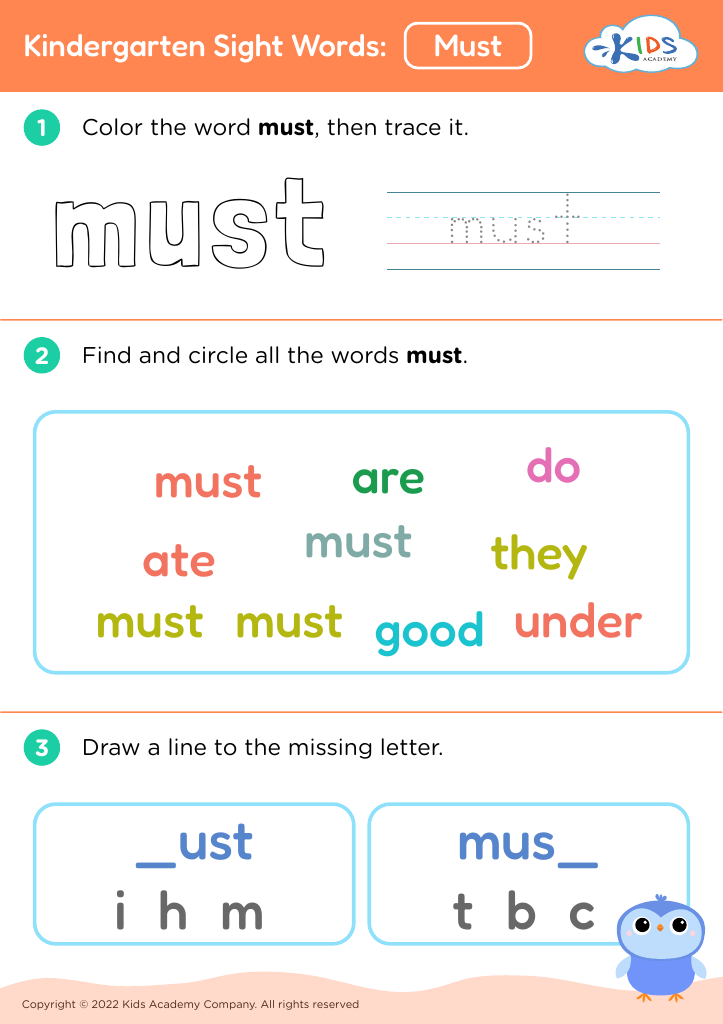








Vocabulary development is crucial for children aged 4-9 as it forms the foundation for literacy and overall academic success. At this age, children are rapidly expanding their language skills, and a rich vocabulary enhances their ability to understand and express ideas effectively.
When parents and teachers prioritize vocabulary development, they equip children with the tools needed for reading comprehension, writing fluency, and effective communication. A robust vocabulary allows young learners to engage with diverse texts, enabling them to grasp complex concepts and develop critical thinking skills. Moreover, a strong vocabulary supports social interactions, helping children to articulate their thoughts and feelings.
Furthermore, collaboration between parents and teachers in promoting vocabulary-rich environments—such as reading aloud, engaging in discussions, and using varied vocabulary in everyday conversations—can enhance children’s language skills outside of a formal classroom setting. This synergy encourages a love for language and reading that can last a lifetime.
Ultimately, fostering vocabulary development in young learners not only enriches their educational journey but also supports their emotional and cognitive growth, making it essential for parents and teachers to be actively involved in this vital aspect of early education.








