Character recognition Reading Fiction Worksheets for Ages 4-9
4 filtered results
-
From - To
Explore our engaging Character Recognition Reading Fiction Worksheets designed for children ages 4-9! These interactive materials foster essential reading skills while immersing young learners in delightful stories. By identifying characters in fun narratives, kids enhance their comprehension and analytical abilities, making reading both enjoyable and educational. Our worksheets encourage creativity and critical thinking, ensuring that children not only recognize characters but also understand their roles and emotions within the stories. These resources are perfect for parents and educators seeking to develop strong, confident readers. Dive into the world of fiction while building lasting literacy skills with our character recognition worksheets today!
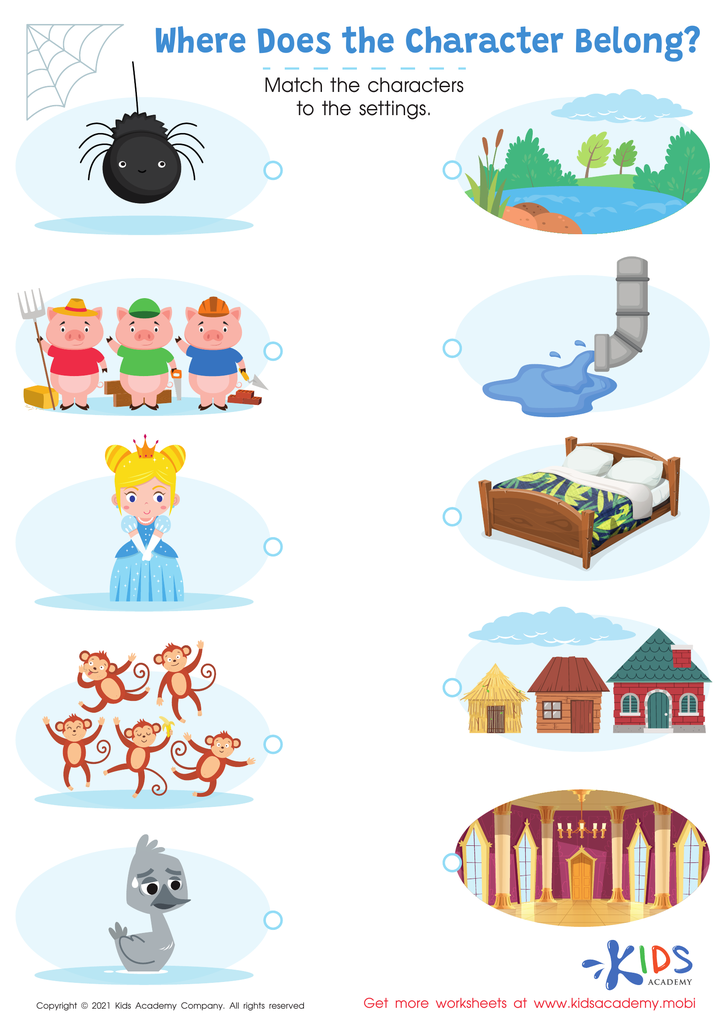
Where Does the Character Belong? Worksheet
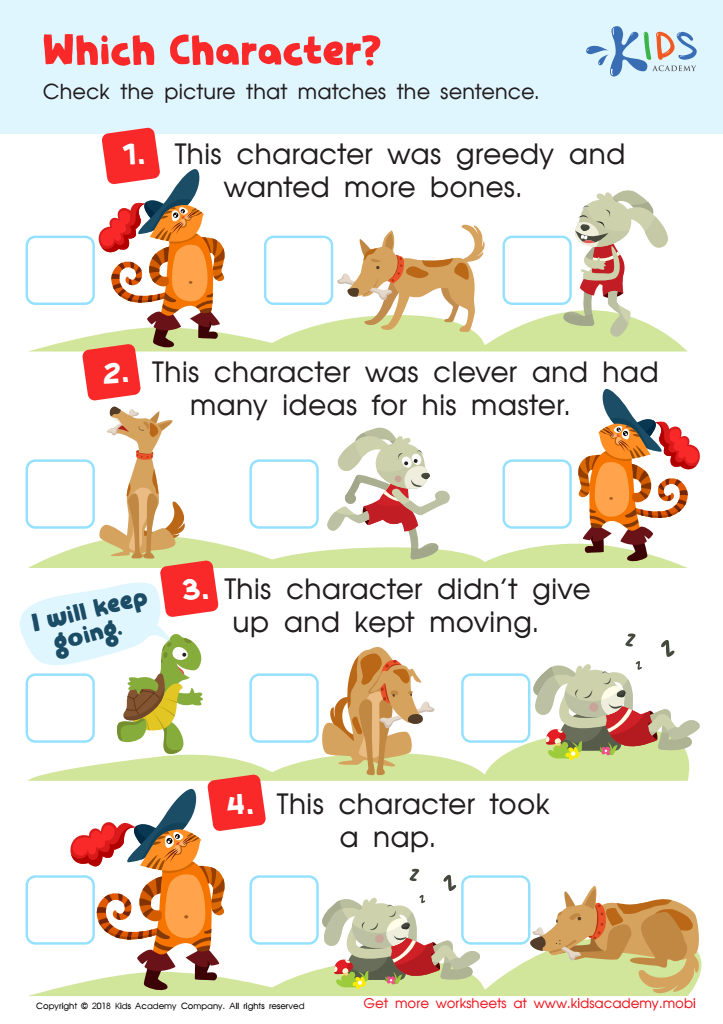
Which Character Worksheet
 Assign to My Students
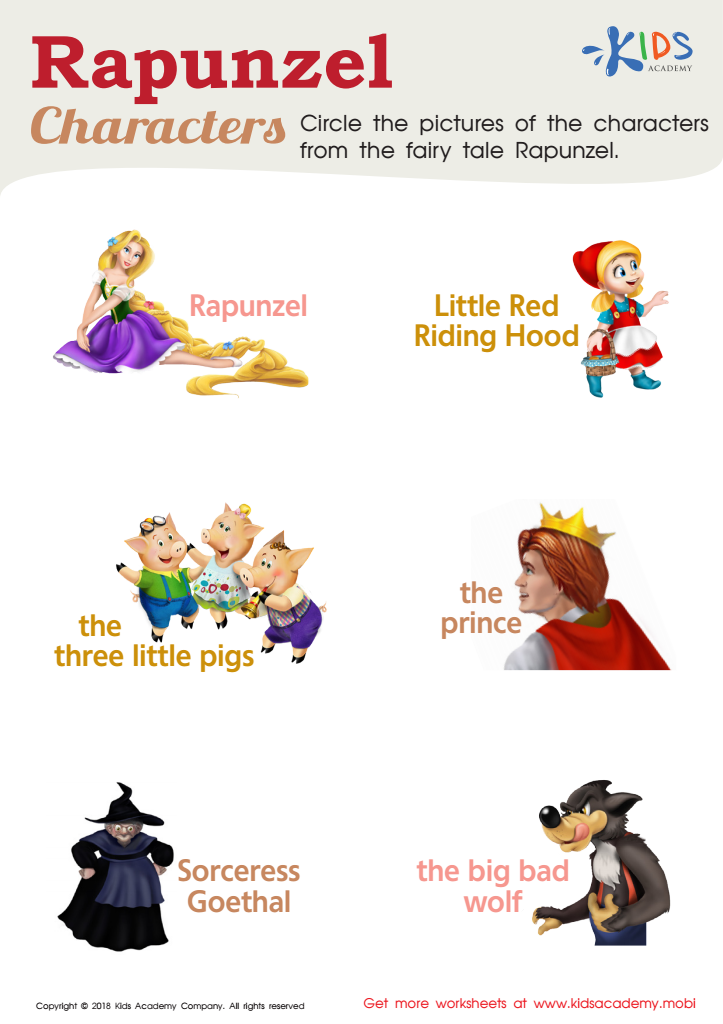
Rapunzel Characters Worksheet
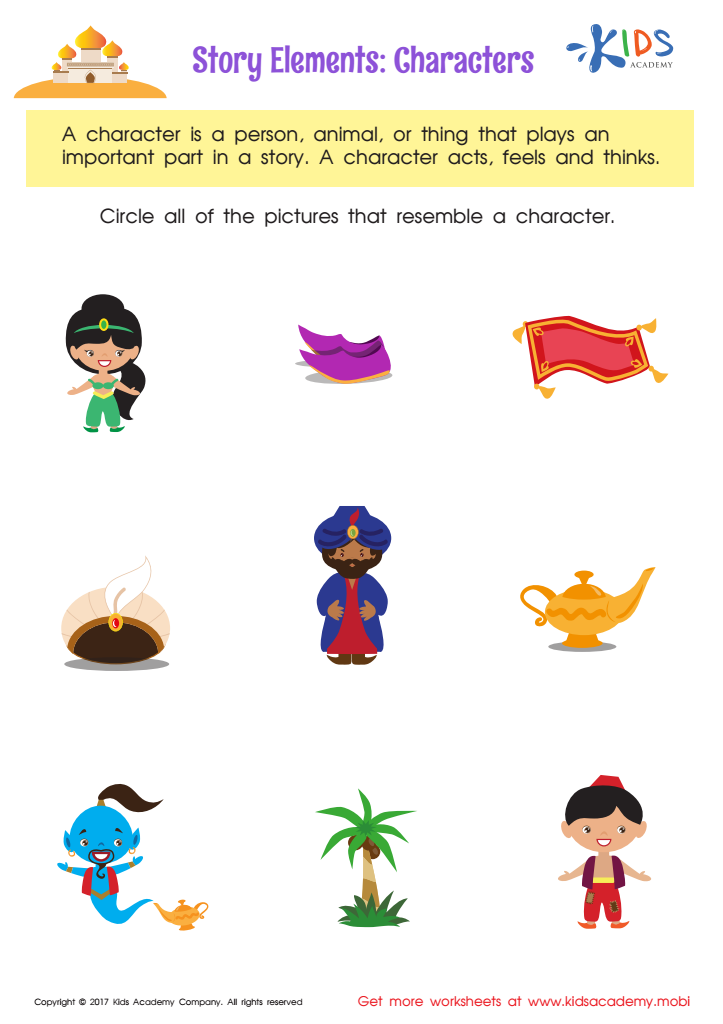
Story Elements Printable



.jpg)




Character recognition in reading fiction is essential for children aged 4-9, as it forms the foundation for their literacy development and comprehension skills. Recognizing characters not only enhances a child's ability to identify and understand texts but also fosters their imagination and creativity. Engaging with stories populated by relatable characters encourages young readers to make connections to their own lives, aiding in social-emotional development as they explore different perspectives and emotions.
Furthermore, skilled character recognition aids in language expansion, enabling children to acquire new vocabulary relevant to character traits, actions, and relationships. This skill also promotes critical thinking—children learn to analyze characters' motivations and reactions, enhancing their ability to infer meanings and predict outcomes in stories.
For parents and teachers, fostering character recognition is a way to cultivate a love of reading. When children can relate to characters and recognize them in various contexts, they become more enthusiastic and engaged readers. This enthusiasm leads to improved literacy outcomes, better academic performance, and a lifelong appreciation for literature. Therefore, attention to character recognition in young readers is not just about improving reading skills; it is about nurturing well-rounded, empathetic individuals ready to interact with the world around them.








