Enhancing Reading Comprehension Reading Fiction Worksheets for Ages 4-9
3 filtered results
-
From - To
Discover our engaging "Enhancing Reading Comprehension Reading Fiction Worksheets" tailored for children aged 4-9. These thoughtfully designed worksheets help young learners improve their understanding of stories through fun and interactive activities. By exploring a variety of fictional texts, children will develop essential comprehension skills, including identifying the main idea, making predictions, and summarizing content. Our resources encourage critical thinking, spark imagination, and foster a love for reading. Perfect for home or classroom use, these worksheets provide a wonderful way to support early literacy development. Unlock the power of fiction and watch your child thrive as a confident reader!
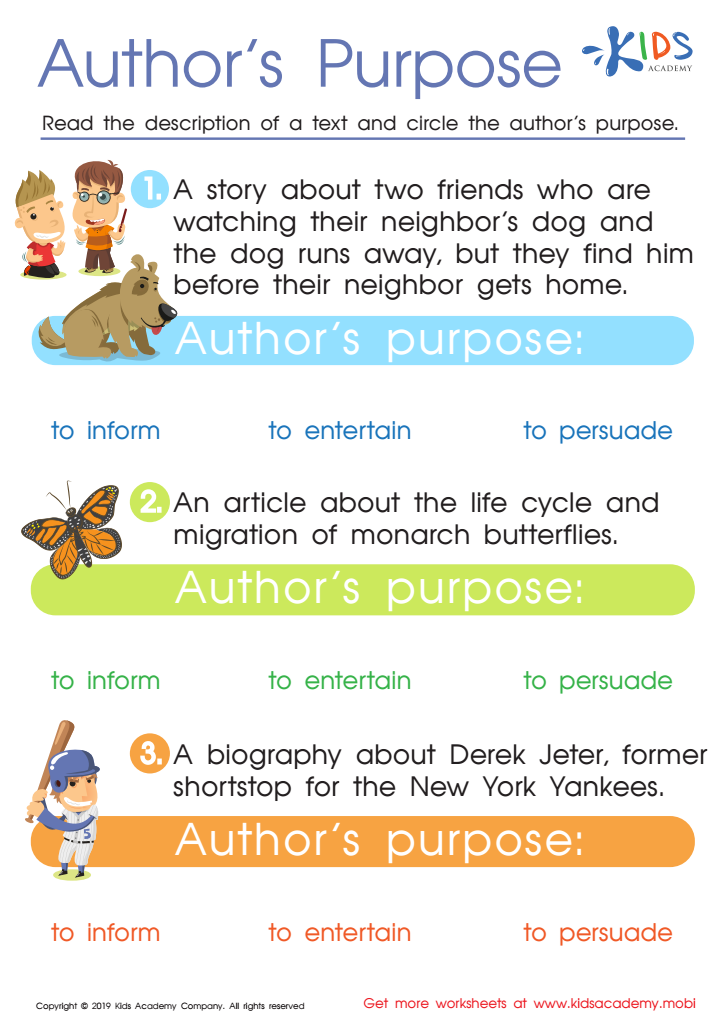
Author's Purpose Worksheet
 Assign to My Students
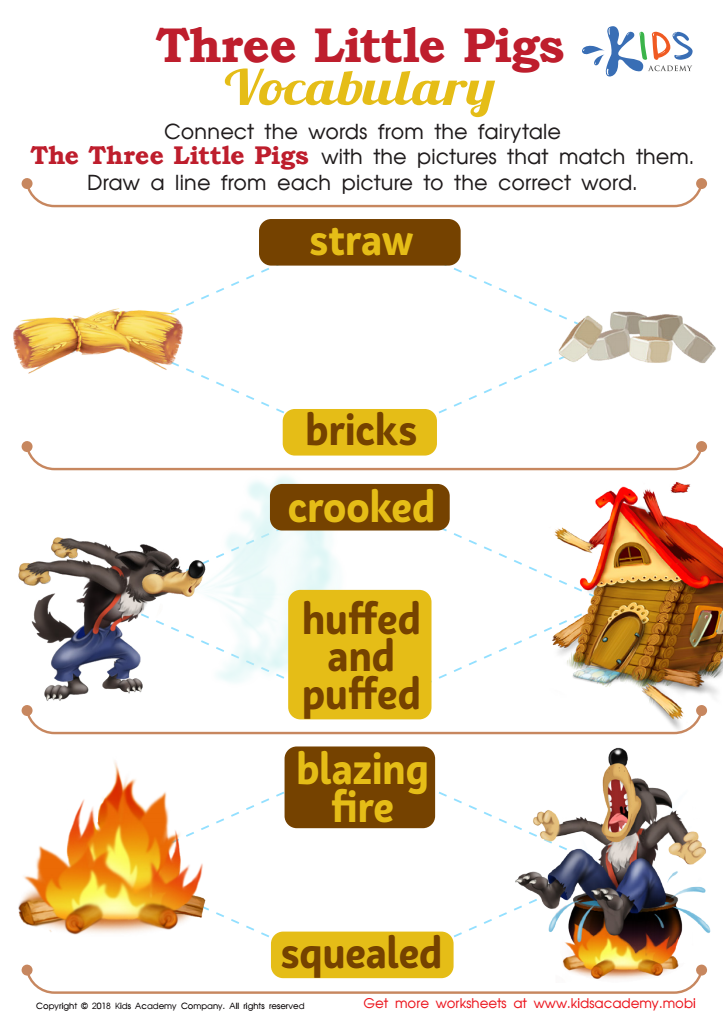
Three Little Pigs Vocabulary Worksheet
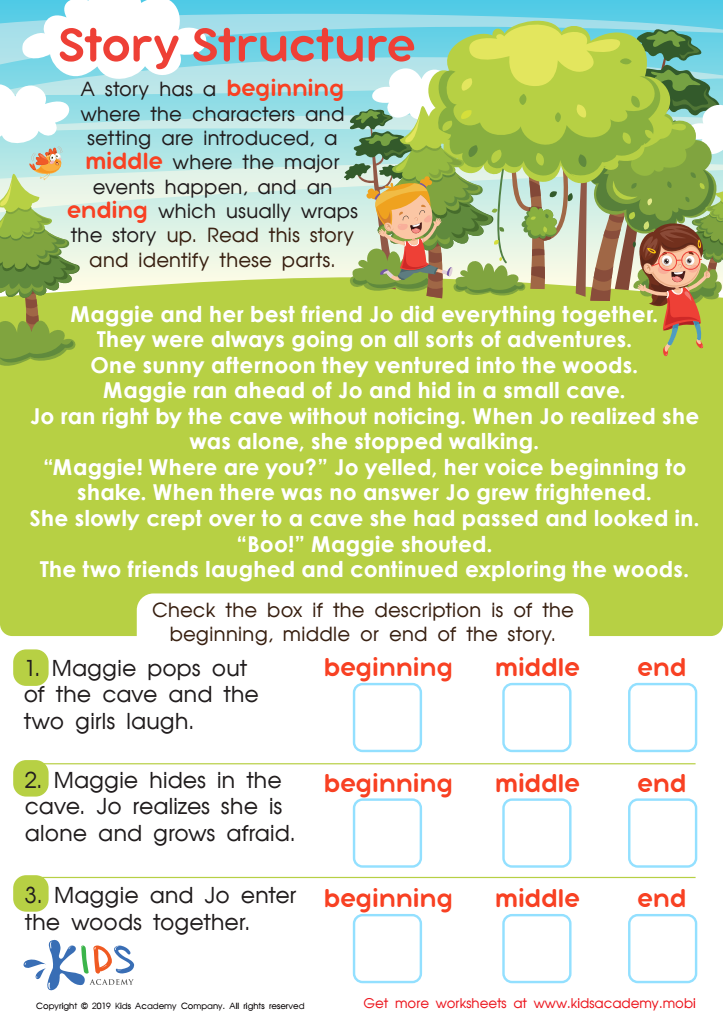
Story Structure Worksheet








Enhancing reading comprehension in young children, particularly through fiction for ages 4-9, is vital for their cognitive and emotional development. At this age, children are in critical stages of language acquisition and literacy skills, which form the foundation for future learning. Engaging with fiction helps develop imagination and creative thinking, allowing children to connect with stories and understand different perspectives.
When parents and teachers prioritize enhancing reading comprehension, they equip children with skills that extend beyond the classroom. Comprehension strategies such as predicting outcomes, summarizing plots, and identifying themes enable children to become active readers. This fosters a love for reading and helps build critical thinking skills essential for problem-solving and making connections between new information and prior knowledge.
Moreover, fiction introduces children to various cultural narratives, boosting empathy and social awareness. This exposure not only enhances vocabulary but strengthens their emotional intelligence as they learn to relate to characters’ experiences.
Ultimately, investing time in developing reading comprehension in young learners cultivates lifelong learners who are capable of interpreting, analyzing, and engaging with the world around them—skills crucial for academic success and personal growth.








