Reading Non-Fiction Worksheets for Ages 4-9 - Page 5
97 filtered results
-
From - To
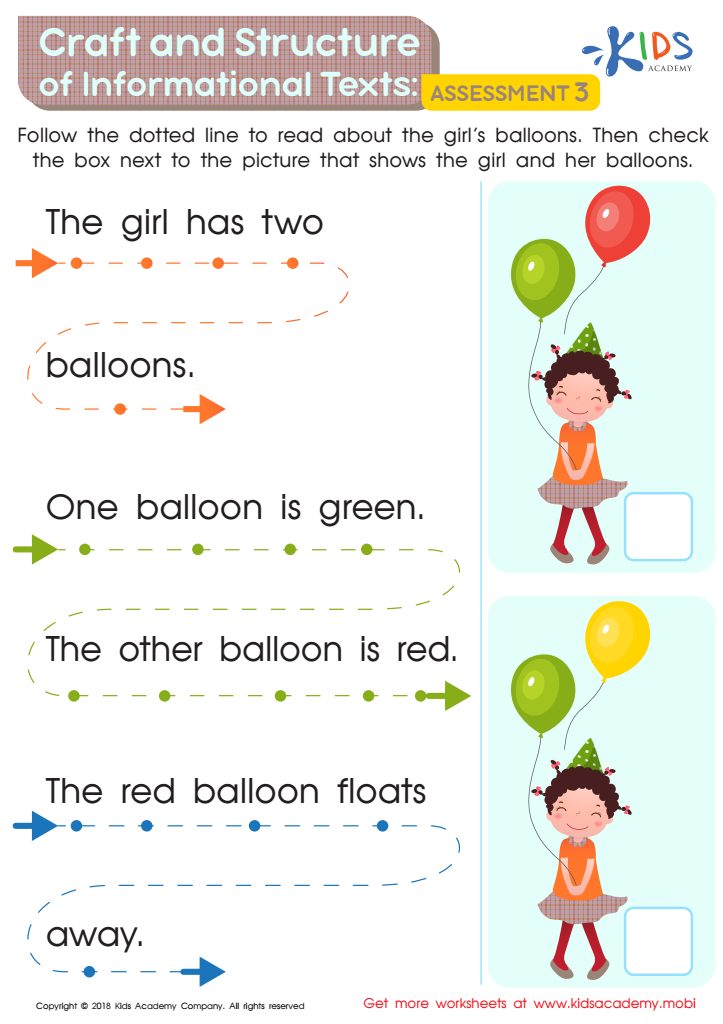
Craft and Structure of Informational Texts: Assessment 3 Worksheet
 Assign to My Students







Parents and teachers should prioritize reading non-fiction for children aged 4-9 because it lays a foundation for critical skills vital for lifelong learning and success. Non-fiction books introduce children to the vast world of real-life information, fostering curiosity and a desire to explore their surroundings. These books help build vocabulary and comprehension skills as children encounter new terms and concepts related to science, history, and nature within a captivating context.
Reading non-fiction enhances cognitive development by encouraging children to ask questions and seek answers, thereby strengthening their analytical thinking and problem-solving abilities. It supports the development of information-literacy skills, crucial in an age where the ability to find, evaluate, and use information is paramount.
Moreover, non-fiction reading helps children understand the world they live in, promoting a better grasp of societal concepts and feeding into their natural inquisitiveness. By exposure to diverse topics, they become more adaptable and open-minded individuals.
Teachers and parents alike can use non-fiction reading to develop stronger connections between literature and everyday life, making learning more relevant and engaging. Encouraging non-fiction reading early equips children with the basic toolsets of knowledge and fosters a consistent motivation to learn, vital for their future academic and personal endeavors.








